100 years in, ‘Gatsby’ still ranks high in American fiction
Who turned the green light off?
To depress us teenagers even more, my high school English class had us read “The Great Gatsby” and “The Catcher in the Rye” back to back …
Who turned the green light off?
To depress us teenagers even more, my high school English class had us read “The Great Gatsby” and “The Catcher in the Rye” back to back and write essays about each. I always thought it was F. Scott Fitzgerald’s Catholic upbringing that made our nuns want to teach his wanton novel, but I’m not sure about “Catcher,” since suicide was contemplated and a nasty word was written on the wall.
I’m uncertain about what the nuns were trying to impart, but some themes did overlap, despite eras that were 30 years apart.
“The Great Gatsby” came out in 1925. Fitzgerald’s two previous novels had been knockouts. “Gatsby,” not so much. However, despite its slow start, the book’s staying power has been immense.
Was it the novel’s bad boys or the naughty girls (for the time) who were bored by their world and sought a life that would make them happy? Was it the lost love of youth, the glitz and glamor of Long Neck and locales with odd names like East and West Egg? And who could keep from laughing about those odd names?
Even though it’s set in the aristocratic East, the book seems to catch the flavor of the Midwest in retelling the universal story of unrequited love. When all the trappings are stripped away, it’s about love — the theme of many tunes from the rock era and modern-day romance novels.
Today, we would call “Gatsby” a novella, one that could be read during a long lunch hour.
So, 100 years later, why are we still fixated on what has come to be thought of as Fitzgerald’s greatest novel and one of America’s greatest as well?
I thought maybe I could get some insight into what makes “The Great Gatsby” so special by reading the 1966 CliffsNotes.
I started with the introduction, which has the disclaimer, “These notes are in no way intended to serve as a substitute for the actual reading of ‘The Great Gatsby.’” Wink, wink.
First and foremost, the CliffsNotes propose that it is “the conscious artistry that fuses a work into a unified whole.” They go on to say that “important as content is, however, it is form that shapes the novel’s unity.”
There are really only five characters: Jay Gatsby; Daisy Buchanan, his lost love; Tom Buchanan, Daisy’s evil husband; Nick Carraway, the narrator; and Jordan Baker, Nick’s paramour, who is easily forgettable but serves the purpose of connecting Nick to the plot, according to the CliffsNotes.
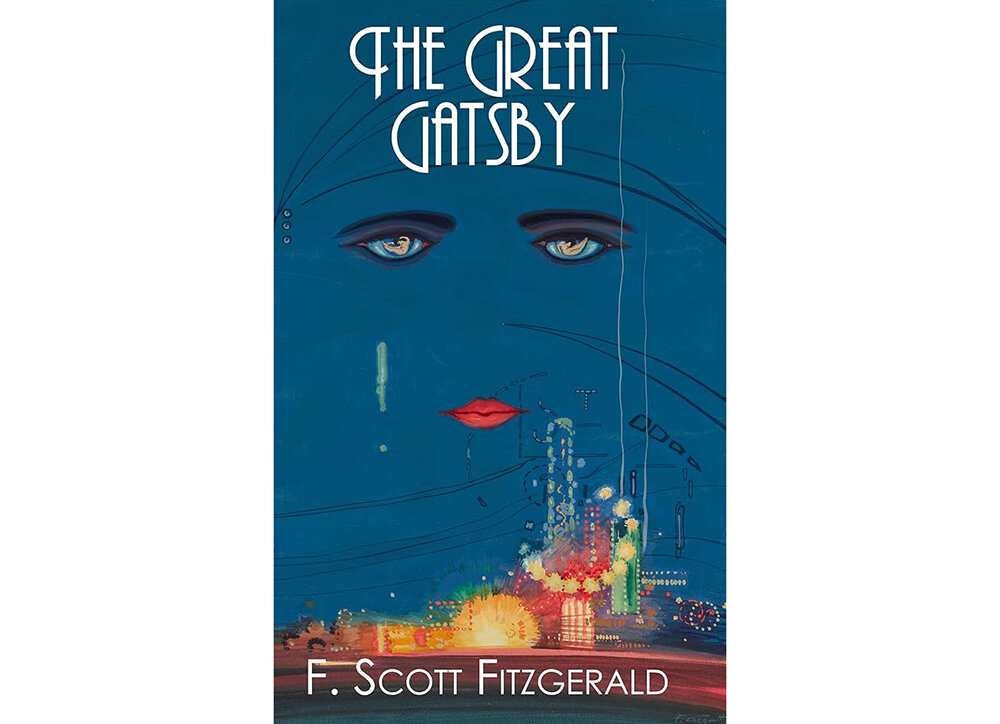
One thing I learned from reading the CliffsNotes is that they don’t delve into some significant plot lines. For example, the horrific car accident that kills one of the characters and Gatsby’s murder are given little mention. But if you’re looking to determine the novel’s symbolism, the CliffsNotes have you covered. The car, contemporary music, a foghorn and, of course, the mysterious green light take on momentous meaning in Fitzgerald’s novel. You can imagine 17-year-olds writing an essay on the green light’s symbolism. I’d say green represents envy.
A typical question the CliffsNotes want you to ponder is, “Choose any example of Fitzgerald’s use of color and relate it to ideas in the novel.”
And they do ask the reader to consider Nick’s 30th birthday, which happens simultaneously with the death of Buchanan’s mistress, and its meaning in the novel. Is that the origin of “over the hill” that became a ‘60s standard?
I particularly loved how the CliffsNotes focus on Gatsby’s dress shirt collection, which he shows off to Daisy as an example of his success.
When it comes down to it, “The Great Gatsby” has proven to be somewhat autobiographical for Fitzgerald. Is it about his own chase of Zelda, his wife for 20 years? Is Daisy her literary stand-in, and is Fitzgerald’s own pursuit of affluence and stature elicited in Gatsby’s ill-fated search for wealth and happiness? You could ask, as the CliffsNotes do, whether anyone is left unscathed — even Nick, the narrator, who sets the plot in motion.
For those who feel that the CliffsNotes leave you hanging with little satisfaction, you could still read the novel, or even watch one of the movies, or just write an essay on how “The Great Gatsby” has permeated popular culture. In the meantime, identify five instances of foreshadowing in the novel. And remember, 100 years later, we are still reading it.