
100 years later: the land and planes around Lansing’s airport
Lansing’s Capital Region International Airport is celebrating 100 years this Saturday.
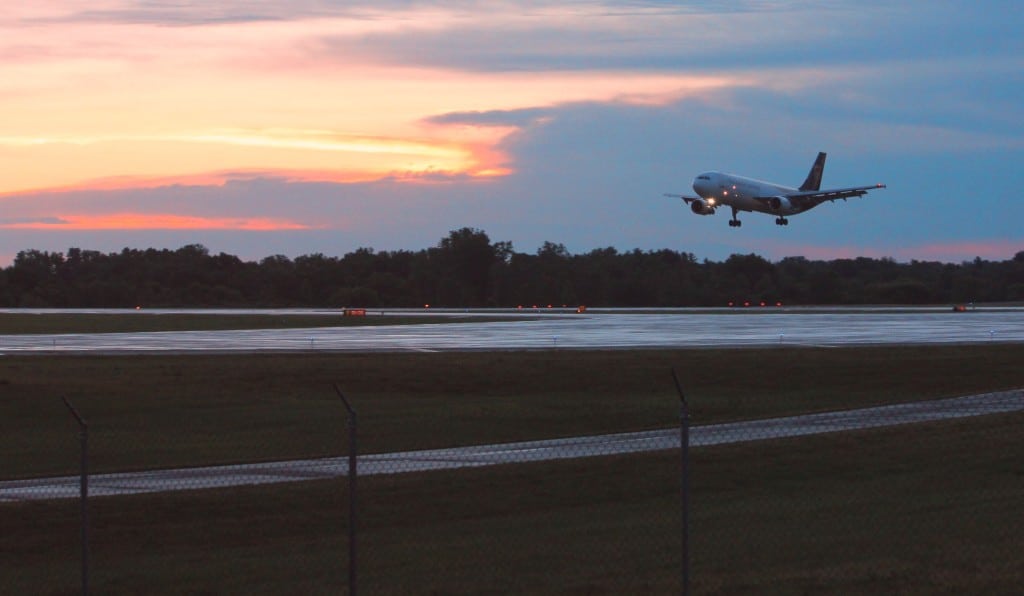
Flying is much safer and more convenient than it was a century ago, back when the airport was known as the Capital City Airport or the Lansing Airport (which is now a separate and smaller airfield to the west) or, for only a few weeks, the Fred W. Green Airport.
Lansing’s airport – born out of postal cargo and military efforts – is still much the same 100 years later: passengers coming along for the ride then as they do now.
Sixty million pounds of cargo a year helps to run today’s Lansing Region International Airport, led by Amazon packages and UPS deliveries, especially next-day deliveries.
“Anything next-day in Michigan, everything outside of Metro Detroit, comes in and out of Lansing,” said Nicole Noll-Williams, president of Capital Region International Airport.
Next-day packages to Alpena, Traverse City and Midland all begin with a flight that lands in Lansing. Smaller planes and trucks take the packages the rest of the way.
Noll-Williams said military flights help to account for many of the airport’s 40,300 annual flights and the future of the airport is expected to include advances in military technology including drones as well as electric-powered airplanes, like the kind demonstrated in Lansing last summer.
Those cargo and military flights have, for a century, helped to build out the infrastructure of the airport, benefiting passenger flights.
Lansing carries 350,000 passengers a year.
The airport features short lines, more like a burger joint than a packed airport, and you can park and get into security in minutes, tops.
Let’s be clear, Lansing’s airport is small.
That’s not to say Lansing doesn’t have bragging rights.
There are only two truly international airports in Michigan, by the standard of being able to carry more than 19 passengers, Noll-Williams said.
Detroit and Lansing are the only places that have the federal inspection stations necessary for large passenger flights and those same inspectors make Lansing one of the state’s keys for shipping.
Detroit handles the lion’s share of Michigan passenger flights, about 17 out of every 20 flights.
It is the only large hub in Michigan, a federal designation meaning it takes at least 1% of the nation’s traffic. Detroit handles more than 3% of the nation’s one billion “enplanements” each year.
The Gerald R. Ford International Airport near Grand Rapids is next and is the only small hub in Michigan (it added flights to Santa Ana, California).
The Cherry Capital Airport near Traverse City and Bishop International Airport near Flint and Lansing’s airport are considered some of the state’s other major airports but they are classified as non-hub primary airports because they serve more than 10,000 passengers and don’t account for a meaningful percentage of the nation’s air traffic.
There are about 1,000 people who work at Lansing’s airport, from UPS and associated workers to fuelers and mechanics to airport workers and rental car employees.
What’s next for Lansing’s airport
Lansing’s airport has Delta and American Airlines services and United Airlines is bringing back four flights to Chicago’s O’Hare International Airports starting in October, Noll-Williams said.
The airport is coming up on its 18th year of having international chartered flights by Apple Vacations – beginning with 16 flights in a season to Cancun and now including 66 flights from January to April and going to Cancun, Punta Cana and Cabo.
LAN became a port of entry starting in 2010, which increased the focus on cargo and logistics and on building out the 2,000 acres around the airport.
The airport is supported by and supports Michigan State University, from athletic flights to businesses including what may be the showpiece of the airport’s inland port, Niowave, a medical company with roots in MSU’s superconductor.
Niowave recently announced an expansion of $50 million, which would grow their building at the airport from 1.5 acres to a 7.7 acre campus and allow the company to make more of its cancer treatments and create another 70 jobs on the airport. The site would have several superconducting accelerators and high-tech systems to help make more of the radioactive isotope Ac-225.
The airport is about to get some heavy paving: the Port Lansing Road around the airport will get new paving and the taxiway will get an upgrade.
The airport has a federal grant to get new jet bridges for passengers.
“All these are key initiatives we need,” Noll-Williams said.
The airline industry is facing a period of turmoil, with major carrier Sprint recently closing and pressure on other airlines from fuel costs and new airplanes to general economic concerns.
Noll-Williams said the next year or two will be important for the industry and Lansing’s airport should have its first master plan in 20 years by the end of the year, giving a blueprint for the next decade and beyond.
The local airport
Noll-Williams said the best way for people to support the airport is to use it.
Take flights out of Lansing and check on the airport before booking corporate travel.
“Look at it like we’re a small business,” Noll-Williams said, “if you’re supporting the local coffee shops and the bakeries and other local businesses, we need you to support the local services that we have at our airport because this helps us to expand and create more benefits.”
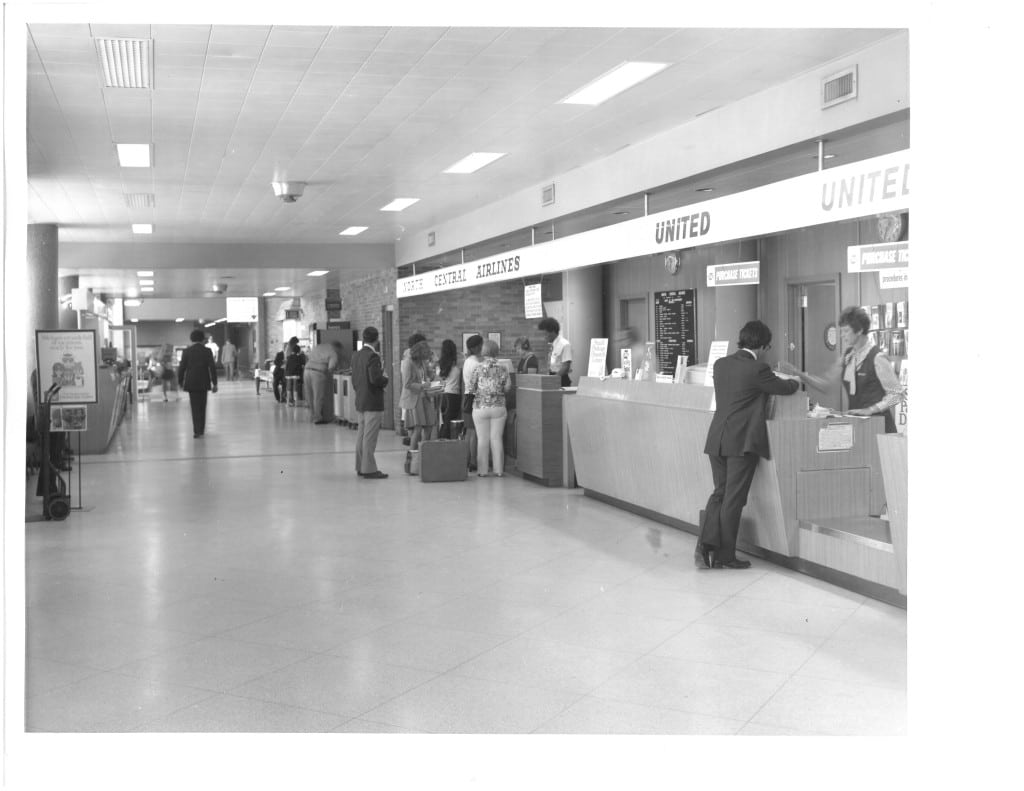
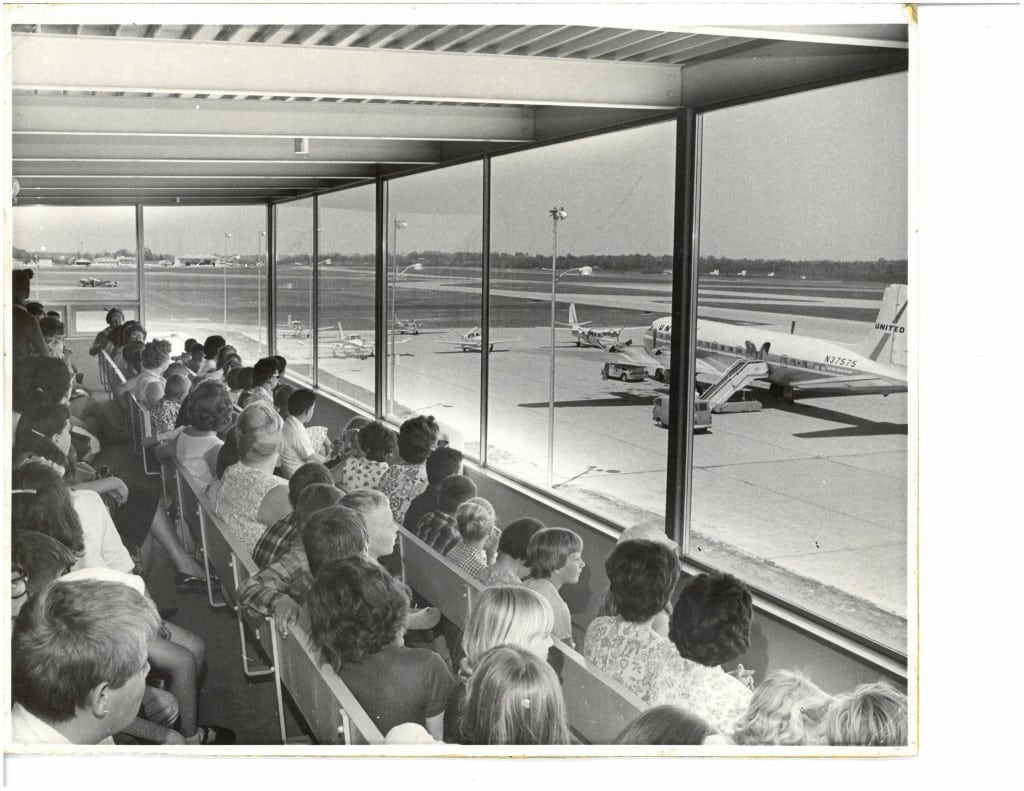
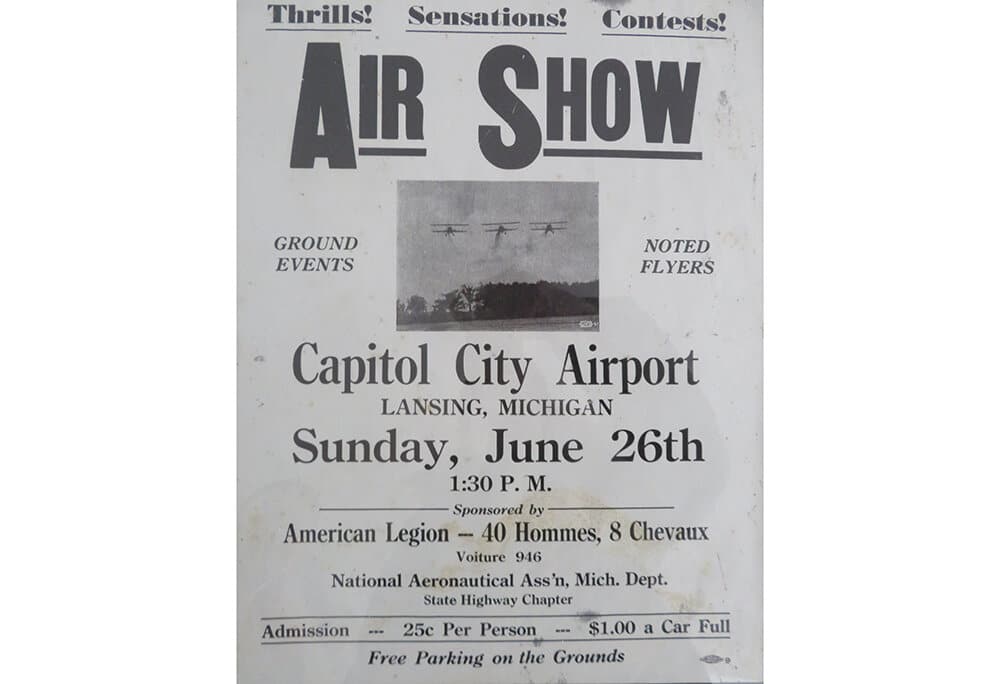
Air shows, daredevil pilots and hair-raising stunts drew thousands to airfields like the Capitol City Airport from the 1920s to the 1940s.
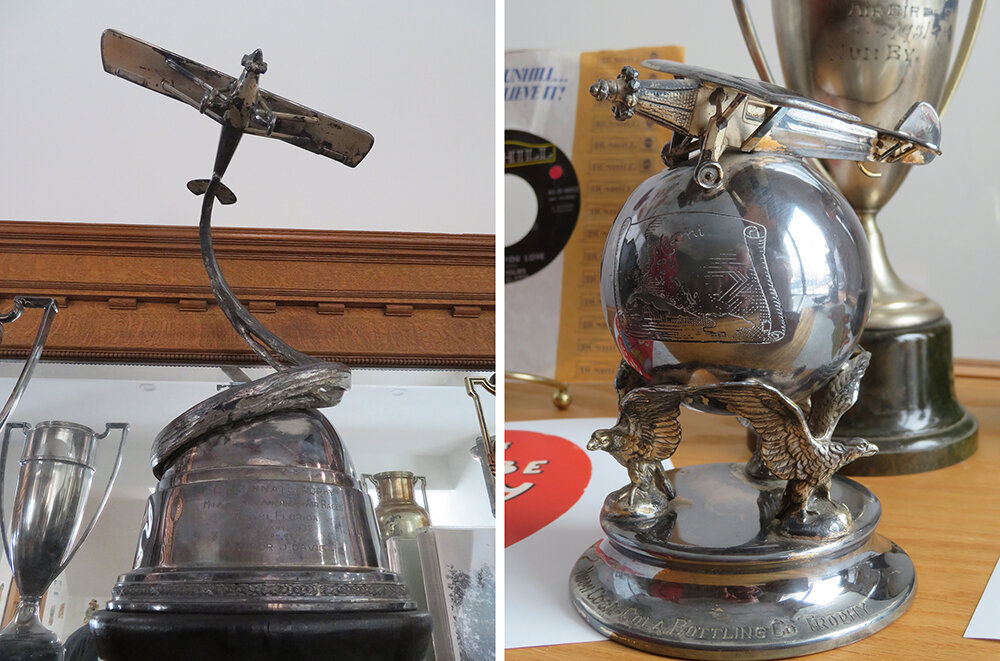
Soaring, gleaming trophies from the collection of Lansing aviation pioneer Art Davis, on display at the Historical Society of Greater Lansing’s “Love Is in the Air”” exhibit, conjure up the heyday of barnstorming and daredevil shows.