160 years later, local veteran’s service honored
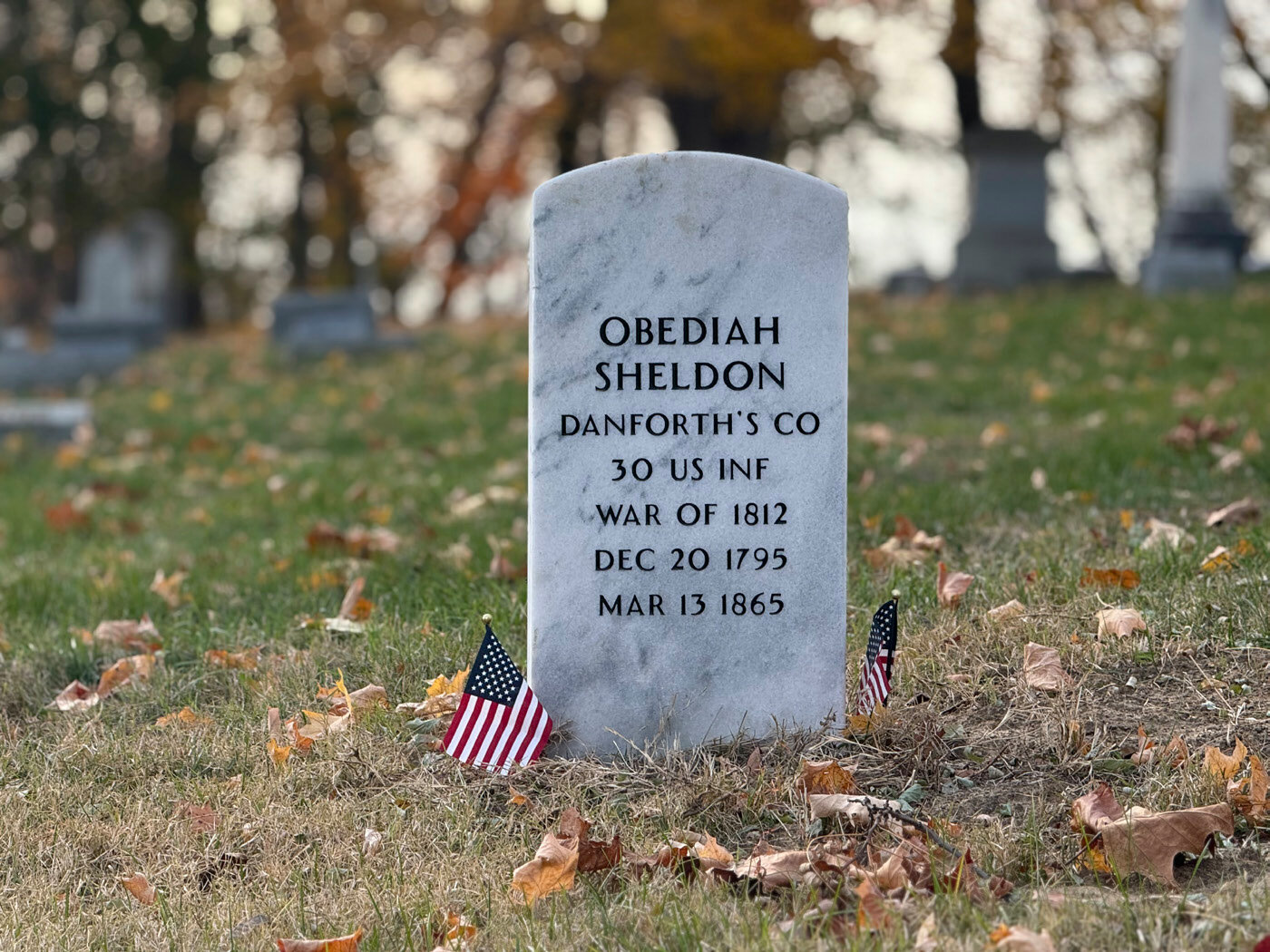
Obediah Sheldon’s marble headstone, in mint condition, stands out amid the historic Mount Hope Cemetery’s field of graying granite.
It looks nothing like the other stones dated in …
Local genealogy hobbyist secures headstone for fourth-great grandfather
Obediah Sheldon’s marble headstone, in mint condition, stands out amid the historic Mount Hope Cemetery’s field of graying granite.
It looks nothing like the other stones dated in the 1800s.
His military service of two centuries ago, in the War of 1812, contrasts with his new, pristine, stone.
Sheldon, a Vermont native, died in 1865 in Lansing. He was buried in an unmarked grave for over 150 years before his great-great-great-great granddaughter, Leslie Murray, found him by accident while looking for other relatives’ burial sites.
Having already secured a military headstone for fourth-great grandfather, Peleg Sweet, alongside other family members in 2022, Murray knew what to do.
She and her nephew contacted the Department of Veterans Affairs, and Sheldon was honored with a military headstone on Oct. 7, 2025.
Having now helped mark two previously unmarked graves, Murray said she will continue researching her family’s history.
“It really doesn’t end,” she said. “I have family traced all the way back to the Mayflower. It just keeps going, and you’ve got to just not give up and keep looking for those records. Because they’re there.”
The headstone isn’t as important, she said, as asking fundamental questions about people that may not have crossed anyone’s mind for years: “Who were they, what were they like, what did they do, how did they live?”
“I just really like to tell people’s stories that might otherwise have been forgotten,” Murray said. “Like Obediah. He’s been gone for 160 years, but he was somebody. He was important. He was someone’s family, someone’s father, husband, brother, son … he was a human being, and he deserves to be remembered.”
Not all the stories Murray has unearthed have been happy. Her distant family tree includes two separate instances of a parent taking their own and their children’s lives via carbon monoxide poisoning, for instance. In both of those cases, Murray started with Census records and eventually found the concerning details after learning some had died on the same day.
But telling stories of the deceased, even sad ones, is important, Murray said.
“They were still here, and they still had a story to be told,” she said. “They still deserve to be remembered.”
That focus on remembering others stems from her father, who worried about being forgotten. She keeps people’s memories alive by doing genealogy research, adding information to findagrave.com and visiting burial sites.
Murray doesn’t have an end goal in mind, except to help fill out the historical record and assist others in looking for relatives. She meticulously fact-checks information and adds it to Find A Grave to help fill out little biographies that dot the site.
For Obediah, or “Obed,” as he was often called, Murray’s work showed up in a physical reminder of him. The most important part of the headstone, Murray said, was that it helps tie the past to the present, reminding her where she, and others, came from.
“Now people can go to the cemetery,” she said, “honor him and see that he was a part of where we are today.”