More than bagged snacks: Greater Lansing’s quirkiest kiosks
Built for convenience and a single serving, vending machines have a distinct place in daily life.
They dispense a single item, usually a snack or beverage, for convenience. The Greater Lansing area has plenty of average vending machines in schools, community centers and malls. City Pulse invites readers to explore a few unique ones, whether they resolve inconveniences or create them.
VendHubb
Picture this: a college student leaving The Riv on M.A.C. Avenue in East Lansing after the last call. Tipsy, maybe stumbling, looking for sustenance that has zero alcohol by volume.
All the typical late-night stops – Raising Cane’s, Dave’s Hot Chicken, El Azteco – are either closed, busy or simply too much of a hassle.
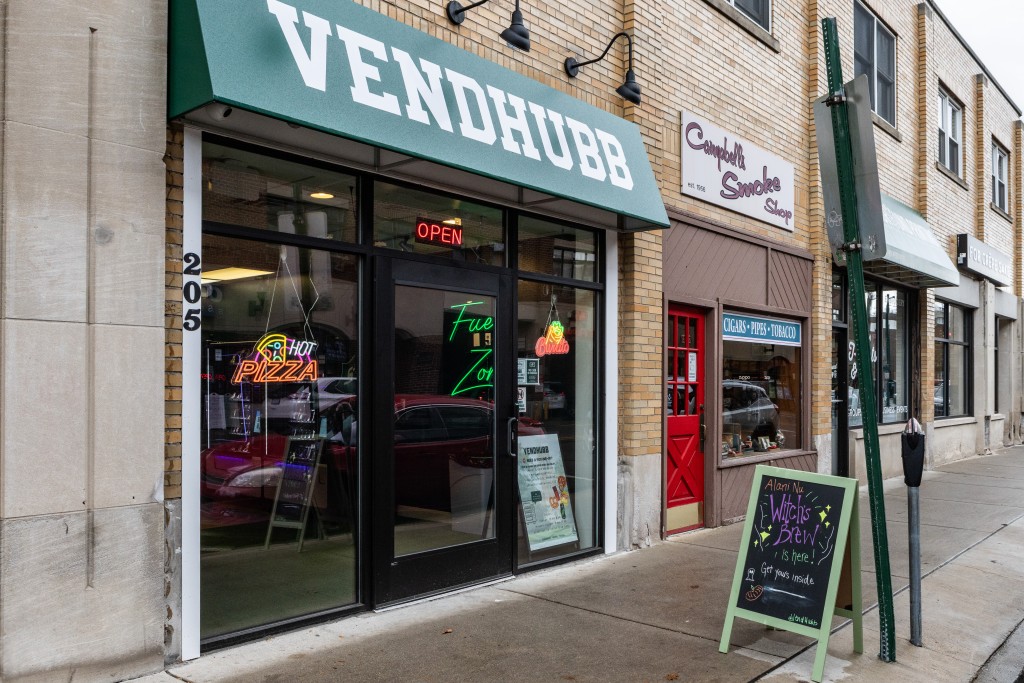
There’s a warm green glow, nestled between Campbell’s Smoke Shop and Potbelly, that offers a haven, serving warm, satiating food in under 10 minutes.
VendHubb.
The store, located at 205 M.A.C. Ave., is relatively new – it opened in early September.
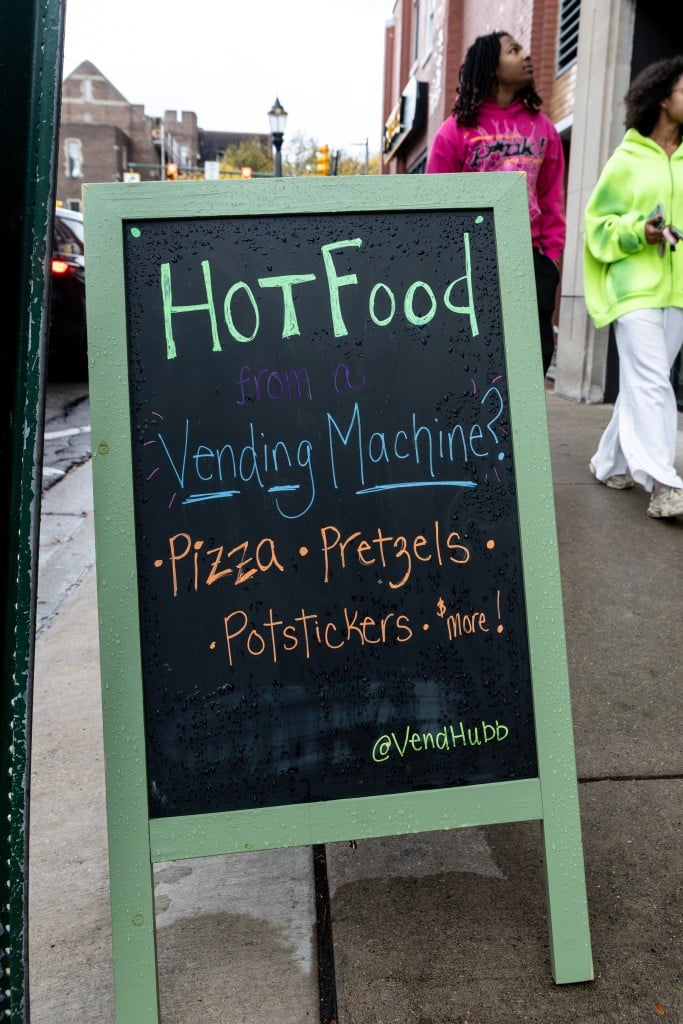
It features 10 vending machines. One offers pizza, one sells hot food items and another offers convenience items. There are also four cold beverage machines and three snack machines.
“It’s so funny because so many of the students are coming here, and they’ll just check everything out,” co-owner Robert Slocum said. “They come back and buy something, but they never buy the first time around.”
Robert runs VendHubb with his wife Jennifer. They had the idea to open the store after seeing a pizza vending machine on a trip.
“We were like, ‘Gosh, we need one of those in East Lansing,” Jennifer Slocum said. “We need one of those for the students.”
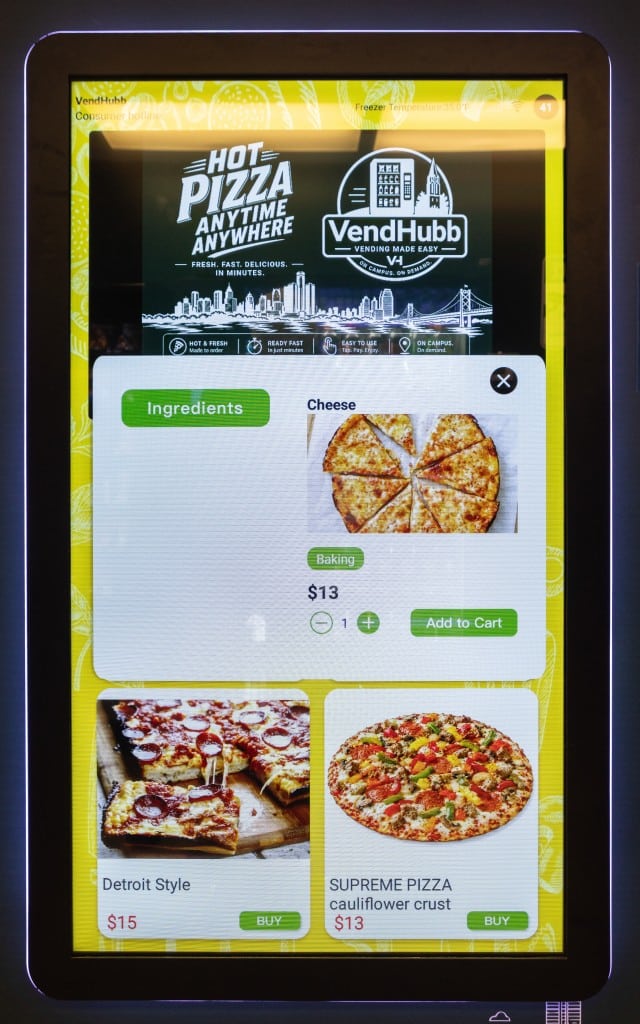
The pizza machine offers hot, 12-inch pizzas that can be ready in under five minutes. It holds 69 pizzas and cooks them using a combination of a convection oven, microwave and UV rays. The pizzas are not pre-cut, so the box includes a small serrated knife.
The menu includes a pepperoni pizza for $14; cheese and supreme pizzas go for $13. The Detroit-style pizza is $15.
In the back of the store, a hot food machine sells even quicker eats, including chocolate chip cookies, potstickers, breakfast sandwiches and soft pretzels, all ready in about 90 seconds.
Jennifer Slocum said the potstickers and soft pretzels are by far the most popular.
At the front of the store sits a vending machine that’s like a check-out-lane with last-minute grabs like mini shaving kits, condoms, melatonin gummies and travel-sized deodorant. According to Jennifer Slocum, condoms are the best seller. “The CVS across the street isn’t open late,” she said. “I think too, because maybe they’re embarrassed to pay for it.”
Customers have recommended different items to include in the non-food machine, like false eyelashes or press-on nails. The couple wants to add free Narcan eventually.
For now, the couple is focused on establishing their presence and name recognition. Business has already picked up with MSU students back in town, and the Slocums expect it to grow. “It’s picking up every week,” Robert Slocum said.
VendHubb is open seven days a week. Hours of operation are 8 a.m. to 3 a.m. Wednesday through Saturday, 10 a.m. to 8 p.m. on Sunday, and 8 a.m. to midnight Monday and Tuesday.
East Lansing Public Schools Book Vending Machines
In an effort to increase literacy, East Lansing Public Schools introduced book vending machines to its six elementary schools. Kiwanis Club of East Lansing, an organization devoted to improving the community, funded the vending machines as part of its signature project.
Books are free, and students get to look forward to a trip to the vending machine as rewards.
According to the Kiwanis Club of East Lansing website, the vending machines “become hubs of literary exploration, igniting a passion for reading that transcends the classroom.”
MSU Narcan and Sexual Health
Like so many, Arianna Paa knows how quickly experimenting with drugs can go wrong.
A current medical student at Michigan State University College of Human Medicine, Paa lost a childhood friend in her sophomore year of undergrad to an accidental fentanyl overdose.
That experience, combined with the stigma surrounding substance abuse, motivated her to look into accessible harm reduction solutions.
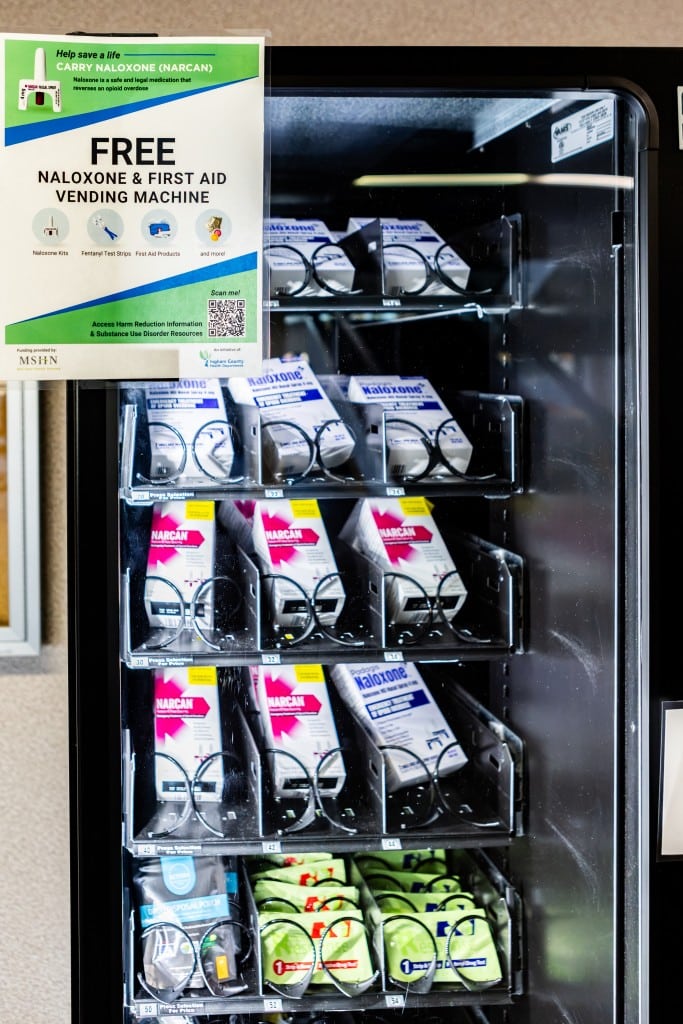
Paa formed a team with other MSU students aimed at increasing access to Narcan as well as sexual health products, like emergency contraceptives, pregnancy tests and condoms.
Paa’s original idea was a free Narcan newspaper box, but after brainstorming with the team, it evolved into a vending machine. Vending machines carry more than two products, so adding other sexual health items fit in.
Paa said using a vending machine also protects the student’s privacy. “You can’t really assume what they’re getting with so many products being in there.”
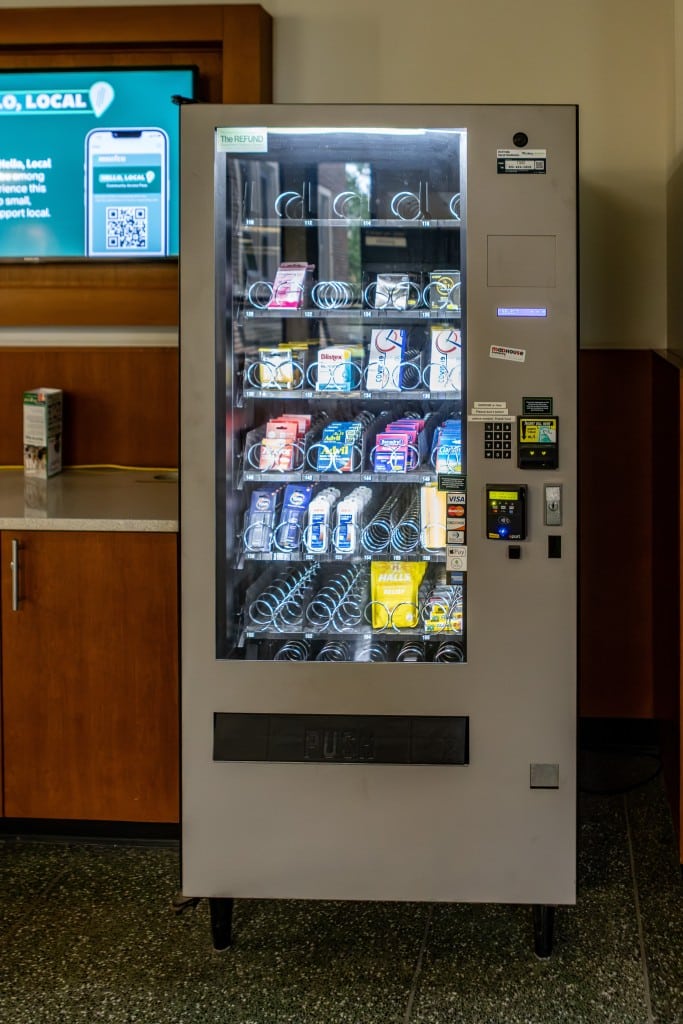
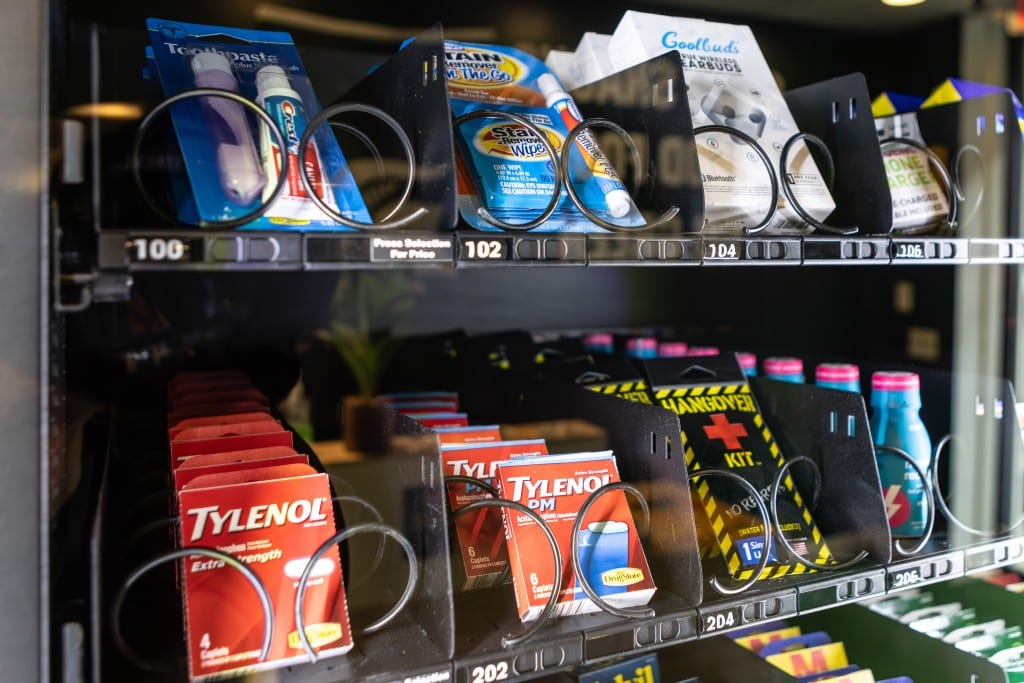
A trial machine went up in the MSU Union in 2024. In Jan. 2025, another was added in the Multicultural Center off of North Shaw Lane. Nine months later, a third was placed in Akers Hall on the east side of campus.
Paa said the vending machines have received overwhelmingly positive feedback, and the machine in Akers Hall is used the most. “My hope is that they will expand within the dorms.”
Dr. Tim Spedoske, the medical director of University Health and Well-Being at MSU, helped with the project. He said when it comes to harm reduction, informative messaging only goes so far.
“We’re able to say, ‘hey, be aware of this risk … here’s a way that you can be prepared, and there’s free Narcan in three different spots around campus.’”
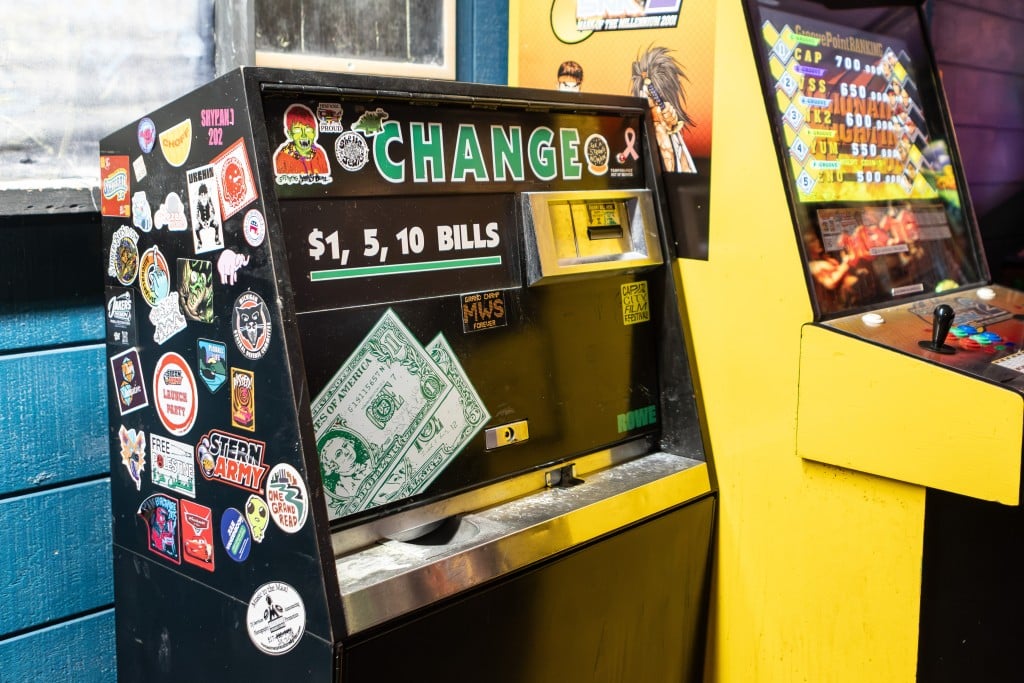
When students advocate for more access – things like life-saving medication and personal health products – they can fill gaps that medical professionals might overlook, Spedoske said. “Sometimes just the barrier to having these conversations is high.
“We need to listen to the people who are affected by these things.”
Narcan is free in the vending machines, and emergency contraceptives are $10, a fraction of the cost in a typical convenience store. MSU also offers free emergency contraceptives at various campus locations.
Cryptocurrency Kiosks
The world of cryptocurrency is puzzling.
While it can be used to grow wealth and net worth, it can also be a conduit for scams.
Lansing City Council is seeking to regulate virtual currency kiosks, which can be found in stores like some Quality Dairys.
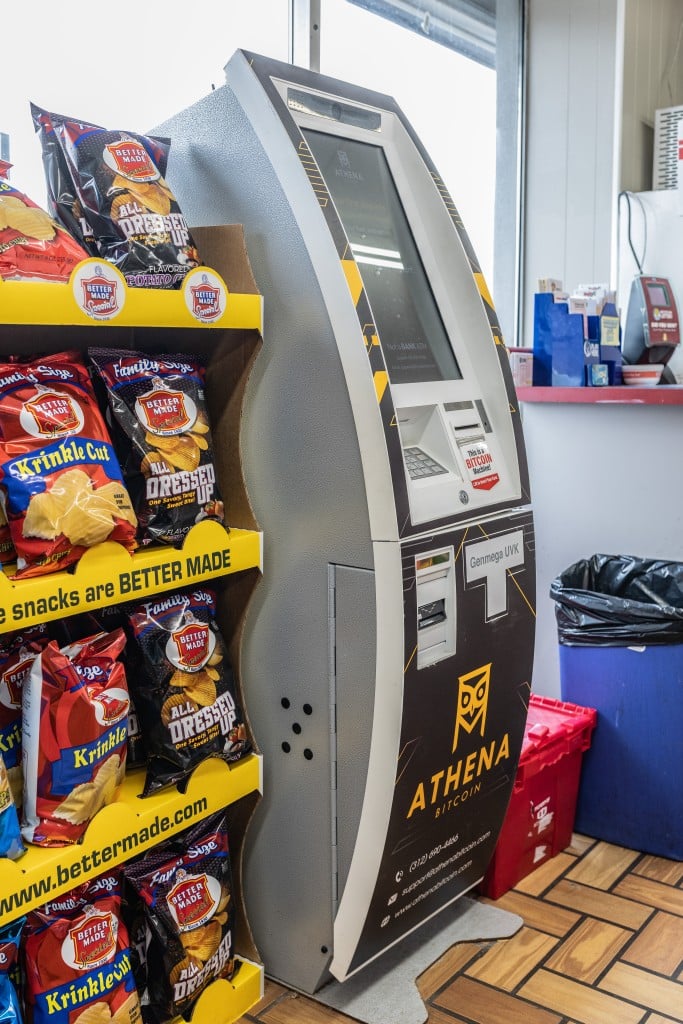
During an Aug. 18 meeting of the Committee on Equity, Diversity and Inclusion (EDI), Councilmember Trini Pehlivanoglu said representatives from the local AARP approached city officials with concerns about the kiosks.
These kiosks look similar to ATMs, but instead of a standard transaction, users can convert real cash into cryptocurrency, or vice versa. Scammers may pressure victims to use the machines to pay phony bills, purchase gift cards or resolve threats, all without the chance to get their money back.
“It’s similar to a lot of other types of scams,” Pehlivanglu told City Pulse. “Someone gets a phone call, and they feel an urgency to go and deposit this money.”
In a recent Oct. 13 EDI meeting, Ryan Kost, Lansing City Council’s first ward representative, said the kiosks could confuse anyone. “I can’t always tell the difference between an ATM and a cryptocurrency machine.”
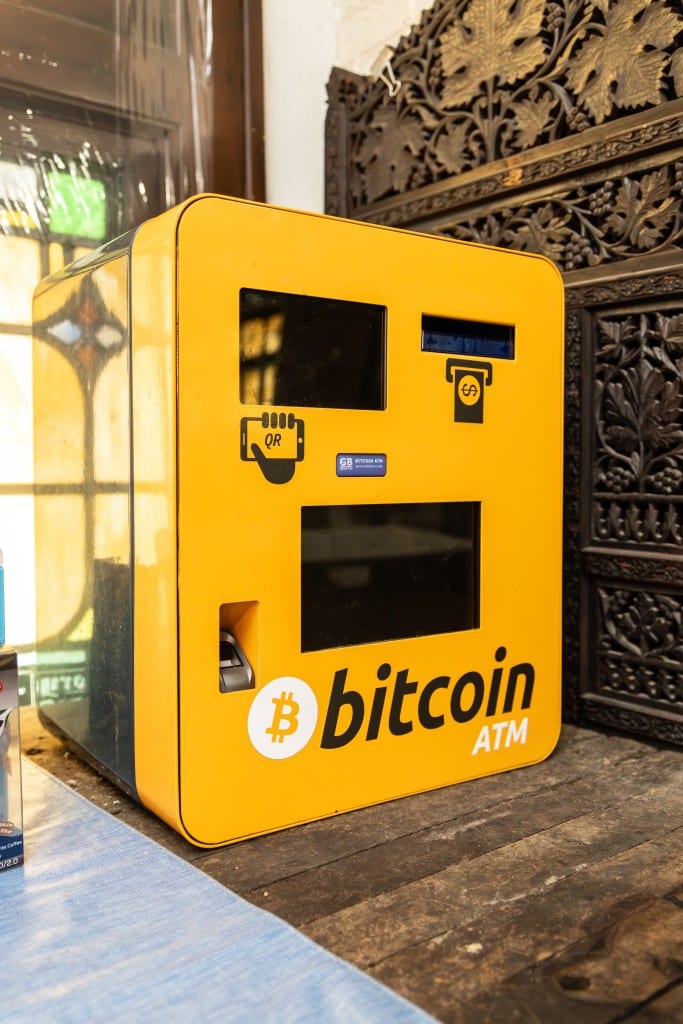
The FBI’s Internet Crime Complaint Center (IC3) reported that cryptocurrency kiosk-related scams resulted in more than $388 million in losses nationwide in 2025, up 58% from 2024. Over three-quarters of those losses came from victims over the age of 50.
The AARP says the number of cryptocurrency scams targeting older Michigan residents is increasing. Residents in Michigan alone lost over $210 million to cryptocurrency kiosks in 2025, according to FBI figures.
The city ordinance proposed by Pehlivanglu requires owners and operators to obtain a machine license. It would mandate that the machine display warnings or disclosures, as well as a customer service number. Violations would be a civil infraction.
The machine’s owner would be subject to a background check as part of the licensing process. If they have financial crime on their record, the license would be denied. And licenses would require annual renewal.
The ordinance was up for a public hearing at the Oct. 12 Lansing City Council meeting; residents expressed confusion about why the council could not outright ban cryptocurrency kiosks.
Pehlivanglu said the City Attorney’s office is exploring whether that is an option. “At this time, we have a clear path for regulation, and the EDI Committee decided to move forward with that to begin protecting consumers.”
The ordinance is up for final passage on Oct. 26. If approved, it would take effect 14 days later.
Jackson City Council banned cryptocurrency kiosks on Sept. 22 through a unanimous vote. The ordinance takes effect on Oct. 22, and any existing machines must be removed within 90 days.
At the state level, two bills to regulate cryptocurrency kiosks and strengthen consumer protection are moving through the House.
Honorable Mentions: The Avenue Cafe Vape Vending Machine and Whole Foods Market Art-o-Mat
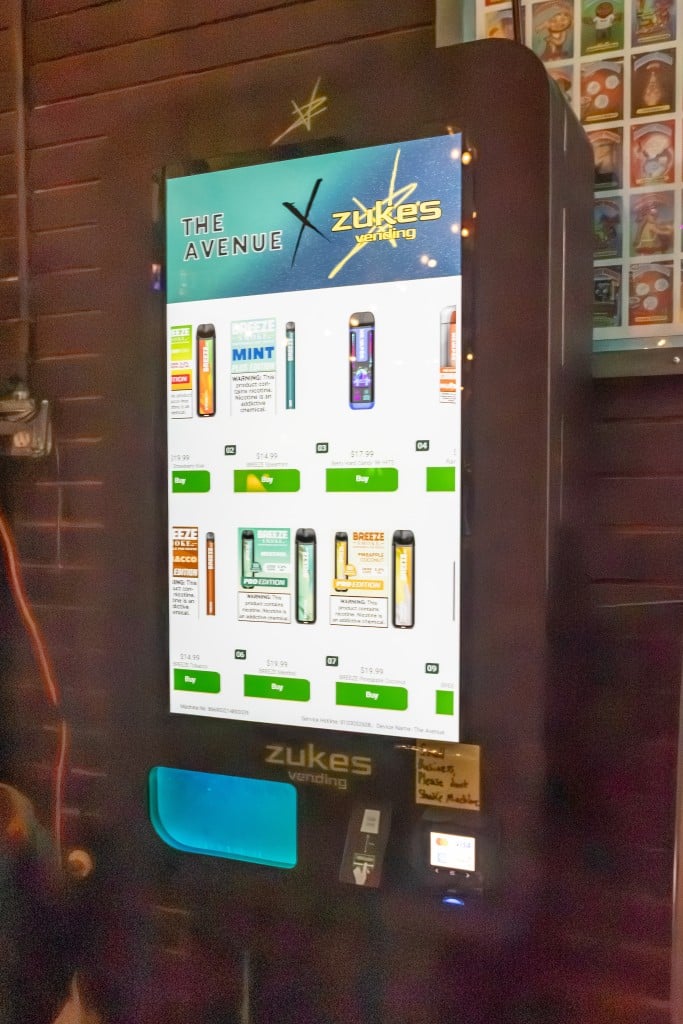
The Avenue Cafe at 2021 E. Michigan Ave. offers a nicotine fix for its customers with two vending machines stocked with disposable vapes, or e-cigarettes. Each vending machine has over a dozen different options, ranging from $15 to $20 per item.
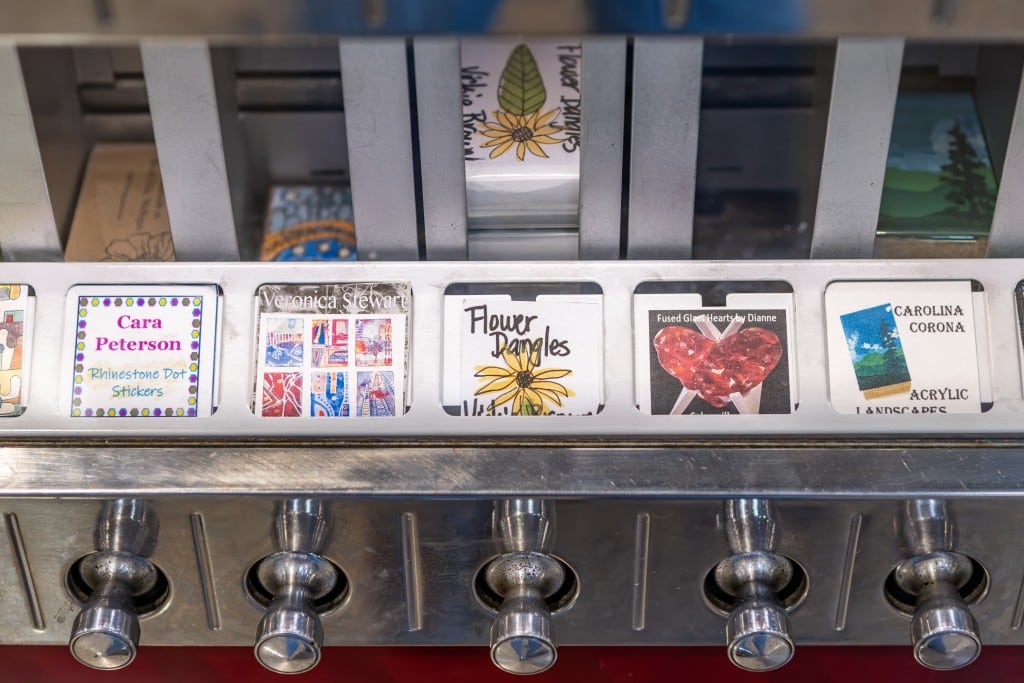
Whole Foods Market in East Lansing still has its Art-o-Mat, which is a retired cigarette machine converted to dispense art. It was located in the store’s Green State Bar and Grill before it closed. The machine vends original mini pieces of art for $5.