
Nick Leydorf spreads the love — and the laughs
Nick Leydorf didn’t set out to be a comedian. In fact, he almost gave up his funnyman persona altogether when he became a lawyer.
“I always liked making people laugh, mostly to get …
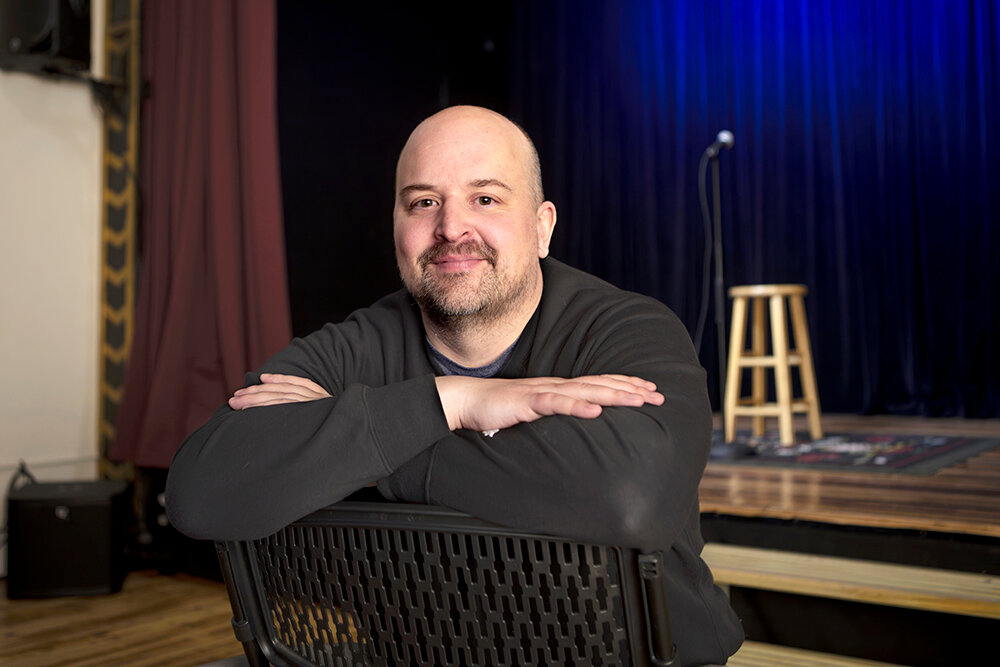
Nick Leydorf didn’t set out to be a comedian. In fact, he almost gave up his funnyman persona altogether when he became a lawyer.
“I always liked making people laugh, mostly to get attention as an only child. In school, I would make people laugh a lot, usually by doing dumb things like quoting movies or just acting like an idiot with my friends,” Leydorf, 45, said. “And then I felt like if I was going to be a lawyer, I couldn’t do that anymore. So I kind of shut that down, which was not good.”
His decision to pursue law was somewhat spur of the moment. A native of the small town of Bannister, after earning his bachelor’s degree in political science from Michigan State University, he found himself questioning what he wanted to do with the rest of his life.
“I wanted to help people, and I didn’t want to go to med school,” he said. “And someone said that I couldn’t do it, like, ‘There’s no way you’re gonna be a lawyer, you grew up in a trailer.’ Spite, I think, was a really big motivator, which isn’t a great way of choosing your profession.”
It also didn’t bode well for the rest of his career.
“I don’t like being a lawyer that much, if I’m being honest,” he said. “I mean, I like helping people, but I wish I would have done something different because it’s pretty stressful.”
Even after changing his focus from criminal defense to estate planning, something more “boring,” he said the field has “destroyed” his soul. However, there’s a silver lining: His disdain for his job has led him to pursue more creative endeavors that keep him fulfilled.
“Both my parents are creative people. My mom was a graphic designer, and my dad was an art teacher,” he said. “I chose a profession that was unlike theirs, which is strange, but I think if I had to do it all over again, I’d probably do something more creative, like writing or performing.”
He got into comedy at an admittedly “not great” time, a couple of months after his son was born. One of his friends signed him up for an open mic competition at Sir Pizza in Old Town, and he ended up moving on to the final round.
“I didn’t tell a lot of people that I did it because I didn’t want to embarrass myself in front of all my friends. So I just had my wife there, and I ended up moving on, and I was hooked from there,” he said. “I was like, ‘Oh, I can make a whole group of people laugh. That’s super cool.’”
Being a first timer, he said he “didn’t have a lot of well-thought-out material” and lost to someone that lip synced to a Talking Heads song.
“That was my first introduction to what comedy is,” he said. “It’s like a punch in the face, but it’s enjoyable.”
After that, he began working on material and trying it out at open mics to see what worked. At first, he suffered from some stage fright, but as he traveled around the state to perform and made friends in the scene, he became more comfortable.
Since then, he’s performed around the Midwest and released a live comedy album, “Free Consultation,” which debuted at No. 1 on the iTunes comedy chart. He said his material has gone through phases, something he’s noticed is common among comedians.
“It’s kind of weird. When you start out, you talk about things you think up that maybe aren’t true, but they’re funny. And then as you get better at it, you start talking about things that are in your real life. And then as you mature past that, you talk about the things that you observe in the world that people may relate with,” he said. “I’m kind of in that phase now, where I’ve talked about all the stuff that’s going on in my life, and I’m just observing things that are interesting to me.”
His goals for the future of his comedy career are to “continue to write stuff that makes me laugh, that I think is interesting, and maybe not be so focused on doing something finite, like ‘I have to get on this show.’”
“That’s kind of what led me to being a lawyer,” he said. “Professionally, I choose the clients that I want to work with. I don’t dress like a lawyer. I’m not stuffy. I talk about death a lot with my job in estate planning, so I try and make it more palatable than the sad thing that no one wants to talk about. And I think people appreciate that.”
He was even asked to put a joke into one of his clients’ trusts.
“That was fun,” he said. “They thought it was great, and they kept it in there. It was cool.”
Though he said it’s “kind of a grind” to find success in stand-up comedy — a grueling gauntlet of open mics where you don’t get paid and perform to miniscule crowds — he finds it to be a worthwhile and rewarding challenge.
“I like writing stuff and performing it. Sometimes it works, and sometimes it’s a huge failure,” he said. “It’s like, how do you try and up your batting average? When you start out, maybe one joke out of 10 will land. And then as you work on stuff, maybe it’ll be four out of 10. And then it’s like, ‘OK, that’s cool.’ Maybe it doesn’t work, but maybe you’ll get something from it.”
Related Articles
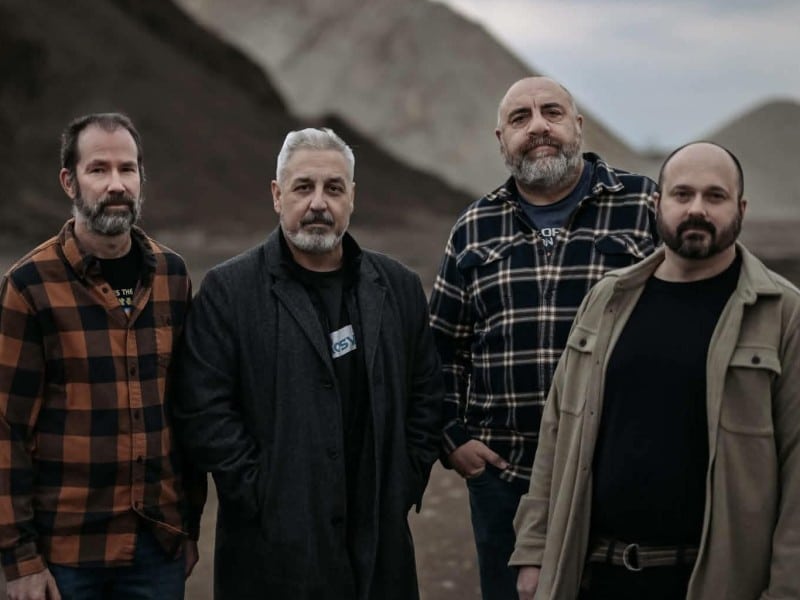
A roundup of recent Lansing-area music news
From Big Sur releases new album, Starfarm’s Whitney Who has a new group and Displaced Manor finds a new home
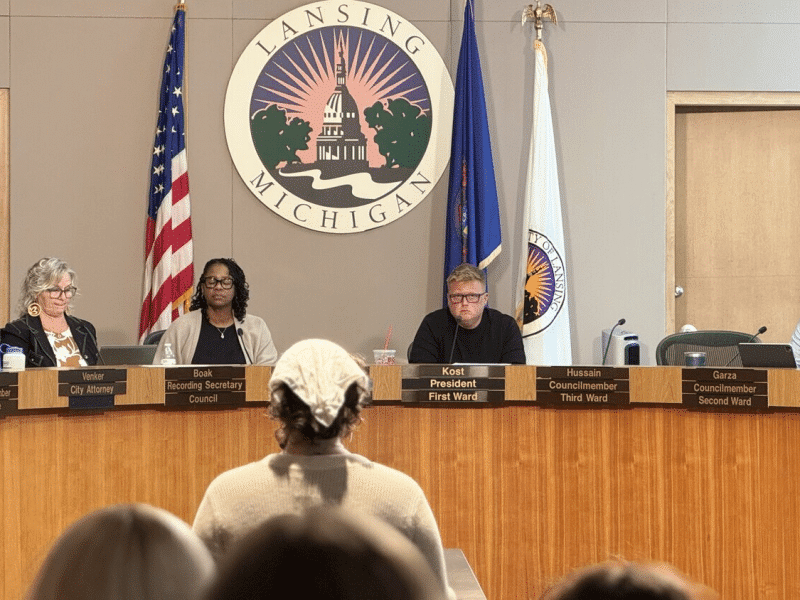
Ten touchstones in local LGBTQ+ history
In 1971, gay activists in East Lansing demanded protections in the city government’s hiring process from their City Council. They came, they fought, and they won: East Lansing’s early 1972 civil rights ordinance was the first of its kind in the country.