
Record turnout for Lansing election despite Schor’s wide lead
FRIDAY, Aug. 8 — Tuesday’s primary election turnout of 15,000 was the highest for a Lansing mayoral primary this century, despite a less-than-close race atop the ticket.
That …
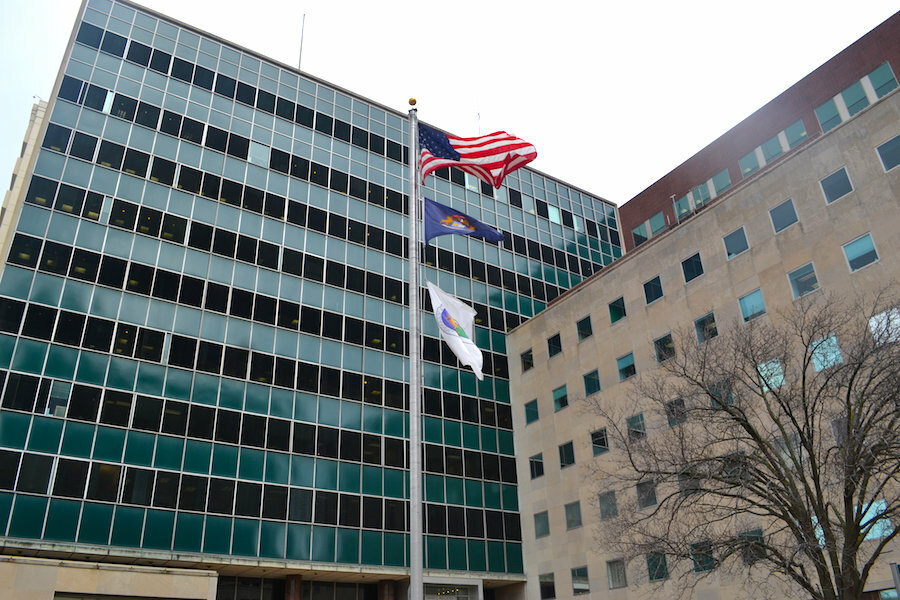
Permanent mail ballot list likely cause for higher-than-usual turnout, Clerk Swope says
FRIDAY, Aug. 8 — Tuesday’s primary election turnout of 15,000 was the highest for a Lansing mayoral primary this century, despite a less-than-close race atop the ticket.
That incumbent mayor Andy Schor took home 63.4% of the vote compared to runner-up Kelsea Hector’s 15.9% indicates to Lansing City Clerk Chris Swope that the high turnout’s cause is elsewhere — particularly, the availability of absentee ballots.
“A large part of it is that it’s so much easier to vote,” he said. “I mean, we have the new permanent mail ballot system that came into being after the 2022 election.”
The permanent mail ballot list, which was introduced in Michigan in 2023, means voters can sign up once to receive an absentee ballot in every election, as opposed to repeating the process each time. Swope said that high turnout for the 2024 presidential election led many to sign up for the permanent mail ballot list.
“Between the permanent mail ballot system and people signing up in the presidential election, we had nearly 23,000 people that just got a ballot mailed to them” in this election, he said.
The permanent mail ballot system is a sort of partial implementation of universal vote-by-mail, in which all eligible voters are simply sent a mail-in ballot. Those systems increase turnout: A primer from the University of Chicago’s Center for Effective Government shows that universal vote-by-mail increases turnout 2-4%, while a 2022 paper by researchers from the Public Policy Institute of California the University of Southern California found a 5.6% increase.
But in Lansing, even with a less universal system, the increase in turnout was over 16% over the 2021 primary’s 12,879 votes, the last mayoral election year. Matt Grossmann, the director of MSU’s Institute for Public Policy and Social Research, said that makes sense in an off-year election.
“It’s easier to raise turnout from a low-turnout election,” he said.
Because “receiving a mailer or someone knocking on your door increases turnout much more in elections where the turnout is 4 or 5%,” Grossmann said he would expect the permanent mail ballot system “to be better able to raise the turnout in elections that are normally low-turnout.”
Swope said he also believes the absentee list to have been a contributing factor because fewer people voted in-person this year, despite the higher turnout. 83.7% of votes in this election were absentee.
“We actually had fewer people at the polls on election day this week than we did four years ago,” he said. “We had about 2,300 people vote in person this year compared to 3,000 four years ago.”
With so few voting in-person, some criticized the election as a waste of money. Swope said it was complicated, but that he is lobbying the Legislature to allow further consolidation of in-person voting precincts for off-year elections.
“Related to the shift toward mail-in balloting, the state has increased the number of registered voters that can be in a precinct,” he said. “So we were able to achieve some long-term savings by reducing the number of voting precincts.”
Swope said that meant reducing “the number of tabulators, some staffing costs in terms of testing the equipment, and then a pretty significant reduction in staffing costs in terms of the election inspectors we have at the precinct.”
But he added “while there are some savings” from the consolidated precincts and from having voters pre-registered for absentee ballots, “there are also some costs” associated with mailing the additional ballots. He said there has not been a full assessment yet to determine whether the cost has increased or decreased, but that the cost could be further reduced by allowing further consolidation of voting precincts.
“It used to be, when we could only have 3,000 people in a precinct, that we could consolidate that to 5,000 during odd-year elections to save money,” he said. “Well, now we can have 5,000 in a precinct, but in an odd year, we can still only have 5,000. So I’m lobbying the legislature to increase that number.”
“We had 22 teams for this election out there for 2,300 in-person ballots,” he said. “That’s an average of just over 100 ballots per team, and that makes for a pretty slow day. They had long gaps with no voters.”
“So if we could consolidate to a higher number per precinct in odd-year elections, we could achieve some additional savings.”
Related Articles
Meet the local women leading Greater Lansing efforts to provide the ‘dignity of work’
No matter how successful Shara Trierweiler became in her years-long finance career, it never seemed to make being a mom to her two children, Philomena and Dominic, any easier. …
Rewind: News from the last 7 days
Rewind 6/3/26 The Michigan State Police have finished their investigation into the April 15 fatal police shooting of Isaiah Kirby by East Lansing officers.

Prayer Walk for Peace in Lansing brought faithful protesters to Capitol
Photo Gallery – Prayer Walk for Peace