
Sink or swim
Three months ago, Bruce Cornelius canceled his subscription to the Lansing State Journal.
“I hate to say it,” he said, “but there’s nothing there to read. It’s not …

Media adapt to the Digital Era — but is it journalism?
(This story has been updated with the additonal information that WSYM will continue broadcasting on channel 47 and remain a Fox affiliate if a station swap between Gray Media and Scripps is granted regulatory approval.)
Three months ago, Bruce Cornelius canceled his subscription to the Lansing State Journal.
“I hate to say it,” he said, “but there’s nothing there to read. It’s not a daily newspaper — it’s a two-day old newspaper when you first get it.”
Cornelius knows more about the Journal than most area residents: He was a photographer there from 1966 until 1983, when the paper had a circulation of over 75,000 on weekdays and nearly 100,000 on Sundays.
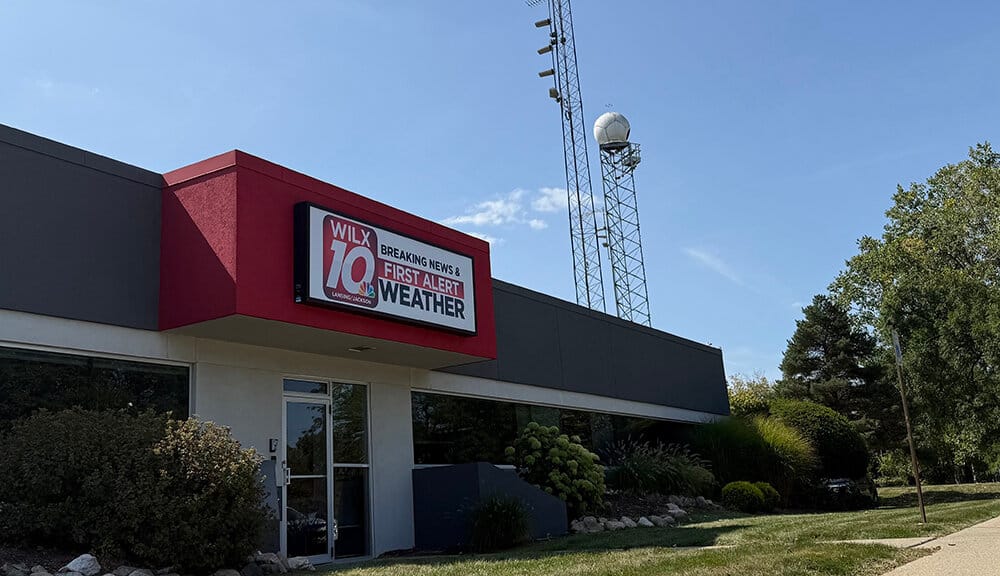
Statistics obtained from the Alliance for Audited Media show the Journal’s circulation in March was around 8,500 on weekdays, and around 11,000 Sundays. That includes digital-only subscriptions. Print is under 7,000 Sundays and below 5,000 during the week.
Its executive editor, Stephanie Angel, retired at the end of last week. Senior news editor Al Wilson is taking over her responsibilities.
The Journal is far from the only local media outlet going through changes. Local NPR and PBS affiliate WKAR laid off nine employees in June amid federal funding cuts, now losing $1.6 million as the Corporation for Public Broadcasting prepares to shut down this month. It is continuing its strategic plan despite the cuts, balancing new strategies to reach social media users as it navigates decreased funds. Gray Media, which owns Channel 10/WILX, will acquire Fox 47 News this year pending regulatory approval, resulting in a duopoly in TV news. And in July, the Michigan Independent Media Group bought City Pulse, aiming to preserve its local character despite not being local to Lansing.
Local news is more important than ever. An Aug. 27 study conducted by the Brechner Center for the Advancement of the First Amendment at the University of Florida found government secrecy increases where local news falters. And trust in local news has mostly weathered the “fake news” storm, with 71% of respondents to a 2024 Pew Research survey believing local media report news accurately.
However, the same survey found only 15% pay for that news, with most of those who don’t believing they can simply get it for free.

Tim P. Vos, Michigan State University Journalism School’s director, said that’s not a sustainable mentality.
“Research absolutely shows that people believe the news will find them,” he said. “So, they feel like they don’t need to subscribe to a newspaper or even watch a newscast. If something important happens that affects them, their community, their country or the world, it will arrive in their social media feed or will get through in whatever way.”
“But if that’s the outlook everyone took, there wouldn’t be a news media there when the time came to cover some big event,” he said. “The news will find you because we have a legacy enterprise of news-gathering, but that is being whittled away each and every year.”
A Pew Research survey said 23% of respondents got their news through social media, up from 15% in 2018. Only 9% still prefer print newspapers.
But social media is far from a modern equivalent to legacy media. Yes, users can “follow” news outlets as they would subscribe to a newspaper, but social media rely increasingly on engagement-focused algorithms to monopolize users’ attention. Print reporters write their stories knowing that they will be read by a consistent (if dwindling) audience. Social media creators drop their work like messages in bottles into the algorithmic sea, knowing it may reach millions — or none at all.
That algorithm is far from random. A 2025 study by computer science researchers at Cornell, University of Washington and University of California Berkeley found that “Twitter’s engagement-based algorithm amplifies emotionally charged, out-group hostile content that users say makes them feel worse about their political out-group,” essentially ensuring users’ engagement by showing them content that enrages, rather than satisfies.
Even as WKAR tries to appeal to social media users, general manager Shawn Turner said it was with the goal of “bringing them down the funnel” and getting them exposed to traditional news “until you are meeting their needs for being informed citizens.”
In short, social media is no substitute for the traditional kind. So how are Lansing’s traditional media doing?
Lansing State Journal
When newspaper publisher Gannett acquired the Lansing State Journal in 1971, it said the Journal would keep its local autonomy. Cornelius said that didn’t quite happen.
“The joke of the newsroom was that they said you’re going to have local autonomy, and then they sent in six people from Gannett to make sure we kept our local autonomy,” he said, laughing. “Well, it wasn’t that bad, but you certainly felt the presence of Gannett.”
Today, Gannett’s model involves extensive sharing of articles among in-network newspapers, meaning much of the Journal’s material comes from the Detroit Free Press, USA Today and any number of other Gannett papers across the state and country. It means the daily, local paper is less local. And in recent years, it’s become less daily, too.
That’s not just because it ceased printing on Saturdays. One source said the Journal’s current deadline for print is 8:30 a.m. the day prior to publication, which would make sense given the paper’s oft-outdated content. For instance, the front page of Monday, Sept. 8’s Lansing State Journal edition contained two Detroit Free Press stories from Friday, Sept. 5, and one Lansing State Journal story from Sept. 4. Of 10 LSJ-original stories in the paper, all were from Sept. 6 or earlier save for one, which was published online at 4 a.m. Sept. 7. The oldest was from Sept. 2.
That doesn’t just mean old news, but sometimes incorrect news as well. One article, published online Sept. 6, incorrectly referred to a “Wexford County man” in its digital headline, but was later updated to correctly refer to an “Antrim County man” before 8 a.m. Sept. 7. Despite this, the Sept. 8 paper ran the article with its original, incorrect headline a full day after it had been corrected online.
Rick Edmonds, media business analyst for the Poynter Institute for Media Studies, said the early deadline is “typical,” both of Gannett papers and throughout the industry, as newspapers consolidate printing operations.
Mickey Hirten, former Journal executive editor and former associate publisher of City Pulse, said Gannett has essentially hollowed out the Journal.
“When I was there, we had three people covering the Capitol, we had a business desk with three or four people covering business, we had dozens and dozens of reporters and covered the community in-depth,” he said. “Now they have four or five reporters covering nearly 500,000 people in the total metro area.”
“If McDonald’s operated the way Gannett has over the last 20 years, the hamburgers would be about the size of a quarter,” he added.
Edmonds said that was typical as well, with Gannett’s cuts becoming more vicious since its 2019 merger with GateHouse Media left it nearly $1.8 billion in debt. It’s down to around 8,900 employees in May, according to its website, from over 21,000 following the merger.
After the announcement two weeks ago that the Cox Enterprises-owned Atlanta Journal-Constitution in Georgia would become exclusively digital, does Edmonds think the Lansing State Journal is going in the same direction?
Despite print being on the decline, Edmonds said it still generates “a pretty decent share of the revenue.” Gannett’s annual report for 2024 backs that up: Approximately 85% of print circulation revenue comes from home delivery subscriptions in U.S. local markets, it says. That cost increased to $50 a month in August for the Journal. So, while print will continue to decline, Gannett will likely continue to keep newspapers in print as long as doing so remains profitable, Edmonds said.
“The short answer is, it’s headed that way eventually,” he said. “But I wouldn’t look for it anytime soon.”
City Pulse
Michigan Independent Media Group bought the nearly 24-year-old local and free alternative weekly paper City Pulse in July. The for-profit group’s out-of-town organizers spent over two years raising funds through grants, gifts and investments first.

So far, little has changed. That’s the plan, according to Lonnie Scott, CEO of Buried Lede Media LLC, which operates City Pulse for the group.
“We’re not one of those conglomerates that are rushing in to gut the journalism, to change the impact or make these huge waves,” he said. “Our model recognizes the importance of local journalism and the folks that have been creating City Pulse, the Yale Expositor or the Hamtramck Review.”
Those are the three newspapers owned by the group, whose goal is to “preserve local journalism” to help avoid news deserts by helping local newspapers grow while maintaining their independence. The group plans to expand and create a statewide network.
Scott said maintaining local focus was key to managing City Pulse. But Hirten said he was skeptical of whether new, out-of-city leadership would bring the entrepreneurial mindset that led City Pulse to succeed where others failed.
“At the Lansing State Journal, we had an alternative paper and it didn’t work,” he said. “We had a magazine, and it didn’t work. But City Pulse works, and other magazines in the area work, because they’ve got entrepreneurs and managers who are really passionate and engaged.”
“Berl has been doing this for 25 years now,” he added, referring to City Pulse founder, editor and publisher Berl Schwartz, “in a difficult business and a difficult market. But he owned it and makes it work and makes it happen. So, they might bring the expertise, but you’re still going to need that ‘I go to sleep at night thinking about the paper, I wake up in the morning thinking about the paper’ mentality. And there’s no real alternative to that.”
Schwartz continues as editor and publisher but can step back to a part-time role under a one-year employment agreement.
Like the Journal, the paper’s print circulation has declined, though mostly not due to digital’s ascendence.
Most of its loss, from a high of 20,000 in 2012, resulted from Kroger and Meijer decisions to eliminate or curtail free newspaper distribution. Today, about 12,000 copies a week are picked up. Another 17,000 email subscribers receive City Pulse’s replica edition every Wednesday, also free.
Eric Hamp, editor and publisher of the Houghton Lake Resorter and president of the Michigan Press Association, is the third-generation Hamp to hold his role. He expressed the importance of local ownership.
“Being part of your community is big,” he said. “My children go to the schools that I cover. My coworkers live in the townships where the tax changes or lack of services I cover will affect them.”
He advised City Pulse’s new leadership to “focus on the community, focus on the people in that community and tell their stories.”
Scott did not provide a specific answer when asked how he would preserve local flavor in Schwartz’s absence, but he said it was a focus point.
“If we’re being honest, that’s one of the challenges that the Michigan Independent Media Group will face,” he said. “What we’re working towards is making sure those local voices are still heard and the local stories are still included, and that the paper stays local in that way. That’s certainly the model we’re trying to establish.”
But will readers still be able to pick up a copy of City Pulse in 10 years? Scott says, “Yes.”
“I hope they can pick it up in more locations,” he said.
WKAR and radio news
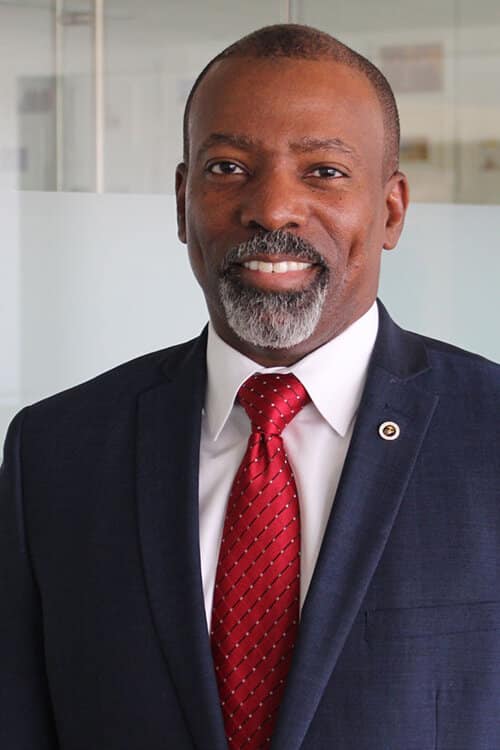
WKAR general manager Shawn Turner is aware that news consumers trust local news above national news. The difficulty is actually getting them to read, watch or listen to it.
“The biggest challenge for us is figuring out how we get in front of people who are interested in what’s happening in the community but who aren’t seeking the information in existing spaces where that information can find them,” he said.
The NPR and PBS station is thus expanding its presence on social media platforms, including “cross-platform promotion” across television, radio and social media, even as it recoils from $1.6 million in lost funding. WKAR’s operating budget before the cuts was $8.6 million.
In response to those cuts, Turner said WKAR will be present at fewer local events, create programming at a slower pace and rely more on freelancers following the nine layoffs. Even amid that scaling back, Turner is fully committed to the strategic plan.
That means increasing video offerings on YouTube and social media as well as recording all written stories in audio form. It also means other, more social media-friendly forms for stories, such as podcasts.
“These are all ways we’re trying to get out of the broadcast-only mindset,” he said.
Turner also said WKAR is expanding collaboration efforts with other media outlets in an effort to give listeners and viewers what it wants: “information that goes beneath the surface and really gets down into detail on some of the issues that impact communities.”
Asked if he was worried that social media offerings would not offer the depth of WKAR’s other reporting, Turner freely admitted social media offerings will be less substantial, but that it will help bring younger audiences into the fold.
“There’s a long game here,” he said. “If I have a thousand people following WKAR on Instagram, and they’ve never listened to or watched WKAR, but they’re following me on Instagram, I have their attention. Now my job is to, over time, bring them on board.”
Sources differed on whether competing for attention on social media is worth it, but former local radio host Tim Barron said the “engagement game” is nothing new.
“Great amounts of thought went into keeping your finger off the button and changing the channel,” he said. “The engagement game has been going on forever.”
It’s good for radio fans that WKAR will keep broadcasting, because Barron said there aren’t many private local radio stations left to tune in to for local news.
“So much has been replaced by the internet and social media,” he said. “I don’t know how many people tell me, ‘All I look at is X anymore, I don’t watch the TV.’”
Barron said waves of radio consolidation starting in the 1990s eventually resulted in most morning shows being outsourced.
“It used to be that this was someone, the morning guy,” he said. “You might see him at the grocery store, or at church or out and about the community. Now, there’s people beamed in from out of town. They’re not local, they don’t try to make it sound local, and they’ll show up once in a while to make an appearance, but it’s just not the same.”
Kenneth MacDonald Jr. owns MacDonald Broadcasting, which operates eight Michigan radio stations, including four in Greater Lansing. He said radio is “alive and well,” pointing to the news team at 1320 WILS, which he emphasized is live and local.
“I think the perception from many people of radio is that it’s dying, just like the newspaper industry has been accused of,” he said. “I don’t believe the newspaper industry is dying. It’s just transitioned into digital forms, as we have.”
That involves keeping all broadcasts digitally accessible, but MacDonald believes radio is not doing as poorly as advertisers think.
That’s not just wishful thinking — 9% of respondents in the Pew Research survey said they prefer to get their local news on the radio, up from 8% in 2018.
TV
Despite facing its own struggles, the broadcast industry has managed to hold somewhat steady. Hirten said Lansing State Journal reporters once substantially outnumbered reporters at local news stations. That’s no longer the case.
Sheri Jones just retired from a 37-year career as a reporter and longtime anchor on WLNS-TV. She said the TV market has been more adaptive.
“You have to adapt to whatever the market is telling you,” Jones said. “We are bringing in reporters now that we call multimedia journalists. They take the pictures, they send it to the social news desk, they do Facebook live videos when they get to the scene. They file their story online, they file it for the television station, and they also go live on TV.”
Vos said print outlets rarely recruit MSU students, but broadcast groups come through “a number of times a year looking for talent.”
“I think it’s probably because there’s a higher turnover,” he said. “That’s my interpretation. But they’re pretty aggressive at recruiting, and our students are keyed into that.”
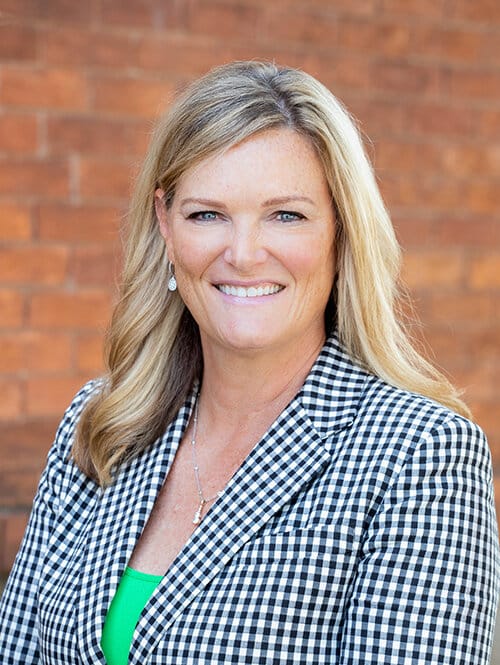
Debbie Petersmark is the general manager of WILX-TV. She said she believes TV has “adapted to a multimedia world” more quickly than newspapers.
She noted that viewership has been declining since 2022, as per traditional ratings. However, she pointed out that ratings are less reliable indicators of success now, because they no longer account for online viewership. Much like WKAR, WILX is meeting people where they are.
“We’re not naive enough to think that a 26-year-old who’s newly married and working full time with a baby is going to tune in at 5 to watch the broadcast news,” she said.
Petersmark said increased social media presence is not a substitute for traditional media, but a way to advertise it and increase brand recognition. She said short-form TikTok videos sometimes “go viral,” garnering as many as 400,000 views. The aim is to increase recognition of the News 10 brand and its key anchors “so that when there is breaking news, when there is severe weather and people are searching for someone to rely on for information, that they’ve seen David and our brand on TikTok, and they say, ‘Oh, that’s my local news.’” David is David Andrews, a staple in local broadcasting since 1986.
But TV stations are struggling, too, forced to compete for a smaller slice of the advertising pie as big tech companies increase their market dominance. While traditional stations have demographic data to show advertisers, tech companies can show ads to users they’re virtually certain are interested in a product.
That has led to a potential major change in the Lansing market. Gray Media, which owns WILX, would gain WSYM, better known as Fox 47 News, owned by E.W. Scripps Co. In turn, Scripps would receive a Gray-owned station in another Scripps market, creating an intentional duopoly, pending FCC approval. It’s one of five such swaps the two companies hope to pull off in the name of efficiency.
“It’s always an issue when there are fewer outlets in competition with each other,” Vos said, calling it “another step away from that underlying regulatory logic that was built on diversity.” Petersmark called it necessary amid slimmer advertising pickings.
The two stations have history. WILX and Fox 47 News made a content-sharing deal in 2004, when the latter outsourced its 5:30 and 10 p.m. newscasts to WILX. Fox News 47 still sold its own advertising, but it paid WILX a production fee. This deal remained until 2021, when Fox News 47 began pre-recording newscasts with reporters centered around specific communities that were interspersed with live segments.
After the merger, WSYM will remain a Fox affiliate and continue to air all of the Fox national programming, Petersmark said. She added it will continue to broadcast on channel 47, but will likely fall under an umbrella brand like “News 10,” and that the deal is expected to close within six months.
Looking forward
Even as legacy media dwindles, others are cropping up. Digital-only, nonprofit local newsrooms are on the rise. East Lansing’s own, East Lansing Info, has been operating since 2014, providing the types of news residents might otherwise miss from decreased coverage of city council meetings and policy discussions.
“Local news is making a comeback,” said Beth Peck, East Lansing Info’s former executive director.
“The big national news cycle can be very overwhelming for some people, and I think being updated on your local community feels more manageable,” Peck said.
She said nonprofit news increased “buy-in from the community” because “it’s run by a board of directors that are typically all local citizens volunteering their time.”
The outlook is far from rosy. Robert Kolt, a former TV reporter and longtime president and CEO of Kolt Communications, which has represented both the city of Lansing and the Lansing School District, said recent interactions with print journalists have been dreary.
“The corporations have continued to squeeze every penny out of local journalism,” he said. “I think it’s really affected the journalists you deal with. Boy, if they’re a newspaper reporter, they just seem to be kind of depressed right now.”
But it’s also not over for legacy media. It’s just changing.
Asked if he expects the Journal will survive another 10 years, Cornelius said he wasn’t sure, but that he encouraged people to stay engaged and seek out trustworthy sources.
“I just know that we’re right in the middle of a maelstrom,” he said. “We’re sorting things out between the internet and newspapers, we’re just trying to figure out how to get our news and who to trust. And right now, finding somebody that we can trust is kind of falling by the wayside.”