
Egg-cellent artistry
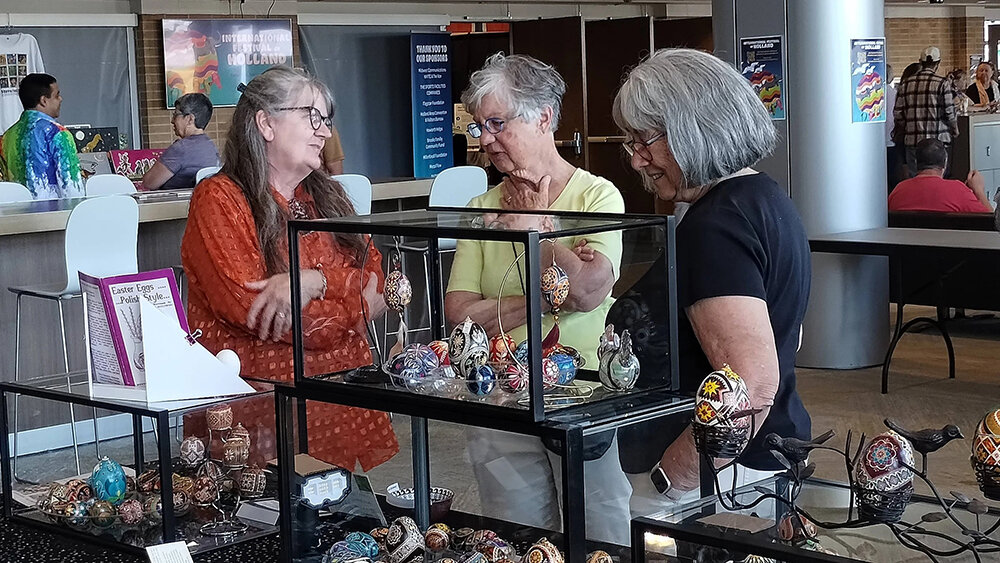
Decorating eggs is a common tradition for many Americans around the Easter season. However, Lansing artist Jozefa Rogocki takes that process several steps further with her pysanky eggs, a traditional …
Jozefa Rogocki wins Midwest Culture Bearers Award
Decorating eggs is a common tradition for many Americans around the Easter season. However, Lansing artist Jozefa Rogocki takes that process several steps further with her pysanky eggs, a traditional Slavic folk art.
Pysanky involves layering wax to create intricate designs on eggshells. The shells are dipped in dye between layers to create a multicolored effect.
“The process of making a pysanky egg is fascinating, and for some people who come to my workshops, it can be quite obsessive,” Rogocki, 68, said. “Depending on the number of colors that you’re working with on the egg, it can go through four, five, even six layers. Your egg is then completely covered with black wax, and it isn’t until you wipe all that wax off that the beautiful design you have underneath is revealed.”
Rogocki was honored for her art earlier this month with a Midwest Culture Bearers Award from nonprofit arts organization Arts Midwest. She was one of nine recipients — and the only from Michigan — chosen from a pool of more than 365 applicants. The award, in its sophomore year, celebrates Midwestern folk artists and cultural practitioners across a range of mediums, including visual art, poetry and dance. Recipients are given $5,000 to further their practice.
“Winning the Culture Bearer Award is such an honor,” she said. “The people who were selected for the awards represent such an amazing breadth of creativity. It’s so marvelous to be a part of that group. And, for myself, it’s just such an honor because it makes you feel like you’ve been seen and that your community is being honored as well.”
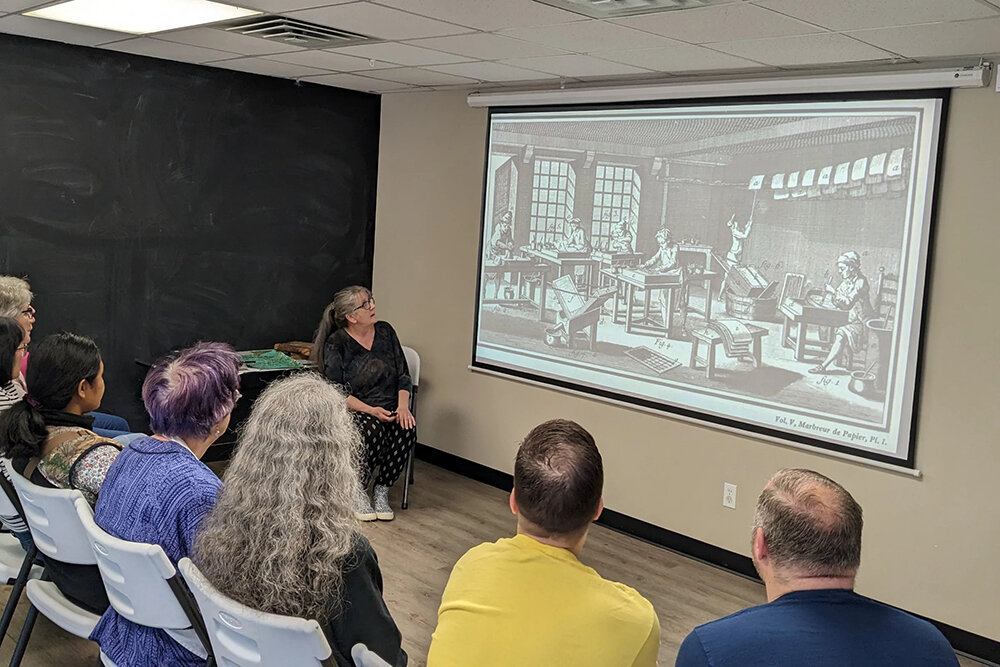
Rogocki was born in the United Kingdom to a Polish father and an English mother. She said art has always been a part of her life, and her work has always reflected her Polish heritage. She holds bachelor’s and master’s degrees in fine art and was an installation and community artist before moving to the United States in 1999.
“My father came to England from Poland and brought with him his knowledge and understanding of his family. It’s a way in which you keep your roots and understand your identity,” she said. “My family in Poland is from the northern part, which is Pomerania, and they’re Kashubian. They have their own particular folk art from there as well, so I try to reflect that.”
Upon arriving in Michigan, Rogocki found a large Polish community in Hamtramck and was introduced to pysanky. She shaped her technique under master pysankarka Helen Badulak.
“They had resources, and they had culture. It was such a wonderful community,” she said. “I was able to learn that particular art, and I’ve done that ever since.”
Many of Rogocki’s patterns are unique to her, but she also has extensive knowledge of the designs specific to various regions of Poland and Ukraine.
“There are so many resources out there. So much work has been done to catalog the traditional designs that are pre-Christian. Some of these ancient designs reflect Slavic mythology,” she said. “They’re very unusual patterns and symbols that represent different meanings, and a person doing a pysanky egg will draw on those resources, that tradition, and make endless variations of these particular symbols and patterns.”
She aims to work sustainably, using chicken and goose eggs from local providers as much as possible and experimenting with natural dyes, which have taken a back seat to chemical dyes in the modern age. She utilizes leaves, flowers and other plants from her garden to create the dyes.
“I have a large garden here in Lansing, and many of the plants that will give you dyes are native and also a little invasive,” she said. “You can collect plant material that will give you different colorings from many, many sources. This fall, I was able to gather walnuts — I have black walnut trees. My goldenrod is very abundant, as is wormwood. These are all plants that will give you dyes.”
The process is time consuming, she explained, but it’s worth it for the effect.
“The colors are just so rich and deep and varied. It’s a very, very lovely process,” she said.
Pysanky isn’t the only traditional European art form Rogocki practices. She also enjoys marbling, which originated in Turkey.
“They have specific ways of working where you’re floating paints on top of a gel surface. And there are many traditional patterns, again, that were used in the marbling of paper that would then be used in bookmaking and bookbinding,” she said. “So, I’ve explored a lot of that. I actually got a grant from the Arts Council of Greater Lansing to explore more of that particular art form.”
She leads workshops on both mediums at local libraries and Polish centers. She also exhibits and sells her work at craft fairs and cultural festivals. Upcoming events include a holiday bazaar Nov. 23 at the American Polish Cultural Center in Troy and an art sale called “Art for the Soul” Dec. 6 and 7 at 2719 Mount Hope Road in Okemos. More information is available at jozefa-rogocki.weeblysite.com.
“I’ve always been working toward creating accessibility in the arts,” she said. “I try to reach out to as many places as I can to bring these activities to a wider audience. In England, I was able to work with people to create a community art center. Here in America, there are so many people working to bring the arts to a wide audience, and you have so many art fairs and events around the area, so I try as much as possible to participate in those.”
“My goal is really just to bring awareness to as many people as I can,” she continued. “And with the award, I think that’s given me an opportunity to reach even more people.”
Related Articles
A roundup of recent Lansing-area music news
From Big Sur releases new album, Starfarm’s Whitney Who has a new group and Displaced Manor finds a new home
Ten touchstones in local LGBTQ+ history
In 1971, gay activists in East Lansing demanded protections in the city government’s hiring process from their City Council. They came, they fought, and they won: East Lansing’s early 1972 civil rights ordinance was the first of its kind in the country.