Jim Harrison leaves behind legacy of adoration and admiration
This is the final installment of a three-part story on Todd Goddard’s biography of Jim Harrison, leading up to Goddard’s appearance at 7 p.m. Thursday, Nov. 13, at the Library of …
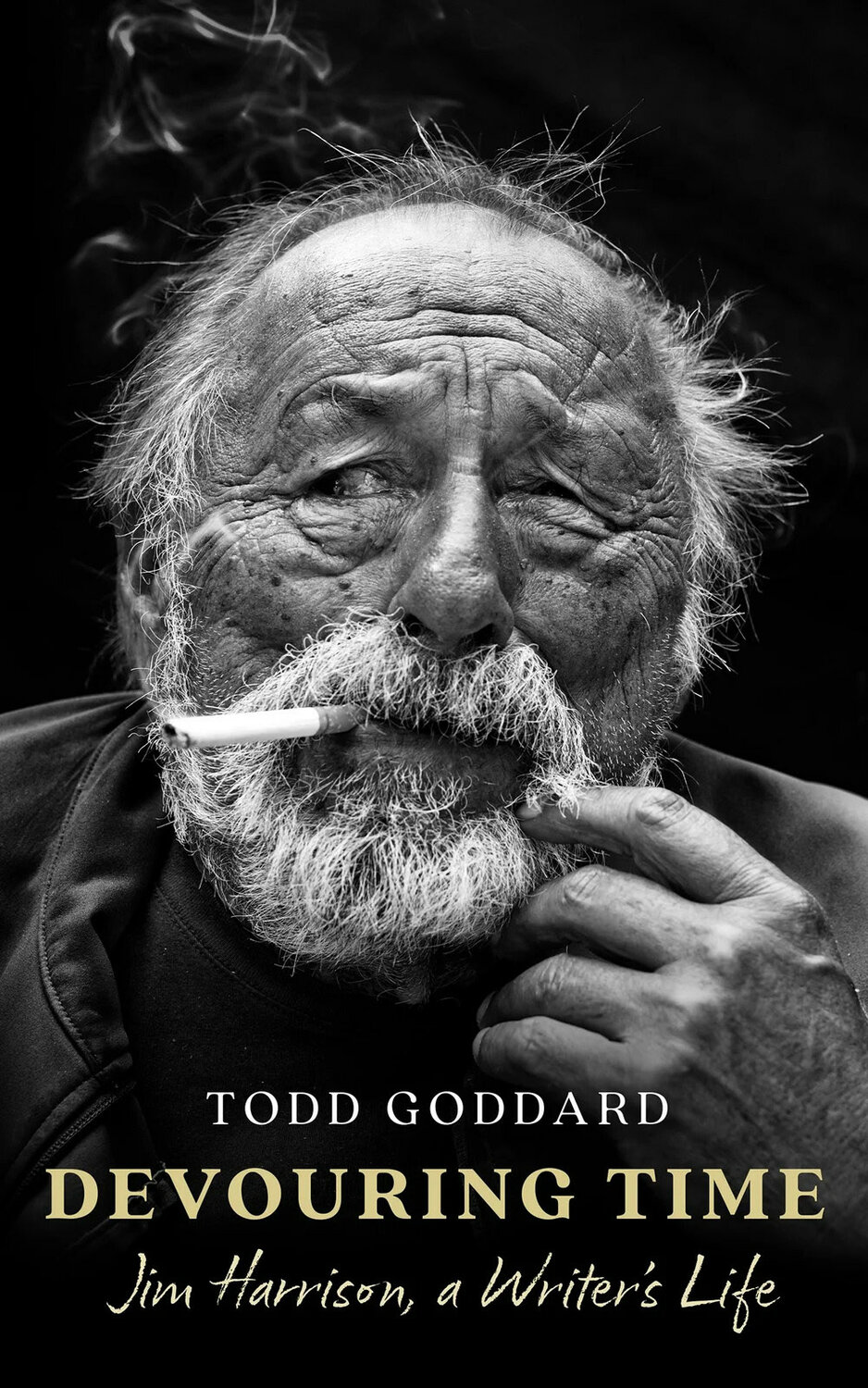
This is the final installment of a three-part story on Todd Goddard’s biography of Jim Harrison, leading up to Goddard’s appearance at 7 p.m. Thursday, Nov. 13, at the Library of Michigan. The event is free, and books will be available for purchase.
Joyce Bahle was involved in almost every decision about writer Jim Harrison’s personal and professional life during the 47 years she spent as his trusted aide de camp.
In a recent post on his Facebook page, she said it was “kismet” that a new biography of Harrison was being released on Nov. 4, her 72nd birthday.
She said she worked with author Todd Goddard, guiding him through the Harrison archives at Grand Valley State University.
“I directed him a lot,” she said.
She also smoothed the way for Goddard to talk with Harrison’s legions of friends and business associates.
With her deep connections from a lifetime of working for Harrison, she said she was “able to open doors for” Goddard.
“Right away, Todd and I hit it off, and we were very close,” she wrote. “I’ve thought to myself, Jim would like him.”
Goddard, Harrison’s latest biographer, spent countless hours poring through the archives, and with Bahle’s help, he interviewed more than 100 of Harrison’s friends and associates.
The list reads like a litany of 20th-century authors and filmmakers, as well as personal friends of Harrison, who died in 2016.
One of his closest friends, someone Goddard wishes he could’ve talked to, is mega movie star Jack Nicholson. Nicholson and Harrison, a Michigan State University alumnus, first met on the set of the movie “The Missouri Breaks” in the mid-1970s.
Author and fellow MSU graduate Tom McGuane had written the movie script and invited a few of his pals, including Harrison, to join him on set in Montana. Harrison, in desperate financial straits, immediately hit it off with Nicholson. According to accounts, the actor “loaned” Harrison $25,000. The money kept Harrison from what he considered the dreaded death of academia.
Nicholson and Harrison would go on to collaborate on several projects, including the actor’s starring role in “Wolf,” loosely based on Harrison’s novel.
Goddard also would have loved to talk with Harrison’s friend Russell Chatham, whose Western landscape art graced the covers of Harrison’s books. Chatham died before Goddard began working on the biography.
Goddard’s book is filled with charming stories of how easily Harrison made friends.
Harrison could be belly up to the bar at Beggar’s Banquet in East Lansing (where this reviewer first met him in the ‘70s), and he would start up a conversation with the person next to him. Over a couple drinks, it was as if Harrison and a stranger were lifetime buddies.
In the last third of “Devouring Time,” Goddard covers with sensitivity Harrison’s declining health and the loss of his beloved spouse, Linda. During this time, Harrison’s literary output slowed only slightly, and he continued publishing novels and poetry with regularity. He was even able to honor his alter ego, the beloved “Brown Dog,” with a collection of stories in 2013.
Brown Dog was a sensual character who, despite many shortcomings, found ways to help the downtrodden. He was the epitome of an Upper Peninsula-proud woodsman. Harrison’s fans loved him across five novellas.
Goddard describes how Harrison found poetry easier to write than novels toward the end, and how his poetry was often autobiographical. Goddard points to the epic poem “Hospital,” penned by Harrison after an extended hospital stay. Who knew blood in the urine could be poetic?
Before his death, Harrison was excited to see his poetry continue to be published by Copper Canyon Press, and he worked closely with his editor, Joseph Bednarek, to shepherd the book “Dead Man’s Float” to publication.
Goddard underlines one of Harrison’s often-overlooked personal characteristics: generosity. When Bednarek and his spouse welcomed twins into their lives, Harrison sent them a check for $2,000 and a note about how “they would need it now.”
Harrison’s good friend, author Richard Ford, sums up his legacy: “What was best and most interesting about Jim — to me — was he was decent, generous, extremely interested in entertaining people and pleasing them, and a memorable writer of sentences. It was a rare gift.”
Goddard ends the biography where he should: with Harrison writing his final poem, which is included in a massive posthumous collection of his poetry.