Local energy, world-class art
Two of Lansing’s key cultural institutions celebrated big birthdays in 2025. The Capital City Film Festival marked its 15th year this spring with 140 film screenings and related events at venues …
Lansing’s fine arts scene burgeoned in 2025
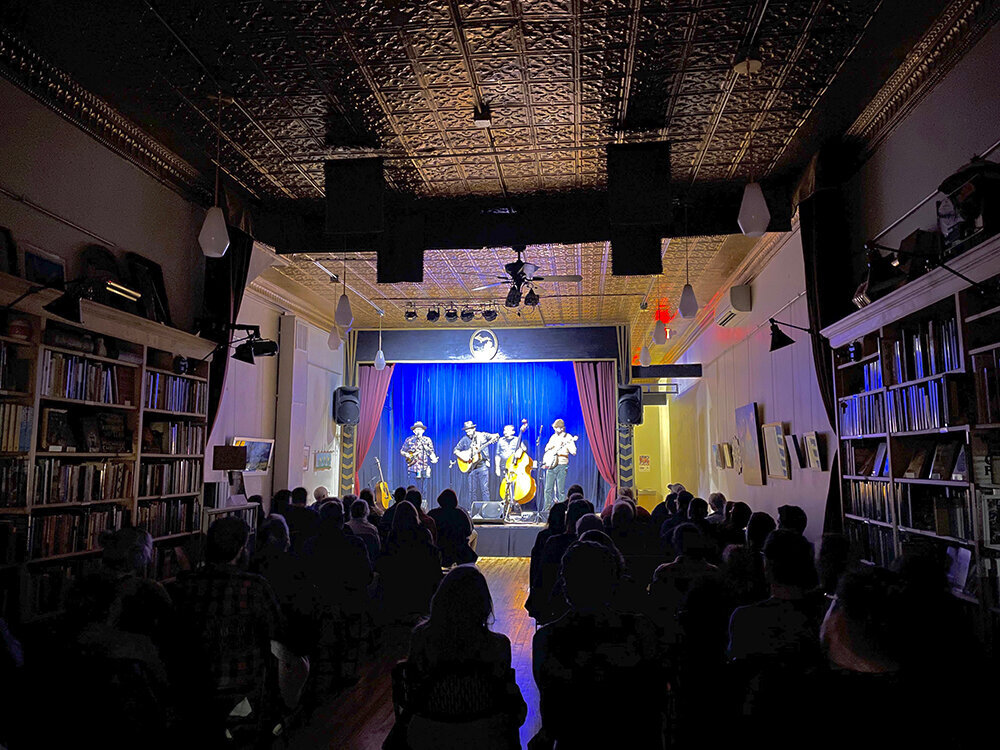
Two of Lansing’s key cultural institutions celebrated big birthdays in 2025. The Capital City Film Festival marked its 15th year this spring with 140 film screenings and related events at venues across the city. The Ten Pound Fiddle marked its 50th season by serving up a rich harvest of folk music’s past, present and future, packed into 39 concerts and more than 30 dances and community events.
Lansing’s fine arts scene is too rich to summarize in one annual survey, but the “Fiddle” and the CCFF are great places to start. Both represent the classic Lansing approach to the arts: driven by local passion, woven into the community, reaching for world-class quality, punching above their weight. Neither organization has a permanent home or a secure financial endowment. Both rely on a creative shell game of rotating venues, public support and sheer persistence to keep the magic going.
Making it to the 15th, 50th or any other milestone in the arts world is an achievement worth celebrating.
Sadly, not all arts organizations made it through the year.
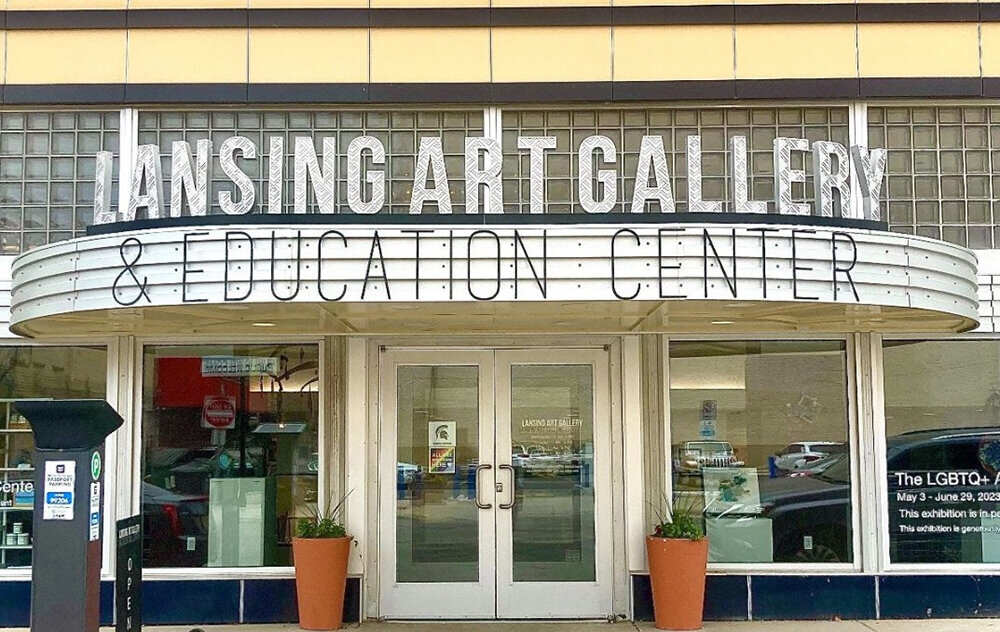
In April, harsh economic realities provided a reminder to celebrate what we have while we have it when the Lansing Art Gallery closed its doors after 60 years of operation.
Now and then, the fragile thread breaks and the grassroots magic runs out. Over the decades, the Lansing Art Gallery scrambled from one venue to another in true Lansing fashion, dodging a dozen near-death experiences by patching together donations and grants and sticking to its educational mission and high artistic standards, never slipping into a glorified gift shop. From its high-quality exhibits, classes and workshops to its innovations in bringing art to the city streets and along the River Trail, the gallery leaves a proud legacy.
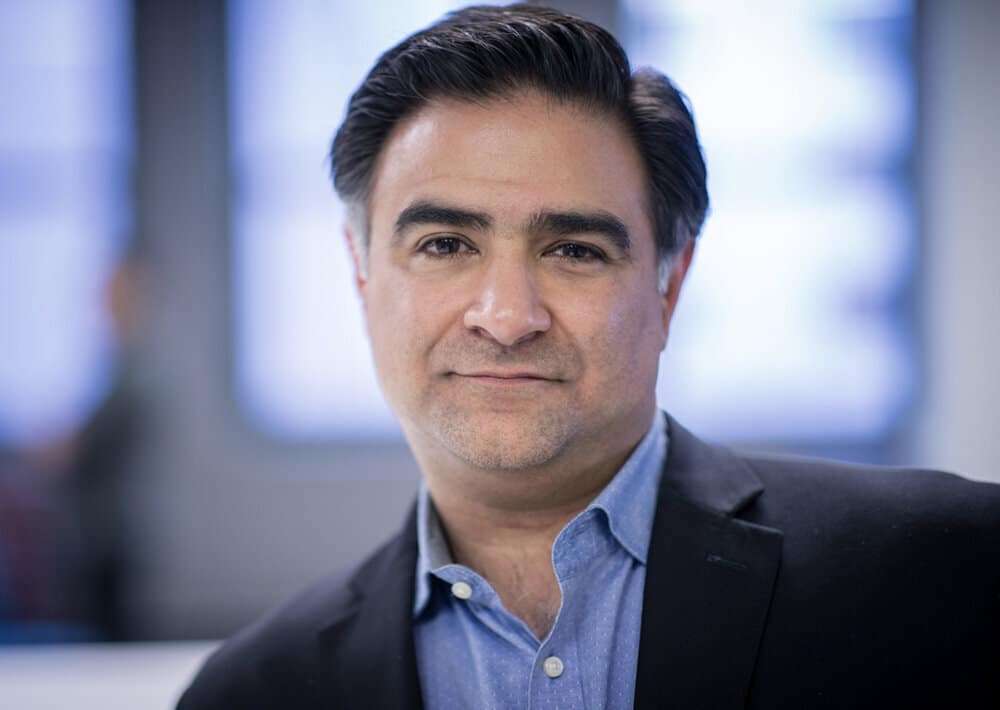
Meanwhile, across town, Michigan State University’s Broad Art Museum made it through a difficult bottleneck. After a search that lasted nearly three years, the museum named Phillip Bahar its fourth director in September. As president and director of the Chicago Humanities Festival for 13 years, Bahar brought more than a thousand artists, authors, thinkers and policymakers to venues across the Chicago area.
Although the Broad is among the highest-profile arts organizations in the area, it’s still a community resource, and it has presented many exhibits keyed to local concerns. Education and outreach, including a wide-ranging program of elementary school visits and field trips funded by the Park West Foundation, are a top priority.
Alan Ross, chairman of the Broad’s advisory board, extolled Bahar’s potential to plug the museum even deeper into the university and the surrounding community, as he did with the Chicago Humanities Festival.
“We’ve finally located a leader we’ve been seeking for a long time, a leader who will bring together students, faculty and community,” Ross told City Pulse in September.
Inside the gallery, the Broad showed no sign of going soft, even as museums and universities across the nation felt pressure to trim their sails to political winds emanating from the second Trump administration. Under interim director (now senior curator) Steven Bridges and his staff, the Broad mounted several ambitious and challenging exhibits in 2025, including “Farmland,” a wide-ranging and critical look at MSU’s land-grant heritage that touched on sensitive issues of land use, food production, scarcity and consumption, and “unbecoming,” a spectacular array of large-scale sculptures and paintings that covered the 20-year career of Syrian-born, New York-based artist Diana Al-Hadid. Other exhibits at the Broad looked at the experience of war (as envisioned in the murals of the late Lebanese-born artist Nabil Kanso) and the life of Michigan families and individuals during the Holocaust and the rise of fascism in Nazi Germany.
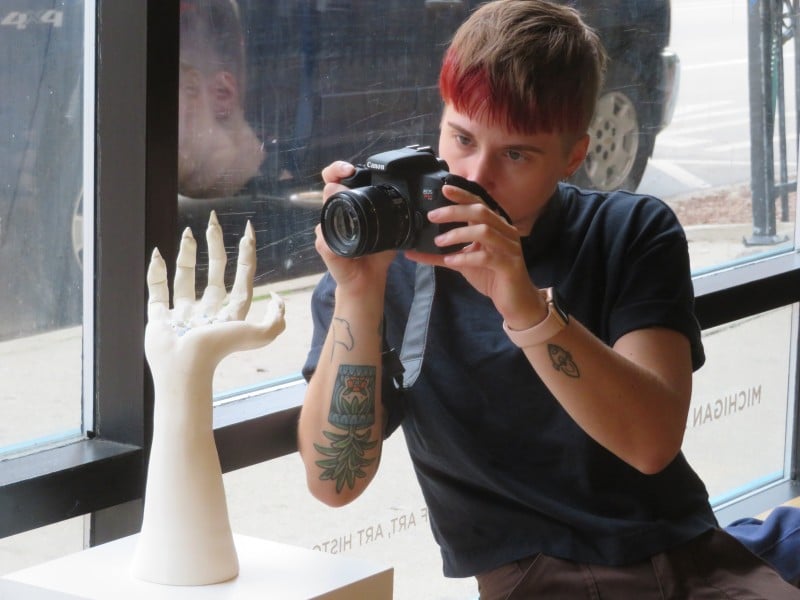
The Broad is the big dog in town when it comes to visual arts, but creativity also flourished in dozens of smaller venues across Greater Lansing. You could see the riotous fruits of Lansing’s burgeoning collage community at Hooked coffee/wine/book shop in East Lansing, dig a unique exhibit fusing the monumental work of sculptor Mark Chatterley and the small-scaled whimsy of his daughter, Teagan, at (SCENE) Metrospace, or experience prison life through the art and poetry of incarcerated people in Michigan at MSU’s LookOut Gallery.
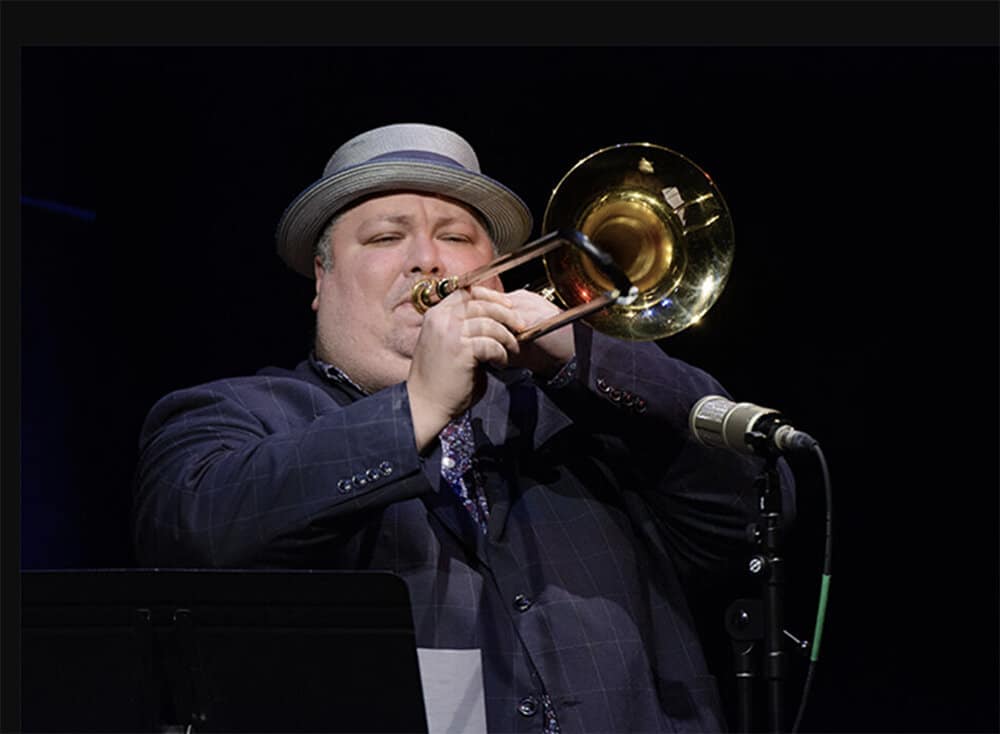
Lansing’s fine arts scene filled the ears as well as the eyes in 2025. Nowhere is the Lansing-style mélange of local talent and world-class luster more evident than in MSU’s stellar jazz studies program, home to national poll-winning trombonist (and Guggenheim Fellowship recipient in May) Michael Dease and established jazz luminaries like bassist Rodney Whitaker, pianist Xavier Davis and guitarist Randy Napoleon. In 2024 and 2025, two top women of the jazz world, vocalist Carmen Bradford and alto sax virtuoso Erena Terakubo, joined the roster.
These are jazz stars you might find in a club or festival in New York, London or Tokyo, but they also find the time to play at local spots like MSU’s Billman Pavilion, UrbanBeat in Old Town or Jazz Tuesdays at Moriarty’s.
Among the stellar guest artists who visited the area to work and perform with jazz students were pianist Rick Roe in February, trumpeter Sean Jones in October and vocalist René Marie in December.
The Jones concert marked another arts milestone, as the jazz studies program celebrated its 25th anniversary.
With MSU’s internationally renowned jazz program at the epicenter, Greater Lansing was again blessed with not one or two, but three jazz festivals in 2025. Guitarist Peter Bernstein headlined the East Lansing Summer Solstice festival in June, curated by Randy Napoleon. In August, JazzFest Michigan brought a broader mix of traditional jazz, R&B and funk to Old Town, and local hero Tim Cunningham returned to his hometown of Lansing for the daylong Armory Smooth Jazz Fete.
The MSU College of Music kept up a relentless schedule of musical events, from early music concerts to the edgy experimentation of the chamber group Musique 21, with many special highlights along the way, including a residency by Grammy-winning Ann Arbor composer Michael Daugherty.
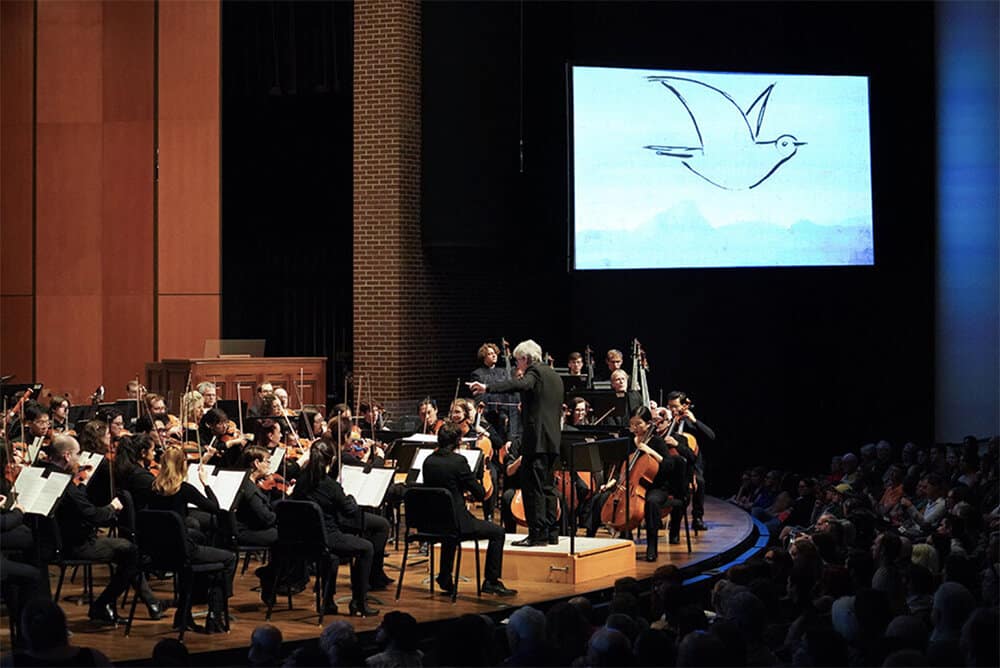
The Lansing Symphony Orchestra reached a bittersweet milestone when maestro Timothy Muffitt announced his retirement in February. Muffitt launched his 20th (and final) season on the podium on a cosmic scale Oct. 4 with a 40-minute mélange of orchestral, choral and visual stimuli by Minnesota-based composer Jocelyn Hagen, “The Notebooks of Leonardo da Vinci,” paired with Gustav Holst’s “The Planets.”
In another Lansing Symphony highlight of 2025, British pianist Benjamin Grosvenor, one of the biggest international stars ever to appear with the orchestra, was the guest soloist for Beethoven’s epic “Emperor” Concerto at May’s 2024-‘25 season finale.
Muffitt brought the orchestra to new heights during his tenure, conquering most of the biggest symphonic mountains in the repertoire, and attracted world-class soloists like Grosvenor, pianist Jeremy Denk, Broadway star Audra McDonald and superstar violinist Ray Chen.
Yet despite its international cachet, the LSO is, at heart, another hometown miracle, sitting squarely at the intersection of local energy and world-class music.
Announcing his retirement, Muffitt said he cared most about showcasing the orchestra’s own hometown talent, often giving them spectacular solo turns.
“The biggest thing for me has been shining a spotlight on the extraordinary musical talent we have here in mid-Michigan,” Muffitt said.
He summed up his tenure as “a decades-long celebration of our state, a place that puts a high priority on the arts, on music for everyone.”
All year long, MSU’s Wharton Center continued its commitment to fine arts as well as its Broadway bread and butter by bringing the world to Greater Lansing, with performers like the World Ballet Company, Ukrainian folk duo Kurbasy and French baroque ensemble Les Arts Florissants.
This year also brought big-time energy in genres of music that blur the line, if there is any, between “fine” art and popular music. DJ Mike Sherman, or Big Sherm, declared Lansing to be in a “golden era” of electronic music, with several intersecting groups hosting electronic music events at Mac’s Bar, The Avenue and other venues. In the wake of a popular techno exhibit at the MSU Museum, an MSU student-led collective called The Cadre has melted into an already rich local mix. At MELT Thursdays at UrbanBeat, established local artists and newcomers spin records well into the wee hours, defying the longtime canard that the city shuts down at 10 p.m. In future years, Sherman envisions the scene coming together for a Lansing-based electronic music festival along the lines of Detroit’s Movement Festival.
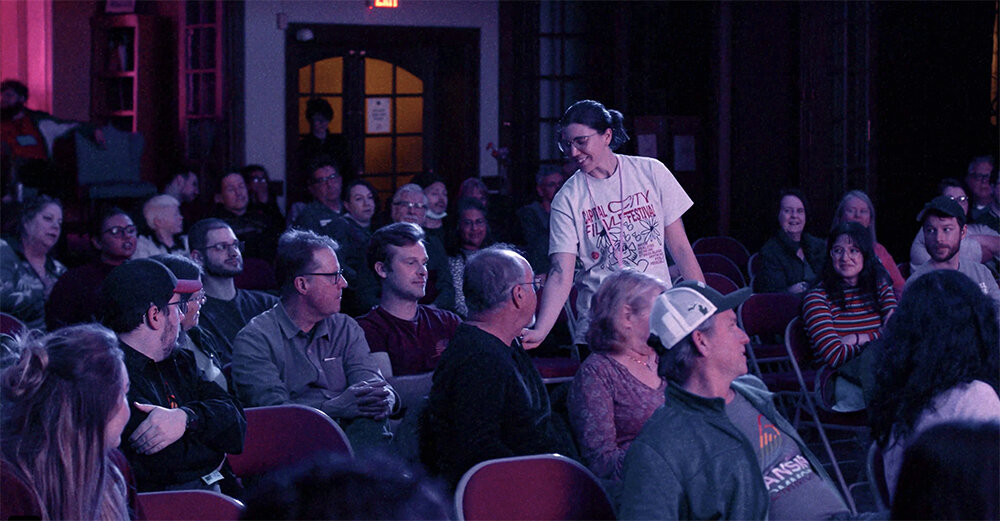
Lansing’s burgeoning film community had a spectacular run in 2025. It’s been a long time since Lansing had a dedicated movie house where international and independent films are shown, but that hasn’t stopped Capital City Film Festival director Dominic Cochran and his staff from growing the festival into a major cultural event with its own unique, welcoming vibe.
This year’s festival brought a massive, coordinated onslaught of international and local indie films, premieres, special appearances by filmmakers, panel discussions, musical events, spoken-word performances and much more to venues as diverse as Central United Methodist Church, Impression 5 Science Center, Stage One, The Avenue and The Robin Theatre.
CCFF was the biggest, but not the only film festival of the year. The 28th East Lansing Film Festival in November and the Lake Michigan Film Festival in February showcased independent films by Midwest filmmakers, including documentaries and shorts, at the Meridian Mall’s Studio C! theater. And if you like your film festivals darker, you got that in 2025, too. Timed to align with World Goth Day, May 22, the World Goth Day Film FestEvil took to various REO Town venues, including the eclectic and vibrant Robin Theatre.
Lansing’s interlocking poetry, spoken word and hip-hop communities also thrived in 2025, with hundreds of large and small events spearheaded by local luminaries like Lansing Poet Laureate Ruelaine Stokes, Poetry Room firebrand Masaki Takahashi and hip-hop artist/educator Jahshua Smith.
Where did all this happen? Wherever it could. The eternal scramble for venues for Lansing artists and musicians to do their thing got a bit easier in late fall, when the Fish Ladder Music Park was completed in Old Town. The ingenious integration of an outdoor concert venue and a fish ladder is another example of pure Lansing, and its potential has only begun to be tapped. Next year, the park will host the annual Dam Jam music festival and many other events.
Last but not least, Lansing’s long-awaited downtown music venue, The Ovation, is set to open in early 2027, with a two-story main stage, a second performance space, community spaces, podcast studios and much more. The venue will likely serve as the epicenter of the Capital City Film Festival as well.
These new venues, and the prospect of hundreds of new residents moving into downtown developments now under construction, bodes well for the local art scene in 2026 and beyond.
Lansing Art Gallery Board Chair Rachel Beatty summed up the diehard energy and optimism of the city’s arts scene at its darkest hour in 2025, when the gallery closed its doors. “This doesn’t reflect the Lansing arts community,” Beatty declared. “We’re strong. We’re vibrant. There’s so much support, and so many artists love this community. The future of the arts landscape is going to be on the rise in the next couple of years.”