More details emerge about proposed downtown data center
About 100 people braved brutal cold temperatures Saturday to learn more about a proposed data center that could one day heat some of their homes.
The meeting, held by Bellwether Public …
(This article has been updated. A previous version misidentified the Saturday event’s hosts.)
About 100 people braved brutal cold temperatures Saturday to learn more about a proposed data center that could one day heat some of their homes.
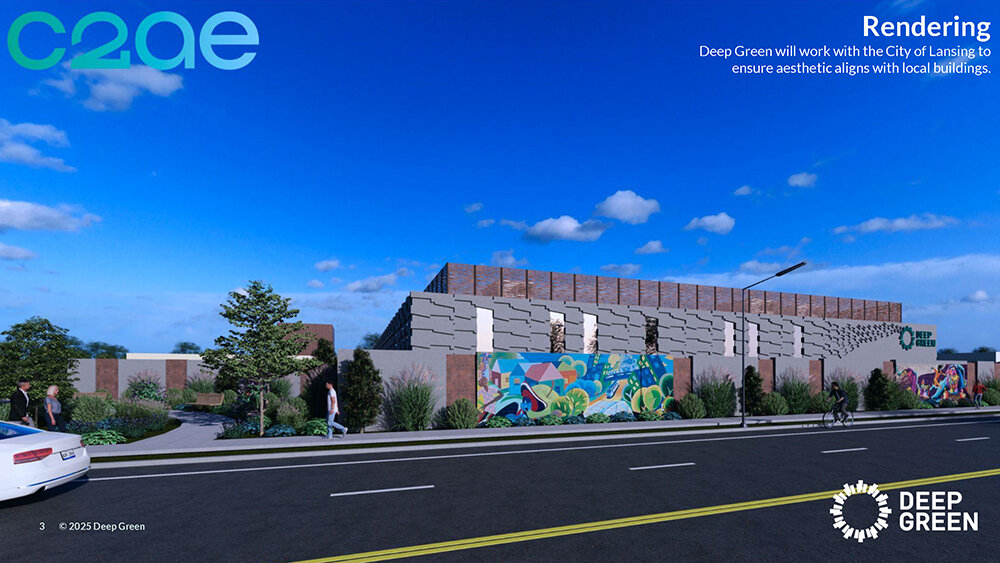
The meeting was held by the city’s four at-large City Council members and Deep Green, the British company seeking to purchase four parcels of land in the Stadium District for a 24 megawatt data center. The project, marketed as “a different kind of data center,” would donate the heat it generates to the Lansing Board of Water and Light’s downtown heating system. It was facilitated in part by Bellwether Public Relations.
Also, there were representatives from the Lansing Board of Water and Light, the city’s Economic Development and Planning Department, the Lansing Regional Chamber of Commerce and the Lansing Area Economic Partnership.
The meeting was arranged so residents lined up at several desks to ask questions, which left the crowd’s general stance on the project indecipherable. Residents have voiced overwhelming opposition at previous meetings.
Here are some key takeaways from the Saturday meeting, as well as from a City Council Committee of the Whole meeting on Monday:
8 megawatts of the project’s 24 MW load will be supplied directly from the BWL’s grid at a standard rate of 8 cents per kilowatt, while the remaining 16MW will be supplied by an onsite fuel cell plant, said BWL General Manager Dick Peffley.
That fuel cell plant would be owned and operated by the BWL, but Deep Green will pay for the entire facility. That means if Deep Green stopped sourcing its electricity from the BWL, the BWL would keep the plant. The cost that Deep Green will pay for electricity generated by that fuel cell plant is not yet clear.
Fuel cells are not designated as clean energy in Michigan, in part because there are no fuel cell plants in the state.
The heat donated by the data center, with most coming from the fuel cell plant, would be used year-round, not just during the cold season, including by industrial customers in the summer.
The water pipes feeding the data center would be similar in size to a fast-food restaurant’s pipes, which Peffley said would lead to similar water usage.
One of two votes the City Council will make, as early as Feb. 23, is whether to allow a conditional rezoning of the proposed site, which is currently a parking lot, from “downtown core” to “industrial.” Zoning administrator Sue Stachowiak said that means other industries could not operate a different industrial facility on the land, but there are no conditions tied to the heat reuse component or Deep Green operating it specifically.
Read more at LansingCityPulse.com