Breaking his ‘Silence’
Tony Award-nominated actor Anthony Heald, a Michigan State University alumnus, called his audition process for the acclaimed 1991 horror-thriller “The Silence of the Lambs” a “very, very …
MSU alum looks back on 35 years of ‘The Silence of the Lambs’
Tony Award-nominated actor Anthony Heald, a Michigan State University alumnus, called his audition process for the acclaimed 1991 horror-thriller “The Silence of the Lambs” a “very, very bizarre experience.”
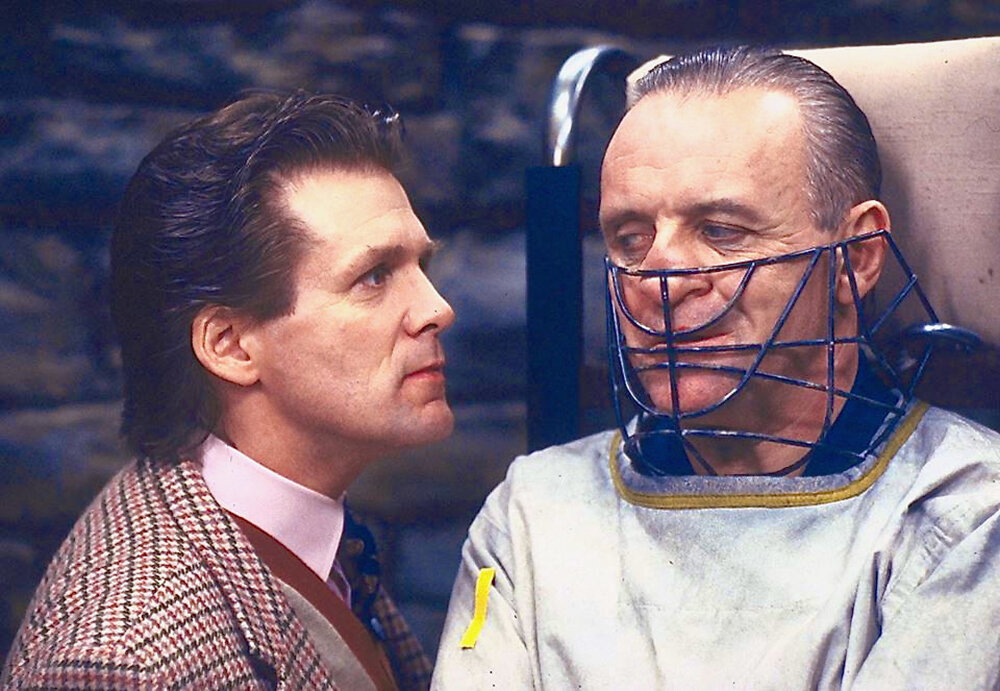
Based on Thomas Harris’ 1988 novel of the same name and directed by the late Jonathan Demme, Heald played pompous psychiatrist Dr. Frederick Chilton, jailer of cannibalistic serial killer Dr. Hannibal Lecter (Anthony Hopkins). FBI agent Clarice Starling (Jodie Foster) interviews Lecter about a serial killer named Buffalo Bill (Ted Levine) in a twisted game of cat and mouse.
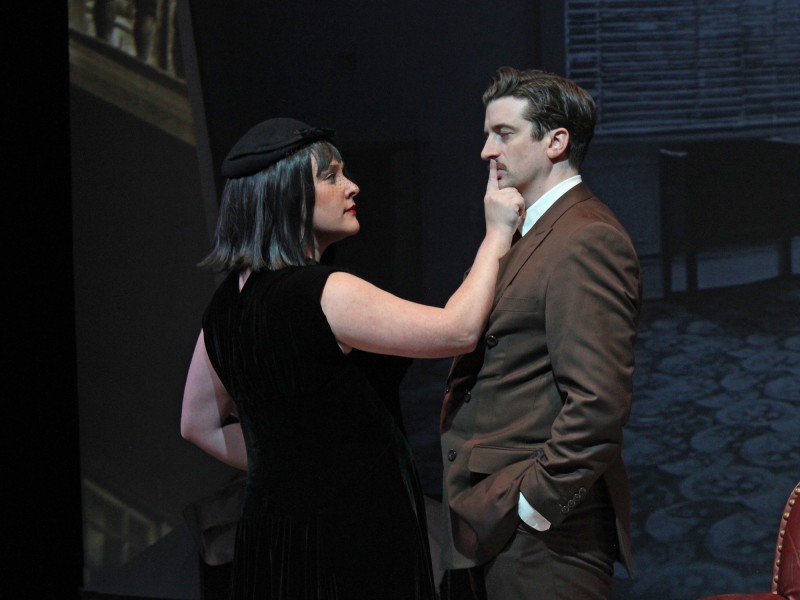
Heald was starring in “Betrayal” at the Berkshire Theatre Festival in Stockbridge, Massachusetts, when his agent called and told him that Demme wanted to see him for “Lambs.” Admittedly, Heald had no idea what “Lambs” was. He ended up buying the book, which he read in one sitting.
“I thought, ‘If this gets made into a movie, I’d love to be in it!’” recalled Heald, 81, who lives in Oregon. “I went to Jonathan’s office, and he greeted me like an old friend — ‘It’s so nice to meet you! I’m such a big fan! I’ve seen all the plays you’ve been in, and I’d love for you to be in this movie!’ Who does that? Nobody ever says that to an actor!”
Demme asked Heald which character he’d like to play. When Heald mentioned Chilton, Demme informed him that Chilton was supposed to be in his late 50s (Heald was in his mid-40s at the time) and told him no. Heald then suggested he’d like to be one of the Smithsonian bug guys, thinking it’d be “great fun.”
Several months later, Demme held a table read for “Lambs.” The late Gene Hackman was supposed to play Lecter, but he dropped out a day or two before the reading. Demme asked Heald if he would play Lecter in the table read, to which Heald replied, “In a heartbeat!”
Impressed with Heald’s performance, Demme decided he wanted him to play Chilton, much to Heald’s delight.
The late Robert Duvall was attached to play Lecter but also dropped out. Eventually, Hopkins got the role. At the time, Hopkins’ career was stagnant. “Lambs” catapulted him to A-list status.
Although they played bitter enemies (it’s heavily implied at the end that Hannibal killed and ate Chilton), Heald and Hopkins became good friends. After their first night filming together, a van was supposed to transport them to their hotel. A production assistant informed Heald that they needed an insert shot, and he stayed to film it, sending Hopkins word to go back without him. It took 45 minutes to film the scene.
When Heald entered the van, he was surprised to see Hopkins.
“He was waiting for me. ‘Didn’t anybody tell you I was delayed?’ ‘Yes.’ ‘But you’re still here?’ ‘I wanted to ride back to the hotel with you.’ I mean, who does that?” Heald said.
The two reunited in 2002’s “Red Dragon,” the prequel to “Lambs.”
“When he saw me, he started dancing across the room with his arms raised — ‘We get to do it again! We get to do it again!’ Heald recalled. “He’s so silly. That’s the kind of person he is. It was wonderful having the opportunity to work with him again.”
Heald also spoke about working with Foster, whom he said was “very private” following John Hinckley Jr.’s attempt to assassinate President Ronald Reagan in 1981 to impress her.
“She was a guarded person. I respected her privacy and didn’t interact with her much,” he said.
Heald later presented the New York Film Critics Circle Award for Best Actress to Foster for “Lambs.”
“When Jodie and I were asked to face the gaggle of photographers, it was terrifying — ‘Jodie, over here!’ ‘Anthony, this way!’ I was shaken, and she took my arm — ‘It’s fine, don’t worry about it.’ She was so comforting and helped me through that very challenging experience,” he recalled. “When I did ‘The Lisbon Traviata,’ she came to see it, and we had lunch afterwards. She ended up being somebody I felt very comfortable being around.”
“Lambs” won five Oscars: Best Picture, Best Director (Demme), Best Actor (Hopkins), Best Actress (Foster) and Best Adapted Screenplay (Ted Tally). It’s the only horror film to win Best Picture. On a $19 million budget, it grossed more than $272 million worldwide. In 2011, it was selected for preservation in the National Film Registry.
The film spawned a franchise, including three more movies (the aforementioned “Red Dragon,” 2001’s “Hannibal” and 2007’s “Hannibal Rising”) and two TV adaptations (“Hannibal” and “Clarice”).
Heald shared his insights into what gives “Lambs” such staying power 35 years later.
“It’s a great story and an iconic character, who was played so brilliantly by Hopkins. The way he never blinked, the stillness that he had, that unspoken menace, speaking in a soft voice, it was just a magical performance. The same with Jodie’s,” he said.
He also attributed the film’s success to Demme and Tally.
“First of all, it starts with the book, which was a real page-turner. Harris wrote other books, but nothing as powerful as this. Demme had Tally, a New York playwright, write the script, and it was the first screenplay Ted had ever written,” Heald said. “Then there was the way Jonathan directed it: He never showed you gore. It was all about implication, it was all about suggestion, it was all in your imagination, which made it all the more terrifying.”
New York and MSU roots
Heald, the middle of three children, was born in New Rochelle, New York. His parents instilled in him a love of acting at an early age.
“When I was 8 or 9, my parents started a playreading group. All these adults would meet in our living room and read plays aloud once per month. I would be at my bedroom door listening as my father became someone different. It was very exciting to me,” he recalled.
At Massapequa High School on Long Island, New York, he had a small part in “Goodbye, My Fancy.”
“As a senior, I got cast as Henry Higgins in ‘Pygmalion,’ which solidified it for me,” he said.
After graduating in 1962, he enrolled at Michigan State University. Although he wanted to be an actor, he didn’t think he’d be successful at it. Initially, he planned to be a TV newscaster and majored in journalism.
“MSU has a great journalism school,” he said. “I found the campus so wonderful. I was only there for three weeks of my freshman year when I got cast in a student production of ‘The Zoo Story,’ by Edward Albee. Immediately, I was part of the in-crowd of the theater department as a first-term freshman. I was invited to all these parties and thought, ‘Maybe I’m not supposed to be a newscaster, maybe I’m supposed to be an actor!’”
While at MSU, finances were tight. Heald did odd jobs and worked in the MSU Department of Theatre while taking one class per semester until his family was able to finance his education.
“I worked summer stock the next three summers and continued doing plays at MSU,” he said. “I went to the Asolo Theatre Festival in Florida, firmly committed to being an actor until someone I really respected said, ‘You know what? You shouldn’t be an actor anymore.’ And nobody ever said it, so I stuck with it.”
In 1970, he graduated from MSU with an undergraduate degree in theater. During his final year, he joined a theater company called the Street Corner Society.
“We toured all over the East Coast in a converted mail van, playing in Central Park, sleeping on people’s floors in sleeping bags. It was poor theater,” he said.
Two years later, he started working with a non-equity company in Grand Ledge called the BoarsHead Theater. To supplement his income, he taught acting at Lansing Community College for four years.
Heald has worked extensively on Broadway and has been twice nominated for a Tony Award for “Anything Goes” in 1988 and “Love! Valour! Compassion!” in 1995.
He made his film debut in 1983’s “Silkwood” and had larger roles in 1987’s “Outrageous Fortune” and 1990’s “Postcards from the Edge.” He appeared in 1993’s “The Pelican Brief” and would go on to work with the late director Joel Schumacher on two other John Grisham adaptations, 1994’s “The Client” and 1996’s “A Time to Kill,” as well as 1999’s “8mm.”
Additionally, he’s appeared on numerous TV series in guest roles and has also narrated audiobooks, including many “Star Wars” novels and classics such as “The Iliad,” “The Odyssey,” “Crime and Punishment,” “The Great Gatsby,” and “Moby Dick.” In total, he’s done about 150 audiobooks.
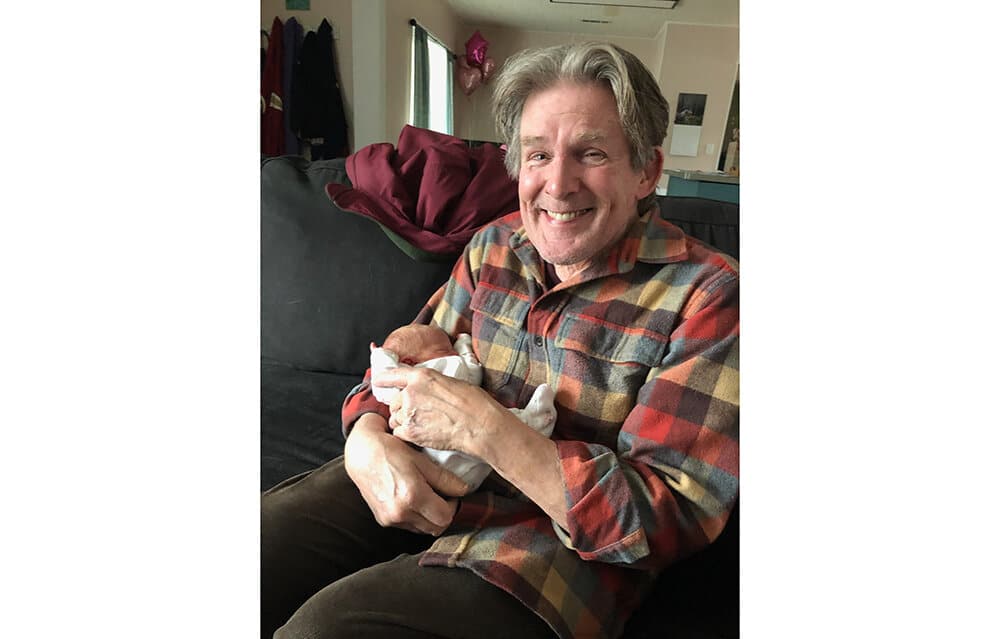
Since 1996, he has been active in the Oregon Shakespeare Festival. In 30 years, he completed 15 seasons while working in film and television. Today, he is semi-retired. The father of two is spending more time with his 3-year-old granddaughter, Amelia.
“I don’t feel the need to be performing,” he said. “I love being a grandfather.”