
Why Irish whiskey deserves your attention
I’ll admit it: When the City Pulse asked me to write about Irish whiskey, I had to take a quick inventory of my own liquor cabinet to figure out how little I actually knew. I’ve spent years …
Start With the Basics: How to Taste It
If you’re trying a new bottle, start neat. No ice, no mixer, just whiskey in a glass.
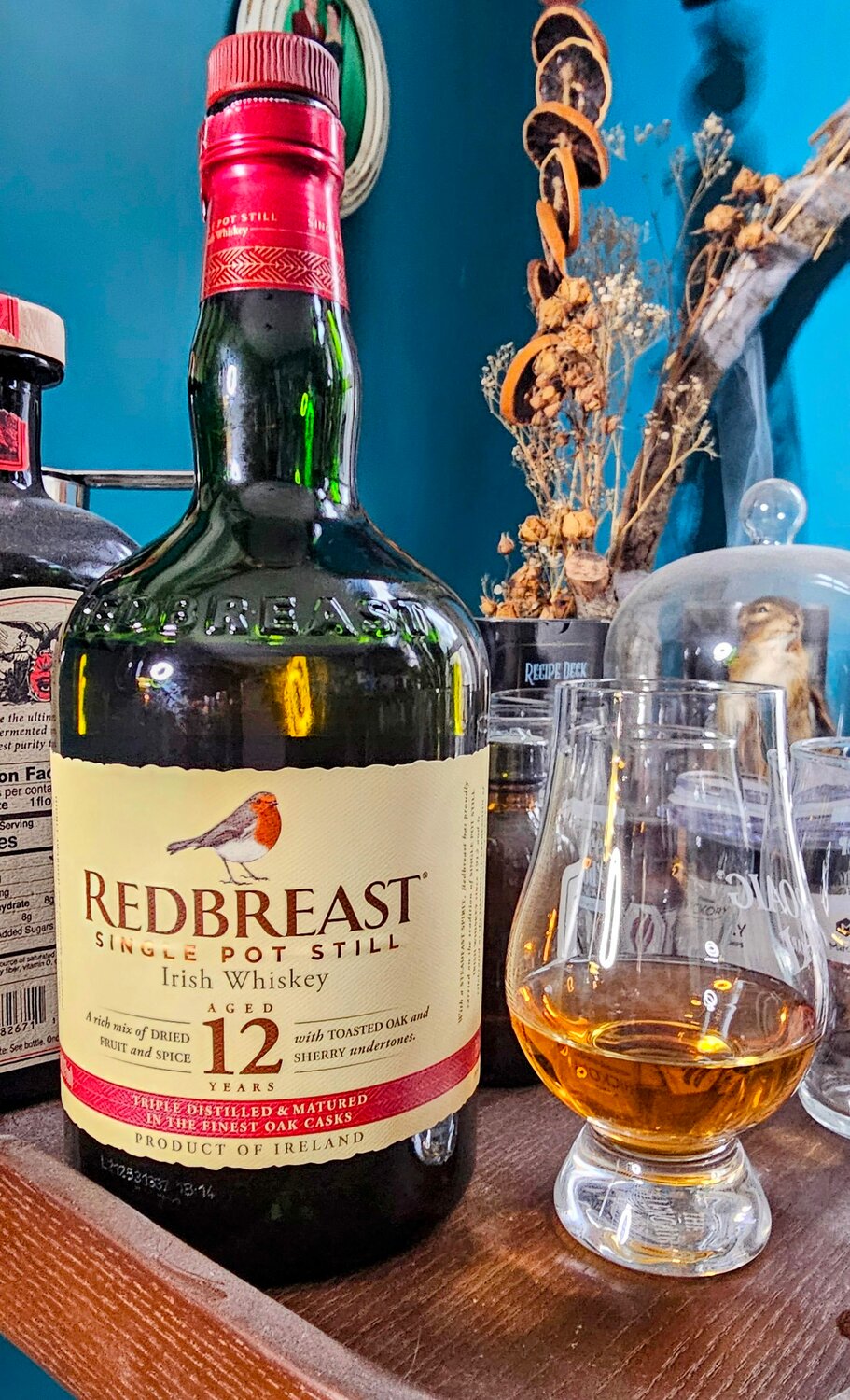
The Glencairn glass is considered the standard for tastings because it’s easy to swirl and nose. Give the whiskey a moment to breathe, nose it gently (don’t stick your nose all the way in), then take a small sip and let it coat your palate before swallowing. Note what you taste: fruit, oak, vanilla, spice, sweetness and the finish. There are no wrong answers: What you taste is dependent on your lifelong flavor experiences.
Once you’ve assessed the spirit neat, try adding a few drops of water. I like to use a dropper. This isn’t sacrilegious by any means: Water genuinely opens up the aromatics and helps different flavors come through. If you’re drinking a standard Jameson, you’ll notice the difference isn’t dramatic. If you’re drinking a cask-strength Redbreast, it’s transformative.
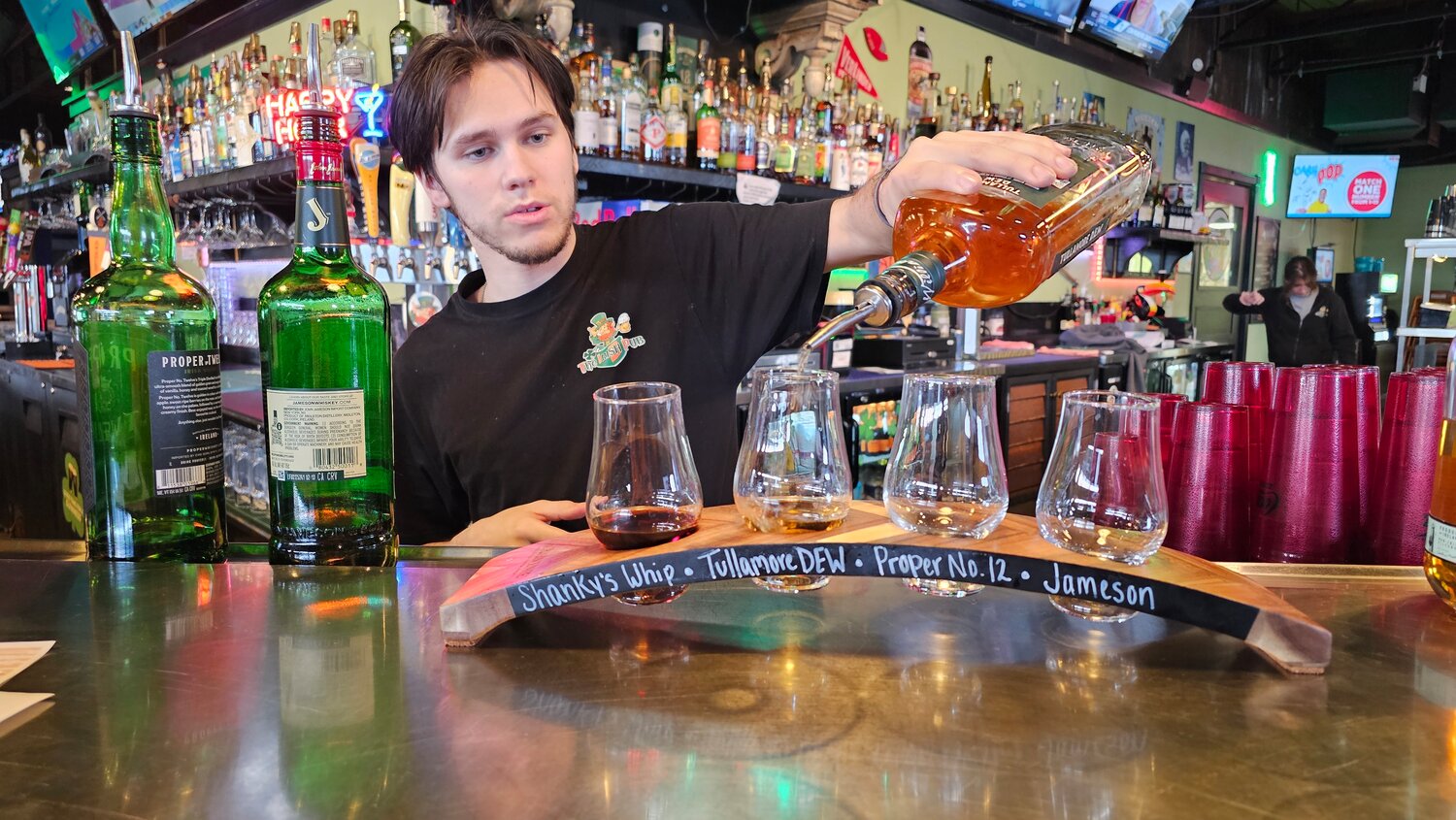
On the rocks is perfectly fine for blended or budget-friendly expressions, though it will dull the more nuanced flavors in a premium bottle. The staff at the Irish Pub prefers a single large ice cube, which gently chills the whiskey without drowning it. “We love our big ice cubes here,” says bar manager Sarah Carter. “That’s how my bartenders drink it.”
What to Buy: Three Price Points
Breanna Bauer has been stocking spirits for Lansing shelves for over two decades, including managing 16 Quality Dairy locations. Here’s how she’d guide you through the category at different price points:
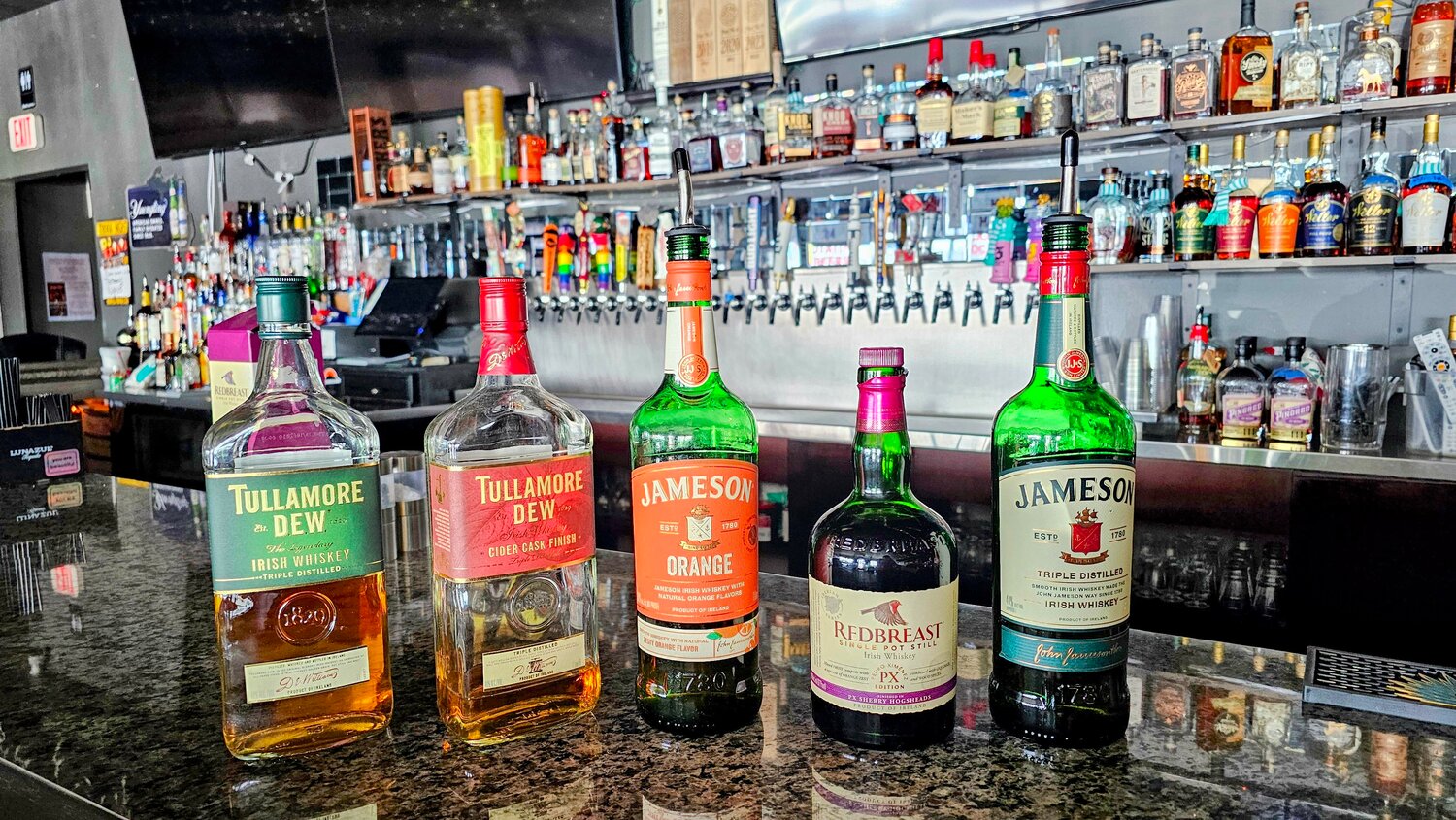
Entry level (): Paddy’s Irish Whiskey. An accessible, budget-friendly option that represents solid value for its price. Good for mixing or casual sipping.
The sweet spot (): Jameson. The undisputed king of the category. Smooth, light, and approachable, Jameson is ideal for mixed drinks, shots, or introducing someone to Irish whiskey for the first time. If you want to step it up slightly, Jameson also offers a Black Barrel expression () and the newer Triple Triple (), both of which add complexity at a modest price increase.
The splurge (): Redbreast 12-Year. This is the bottle every local expert interviewed for this story mentioned unprompted. Bauer calls it “a phenomenal choice” and says it’s the best Irish whiskey available under 0. Henry Kwok agrees: “Redbreast is probably my favorite Irish whiskey.” The 12-Year is the entry point for their line, which gets significantly better and more expensive from there.
Also worth seeking out: Slane Irish Whiskey (), which the Irish Pub’s head bartender rates as comparable to Redbreast at a fraction of the cost. And, if you want to venture into the premium tier beyond Redbreast, the Spot Whiskey line — Green Spot (), Yellow Spot (0), and Red Spot (0) — features some of the most acclaimed single pot still expressions available.
Cocktails Worth Knowing
Irish whiskey’s clean, light profile makes it a natural mixer. Here are three cocktails worth trying this St. Patrick’s Day:
Irish Coffee: The classic. Jameson (or your preferred Irish whiskey), hot coffee, a touch of brown sugar, and fresh cream. Baileys Irish Cream is often used; try Carolans for almost half the price. The Irish Pub has poured a lot of these this winter. A proper Irish coffee is best in the early afternoon.
The Pickle Back: Kwok’s recommendation. A shot of Jameson followed by a shot of pickle juice. “Pickle juice really cuts that alcohol taste,” he says. “If you don’t love the taste of Jameson neat, this is your move.” It sounds unhinged, but it works.
The Irish Car Bomb: Not subtle, but culturally unavoidable on St. Patrick’s Day. Shots of Jameson and Bailey’s Irish Cream are dropped into a half-pint of Guinness and consumed quickly. The name is considered offensive in Ireland and parts of the United Kingdom, where it is called “Irish Slammer” or other names.
A Word on Green Tea Shots
You may hear about green tea shots on March 17th. They’re made with Jameson, peach schnapps and sour mix. The Irish Pub sold more than 400 of them last St. Patrick’s Day alone. “Especially with college kids, it’s just: let’s do green tea shots,” says bar manager Carter. “Whiskey is more than that.”
She’s right, but also, they’re kind of fun. No judgment. After all, if you like it, then it’s the “right” way to drink whiskey.
And how to drink Irish whiskey
I’ll admit it: When the City Pulse asked me to write about Irish whiskey, I had to take a quick inventory of my own liquor cabinet to figure out how little I actually knew. I’ve spent years tasting and reviewing bourbon and rye, touring the Kentucky Bourbon Trail, and interviewing the biggest master distillers. But Irish whiskey?
I had three bottles collecting dust on a shelf. I tried the two cheaper ones first and was not impressed. Then I opened a Redbreast 12-Year and thought, “Okay, there’s something to this brown juice.”
As it turns out, there’s quite a history. What most American drinkers and I don’t know is that Irish whiskey isn’t just something you order on St. Patrick’s Day. It’s actually the spirit that gave whiskey its name.
A Quick History Lesson
The word “whiskey” comes from the Irish “uiscé beatha,” meaning “water of life.” Irish monks brought perfume distillation techniques to the island around 1,000 AD, and by the 12th century, the Irish had repurposed the process to make the first whiskey. Though it looked nothing like what we drink today (barrel aging hadn’t been invented yet), Irish whiskey predates Scotch, bourbon and every other form of whiskey available on your local shelf.
Some credit Kilbeggan Distillery, founded in 1757, as the first licensed distillery. Others point to Bushmills’ 1608 date. Both claims have asterisks, but the point stands: Irish whiskey has a centuries-long history. By the 1700s, the increasing demand led to a decline in quality.
Then came Prohibition in the United States, which dealt a near-fatal blow to the industry, not because distillers could no longer export to the United States but because illicit moonshiners flooded the market with counterfeit expressions, giving Irish whiskey a bad name. For most of the 20th century, Irish whiskey was a category on life support.
The comeback, however, has been remarkable. Over the last few decades, the number of distilleries operating in Ireland has exploded from a handful to over 40, and the demand continues to grow.
What Makes It Irish
To be legally called Irish whiskey, a spirit must be distilled and matured on the island of Ireland, aged a minimum of three years in wooden casks, and bottled at no less than 40% ABV (80 proof). Most Irish whiskeys are triple distilled, meaning they’re run through the still three times instead of the standard two. This strips out impurities, producing a notably cleaner, smoother spirit.
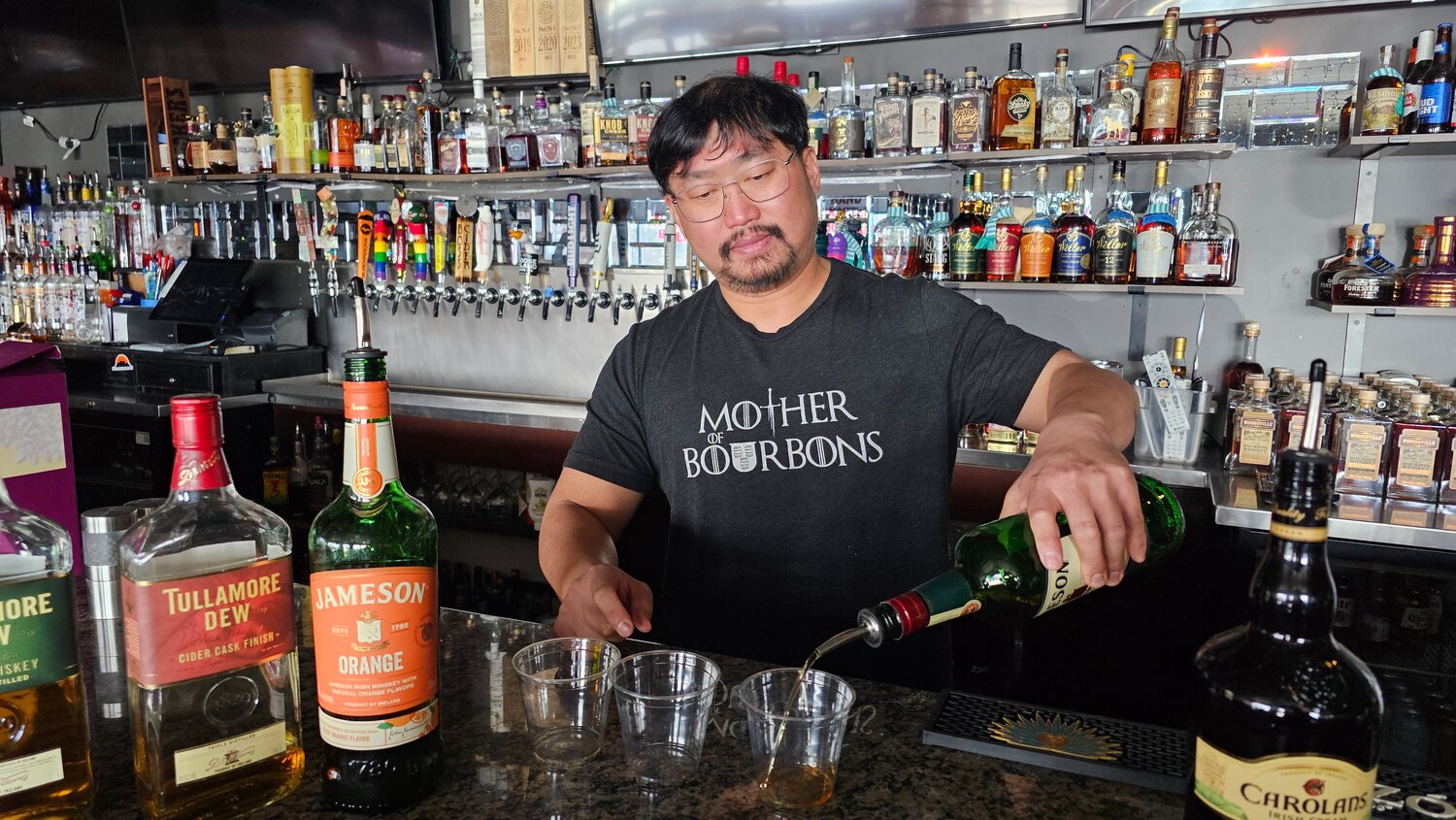
“It’s kind of like the redheaded stepchild of the whiskey world,” says Henry Kwok, owner of Henry’s Place in Lansing. “If you’re deep in the bourbon world, you kind of miss it.” Kwok, a bourbon devotee, describes Irish whiskey as “very clean, floral, never really high proof, never offensive.” He compares it to vodka in its purity, with the subtle fruit and oak notes of a Scotch.
The comparison to Scotch is apt, but there’s a key difference. Scotch uses peat smoke to dry the malted barley used in production, giving it that distinctive smoky character. Irish whiskey almost never uses peat, which is a big reason it tends to taste lighter and more approachable.
Four Styles Worth Knowing
Not all Irish whiskey is the same. There are four main categories:
- Single Pot Still: made from a mix of malted and unmalted barley, distilled at a single distillery, and uniquely Irish; you won’t find this style anywhere else in the world.
- Single Malt: made entirely from malted barley at a single distillery, and is similar in concept to Scotch single malts.
- Single Grain: typically used as a blending component, made from a variety of grains in a column (or “Coffey”) still for a lighter style.
- Blended: the most common category, which combines two or more of the above styles and accounts for most of the big commercial brands.
Premium expressions often gain their complexity through finishing in a secondary cask after the primary aging period. Sherry casks, port pipes, and even cider barrels are common. This is where whiskeys like Redbreast really come alive.
So, Why Does Everyone Just Drink Jameson?
Jameson is affordable, smooth, and ubiquitous. “Jameson is king,” says Breanna Bauer, Category Manager for alcohol at Quality Dairy, who has spent 21 years in spirits retail in Lansing. “Nobody’s really touching that.”
Jameson’s mass production via continuous distillation keeps costs down and maintains consistency. Kwok puts it bluntly: “When you taste Jameson, you really taste just alcohol. You don’t really taste much flavor.” That’s not necessarily a criticism, since it makes Jameson an ideal mixer and an approachable entry point. But it’s a long way from representing what the category can actually do.
The bottom line is that Irish whiskey was once the most popular spirit on earth, and based on what’s on shelves and in glasses around Lansing, it’s well on its way to making a comeback.
(James Brains runs Brains Report, a humorous product review website and YouTube channel. He’s also the founder of Lansing Foodies and a former senior reporter for Business Insider, where he covered American whiskey.)
Related Articles
Babe’s Corner reels in shrimp and lobster rolls
It’s hard to find a good lobster roll in the area. The few restaurants that serve them only do so for a limited time. One of these places is Babe’s Corner, which recently moved into the downtown …

Sunrise Chinese Food & Sushi replaces Apple Jade in Frandor
Before opening Sunrise Chinese Food & Sushi in Frandor, Feng Yang operated a similar restaurant in New Jersey.
Arana Yang, translating for Feng, said he was interested in bringing his …