Berkley author’s latest book chronicles the making of ‘Ferris Bueller’s Day Off’
By KURT ANTHONY KRUG
When author and comedian Jason Klamm learned nobody had ever written a deep dive on a single John Hughes movie, he decided to take the task on himself.
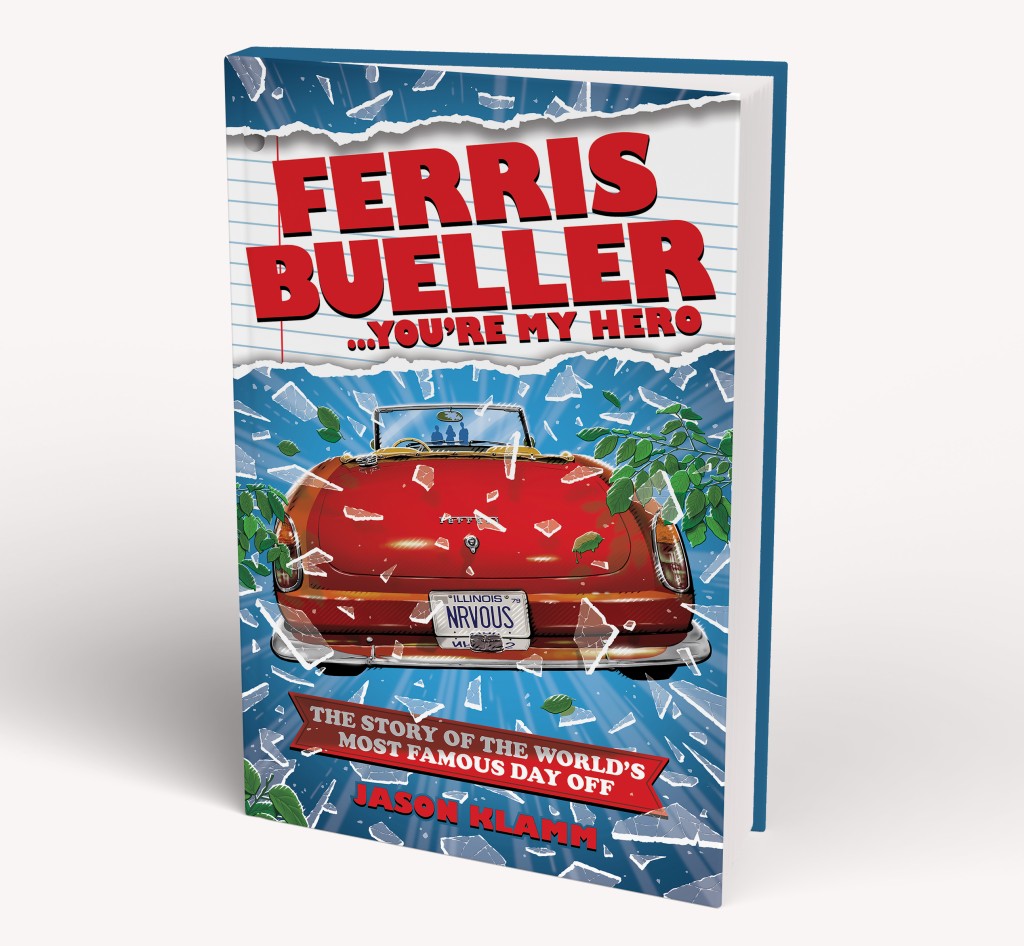
To coincide with the 40th anniversary of “Ferris Bueller’s Day Off,” the Berkley resident penned “Ferris Bueller … You’re My Hero: The Story of the World’s Most Famous Day Off” (1984 Publishing, $28). The book takes a definitive look at the making of the 1986 coming-of-age teen comedy, which was written and directed by the late Hughes, a Lansing native who grew up in the Chicago suburb of Northbrook. He was best known for his movies offering honest depictions of suburban teen life, including 1984’s “Sixteen Candles,” 1985’s “The Breakfast Club” and 1986’s “Pretty in Pink.”
It took Klamm, an alumnus of Columbia College Chicago, two years to research and write the 372-page book.
“It was originally 136,000 words or so, so most of it was news to me. I started as a fan and ended up an expert,” he said. “Whittling down 2 million combined words of interview transcripts and text from articles and book clippings was the hardest part. Then was the challenge of making it an interesting narrative.”

Courtesy
He conducted interviews with stars Matthew Broderick and Alan Ruck, as well as the “gummy bear girl” at the end of the film and Hughes’ son James. The book contains never-before-seen photos, rare production documents and unforgettable on-set stories.
“James provided me with hours of insight, including a great deal of behind-the-scenes information about what it was like living in the Hughes household as John banged out movie scripts in less than a week, which happened often,” Klamm said. “Broderick was a very kind interviewee and was happy to talk about Ferris from the perspective of the acting process. I chose not to interview him about other people’s nostalgia for the role, instead talking about how he prepared to play a character who was so different from who he is as a person: a quiet, sweet type who likes old movies and music.”
The movie opens with popular high school senior and all-around “righteous dude” Ferris (Broderick) feigning illness — totally hoodwinking his parents (Lyman Ward and Cindy Pickett) but not his sister, Jeanie (Jennifer Grey) — in order to skip school on a beautiful spring day. Ferris enlists his uptight, hypochondriac BFF, Cameron Frye (Ruck), to join him in getting his girlfriend, Sloane Peterson (Mia Sara), out of school so they can have an adventure in downtown Chicago, joyriding in a 1961 Ferrari 250 GT California Spyder owned by Cameron’s domineering father, Morris. But Dean of Students Ed Rooney (Jeffrey Jones) is on to Ferris. Determined to expose him, Rooney pulls out all the stops, even breaking into the Bueller residence, but instead falls victim to several pratfalls.
One of the subplots involves Cameron’s relationship with his father, who’s never seen. Cameron ends up destroying the Ferrari in a fit of rage. Ferris offers to take the blame, but Cameron won’t let him. Confident and determined, he will face his father. Cameron is never seen again in the film, but Ferris tells Sloane that for the first time in his life, Cameron will be all right.
There are many fan theories about what happened to Cameron. His father and him hugged it out and mended fences. His father killed him. He ran away from home.
Another theory is that Ferris is a figment of Cameron’s imagination, the way Tyler Durden (Brad Pitt) is to Edward Norton’s unnamed narrator in 1999’s “Fight Club.” The day off is a coping mechanism dreamed up by a depressed, borderline-suicidal Cameron. In this scenario, Ferris is the charismatic, confident and popular person that Cameron desperately wants to be. Cameron eventually faces reality, allowing himself to take responsibility for his actions and stand up to his father as his own person.
Ruck was aware of all these theories. He said that if Hughes wanted the audience to see what happened to Cameron, he would’ve shown it.
“It’s left up to the imagination of the viewer, so any ending you project on Cameron is completely valid,” he said. “It’s up for the audience to fill in the blanks, not me.”
Hughes died in 2009.
“He was tricky. The guy had his own particular genius,” Ruck said. “I don’t think anybody since John has written about teenagers as well as he did — no other screenwriter, anyway. He had great love and respect for kids. He didn’t talk down to them or write down to them, he didn’t hold them up to ridicule, and he honored them as complete human beings who were in process of whoever it was they needed to become.”
“Ferris Bueller” grossed $70 million on a $5 million budget and was the 10th highest-grossing film of 1986. It received acclaim by fans and critics alike. In 2014, it was selected for preservation in the National Film Registry by the Library of Congress.
Klamm offered his insights on what gives this film such staying power after four decades.
“John Hughes’ greatest strengths were turning ordinary circumstances into fantastic stories and turning extraordinary circumstances into relatable ones,” he said. “It was designed from the ground up to be timeless, like a Preston Sturges film. Even if you know it was made in a certain era, it isn’t so concerned with its place on a timeline, other than being about these three teens on the verge of a huge change.
“The movie brought about a renewed obsession with ‘cool teens’ who were funny and young people getting away with stuff,” he continued. “Many Hughes movies to follow included some of these elements, too. This movie is a piece of art, and in the end, that’s what my book is about: appreciating comedy movies as art.”
By KURT ANTHONY KRUG
When author and comedian Jason Klamm learned nobody had ever written a deep dive on a single John Hughes movie, he decided to take the task on himself.
To coincide with the 40th anniversary of “Ferris Bueller’s Day Off,” the Berkley resident penned “Ferris Bueller … You’re My Hero: The Story of the World’s Most Famous Day Off” (1984 Publishing, $28). The book takes a definitive look at the making of the 1986 coming-of-age teen comedy, which was written and directed by the late Hughes, a Lansing native who grew up in the Chicago suburb of Northbrook. He was best known for his movies offering honest depictions of suburban teen life, including 1984’s “Sixteen Candles,” 1985’s “The Breakfast Club” and 1986’s “Pretty in Pink.”
It took Klamm, an alumnus of Columbia College Chicago, two years to research and write the 372-page book.
“It was originally 136,000 words or so, so most of it was news to me. I started as a fan and ended up an expert,” he said. “Whittling down 2 million combined words of interview transcripts and text from articles and book clippings was the hardest part. Then was the challenge of making it an interesting narrative.”
He conducted interviews with stars Matthew Broderick and Alan Ruck, as well as the “gummy bear girl” at the end of the film and Hughes’ son James. The book contains never-before-seen photos, rare production documents and unforgettable on-set stories.
“James provided me with hours of insight, including a great deal of behind-the-scenes information about what it was like living in the Hughes household as John banged out movie scripts in less than a week, which happened often,” Klamm said. “Broderick was a very kind interviewee and was happy to talk about Ferris from the perspective of the acting process. I chose not to interview him about other people’s nostalgia for the role, instead talking about how he prepared to play a character who was so different from who he is as a person: a quiet, sweet type who likes old movies and music.”
The movie opens with popular high school senior and all-around “righteous dude” Ferris (Broderick) feigning illness — totally hoodwinking his parents (Lyman Ward and Cindy Pickett) but not his sister, Jeanie (Jennifer Grey) — in order to skip school on a beautiful spring day. Ferris enlists his uptight, hypochondriac BFF, Cameron Frye (Ruck), to join him in getting his girlfriend, Sloane Peterson (Mia Sara), out of school so they can have an adventure in downtown Chicago, joyriding in a 1961 Ferrari 250 GT California Spyder owned by Cameron’s domineering father, Morris. But Dean of Students Ed Rooney (Jeffrey Jones) is on to Ferris. Determined to expose him, Rooney pulls out all the stops, even breaking into the Bueller residence, but instead falls victim to several pratfalls.
One of the subplots involves Cameron’s relationship with his father, who’s never seen. Cameron ends up destroying the Ferrari in a fit of rage. Ferris offers to take the blame, but Cameron won’t let him. Confident and determined, he will face his father. Cameron is never seen again in the film, but Ferris tells Sloane that for the first time in his life, Cameron will be all right.
There are many fan theories about what happened to Cameron. His father and him hugged it out and mended fences. His father killed him. He ran away from home.
Another theory is that Ferris is a figment of Cameron’s imagination, the way Tyler Durden (Brad Pitt) is to Edward Norton’s unnamed narrator in 1999’s “Fight Club.” The day off is a coping mechanism dreamed up by a depressed, borderline-suicidal Cameron. In this scenario, Ferris is the charismatic, confident and popular person that Cameron desperately wants to be. Cameron eventually faces reality, allowing himself to take responsibility for his actions and stand up to his father as his own person.
Ruck was aware of all these theories. He said that if Hughes wanted the audience to see what happened to Cameron, he would’ve shown it.
“It’s left up to the imagination of the viewer, so any ending you project on Cameron is completely valid,” he said. “It’s up for the audience to fill in the blanks, not me.”
Hughes died in 2009.
“He was tricky. The guy had his own particular genius,” Ruck said. “I don’t think anybody since John has written about teenagers as well as he did — no other screenwriter, anyway. He had great love and respect for kids. He didn’t talk down to them or write down to them, he didn’t hold them up to ridicule, and he honored them as complete human beings who were in process of whoever it was they needed to become.”
“Ferris Bueller” grossed $70 million on a $5 million budget and was the 10th highest-grossing film of 1986. It received acclaim by fans and critics alike. In 2014, it was selected for preservation in the National Film Registry by the Library of Congress.
Klamm offered his insights on what gives this film such staying power after four decades.
“John Hughes’ greatest strengths were turning ordinary circumstances into fantastic stories and turning extraordinary circumstances into relatable ones,” he said. “It was designed from the ground up to be timeless, like a Preston Sturges film. Even if you know it was made in a certain era, it isn’t so concerned with its place on a timeline, other than being about these three teens on the verge of a huge change.
“The movie brought about a renewed obsession with ‘cool teens’ who were funny and young people getting away with stuff,” he continued. “Many Hughes movies to follow included some of these elements, too. This movie is a piece of art, and in the end, that’s what my book is about: appreciating comedy movies as art.”