Decades in the making: Lansing previews new City Hall
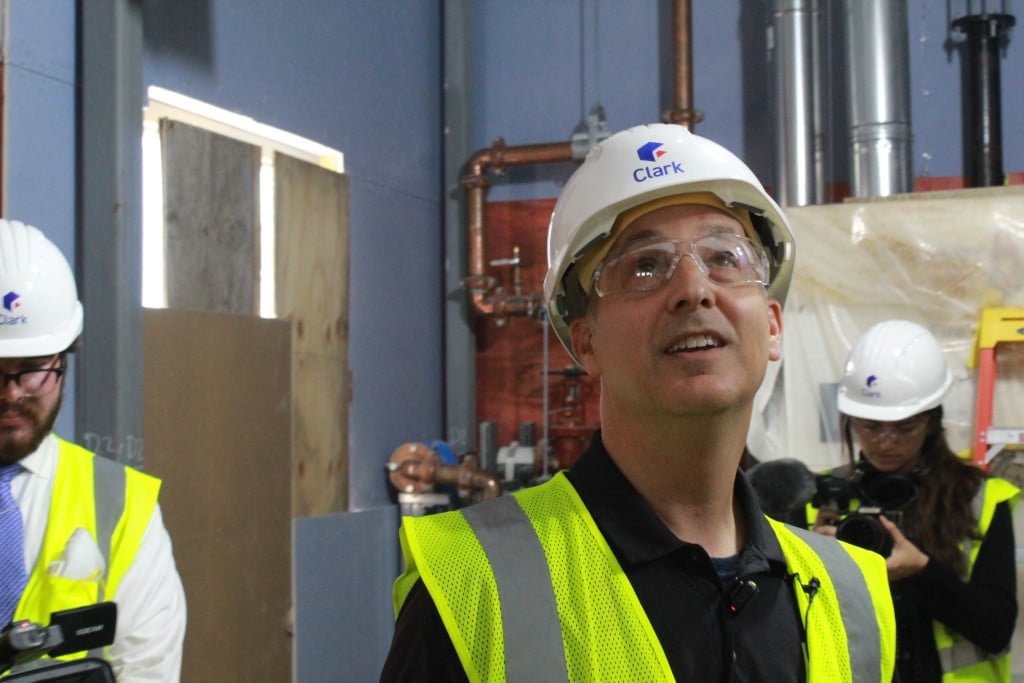
“It was just an empty parking lot,” Lansing Mayor Andy Schor said, standing in the 65,000-square-foot, three-story building that will be the new City Hall.
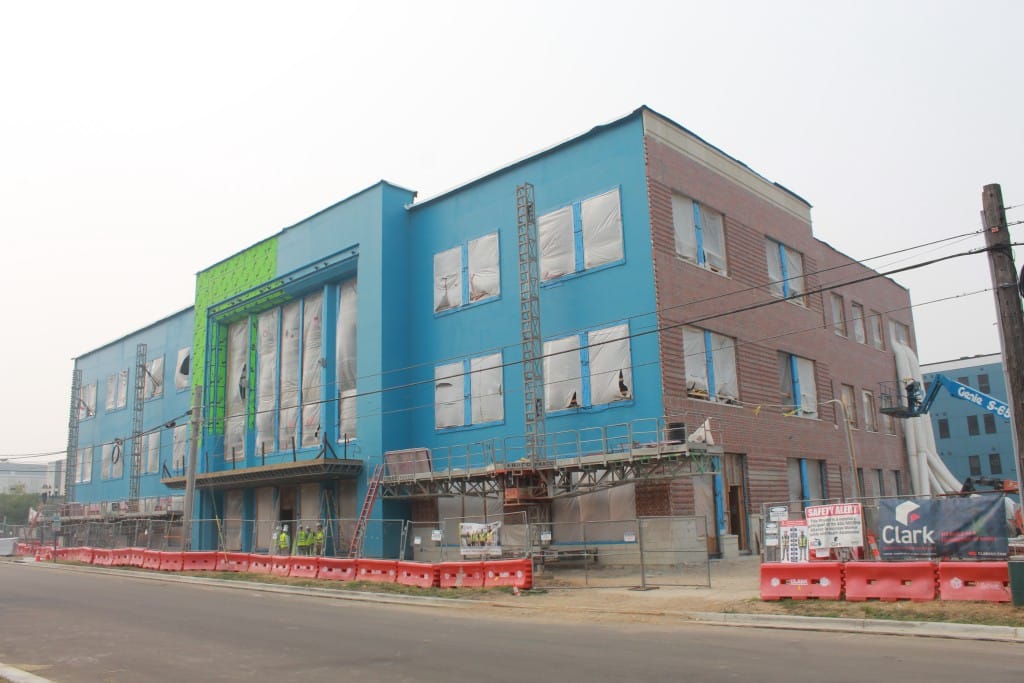
Construction crews broke ground on the site 15 months ago and the pieces are finally coming together. The building is designed to be a “one-stop shop” for residents and house more accessible City Council chambers.
Walking under unfinished ceilings and past sheeted windows, Schor said he pictures centralized city services. “It’s becoming real,” he said. “We have a few months before it’s finished, but this is exciting.”
The process of finding a new City Hall goes back several mayors ago, before Schor’s time. Former Lansing Mayor David Hollister, who served between 1993 and 2003, recommended budgeting for a new City Hall decades ago.
Built in the 1950s, the current City Hall is falling apart, assisted by years of neglected maintenance that has led to recurring issues. “We see the heat go out all the time,” Schor said. “If you go into the garage, you can see stuff falling down.”
The city has estimated the cost to upgrade the building to maintain it as City Hall would be nearly $80 million.
According to the city’s website, Schor issued a Request for Proposal (RFP) in 2021 to see if the project was possible, and asked potential bidders to “provide creative funding costs” to help the city with costs.
Voters approved a millage in 2022 to build a complex to move the Lansing Police Department, Lansing Fire Department administration and training facilities, district courts and lock-up, as well as a new fire station. Separating these departments from City Hall significantly reduced the size of the original proposal.
The new safety complex, sitting at 2500 S. Washington Ave., is slated to open in the spring of next year.
When Lansing received a one-time $40 million state appropriation in 2023 to relocate City Hall, the project turned from a pipe dream into a reality. Officials considered converting the historic but vacant Masonic Building for the relocation.
Plans were sent back to the drawing board after the City Council and the mayor disagreed on the building.
In 2024, Schor proposed a Grand Avenue parking lot across from CATA’s downtown transportation center as the new location.
Instead of sending residents to multiple buildings to pay taxes, obtain permits, register to vote or conduct other city business, the new building will consolidate those services into a first-floor customer service center.
“Right now, you’ve got to go to eight different places,” Schor said. “It’s efficient for the government, but it’s not efficient for customers.”
The first floor will house the customer service center. City Council chambers are also located on the first floor, fitting up to 170 people. The hallway outside of the chambers is meant for overflow crowds. Unlike the current chambers, visitors won’t have to navigate elevators or multiple levels to attend meetings.
“You just have to walk through the door,” he said. “It’s flat, so that makes it easier.”
Deputy Mayor Christopher Mumby said between 250 and 300 employees will work out of the new City Hall. The second and third floors will hold other city departments, including the 311 call center.
The building also includes short-term parking spaces surrounding the property, for people conducting quick business with the city. The spots will likely be either 15 or 30 minutes of free parking.
“We’d like to have free parking for those who are coming in to do work,” he said.
City officials expect staff to begin moving into the building in October, though the transition will happen in phases. Departments are currently digitizing records and reducing paper storage to fit into a building that is roughly a third of the size of the current City Hall.
“It’s not just bringing in a bunch of moving vans,” Schor said. “We’re making sure things get scanned, saved and archived.”
Once city employees leave, the building won’t sit vacant for long. The city council approved the sale of the building in 2024 to a Chicago-based developer for nearly $2.8 million. Under a longstanding agreement, the building is expected to be converted into a hotel with restaurant and retail space.
This plays into the city’s broader vision for a more active downtown, where hundreds of new residents, visitors and concertgoers are expected to arrive over the next several years. Just blocks away, the Ovation Center for Music and Arts is nearing completion, a 28-story residential tower is under construction, and additional housing developments continue to reshape the area.
Schor believes the new City Hall is another piece of that transformation.
“My expectation is five years from now people are going to forget we even had the old City Hall,” he said. “They’re going to come here, they’re going to know this is where they have to go, and they’re going to say, ‘That’s not City Hall anymore. That’s a hotel.’”