
Rewind the news, week of September 30, 2026
The family of Denis Dunneback of Lansing, 70, believes his death due to injuries from an apparent attack is the fifth in a series of known incidents involving homeless men on the Lansing River Trail since last October. Dunneback’s cousin, Teresa Sumpter, told the Lansing State Journal that he was found on the trail near the Kalamazoo Bridge on July 9, a week before he died of the injuries. Four others – Robert William Smith, Gino Chouinard, Daniel Lusk and Louis Woodruff – were beaten or stabbed in attacks in the past 11 months. Lansing Police Department spokesperson Jordan Gulkis told the LSJ it is investigating Dunneback’s death and “looking into whether there may be any connection between the incidents.”
Lansing Police Department investigators are looking into apparent human remains that were found Saturday. Police were alerted, around 7 p.m., to the apparent remains in the 2400 block of Tecumseh River Road. The city’s crime scene investigators and the Michigan State Police Crime Lab were part of the initial investigation, and a MSU Anthropology team was called in for assistance. “Based on the condition of the remains, they are believed to be several years old,” according to a statement from the police department. Investigators are working with the Ingham County Medical Examiner’s Office to identify the remains. Also on Saturday, in an unrelated incident, police retrieved a prosthetic leg from the Grand River. Both calls happened on the same day but the prosthetic leg is not related to the human remains, said Jordan Gulkis, a spokesperson for the police department, in an email.

A new 65,000-square-foot innovation hub is being built at Michigan State University. The Rosenberg Center is a new $20 million investment from the MSU Research Foundation, an independent R&D nonprofit aligned with the university. The new facility aims to bring startups, researchers, investors, and corporate partners together to accelerate research and new technologies toward the market. The center is expected to open this summer and will house growing companies and innovation partners and serve as the foundation’s new headquarters.
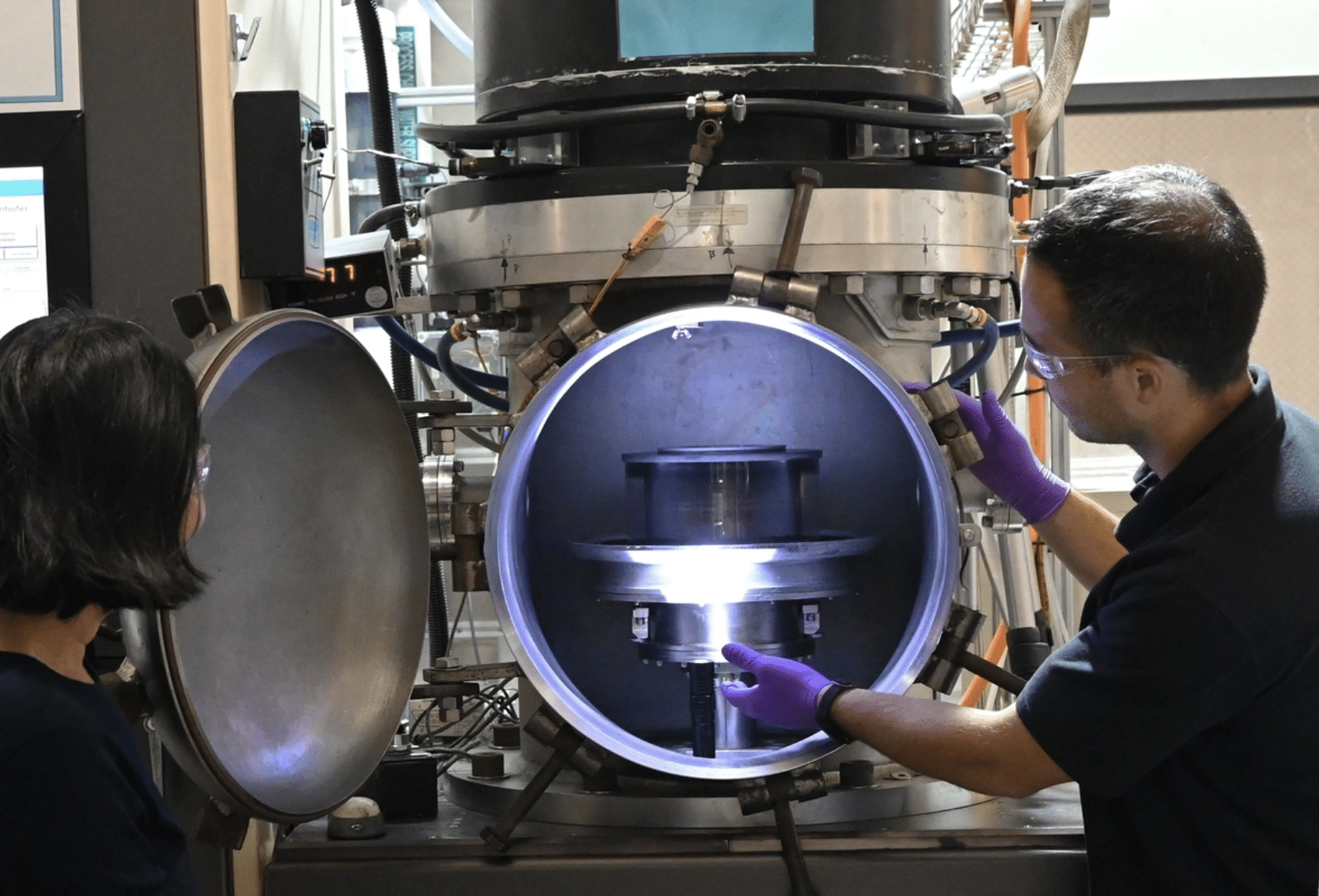
MSU also recently announced a $20 million grant that will help build a diamond foundry and testing facility for extreme environments like space. The new center will be able to simulate space radiation, which can damage normal electronics and poses serious challenges for spacecraft. The grant from the U.S. National Science Foundation will support the university’s Integrated Diamond and Carbon Research in Space Applications, or IDiCaRS, a shared-use research facility designed to accelerate the development and testing of semiconductor technologies for these extreme environments. “IDiCaRS will strengthen MSU’s ability to bring together researchers, industry partners and advanced research capabilities to tackle some of the most important challenges facing space electronics and semiconductors,” said John Papapolymerou, dean of the College of Engineering and director of the MSU Space Electronics Initiative. “Just as importantly, it will give our students hands-on experience with cutting-edge technologies and help prepare the highly skilled workforce needed to keep Michigan competitive in semiconductors and advanced manufacturing.” The facility will work in conjunction with the high-energy heavy-ion beams at the adjoining Facility for Rare Isotope Beams, or FRIB. “We are building a first-of-its-kind niche facility — a diamond foundry — here at MSU,” said Wen Li, MSU Research Foundation Distinguished Professor in the College of Engineering and executive director of Fraunhofer USA Center Midwest. “The goal is to give researchers in space and automotive electronics a place to move more quickly from developing a material or device to testing how it performs under harsh environmental conditions that can damage electronics in space.”

The federal government is suing a Shiawassee County logistics company over sexual harassment allegations. Davis Cartage Co. is identified as a transportation, warehousing and logistics company in the lawsuit announced this week by the U.S. Equal Employment Opportunity Commission. The lawsuit alleges that the company allowed its president of logistics to sexually harass two female employees at its Owosso location. According to the EEOC’s lawsuit, in 2023, the president of logistics, who is also on the board of directors and part owner of the company, passed over more qualified applicants to hire two young women whose photos he found on social media. He then subjected both women to harassing and possessive behavior, including regular comments on their appearance and dress; trying to discuss their personal lives; telling them they owed him for overlooking their criminal histories; inviting one or both to stay at his cabin, to go out drinking or to stay in his hotel room; closely monitoring them with the company cameras while they performed clerical work; and leaning over within inches of them at their desks.

An Eaton County felon will be resentenced after decades behind bars. David Armstrong Jones was convicted in 1990 of home invasion, armed robbery, felony firearm and unlawful driving away. On July 4, 1988, Jones, then 19, along with his brother and a friend, planned to break into a random home out of boredom. Armed with shotguns, Jones and his friend forced entry into a residence in Dimondale, where they robbed and beat the adult occupant before stealing his vehicle and fleeing. Jones was convicted by an Eaton County jury and sentenced to 50–75 years in prison. Over the last 35 years, he has repeatedly challenged his conviction and sentence, but those challenges were denied. Jones previously argued that his sentence was disproportionate and failed to consider his age—arguments rejected by the Court of Appeals in 1992, 2000, and 2012, and declined by the Michigan Supreme Court on multiple occasions. After Jones’s third appeal to the Michigan Supreme Court, the Court has now ordered his resentencing. Eaton County Prosecutor Doug Lloyd, a candidate for Attorney General, criticized the decision and linked it to other recent cases. “Now the Court has continued its erosion of victims’ rights and public safety by ordering the resentencing of an individual who planned and executed an offense that terrified not only the direct victim, but the community as a whole—and the Court did so because they personally believe the sentence was too harsh,” Lloyd said, in a statement.

Michigan State Police are looking for a 2018 Jeep Compass they believe was involved in a fatal hit-and-run crash on Friday in Eaton County. Police have arrested a 39-year-old male from Charlotte they’ve identified as a suspect; he has been charged with unrelated crimes, according to a statement from State Police. The victim, a 52-year-old Dewitt man, died on Saturday. The crash happened on southbound I-69 near M-100 Highway. Police are looking for the Jeep they believe was involved, it was described as dark gray in color and likely with a broken passenger side mirror and a possibly missing or damaged right-side headlight.