‘All will be revealed’ as rock legend Alice Cooper releases memoir
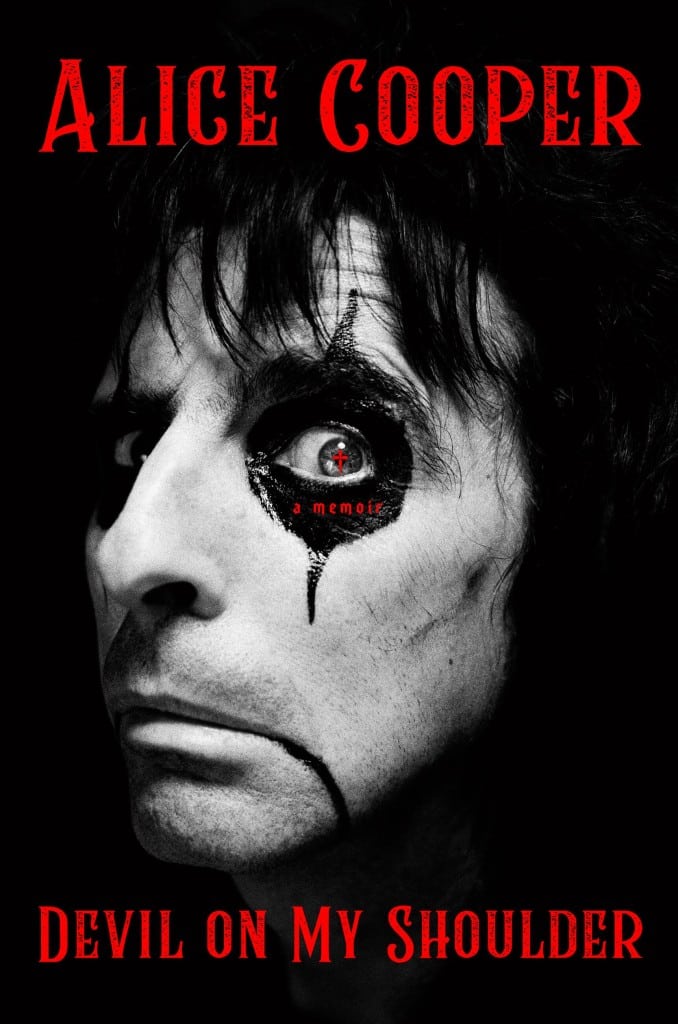
In his new memoir, “Devil On My Shoulder” (Da Capo, $32.50), Detroit native Alice Cooper details his “evilution.”
“After over 30 records and 60-plus years, the story of Alice Cooper has become a tangle of embellishments, elaborations and outright fabrications,” the “godfather of shock rock,” 78, said in a statement announcing the book. “I think it’s time to sort reality from myth: the slaughtered chickens, the bans and record burnings, the evangelical terrors, Ouija boards and poltergeists, resurrections and revenge from the grave, the cross-dressers, thieves, drug addicts and hopeless alcoholics, the house fires and car crashes — all will be revealed for what they really were.”
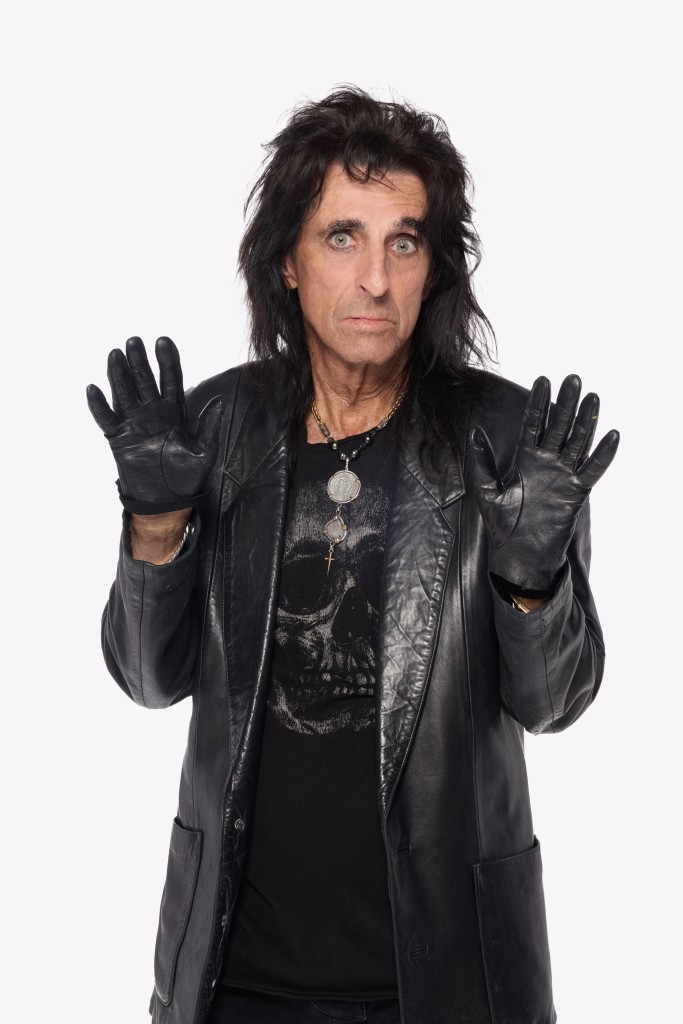
Cooper, who was born Vincent Damon Furnier, also comes clean about his addictions and his blackout years, as well his rise to the top and his “terrible slide” back down.
“I want to talk about the origin of ‘Cold Ethyl,’ the guillotine and the dead babies, the best and worst of my reviews, my feelings of guilt and regret after people got hurt or died, what life was like on the road until the wheels came off the bus, what a romantic I am at heart and how I’ve stayed married for half a century even after my wife came at me with a frying pan,” the statement continues.
Cooper is a born-again Christian. He returned to his faith in the mid-1980s after receiving Christian counseling and going through rehabilitation. He grew up in a religious household: His father, Ether Moroni Furnier, was an evangelist in The Church of Jesus Christ. His paternal grandfather, Thurman Sylvester Furnier, was a leader and later the president of the same church organization.
“I want to talk about God,” Cooper adds. “Don’t worry, I’m not gonna bang you on the head with a Bible, I just want to describe how it is that I found him dwelling in me. Alice, that inveterate liar, was a voice in my ear for so long — whispering lies and sweet nothings, pretending to be my better conscience and my inspiration, pretending to be me — that I think it’s only right to present both sides of the story: the angel on one shoulder, the devil on the other.”
Cooper was born in Detroit and grew up several blocks away from the Eastland Center mall. When he was around 10, his family moved to Phoenix.
“There’s always somebody who says I lived next door to them or went to high school with them,” Cooper said in an interview. “If they say I went to high school with them, you know it’s a lie because I left Detroit when I was 10. I’m still a dyed-in-the-wool Tigers and Lions fan, though.”
Cooper’s passion for music was heavily inspired by the Beatles. He was 16 when the Fab Four made their historic U.S. debut on “The Ed Sullivan Show” in 1964, which launched Beatlemania across the country.
At the time, Cooper was attending Cortez High School in Phoenix and wanted to participate in the talent show. He gathered four classmates and formed a band called the Earwigs. They dressed up as the Beatles and parodied their songs.
Not long after, they renamed themselves the Spiders, inspired by the music of the Rolling Stones, the Who, the Doors, the Yardbirds and the Kinks. For the next year, the band performed regularly around the Phoenix area with a huge black spider’s web as their backdrop.
“I was the perfect age to be sitting there, going, ‘I don’t want to work in my dad’s office, I don’t want to do this, I don’t want to do that. I wanna be the Beatles, I wanna be the Rolling Stones, I wanna do that for a living,’” Cooper said.
By 1967, they had graduated from high school and renamed the band the Nazz. However, there already was a band with the same name, so they needed a new moniker. Cooper believed the band also needed a gimmick to succeed and pointed out that other bands weren’t taking advantage of their showmanship potential.
“Having a name like ‘Devil’s Blood’ or ‘Satan’s Dog’ or whatever … the idea was everyone’s trying to come up with a name that’s startling,” Cooper recalled. “I said, ‘Let’s go the other way. Let’s have a name that sounds like a little old lady who lives down the street and makes cookies for the kids, except maybe there are, like, 12 bodies buried in her basement. Let’s make this Alice Cooper character sound really macabre.’”
The band made its debut as Alice Cooper in 1968. It was one of the few glam rock or glitter rock acts to achieve mainstream success in the U.S., rising to fame with the 1971 hit single “I’m Eighteen” and making waves again with 1972’s “School’s Out.”
“‘School’s Out’ is timeless,” Cooper said. “Every graduation day, ‘School’s Out’ is the national anthem to this day.”
In 1974, the band broke up. In 2011, the original band was inducted into the Rock & Roll Hall of Fame. Between 1999 and 2021, the band reunited several times before coming together in 2025 to record its first studio album in 52 years, “The Revenge of Alice Cooper.”
In 1975, Furnier legally changed his name to Alice Cooper to secure the rights to the name and to avoid any legal problems as he transitioned from the lead singer of the band to a solo artist. Cooper stated in interviews that changing his name was one of his most important and successful career moves. He’s referred to himself as the “Darth Vader of the rock ‘n’ roll set.”
“Think about it: Does Alice Cooper look like a hero? No. Alice Cooper is definitely the villain type. Paul McCartney is the hero, Bono is the hero, Sting is the hero. Alice Cooper is the archvillain. The villain gets all the good lines,” he said.
Cooper is also an avid golfer.
“I had to trade addictions,” he said. “I had a drinking addiction. I was the most functional alcoholic in the world: I never missed a line, I never missed a show, I never missed anything. I never got drunk; I was just on a nice, golden Dean Martin buzz all the time.
“But it got to me,” he continued. “I got up one morning and started throwing up blood. That was me going into the hospital right then. Since 1983, I have not had a drink. I think God just took it away from me, changed my desire for it. I never went to AA, never did any of that stuff. When I got out of the hospital, the urge was gone.”
Even though he’s pushing 80, Cooper has no desire to pack it in.
“I’ve never lost the urge, never lost the love of that gigantic power chord when you start the show and see the audience reacting to every song,” he said. “I can’t even think about Alice Cooper retiring. I’ve got more energy than the audience does. I’m not gonna be the one who gives up. Let them give up.”
Visit alicecooper.com.