A boiling, spicy pot called Salsa Verde
Salsa isn’t a rhythm you hear very often in Michigan’s capital city; at least not as much as in Detroit or Grand Rapids. However, whenever the Michigan State University student ensemble Salsa …
MSU band has maintained salsa culture in the capital city since 2008
Editor’s note: This story has been updated to correct the spelling of Alirna Korieva and Fidel Jiménez.
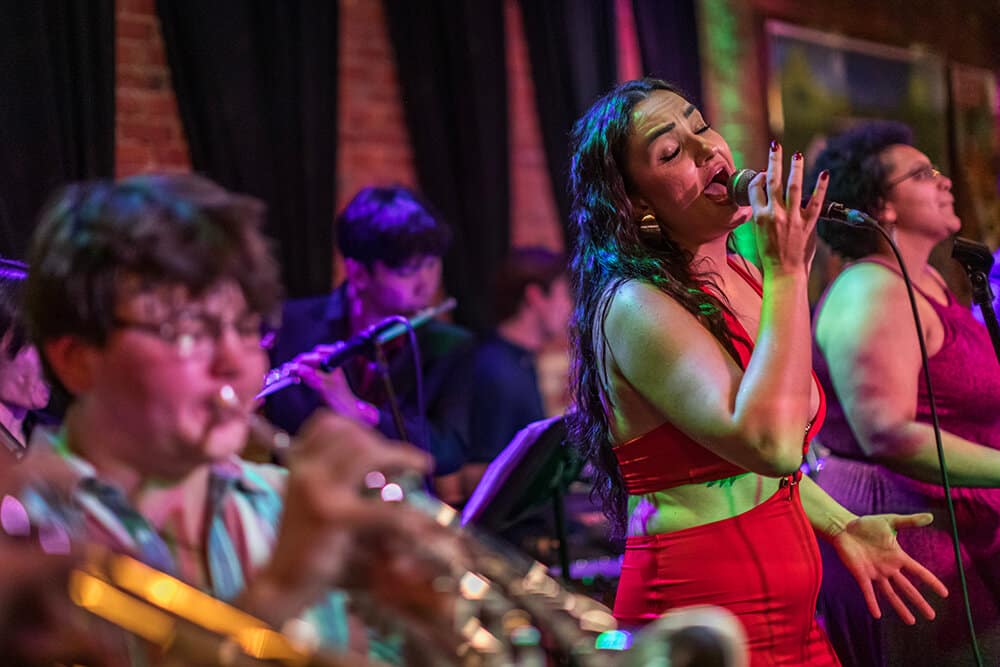
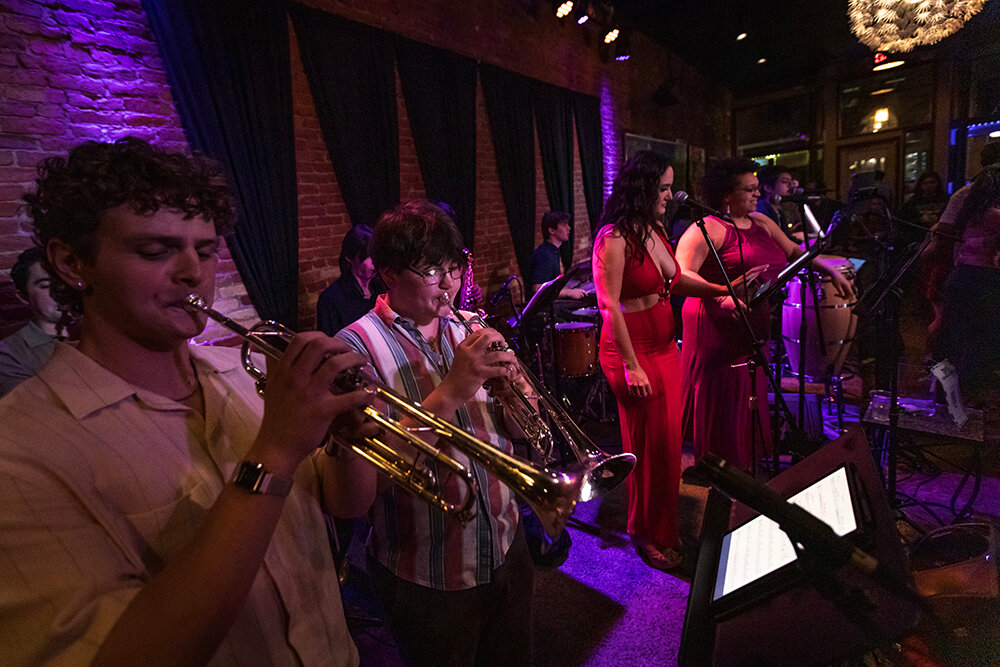
Salsa isn’t a rhythm you hear very often in Michigan’s capital city; at least not as much as in Detroit or Grand Rapids. However, whenever the Michigan State University student ensemble Salsa Verde takes the stage, Lansing venues become a boiling pot where dancers polish the floor with elegance and spice.
“It’s familiar to me,” Angel Hernandes, an MSU music grad student and conga player, said. “We’re just playing the music because we enjoy it, and the people who come to our shows are coming because they also enjoy it. It’s mutual.”
Playing salsa is about flavor and charisma, as Jon Weber, the band’s director and a percussion instructor at MSU, knows. He founded Salsa Verde, meaning “green salsa” in Spanish, around 2009 to teach and perform Afro-Caribbean genres.
From its inception, the group became a unique space where MSU music students from diverse backgrounds could explore Afro-Caribbean rhythms such as salsa, cha-cha-chá, bolero, merengue and other popular styles.
“Weber has a genuine appreciation for the music,” Hernandes said. “So, when the students approached him, saying that they were interested in playing, he decided to form a group out of that shared interest in playing salsa music.” Hernandes has taken over directing duties for now, while Weber takes a rest.
He is one of the longest-serving members of the band. His interest in Afro-Caribbean music came to him while he was taking classes on hand drumming and African diaspora history. As he grew more familiar with playing, he joined Salsa Verde in late 2021, during his junior undergraduate year.
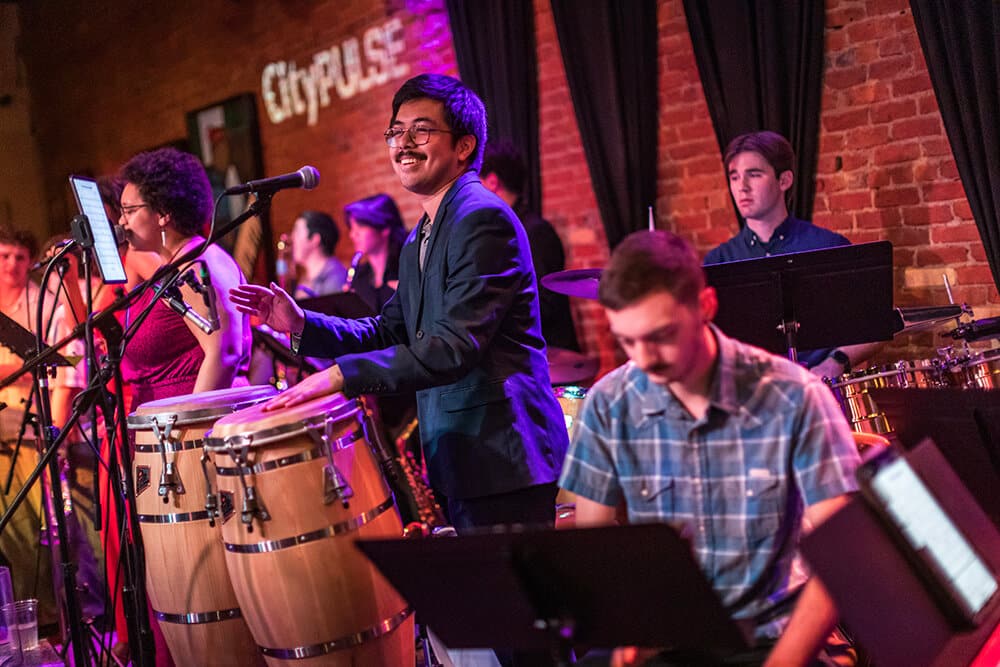
“I think I got it pretty naturally in the band; it was a similar feeling to the music that I grew up listening to in my Mexican household,” Hernandes said. He grew up listening to Mexican banda, cumbia and corridos, thanks to his parents, who are from Mexico.
It’s winter in Lansing, and there aren’t many places open to warm up on a cold night out. But Saturday evening (March 21), the swinging shadows dancing across the foggy windows at the UrbanBeat venue in Lansing’s Old Town showed that the rumba had been unleashed inside.
Alirna Korieva was on stage singing “Quimbara” by the legendary Afro-Cuban singer Celia Cruz, who, along with Fania Records, took salsa to its highest peak around 50 years ago.
A native of Uzbekistan, Korieva grew up with Turkish and Slavic language groups spoken in her country, and a culture with more Arab and Turkish influences than Latin.
Salsa came to Korieva shortly after she moved to Michigan to study music at MSU five years ago. She describes it as a dream.
Growing up, she envisioned herself performing in a Latin band, singing “Cambio dolor” by Uruguayan singer-songwriter Natalia Oreiro, which she heard on a TV show. Korieva doesn’t speak Spanish, but she’s used to singing in languages she’s never spoken and has been mistaken for a native Spanish speaker more than once.
“People from different countries would ask, ‘Oh, can you sing songs for us? We’ve been living here for years, and we miss our culture.’ So, I started learning songs in Arabic, French, Italian, Spanish, Ukrainian — so many different languages,” she said. “I never thought that would help me in so many ways, like learning all those songs for Salsa Verde, even without actually learning the languages. And people don’t always realize that I don’t speak them.
“I love this music, and I love the culture,” she continued. “It is close to my heart and spirit because my people from Uzbekistan are also passionate, and although our music is not similar, we approach it with the same intensity and romanticism. I just feel like I found myself in the good space, surrounded by good people.”
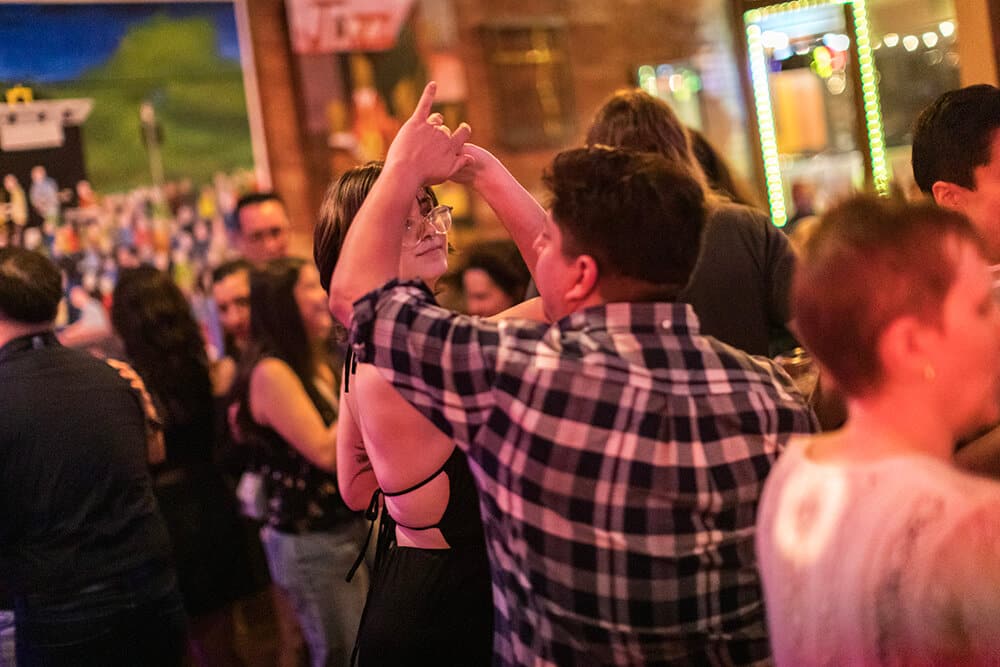
The group’s concerts bring together local salseros, as salsa dancers are known in Spanish. Many come from places where the genre is well known, such as Colombia, Cuba, Panama, Peru, Venezuela and Puerto Rico. The music is also a magnet for Lanstronauts, both the experienced listeners and the curious. They dance and sing along with Korieva; many of them know the lyrics, often from childhood or days gone by.
“Dancing to their songs doesn’t just help me release work-related stress; it makes me feel closer to my home country, Panama, at least for a few hours,” Fidel Jiménez, a doctoral student in plant pathology, said. “In Lansing, the options for enjoying salsa are limited, and nightclubs rarely play it, so Salsa Verde fills that social and cultural gap in the community.”
On UrbanBeat’s dance floor, the energy had reached a different caliber; everyone was dancing body to body. It was bursting at the seams.
“Idilio,” by the late singer-songwriter and trombonist Willie Colón, was being played. Leaders spun their partners around, took them by the waist, and pulled them close again. Intertwining hands and flowing hair moved freely in the air throughout the romantic piece. Smiling was key.
“I believe Salsa Verde is a gift for all true salsa lovers and a reminder that, far from disappearing, salsa is still very much alive,” Jiménez said.