A New Way of Seeing the Universe: MSU’s Contribution to Nobel-Winning Neutrino Research
Michigan State University has been involved in the IceCube Neutrino Observatory for about 12 years, contributing to an international scientific project based at the South Pole that studies subatomic particles originating from some of the universe’s most energetic phenomena with the goal of solving some of the universe’s most challenging problems.
A team of students, researchers, and engineers at MSU are part of the international IceCube project, led by researcher Francis Halzen, who in early October received the 2026 Nobel Prize in Physics, awarded by the Royal Swedish Academy of Sciences, “for his decisive contributions to the IceCube Neutrino Observatory and the discovery of high-energy neutrinos of astrophysical origin.”
A “cute idea,” as Halzen described it on a phone call after learning about the Nobel Prize, emerged in the late 1980s, when he envisioned a way to capture traces of an invisible fundamental particle called a neutrino using a new type of telescope: IceCube.
“We weren’t shocked”, said Tyce DeYoung, a professor in the Department of Physics and Astronomy and head of the MSU IceCube research group. “But it was certainly exciting. We’ve thought the science behind has been exciting for a very long time, and we wanted to see Francis recognized; he’s been clearly the moving force behind this project since the very beginning.”
“But, as Francis has said several times,” DeYoung said, “he views this as a prize for all of us for this work that we’ve done together. And so that was very exciting. I am very proud of him, but also, we’re very proud too of the contributions we’ve made.”
The Nobel announcement surprised both outsiders and project insiders.
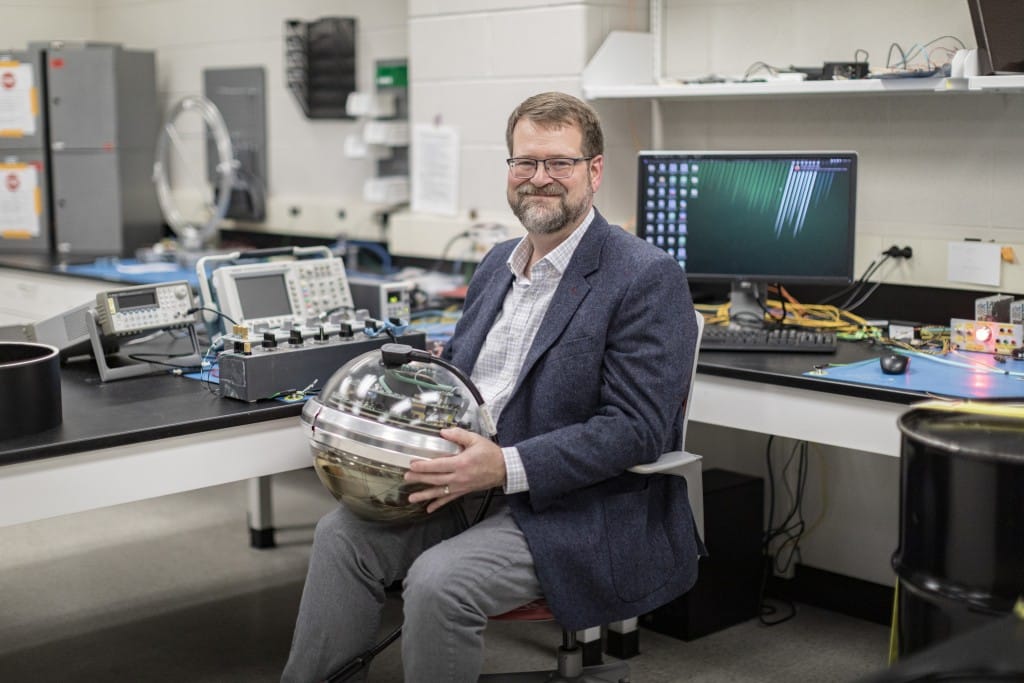
“I was very excited to see him win because particle physics hasn’t won a Nobel in 10 years,” said Alejandra Granados-Hernández, a graduate student specializing in particle astrophysics and part of the hardware production for the IceCube Upgrade, a new part of the project in which the MSU team participated by improving sensor calibrations last year. “And when I literally woke up, I saw that one of my professors had posted that Halzen had been awarded the Nobel, and there were tons of people celebrating and congratulating him. So it was super cool, because it felt like finally receiving recognition.”
And this recognition has drawn public attention to the scientists involved and put the project in the spotlight, as it “wasn’t valued or understood enough,” said Dan Salazar-Gallegos, an MSU Physics post-doc who worked as lead physicist in the IceCube upgrade. “Without a doubt, the Nobel Prize has made it much more popular than it was just a few weeks ago, so it’s fantastic to hear from people who had never heard of it before.”
The project resulted from international scientific cooperation involving 14 countries and 400 scientists. It cost $279 million, and the United States funded a large portion of the project, although IceCube avoided a proposed 50% budget cut pushed by President Donald Trump’s administration earlier this year. Congress rejected the drastic budget slash and secured five more years of funding for the IceCube.
But what are neutrinos, why the IceCube, and why Antarctica?
“They’re incredibly unique particles,” Salazar-Gallegos said, of neutrinos. “People may have heard them called ‘ghost particles’ because, for the most part, they pass through virtually everything. That’s why it takes such a large telescope to detect them. We receive tens of millions of them every day. They interact very rarely, but over many years, it becomes possible to start reconstructing where they came from.”
DeYoung said scientists believe some of the universe’s most powerful particle accelerators may be located near supermassive black holes, where particles are accelerated to energies roughly 100 million times greater than those achieved by the most powerful accelerators on Earth, including CERN.
Despite more than a century of research into these cosmic phenomena, their origins and mechanisms remain largely unknown. By detecting neutrinos, there is hope to gain new insights into these extreme environments and better understand the powerful processes shaping the universe.
And here is where the IceCube Observatory plays its key part.
“Galileo Galilei invented the first optical telescope,” DeYoung said. “And we learned many things from that. In the 20th century, many new types of telescopes were developed: radio telescopes, infrared telescopes, gamma-ray telescopes, and every new way that we find to look at the universe, we discover amazing things that we hadn’t thought about, we hadn’t understood. IceCube is the latest.”
“It’s another new way of looking at the universe,” he said. “And it tells us about things that we don’t see very well in optical astronomy or in X-ray or radio astronomy.”
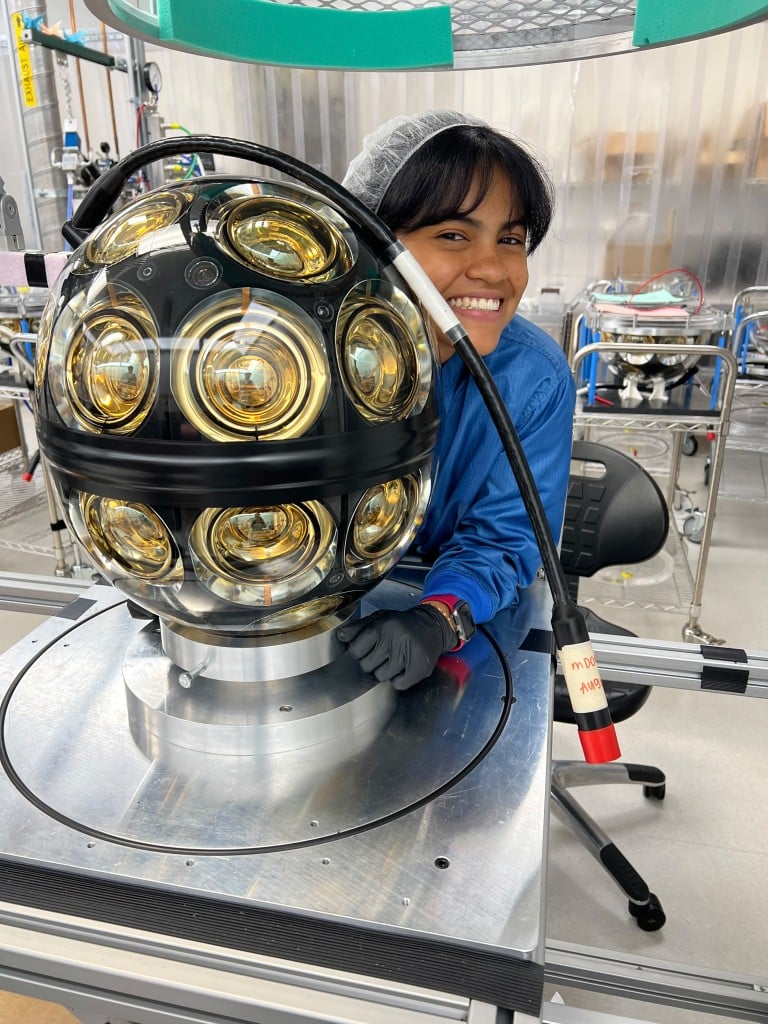
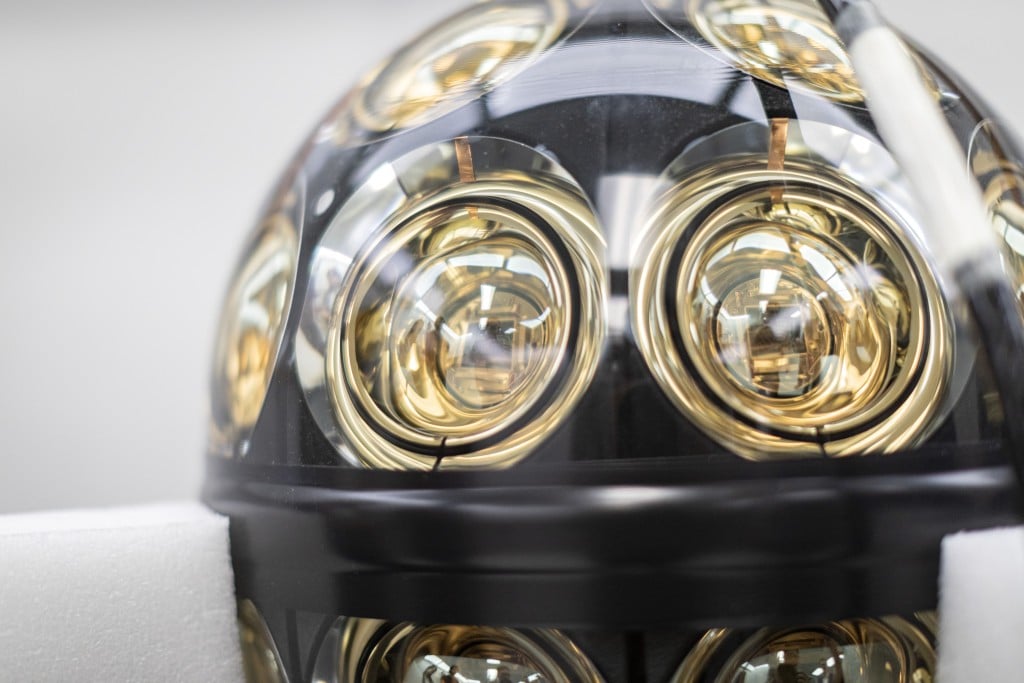
About 3 kilometers under the Antarctic ice, beneath billions of tons of ice, IceCube consists of rows of more than 5,000 digital optical modules and was constructed between 2004 and 2011. The 5,000 detectors, each slightly larger than a soccer ball, together make a giant cube, nearly a kilometer wide.
And they make it possible to detect the traces left by neutrinos.
“Going to Vancouver or Hawaii would be a lot more convenient than going to the South Pole,” DeYoung said. “It would certainly be a lot more pleasant to conduct an experiment, but it turns out that the engineering that you need in the deep ocean is much more difficult than it is at the South Pole.”
This is one of the few things that’s easier to do in Antarctica than anywhere else on Earth.
“It’s easier,” DeYoung adds. “Because it’s not under the water, and it’s easier because the South Pole ice is freshwater, so it’s not corrosive like saltwater is. Once it freezes, it stops trying to destroy our equipment.”
MSU and the IceCube
Before IceCube, there was AMANDA (Antarctic Muon and Neutrino Detector Array), a precursor detector that advanced neutrino research in Antarctica. DeYoung said his doctoral thesis focused on demonstrating that AMANDA could identify neutrinos, laying some of the scientific groundwork for the development of observatories like IceCube.
Involvement began through individuals, not an institution. DeYoung started about 30 years ago as a graduate student at the University of Wisconsin, working within Francis Halzen’s group; his colleague Nathan Whitehorn joined about 15 years later. Both eventually became faculty members and brought the work to MSU.
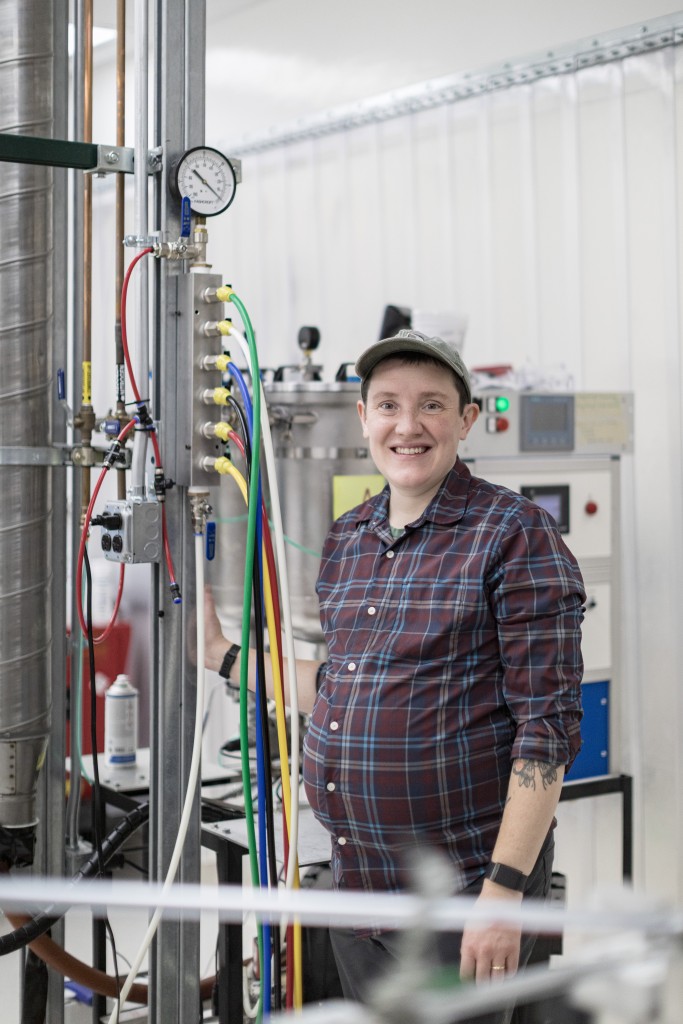
“The university was very enthusiastic about the science we were conducting. In fact, we now have several faculty members who have been involved,” DeYoung said. “So, MSU has been involved for about 12 years and has been a major supporter.”
One of MSU’s most significant institutional contributions was its participation in the IceCube Upgrade project, an initiative to enhance the observatory’s calibration and measurement capabilities. Last year, 400 more sensitive modules were installed inside the ice. Of these new modules, MSU assembled 205 as part of the IceCube Upgrade project, developed through a collaboration between Michigan State University, the University of Wisconsin, and scientific partners in Germany and Japan.
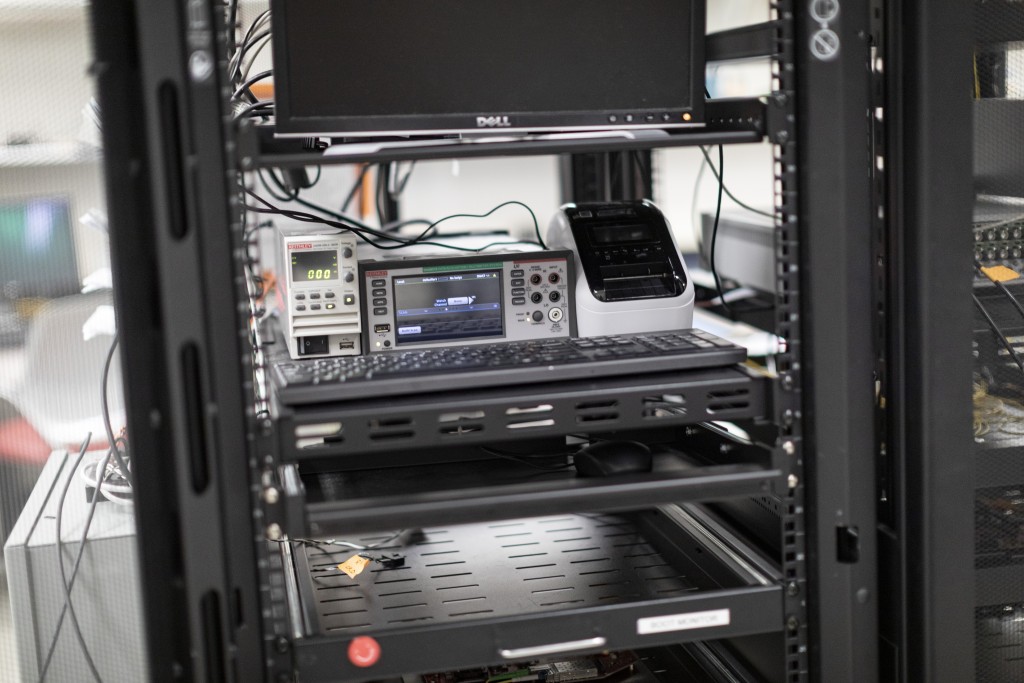
The sensors were assembled at MSU’s Biomedical and Physical Sciences Building in East Lansing, with production beginning in spring 2024. The project also provided students, around 18 undergrads, with an opportunity to participate directly in an international scientific collaboration, contributing to the manufacturing, testing, quality control and calibration of the equipment. According to the university, the new modules are designed to be two to three times more sensitive than the existing optical sensors.
Emmett Krupczak, a National Science Foundation Graduate Research Fellow and project lead for the IceCube Upgrade’s construction, traveled to the South Pole from early November 2025 through February 2026 to participate in the installation process.
“It was extremely exciting to see modules that we built right here at MSU travel all the way down to the South Pole,” Krupczak said. “The holes for the modules go about 2.5 kilometers down into the ice, so drilling them is a project in itself! I really appreciated having the opportunity to work on both the drilling side and the module installation side, because I got to participate in the whole process of constructing the detector, starting from parts in the lab and finishing with a fully tested module more than 2 kilometers deep in the ice.”
The project will not be limited to a single location for observing the universe. Although IceCube is the first operational telescope of its kind, researchers say its ability to pinpoint neutrino origins remains limited. Its relatively low angular resolution provides only a broad picture of the sky, leaving many questions about the universe’s most energetic phenomena unanswered.
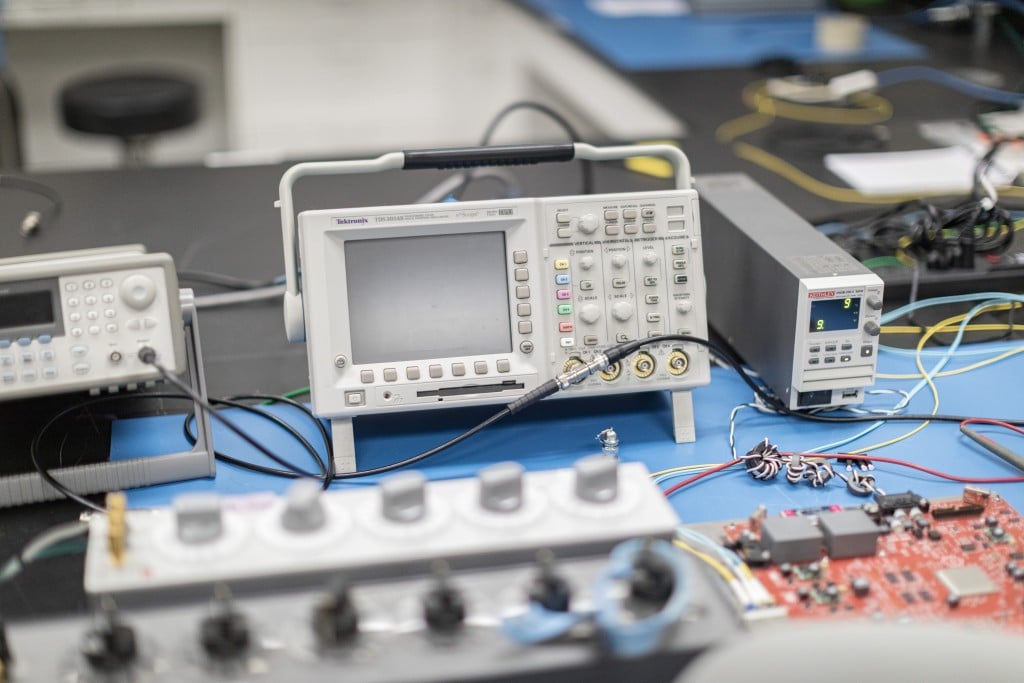
“The IceCube is the first telescope of this type that works,” DeYoung said. “And it’s starting to tell us very interesting things, but it has kind of a little bit of a fuzzy or foggy view of the sky. It doesn’t have the precision. If we go to a radio astronomer and tell them what our angular resolution is, they kind of laugh at us because they’re like, ‘Well, that’s cute.’ So it’s the first step.”
To address these limitations, several MSU researchers are working on the Pacific Ocean Neutrino Experiment (P-ONE), a proposed next-generation neutrino observatory designed to provide greater precision and a sharper view of the universe. Located in the Northern Hemisphere, the instrument would also offer a better vantage point for studying the Milky Way, which IceCube cannot observe as effectively from its position at the South Pole.
After the Nobel Prize, team members are more encouraged than ever to continue their research and explore how far this new field of astronomy can take them in their own professional careers.
Looking back to before completing his doctorate, Granados-Hernández had hoped to help develop new methods for searching for neutrino sources that utilize machine learning. Afterward, she intends to continue researching neutrinos and to remain involved in mentoring, as she has done since her first year, to help others envision themselves in a scientific career.
Salazar-Gallegos hopes to keep researching dark matter and join a team that says something definitive, or at least interesting, about it.
“We’re at a point in our history where we can break patterns and establish new standards for ourselves,” Salazar-Gallegos added. “And all those barriers that existed, and still exist, can be broken down in ways that weren’t possible before.”