Bath mother hopes leather pouch can make traffic stops safer
Like many mothers of Black children, Susan Pope had to have a particular conversation with her children when they started driving.
“I gave them the talk about being pulled over by the …
Like many mothers of Black children, Susan Pope had to have a particular conversation with her children when they started driving.
“I gave them the talk about being pulled over by the police,” the Bath mother said. “You know: hands on the wheel, ‘yes, sir,’ ‘no, sir,’ and all of that.”
But as she was talking, Pope came to a realization: “The talk,” as she called it, is an oxymoron.
“You’re telling them to put their hands on the wheel, but they’re going to have to grab their documents, and usually those documents are in at least two different places,” she said.
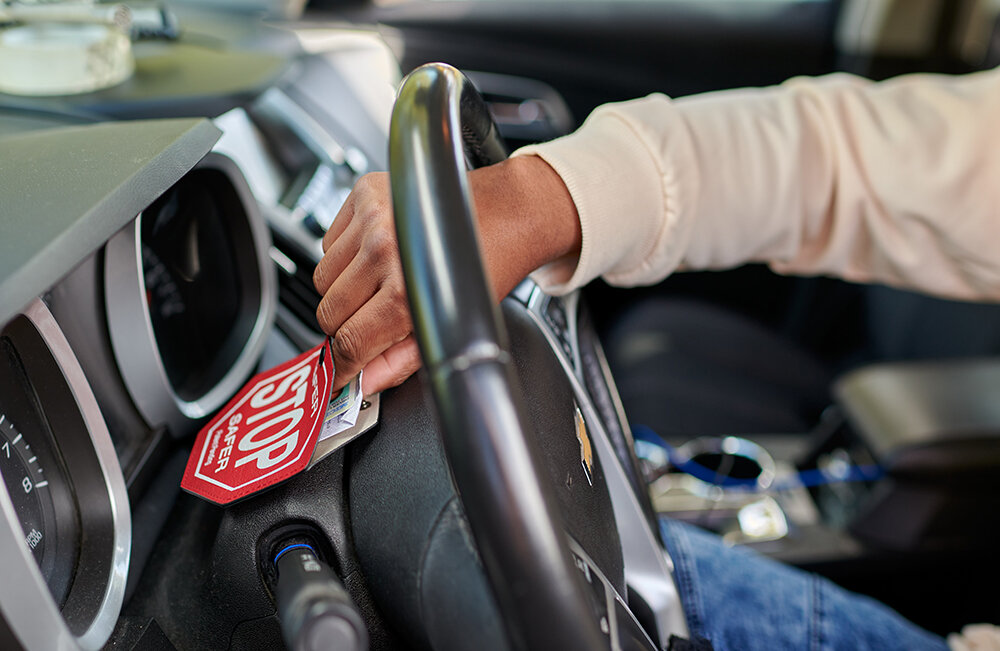
Anxious to keep her children safe, Pope began designing the first prototype for her Safer Traffic Stops, a leather document holder that attaches to the top of a steering wheel. It allows drivers to grab all the necessary paperwork while limiting movement and keeping their hands in sight.
She began selling the product about two years ago, and has sold roughly 2,000 units, at about $20 each.
Traffic stops can be a high-stress situation for everyone involved. Racial profiling during traffic stops has been a topic of national conversation for decades, and several high-profile incidents of Black people being injured or killed by officers after the officer mistakenly believed themself to be in danger have dominated headlines in the last decade.
“You have to take your safety into your own hands,” Pope said, “because you never know.”
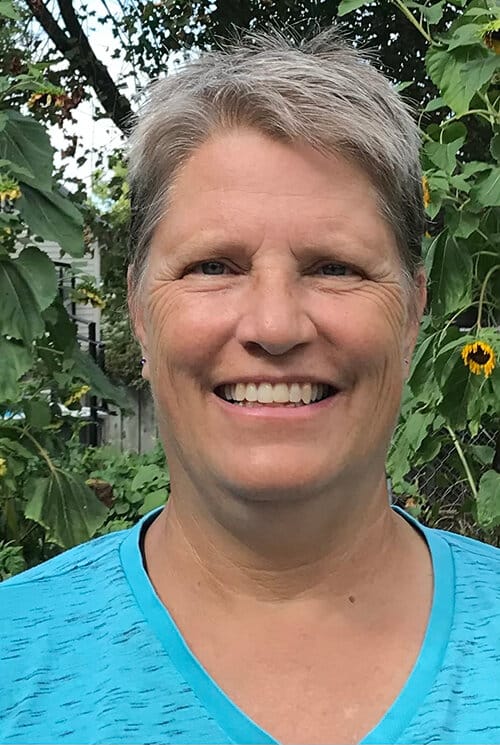
Kath Edsall is vice chair of the East Lansing Independent Police Oversight Commission. Her parents never had to have the traffic stop talk with her, but as the mother of eight black children, it’s a conversation she has become intimately familiar with.
She said officers’ training manifests in “hypervigilance,” a mentality where they need to be constantly prepared for a violent threat.
About one in 7,000 police stops ends up being an assault against an officer, and one in 361,111 stops results in an assault causing serious injury to an officer, according to a 2019 study by Jordan Blair Woods at the University of Arkansas School of Law, Fayetteville. However, officers never know which stop could be that one anomalous assault.
Edsall said data reviewed by the oversight commission showed Black drivers are stopped and have force used against them at disproportionate levels in East Lansing. As a parent, she is particularly concerned because one of her children drives an expensive car, and she is worried police will suspect a 19 year-old Black man could not afford it.
“I’ll be getting this product for him shortly,” Edsall said.
Asked what could be done to keep traffic stops safer, Edsall said that for individual stops, the onus is on the driver to stay calm despite the high-stress situation.
On the policy end, East Lansing passed an ordinance in 2024 banning pretextual traffic stops — stops for individual, minor violations like an object hanging from a rearview mirror — which can be used by officers as a pretext to search for more serious violations.
But that ordinance was stripped back as recently as last week, when the East Lansing City Council put loud exhaust back on the list of items that officers could pull a car over for, and the council is expected to consider additional changes.
In Lansing, such stops have been against policy since 2020.
Anthony VandeVoorde, Patrol Division Sergeant in the Lansing Police Department, said he’d seen similar products before, but never one that sticks atop a steering wheel.
“If I had teenage drivers, I would probably— that would be something kind of cool,” he said.
He said traffic stops are “an unknown,” which is why drivers are asked to keep their hands in sight and have all documents available before the officer comes to the car.
“We don’t know who’s in the vehicle or what their purpose being on the roadway is,” he said.
Asked what else drivers could do to stay safe during stops, he encouraged drivers not to debate the officer, even if they feel a citation is unfair.
“That’s what court is for,” he said.
He added drivers who are unhappy with an LPD officer’s conduct can request a command officer come to the scene, or call the department later and ask to speak with a command officer afterward. Because all LPD stops are supposed to be recorded on body camera and dashcam, the stops can be reviewed after the fact.
In 2001, the LPD began collecting data about traffic stops via the Management Analysis of Traffic stops program, following national debates about racial profiling.
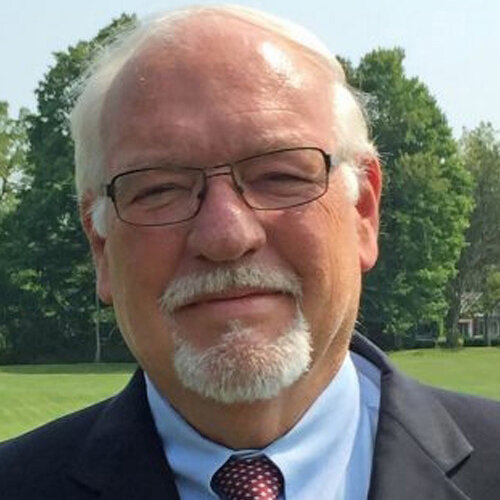
David L. Carter, professor at Michigan State University’s school of criminal justice, helped develop that program and has been involved in preparing yearly reports on traffic stop data ever since. He said the proportion of non-white people stopped in Lansing is higher than that of the city’s population, but cautioned against using that metric uncritically.
“It’s been that way the whole time, but the research shows using population demography is just a bad metric,” he said. “It doesn’t accurately reflect what’s going on because it doesn’t account for transient drivers, it doesn’t account for where officers are deployed, it doesn’t account for crime rates, et cetera.”
Over 25 years, little has changed in terms of race, he said, but there are fewer traffic stops than previously due to new policies.
To stay safe during stops, Carter suggested drivers tell the officers what they are doing before making any movements.
“You tell the officer, ‘Oh, my wallet’s in my back seat, may I reach back and get it?’” he said. “You’re opening lines of communication. That way, a sudden move to reach back doesn’t set the officer off.”
At night, he suggested turning on the dome light to ensure the officer can see everything clearly.
He said that while the percentage of traffic stops that go wrong is very low, officers are trained to treat every stop as a potential threat and to remain vigilant.
Pope was careful to clarify that her goal with the product is to reduce that tension for drivers and officers alike.
Asked if she thought it was sad that such a product would be necessary, she said it was, but that doesn’t mean she shouldn’t sell it.
“Yeah, it is sad, but I don’t think anything’s going to change anytime soon,” she said. “Wouldn’t you rather have it than not?”
— LEO V. KAPLAN