Blue-Nami ‘26: Fewer Split Tickets Turn Familiar Dem Margins Into Historic Gains
The beating Democrats put on Republicans in Michigan last week can’t be gauged by the visible size of the bruise.
It’s by how deep the bruise stretched beneath the skin.
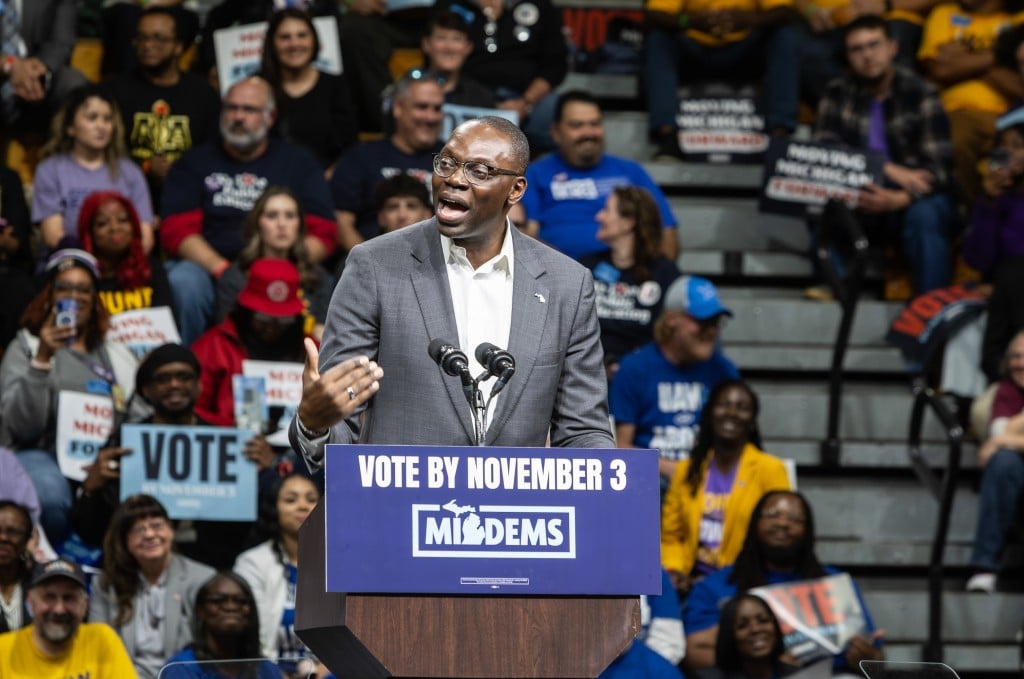
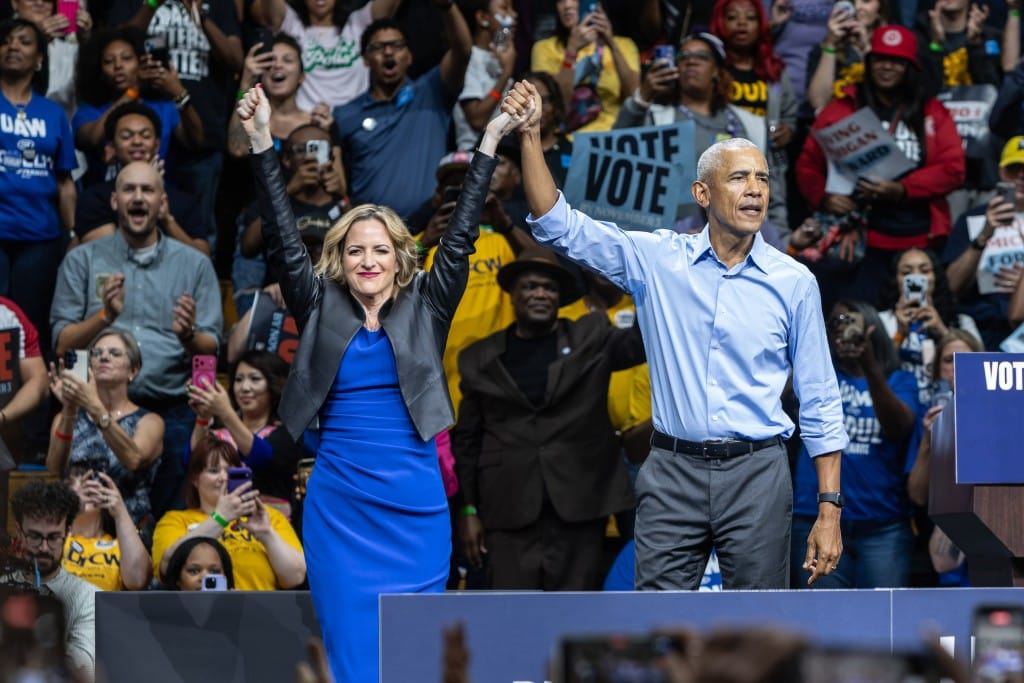
Democrat Jocelyn Benson beat Republican John James on Nov. 3 by 10.85 percentage points. In 2022, Gretchen Whitmer beat Tudor Dixon by 10.53 percentage points.
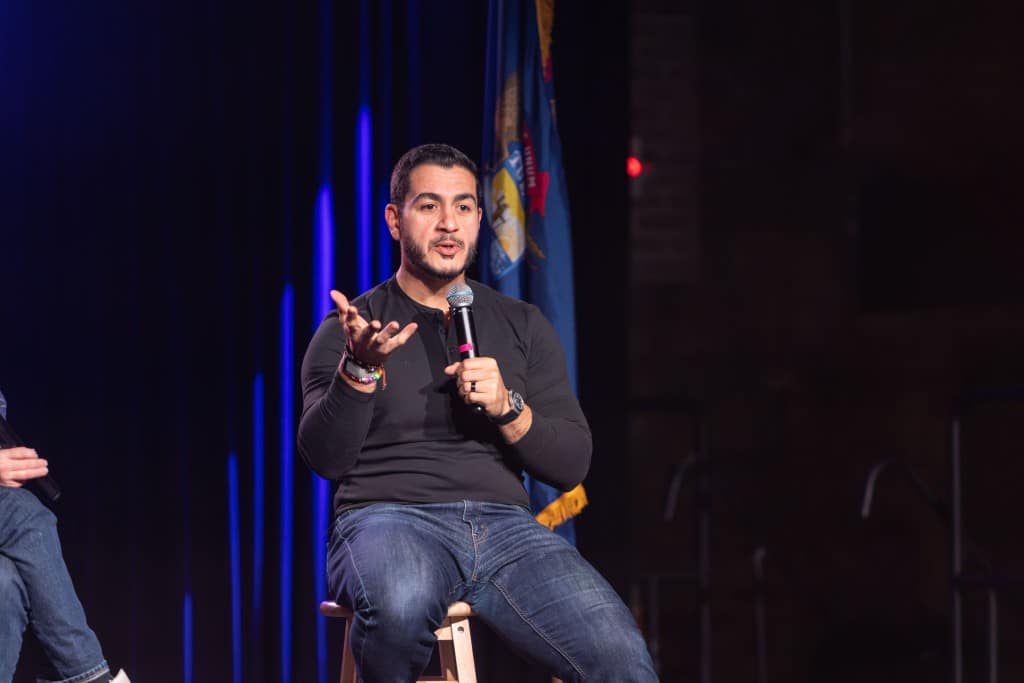
Democrat Abdul El-Sayed won his seat with 52.55% of the vote. Democratic U.S. Senate candidates, since 1936, have averaged 52.71% of the vote.
It’s hard to call either result bigger.
What made the 2026 “Blue-nami” so historic is how completely Democratic votes carried down ballot. Also, the traditional pendulum swing back to Republicans after a Democratic administration didn’t happen.
“It was more than just a wave,” said Oakland University political science professor Dave Dulio. “The statewide and nationwide domination was consistent and widespread.”

Let’s run through the numbers.
– The Whitmer-Benson transition will be the first time a Democratic governor will hand off to a Democrat successor since 1961 and only the second time since the Republican Party started nominating candidates in 1854.
– With El-Sayed’s election and assuming no early departures, Michigan will go 30 years without a Republican U.S. Senator, its longest-ever drought, which includes 1837-1854, when the GOP didn’t even exist.
– Michigan Democrats picked up three congressional seats, reducing Michigan’s Republican congressional delegation to four starting in 2027, its lowest point since 1884 when Michigan had 11 members of Congress.
– Democrats picked up three state Senate seats, creating a 23-15 majority, its largest margin since the end of 1982.
– Democrats picked up 11 state House seats, its largest election pickup in 62 years. It will now have a 63-47 majority.
– Only one of Michigan’s seven Supreme Court justices, Brian Zahra, was nominated by the Republican Party. Zahra is the only non-education post statewide Republican to win since 2018.
A reason for these numbers is a nearly 20% jump in voters picking straight-ticket Democratic from 2022 to 2026. Republican straight ticket voting went up 16.7% during that same period.
This widened the Democratic advantage in straight-ticket votes from 185,887 four years ago to 255,905 this year.
Not as many voters are splitting their tickets.
Competitive precincts in Downriver, Macomb County and elsewhere that split – a vote for Whitmer alongside a vote for a Republican state House candidate in 2018 and 2022 – are seeing more homogenized election results.
Take Blackman Township in Jackson County, for example.
In 2022, Republican Rep. Kathy Schmaltz (the former WILX anchor) won Blackman Township by 1,338 votes while Democrat Gretchen Whitmer won it by 160 votes.
This year, Schmaltz won the Township by 179 votes. James won it by a nearly identical margin – 156 votes.
That’s bad news for Republicans since Michigan, overall, tends to lean more Democratic than Republican.
“Republicans could go from being a nearly extinct creature in 2027 to being a full extinct creature in 2029 if – and this is what I’m really concerned about – Michigan is not a battleground state in 2028,” said Republican political consultant Dennis Lennox.
At the epicenter of it all is President Donald Trump.
The war in Iran.
The on-again, off-again tariffs strategy.
The trade war with Canada.
All of it came with gas hitting $5 a gallon.
Grocery prices ballooned.
High interest rates stifled the housing market.
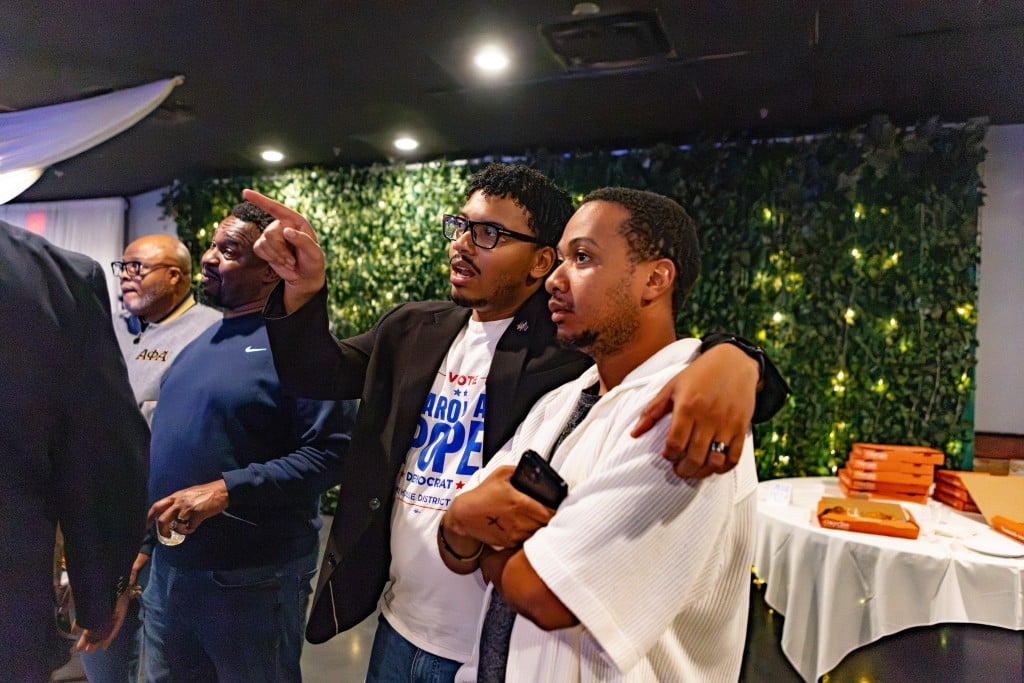
Voters held the President responsible for the rising prices, and Republicans representing politically competitive districts paid the price this time, said Adrian Hemond of Grassroots Midwest.
“When the numbers go, people get angry,” Hemond said. “As it turns out, when the President wrecks the economy on purpose and for political reasons, the voters will punish you for that.”
Data centers, Flock cameras and the Muslim Brotherhood all came up as issues this campaign, but Hemond said all of these issues turned out to be “irrelevant.”
Campaigns seemed to bring up issues “just to entertain each other,” because voters truly didn’t distinguish between the candidates.
Republicans were pro-Trump. Democrats are not. They feel Trump is responsible for their current life situation. That’s all the information most voters needed to know.
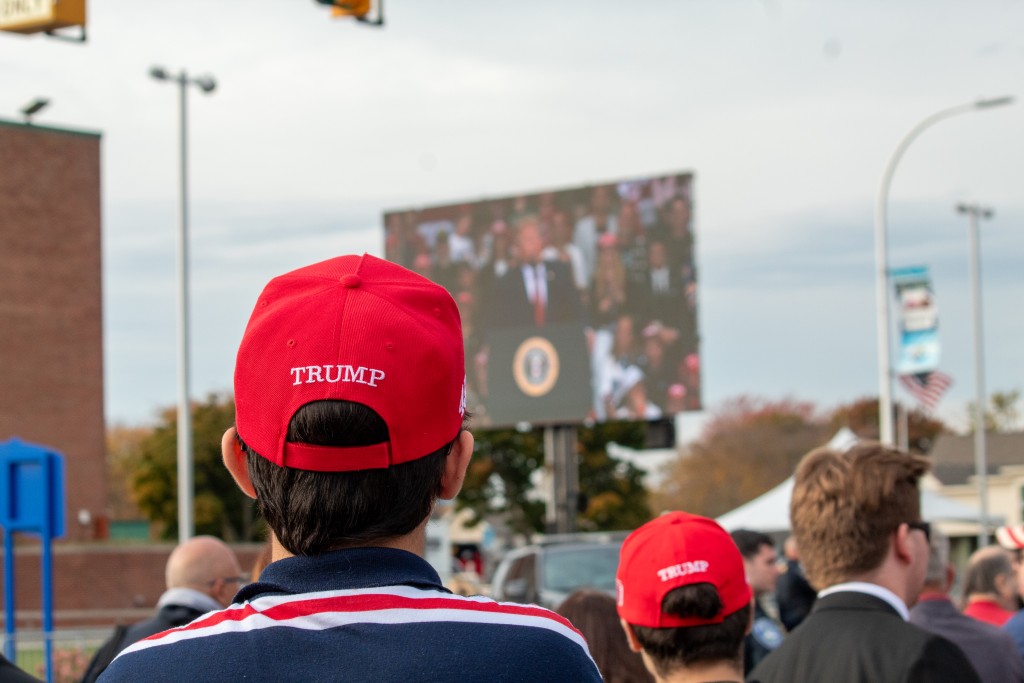
“Nobody gives a crap about what’s happening in Iran or how well the stock market is doing when they can’t afford groceries, they’re paying $5 for gas, and buying a home feels completely out of reach,” said Paul Cordes, the former Michigan Republican Party executive director.
“It’s not rocket science. People didn’t suddenly become wonk Democrats overnight. “They voted to punish a party that promised to fight for working families, but hasn’t done nearly enough to make their lives better.”
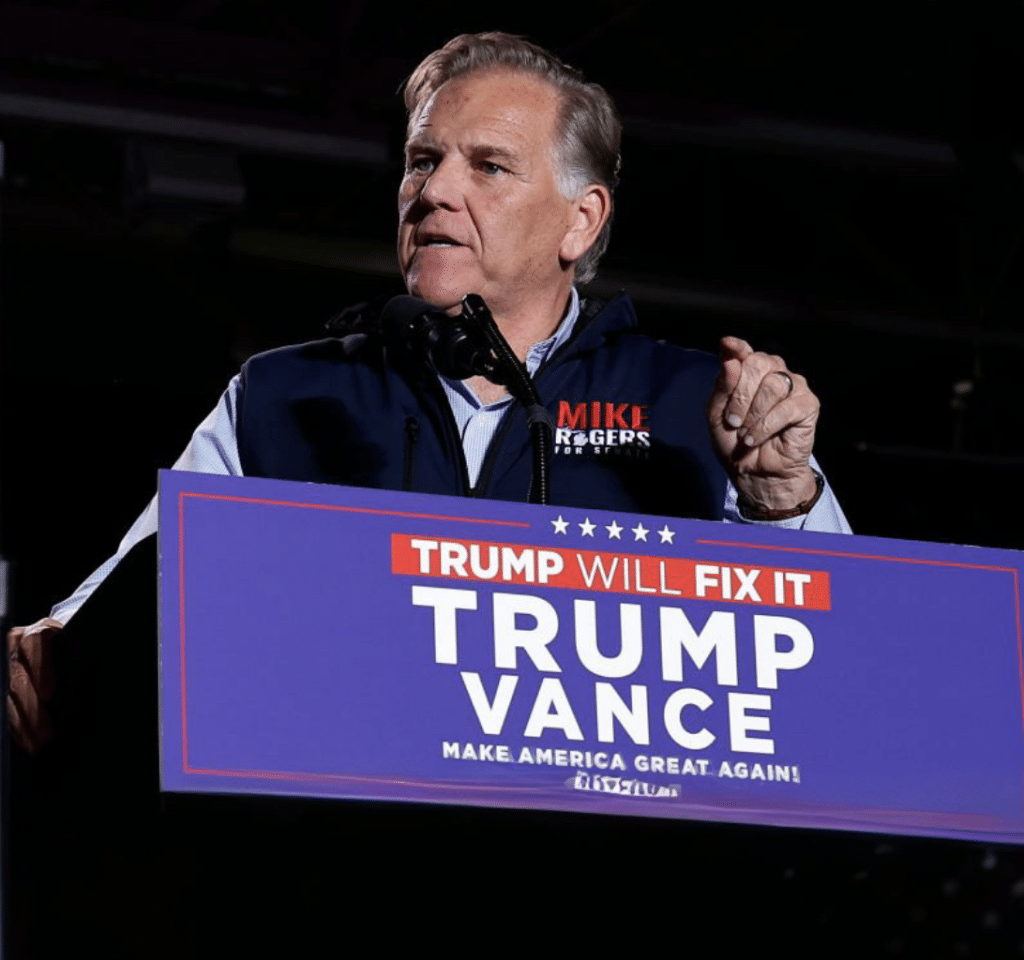
According to AdImpact, $172.8 million was spent on TV, streaming and internet ads trying to get Republican Mike Rogers elected to the U.S. Senate. By contrast, $108,856 was spent through those mediums to get Republican Tony Forlini elected secretary of state.
Rogers lost with 45.45% of the vote. Forlini lost with 43.53% of the vote.
“We saw very little crossover across office, across states, social groups or anything,” said Matt Grossmann, director of the Institute for Public Policy and Social Research. “People’s vote for state legislator was far more related to the President than their position on anything related to state government.”
Republican candidates were stuck.
Speak in favor of Trump and lose a substantial segment of the population. Speak against Trump and potentially lose base support and possibly earn a primary opponent in the next election … if there is a next election for them.
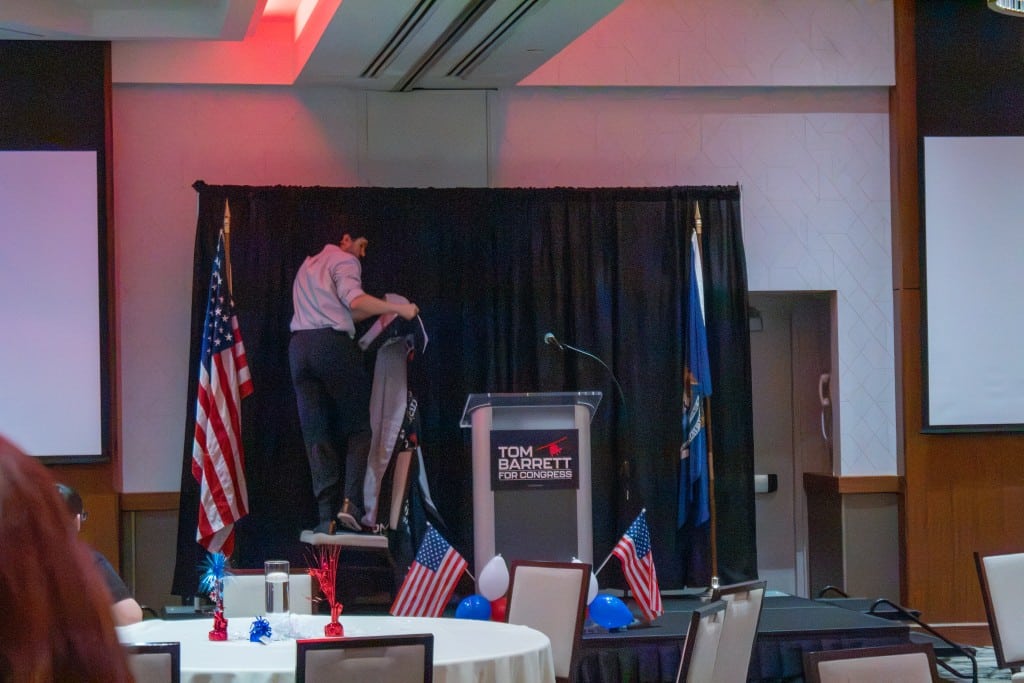
Incumbents in competitive districts, including U.S. Rep. Tom Barrett and U.S. Sen. Bill Huizenga, invited cabinet members and congressional leaders to town to talk about other issues where Team Trump could arguably claim successes.
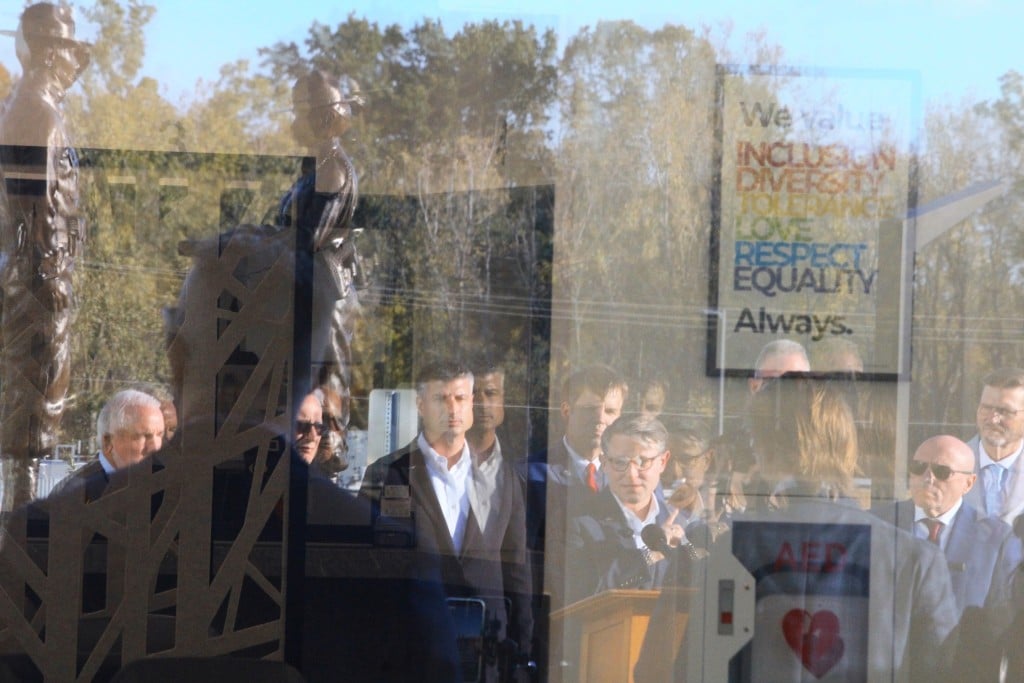
House Speaker Mike Johnson came to Michigan State’s Facility for Rare Isotope Beams (FRIB) with U.S. Interior Secretary Doug Burgum to highlight the $125 million Barrett helped bring to MSU to make it all happen.
Johnson returned to Mason weeks later to highlight how much federal money Barrett scored for local law enforcement.
Voters seemed to care about little beyond how life was becoming unaffordable.
“If you’re raising a family of four on $90,000 a year, you’re screwed,” Hemond said. “A whole lot of people are not doing good right now. They’re cutting back where they can, but it’s not good.”
Also, Trump has never won 50% of Michigan. He scored 47.5% in his 2016 victory and 49.73% in 2024.
The point being that his allure was enough to win Michigan twice, but not much else. In the post-Rick Snyder era, Democratic candidates win with majorities in Michigan. Republicans do not.
The numbers show neither party is doing much to expand the size of their universe.
In the last three mid-term elections, the Democratic nominees for U.S. Senate, governor, secretary of state and attorney general have received all received between 55.86% and 49.04% of the vote, an average of 53.31%.
The Republican nominees received between 46.26% and 41.93% of the vote, for an average of 44.11%.
“Both parties are in a base-only posture right now,” Dulio said. “There’s little evidence to demonstrate that voters are interested in candidates who are from the other side.
“They are pushing turnout models in these elections as opposed to persuasion models.”
Turnout models are easier to execute, he said. It requires getting people out to the polls as opposed to the two-step process of convincing voters that you’re right and then getting them to vote, he said.
If Michigan elections are destined for more strap-on-your-helmet-and-repeat cycle, Republicans would seem stuck in the mud.

Could repeated Blue-namis become the anticipated norm as opposed to the exception?
Cordes said he doesn’t believe it needs to be that way.
The first step is connecting with a majority of voters. Talking and connecting with the guy working 60 hours a week trying to pay his mortgage, not the guy sitting in a boardroom “figuring out to squeeze another dollar out of him.
The party needs to elevate candidates like Barrett, a married father of young kids, whose got a mortgage and is “a hell of a lot more concerned about what groceries cost than which hedge fund is going to outperform the market.
“We need more leaders who actually live the same lives as the people we’re asking to vote Republicans,” Cordes said.