Building pathways, one job at a time
If MyHandyma’am hired only based on experience, they wouldn’t be handyma’ams at all.
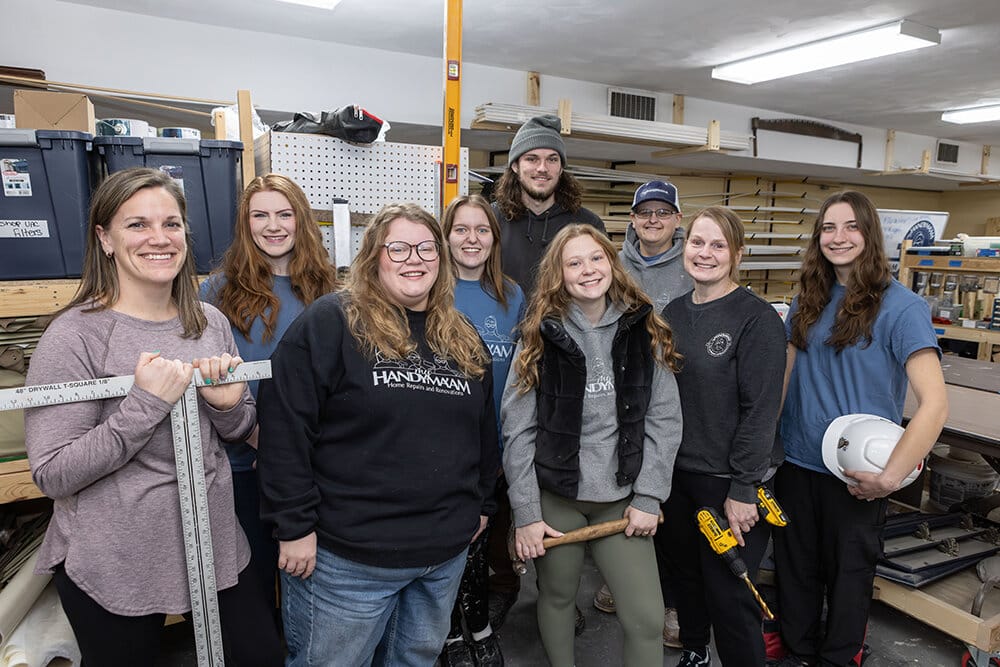
All but one of the St. Johns home repair and renovation company’s 12 employees are women. Only about …
MyHandyma’am and other local businesses are making the trades more accessible
If MyHandyma’am hired only based on experience, they wouldn’t be handyma’ams at all.
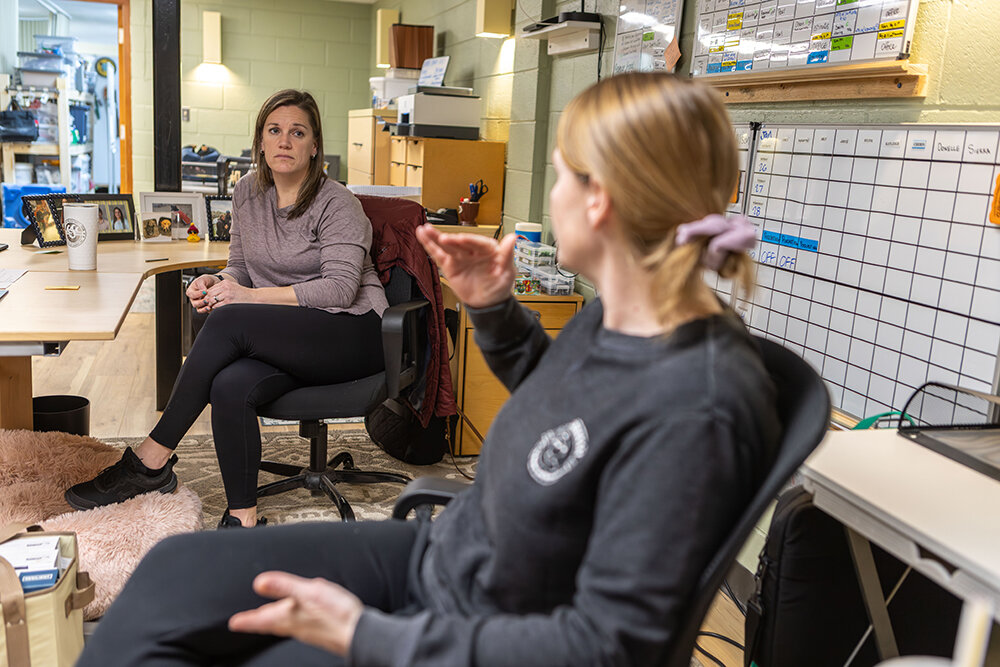
All but one of the St. Johns home repair and renovation company’s 12 employees are women. Only about three out of every 100 maintenance and repair workers in the country are women, according to the latest U.S. Department of Labor figures. That’s the fifth lowest out of any industry in the country.
With a mostly female team, MyHandyma’am’s target demographic is single women over 50. Those are the people, said MyHandyma’am business development manager Emily Pearl Reist, who often feel most comfortable with female teams after having had a variety of negative experiences with male handymen.
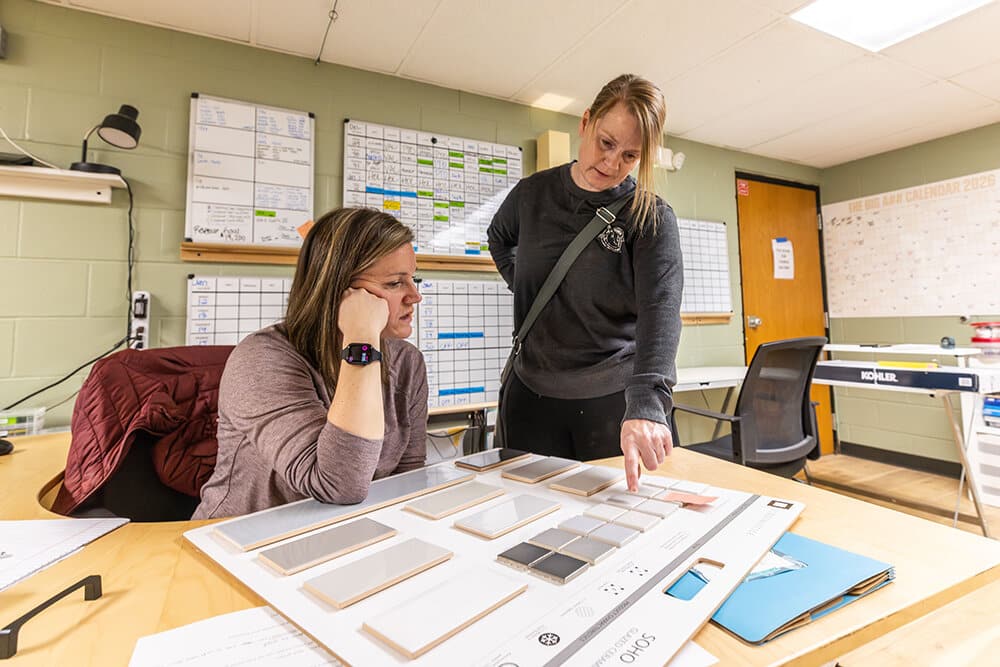
“A lot of women like to refer us to other women because they’ve had really bad experiences just with tradespeople in general in their house,” Pearl Reist said. “And so I think it’s kind of twofold. There are women who would prefer only women to be in their homes, but there is also this need for reliable tradespeople.”
Starting out as a handyperson is difficult for many women, who often do not get the same youthful experiences men do, or they don’t realize it’s a profession well-suited for them until well into adulthood.
Pearl Reist herself got into the field in her own home, alongside her mother and cofounder Samantha Pearl. The two of them got started in 2020, doing interior demolition work to expose 19th-century brick.
Afterward, Pearl and Pearl Resit purchased and renovated another home over the course of 9 months, when their renovation social media posts began to earn them handyperson work. That’s when they got their builder’s licenses.
“There hasn’t been an entry point for women in trades,” Pearl Reist said. “As an example, we had some guy comment on one of our YouTube videos that it was dumb that we were talking about how a drill works, and then somebody else commented on our TikTok, ‘I don’t even know what a drill bit is.’ So that’s a good comparison on the lack of knowledge between men and women.”
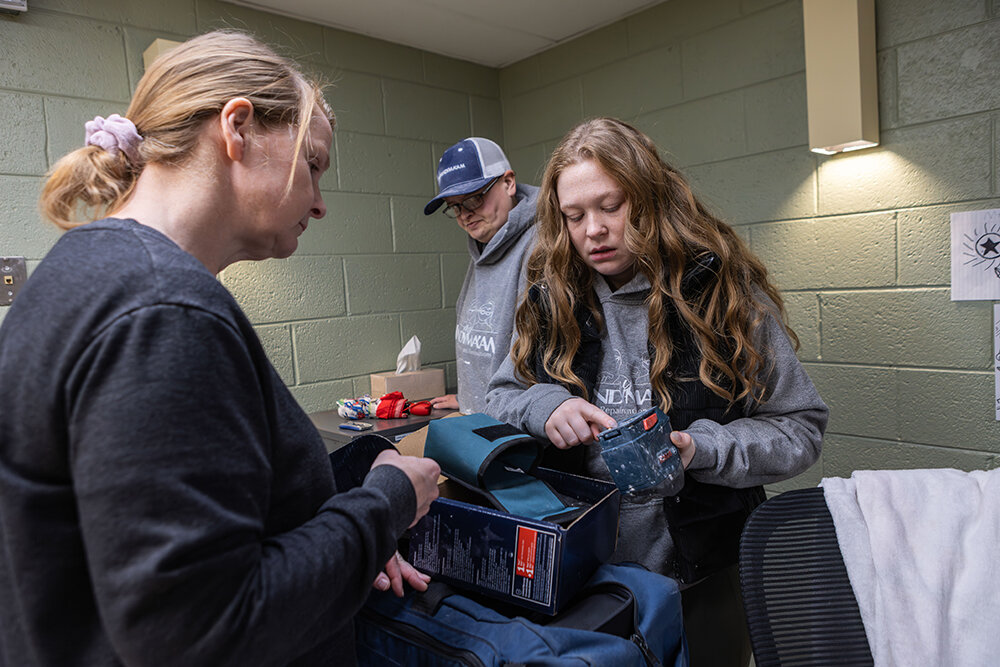
Of the six people MyHandyma’am currently employs in the field, one is a man, and he is the only employee with prior experience. By hiring people with a passion for the craft and a willingness to learn, MyHandyma’am is filling another niche: A pathway for women to get started in the profession.
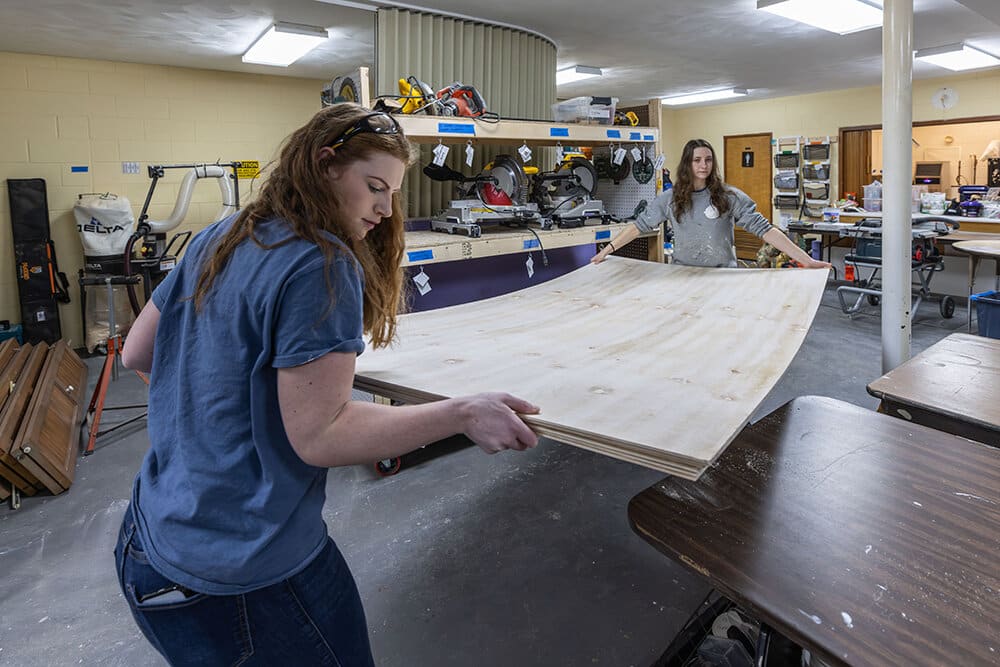
“There’s a lack of entry-level jobs,” Pearl Reist said. She said one recent hire had spent years searching for a job in the field and had been told, by one employer, that being a woman made her a difficult hire.
Those disparities also limit the types of work that women in trades can access. The four industries that are even more male-dominated than maintenance/repair work are also trades: plumbers, pipefitters and steamfitters (1.6% female), automotive service technicians and mechanics (2.2%), carpenters (2.3%) and electricians (2.7%).
Johanna Schuster-Craig owns Smaller Scale, which specializes in “minor” home repairs and similarly caters to people uncomfortable with traditional handymen. Like MyHandyma’am, she focuses on making customers comfortable and employing people who have historically been kept out of the profession.
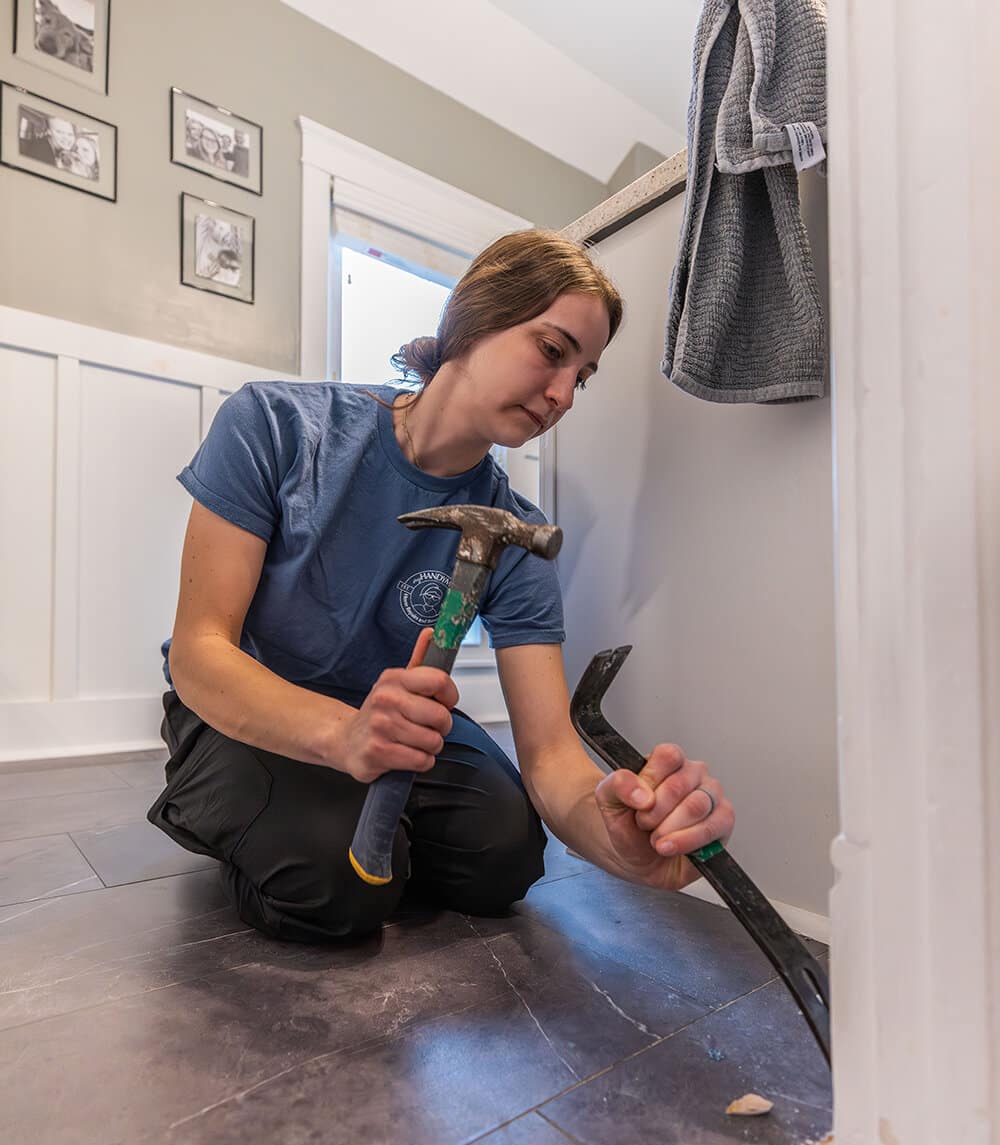
She said that people who have been interested in the trades since a young age and have felt those professions are an option are more likely to complete the yearslong processes necessary to get accredited for those larger-scale jobs.
“Women are still in a second-class contractor position,” she said. “It’s very rare to find women that are framing houses. It’s very common to find women that are painting. So there’s still a differential there.”
Schuster-Craig left a tenured professor role at Michigan State University after “constant scandals” made her job stressful. To get into handyperson work in her 40s, she attended classes at Lansing Community College and from the state’s housing department. But at her age, a rigid, years-long apprentice program for the trades isn’t worth it, she said.
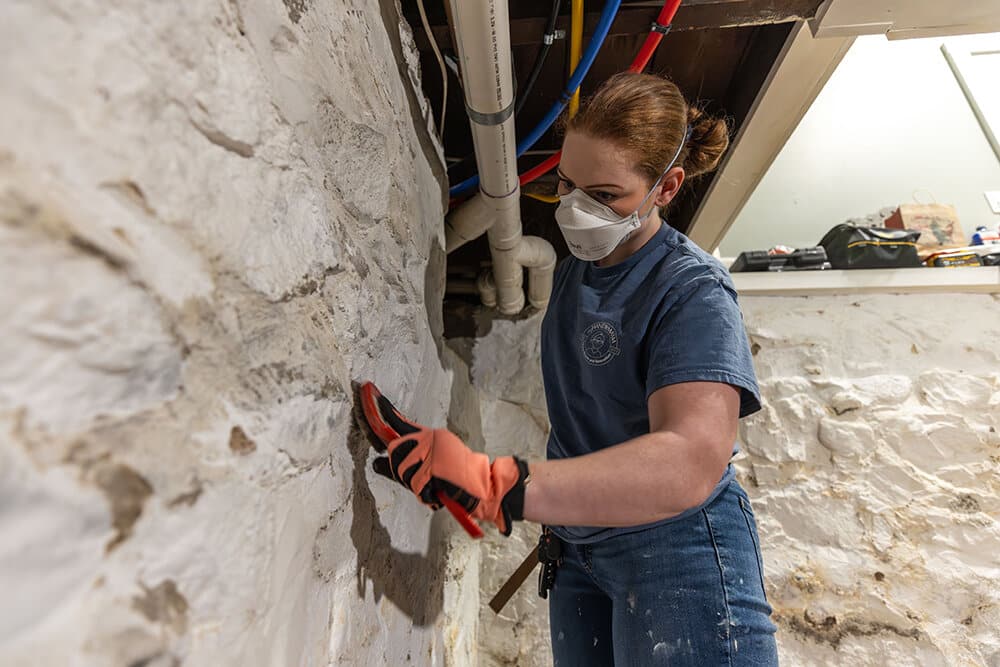
“I can’t take three years off and be supported by somebody so that I can become an expert carpenter,” Schuster-Craig said.
The monetary investment is also harder to justify later in life.
“I’m well aware of my own mortality and the state of my knees,” she added. “I got 10 years (left) in these knees, not 50.”
But as the country faces a shortage of tradespeople, Schuster-Craig said she thinks more doors will open for women out of sheer necessity.
“The trades are so hollowed out that they can’t just rely on one type of person,” she said.
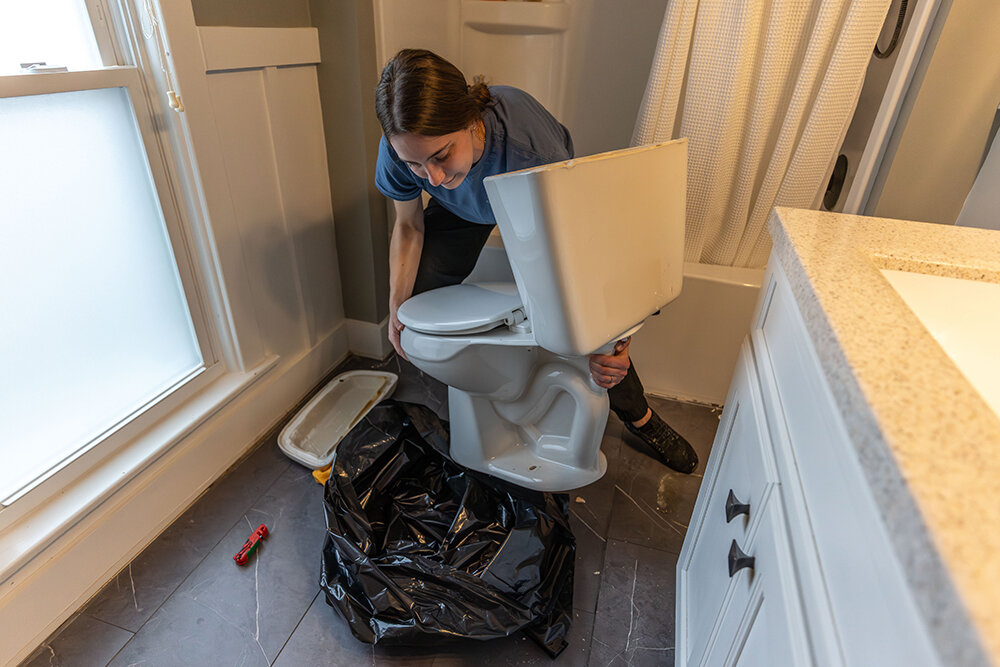
On the flip side, starting out can be difficult even for those who are just trying to build skills.
Megan Shannon runs Tiny Bit Of Wood, a Lansing woodworking school geared toward minority groups. She got into woodworking after working as a special education teacher, a journey which she described as lonely.
“There was really no avenue for me to learn things in a community I felt comfortable in,” she said. “I took one woodworking class, I was the only female and I was the last one to be looked at for everything. I didn’t even really exist there — sort of an afterthought.
“I don’t even think people meant to do it; it’s just ingrained in our society.”
Instead, Shannon spent years building up a woodworking shop, then spent years more building furniture alone in a barn. With Tiny Bit Of Wood, she hopes to be able to guide others into building with fewer hurdles than she had.
Most of her students aren’t turning around and starting a career in home renovations, but Shannon said having that baseline of knowledge that many men start out with can be very empowering.
“I hear a lot of older women tell me that, like, their dad was a carpenter but wouldn’t teach them because they were a girl,” she said.
As difficult as it is for women to get involved in trades, it’s better than it once was.
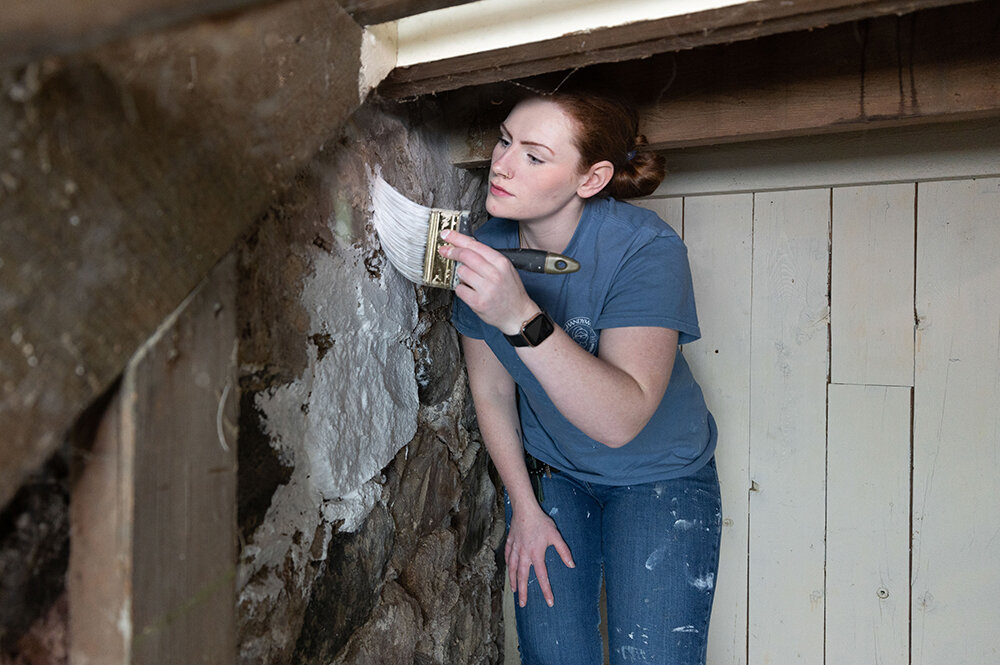
Alicia Bleil, a local builder, first became interested in building when she was in junior high school around 1970, but was told she was ineligible for shop classes or drafting classes due to her gender.
In 1978, then-President Jimmy Carter signed federal regulations that opened construction jobs and trade apprenticeships to women. That same year, Bleil co-founded a group called Women in Skilled Trades, dedicated to helping women who were starting out in trades like electrical work with a high barrier to entry.
“Many of them had not had the skills and were trying to get into the union training,” she said. “There were no activities that would help them while they were in school.”
Several programs to help women get involved in construction and other trades cropped up across the area, including the Capital Region Habitat for Humanity’s Women Build, a weeklong program that is still going.
But while accessibility has improved, Bleil said several women she knows in the field have taken their skills into office work because of the danger of workplace violence in a male-dominated field.
While most tradeswomen interviewed said they had faced challenges entering the profession, the sentiment is not universal.
Rachel Gruhn, a master electrician with 12 years of experience in the field, said success and respect in her field is merit-based and called systemic barriers “an outdated myth.”
“I’ve literally never had any issues in this trade because I’m a woman,” she said, acknowledging that while some men had made disparaging remarks, they have been few, far between and easy to ignore.
While Gruhn has seen women fail in the career, she said it has been work ethic or work quality, rather than gender disparity.
While many people across backgrounds face challenges getting into the trades, Gruhn said she hasn’t noticed any special difficulties for women. She frequently gets calls from white men asking for apprenticeships, “because they can’t get in anywhere.”
Terry Cannon is a local builder who specializes in remodeling older homes. He’s been in the field locally since 1992, and said the proportion of women in the field has been increasing.
He’s glad about it.
“They bring a different perspective than what we bring,” he said. “A lot of times, as a man, I get cookie-cutter vision, and when I bring them on, I get a totally different perspective.”
Cannon said having women involved with a home remodel can be a particular benefit with regards to design and functionality, with female contractors more likely to notice when one aspect of a design “might not fit well for everybody.”
Pearl Reist said a diverse team is “absolutely essential” to building trust between contractors and homeowners. She mentioned LGBTQ+ people as another demographic that struggles with traditional handymen.
“The trades have a lot of homophobia running through them,” she said. “We want to have someone trustworthy who isn’t going to be rude to people’s family members. We’ve had so many clients who have had absolute horror stories.
As she looks forward, Pearl Reist wants MyHandyma’am to continue building pathways into the trades for those who have historically been kept out.
“We see a vision where we can equip people to go into the field with what we’ve learned,” she said.
Alongside training their own employees, MyHandyma’am recently launched a podcast, “How to Handyma’am.” It’s the first step as the company branches out its educational angle. Eventually, they want to create a full-fledged apprenticeship school.
Pearl Reist hopes the work itself shows people anyone can learn to become handy.
“If a man can do it,” she said, “how hard is it?”