
Candidates differ on how to help homeless residents
Lansing’s purchase last month of 50 ModPod housing units to serve as transitional housing for 66 homeless residents at a time promises to make a dent in the city’s homelessness problem, …
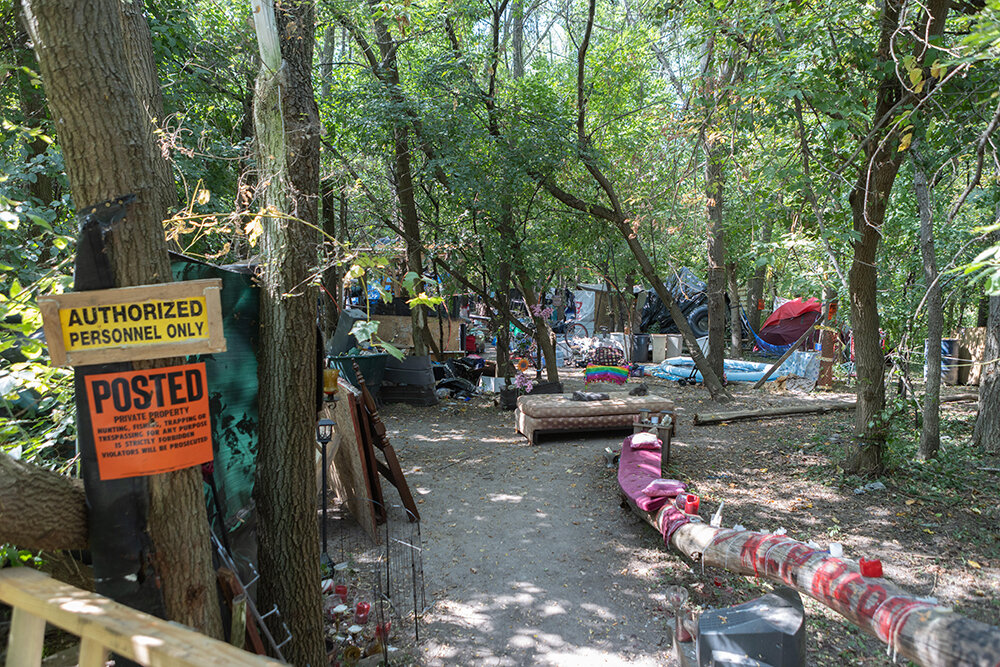
Lansing’s purchase last month of 50 ModPod housing units to serve as transitional housing for 66 homeless residents at a time promises to make a dent in the city’s homelessness problem, but not until June at the earliest.
Meanwhile, much of Lansing’s homeless population is still outside — and winter is quickly approaching.
City Pulse asked mayoral and council candidates whether the city’s approach to homelessness is working.
Mayor Andy Schor touted Lansing’s homeless prevention efforts, which he said are not often publicized. He added there are job assistance programs through Capital Area Michigan Works, housing assistance programs including vouchers and subsidized housing, documentation assistance and funds given to shelters. He said he was “fully supportive” of the ModPods.
When “you see the system not working as well as we’d like,” Schor said, it is often “people who are violent or have mental health issues, or just choose not to live indoors.” He called Michigan’s mental health system “broken” and said more stable mental health assistance would help.
He added LGBTQ+ people, especially transgender people, often do not feel welcome at the City Rescue Mission.
His opponent, Kelsea Hector, is the executive director of Punks with Lunch Lansing, which provides resources for the homeless community.
“I would stop the sweeps,” she said. “They’re inhumane. They actually do not work, they kill people.” She said providing resources to people in encampments helps them find housing more quickly.
She added she would like to bring together mutual aid networks, nonprofits and neighbors to work on solutions, centering the homeless population.
At-large candidate Julie Vandenboom called it “not an easy problem to solve.” She added that while shelters provide housing, it often comes with restrictions such as splitting up families, not allowing pets and forcing residents to be “preached at.” Shelters are “not necessarily incentivized to help those people into permanent housing” either, she said, since they are paid to provide emergency shelter, not permanent housing.
She called for a more comprehensive study of Lansing’s homeless community involving more direct conversations with impacted residents than the city’s previous study.
At-large candidate Clara Martinez called the ModPods “a positive step forward” but a “temporary solution.” In office, she would work to bring experts on homelessness together, listen to their feedback and that of homeless Lansing residents, and work from there, she said.
At-large candidate Jeremy Garza, a 2nd Ward Council member, said, “There needs to be more programs that actually help people get out of poverty, not just put them in a warehouse with the homeless,” such as programs to help people get a GED.
Asked how he would respond to a constituent saying a nearby homeless encampment made them feel unsafe, Garza said he had dealt with that situation before in the 2nd Ward. He said there was an encampment near Gardner Middle School where residents lit fires during the daytime, used intravenous drugs near the school and broke into homes. He called the police, who called the church whose property it was on. The residents were relocated with help from the city.
“You don’t want to move somebody and keep moving them,” Garza said. “They’re human beings, and I want to be empathetic to them, but there’s also some bad actors in there too. You’re not going to have someone that just lost their job and ended up becoming homeless breaking into people’s homes.”
Heath Lowry, a 4th Ward candidate, said the city’s approach is not working and often involves “just moving the problem around to different locations.”
He said he supports changing housing classifications to allow more density and expanding services to help people gain access to affordable housing. Ultimately, he said, the city should “defer to the experts on the ground, really working in the homelessness epidemic.”
Deyanira Nevarez Martinez, a 2nd Ward candidate and an urban planning professor at Michigan State University, said homelessness is her “main research.” She would focus on “the long-term, systemic issues that actually cause homelessness.”
Finding permanent housing for homeless residents will involve “an inevitable sorting,” she said, including people who “are never going to be able to pay anything for their housing” getting long-term permanent housing and others having more staggered assistance.
Her opponent, Erik Almquist, spoke to City Pulse from Omaha, Neb., where he said he was visiting to view the efficacy of a tiny-house village like the ModPods.
He said Lansing failed to center homeless people in its efforts to curb homelessness. He champions extensive outreach, a holistic approach and “bringing the table to them,” rather than bringing homeless people to the table.
He said he met a homeless resident at Reutter Park last month who could not read or write.
“We have to create a solution where someone can sit down with him and help fill all the paperwork out at one time.”
(This story has been updated. Due to a reporting error, an earlier version referred to an interaction between Erik Almquist and a homeless resident at the Dietrich Park encampment. The interaction actually happened during a church service at Reutter Park.)