
Community, collaboration form Lansing’s Hispanic heritage
Emilio Garcia helped settle Lansing.
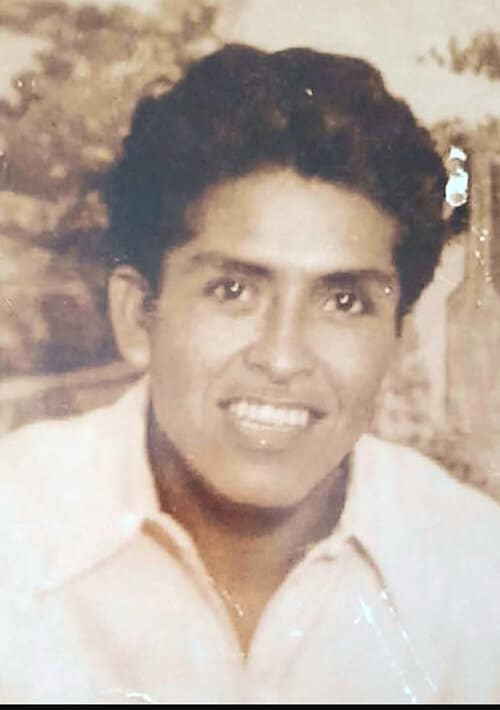
Garcia was about 14 when he moved here from Mexico around 1940 with his two brothers, recalled his son Joe.
“They would travel here, work for …
Emilio Garcia helped settle Lansing.
Garcia was about 14 when he moved here from Mexico around 1940 with his two brothers, recalled his son Joe.
“They would travel here, work for eight, nine or 10 months, basically live on nothing and take back as much as they could to their families,” he said. He added his father had “several opportunities” to settle permanently in the U.S but that he was uninterested in doing so — to start off.
“What happens over time is that you go, you come back, and you start getting familiar,” he said. “You meet one or two folks, you end up going to church, you meet this other social group, you get older and want to start a family. There’s less opportunity in Mexico, or you glorify your time in the States, and say, ‘I’m gonna come now with my family.’”
The legacy of collaboration, community organizing and mutual aid in U.S. Hispanic and Latino communities predates Lansing’s first Mexican settlers. But, like the “mutualistas” that cropped up in the late 19th century to provide Mexican immigrants services like healthcare and legal advocacy, Lansing’s own Hispanic communities made their roots here — then helped others to do the same.
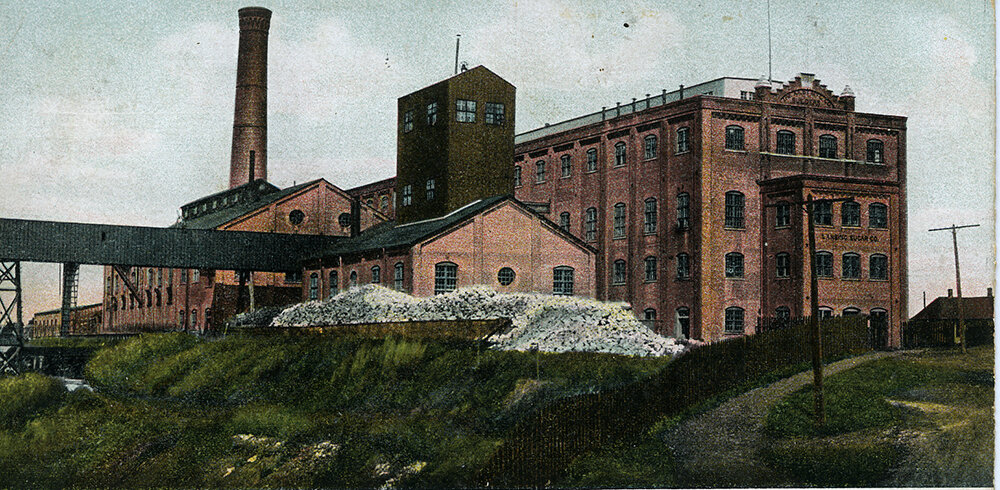
Hispanic people began to trickle into Michigan in the early 20th century, though most were migrant workers in the sugar beet fields, or betabeleros. They worked for as many as 10 months in the fields, but they took their earnings home to Texas or Mexico for the winter and had no intention of settling down in Michigan. By 1924, there were enough migrant workers that the Lansing State Journal reported there were reports coming out of Houston that southern Texas was being deprived of its own Mexican laborers by Michigan contractors, including the Michigan Sugar Co.
The practice of importing Mexican contract laborers, like Emilio Garcia, to spend most of the year working in Michigan was controversial, with some lawmakers concerned their temporary residences would become permanent. Thankfully for the city’s culture, that came to fruition in the 1940s and ‘50s.
Historian Dennis Nodín Valdés backs that up in his 1991 book “Al Norte: Agricultural Workers in the Great Lakes Region, 1917-1970.” He argues that, unlike the European immigrants who settled in the Midwest, Mexican farmworkers did not come with the intention of settling but developed a social network that created the conditions for settlement. In the 1950s, as beet harvesting became increasingly mechanized, that settlement became “very rapid” as former farmworkers took up work in most of the city’s 15 factories.
The most prominent of those factories in Lansing was the Michigan Sugar Co.’s in North Lansing, where the Hispanic community began to coalesce. Most were Mexican, though Puerto Ricans, who were granted American citizenship in 1917, also immigrated to the U.S. after World War II. By 1963, 114 Cubans had also settled in Lansing following the Cuban Revolution, according to historian David A. Badillo.
The community in North Lansing, now called Old Town, continued to evolve as immigration continued.
“You’re talking about recruitment that occurred through the larger farming community from Michigan, down to the villages in Mexico, asking people to come to Lansing,” Garcia said. “And the added story to that, once it was ‘come to Lansing,’ is, ‘Drive to the northern part of town and go through the neighborhoods until you find somebody who looks like you and ask for help.”
“They knew that these people traveling in cars could only bring what they had in their cars, and if they’re coming from a warm place, they were not thinking about flannels in the morning, or if they’re bringing a child, they’re not thinking about a crib or a highchair,” he continued. “But a lot of those established families saved items in their garages and basements, so that when these people came, they could be charitable.”
Because these communities were Catholic, their communities and mutual aid efforts were closely tied to church. That led the Catholic Diocese of Lansing to establish Cristo Rey Church in 1961. The church began in a former Methodist church on what is today Malcolm X Street and served as a community center for much of Lansing’s Hispanic community. Increased community aid efforts and collaborations with other entities, including the Ingham County Health Department, eventually led the community center and church to split into separate entities in 1968. The Cristo Rey Community Center merged with St. Vincent Catholic Charities last year to form the Catholic Charities of Ingham, Eaton and Clinton Counties, of which Garcia was the CEO until this month.
While the church and community center remain, the original location was demolished in 1965 to make way for Interstate 496. It eventually reopened in south Lansing, driving a geographical wedge in the Latino community. An alternate community center called Quinto Sol opened in North Lansing in 1970, the same year a bilingual newspaper, El Renacimiento, began publishing there. The neighborhood continued to serve as a cultural hub for Lansing’s Latino community, with a 16.7% Latino population in 1990 compared to an 8% Latino population in Lansing overall, according to a 1998 Julian Samora Research Institute study.

Hispanic Lansing residents have continued to make history in the 21st century. Tony Benavides became Lansing’s first Hispanic mayor in 2003. Following multiple attempts at renaming the former Grand River Avenue in Old Town to César E. Chávez Avenue in honor of the famous labor leader who made multiple visits to Lansing in the 1970s and ‘80s, the street was renamed in 2018.
And those stories, and the legacy of mutual aid they recall, are still important to members of the community, like Joe Garcia. His dad died in 2012 at the age of 84 after raising seven children.
“You can figure out on a map how to get to Lansing, but once you get to Lansing, make these other connections, and that’s where a lot of the stories began,” Garcia said.