David McCullough defends importance of history in posthumous book
Recently, Wall Street Journal opinion columnist Peggy Noonan, who was the primary speechwriter for President Ronald Reagan from 1984 to 1986, wrote about the importance of knowing our history, …
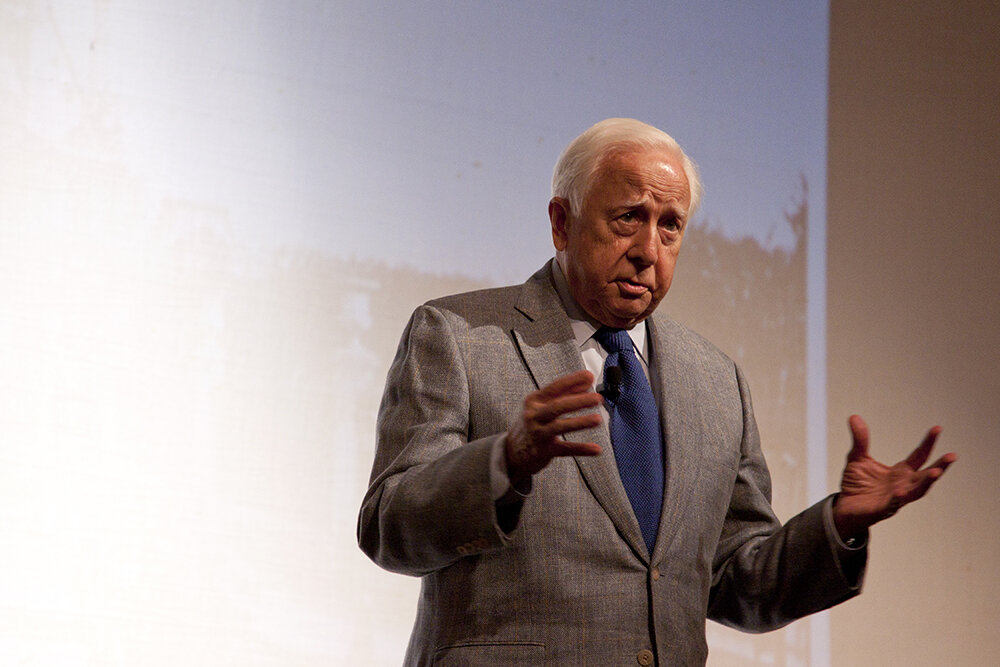
Recently, Wall Street Journal opinion columnist Peggy Noonan, who was the primary speechwriter for President Ronald Reagan from 1984 to 1986, wrote about the importance of knowing our history, especially during these “tumultuous times.”
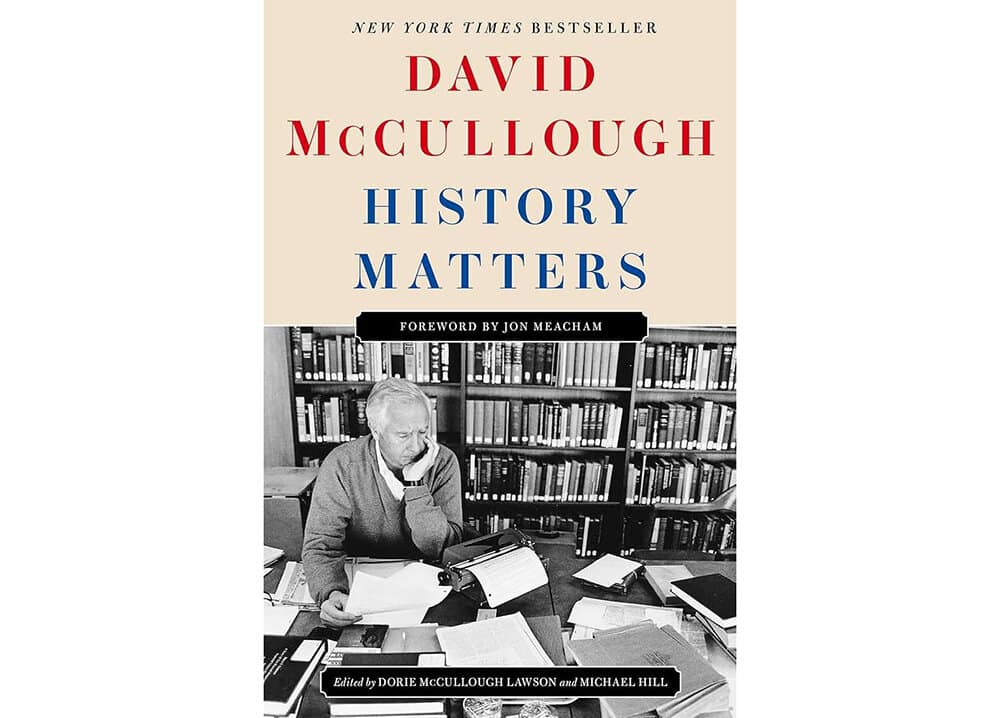
She cited the new book “History Matters,” a collection of musings on the significance of studying and understanding history by two-time Pulitzer Prize and National Book Award-winning historian David McCullough, who died in 2022.
The book comes at a time when telling history with all its warts is under fire and can even get you fired. In the last nine months, we’ve seen numerous attacks on the Smithsonian Institution — a leader in preserving our nation’s history — as well as censorship at libraries and a growing movement to only discuss the good things about our country’s history, eschewing topics like slavery and other uncomfortable truths.
In his foreword to the book, historian Jon Meacham writes that McCullough’s passion was telling the “fascinating story of people — of human beings driven by fear and by hope, by ambition and by altruism, by vice and virtue.” He states that McCullough’s writing gave us “a privileged seat to watch flawed people,” something that is on a questionable path.
Meacham points out to the reader that McCullough could often be heard saying, “History is not the story of heroes entirely. It is often the story of cruelty and injustice and shortsightedness. There are monsters, there is evil, there is betrayal.”
There is a growing national interest in not telling those stories, as well as removing them from museums and libraries. Federally funded programs must comply, or their administrators lose their jobs. A presidential edict recently required a review of all material relating to slavery at national parks and the removal of materials that “inappropriately disparage Americans.”
Last week, hundreds of historians visited Lansing for the Michigan Museum Association’s annual conference. I met numerous attendees, and our conversations revealed that they believe local museums and historical societies may be the last line of defense in telling the complete history of our country.
McCullough’s new book begins with a statement on why telling the stories of history is important. He was blunt in his assessment: “History shows us how to behave. History teaches, reinforces what we believe in, what we stand for, and what we ought to be willing to stand up for. History is — or should be — the bedrock of patriotism, not the chest-pounding kind of patriotism, but the real thing, love of country.”
In a 1995 speech, McCullough cut to the essence of making history “come alive.” Quoting Barbara Tuchman, a fellow two-time Pulitzer Prize-winning historian, he said, “Tell stories.”
In his career, McCullough wrote about John Adams, Harry S. Truman, the Wright brothers, the Johnstown flood and even the Brooklyn Bridge.
His new book gives great insight into his writing process. For instance, when asked if it was possible to do too much research, he answered, “I love the research. And it certainly can become seductive. The tendency is to wander off on tangents, digging into the life of some minor character beyond what is necessary.”
That sentiment will come as no surprise to the hundreds of writers I have interviewed over the last two decades. They all admit to being seduced by that one additional story they’ve discovered. This has become even more noticeable with the rise of tremendous online resources like newspapers.com, which can take you down rabbit holes faster than a reading of “Alice’s Adventures in Wonderland.” But they will also tell you that’s where the real stories of the American people can be found.
Historians across the board will say the key to telling history truthfully and accurately is to listen as people tell their stories. Local community members have an opportunity to do just that on Thursday (Oct. 23) at an event at the Michigan History Museum. Former residents of Detroit’s Black Bottom neighborhood and the Lansing neighborhood that was bulldozed to make way for Interstate 496 will pair up for an afternoon program exploring the impact of urban renewal on Black and brown neighborhoods across the country.
We are at an inflection point in studying and recognizing the history of this country. The new book “History Matters” is worth a read to find out why.