‘Fairview’ tackles race relations with biting satire
Peppermint Creek Theatre Co. continues its provocative season of plays “based on a true story” with “Fairview,” a funny and biting satire. Directed by Janell Hall, the play holds a mirror up …
“Fairview”
March 19-22
7 p.m. Thursday-Saturday
3 p.m. Saturday-Sunday
Stage One at Sycamore Creek Eastwood
2200 Lake Lansing Road, Lansing
(517) 927-3016
peppermintcreek.org
Peppermint Creek Theatre Co. continues its provocative season of plays “based on a true story” with “Fairview,” a funny and biting satire. Directed by Janell Hall, the play holds a mirror up to white Americans, forcing even the most open minded to question their deepest beliefs about race.
The story is told in three acts with two short intermissions, a necessary structure because the direction of the play changes drastically between the three acts. Act 1 lures the audience into thinking this is a dramedy about the Black American family experience.
Beverly (Shelia Burks) is preparing a birthday dinner for her mother, and the pressure is on to make sure everything is perfect. She frets and stresses as husband Dayton (Kevin Forte) tries to calm her and assist. Her high-maintenance sister Jasmine (Sharene Johnson) arrives, and her brother Tyrone calls to say he might not make it. Eventually, the stress is too much, and Beverly faints.
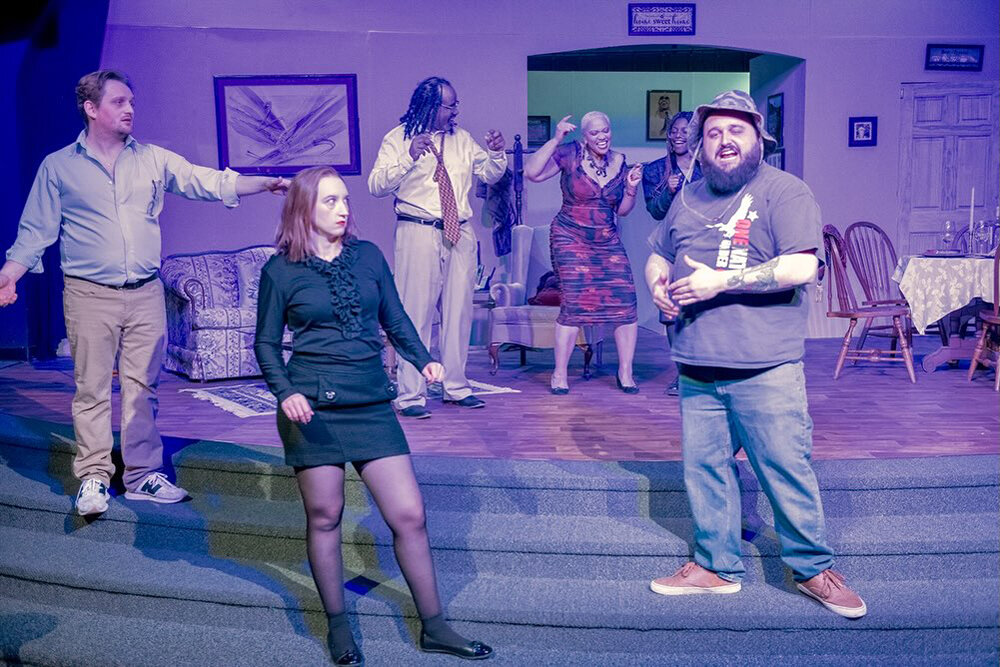
In Act 2, the family reenacts Act 1 silently in the background as a group of white people hold a discussion about race. Specifically, Jimbo (Quinn Kelly) asks the others (Savannah Jordan, Connor Kelly and Rebecca Lane) what race they would choose if they could be any race but white. This is a truly cringe-inducing scene for many white audience members, because most of us have likely had similar conversations at some point in our lives. This is the brilliance of Jackie Sibblies Drury’s script: She knows this conversation well and puts a bright white spotlight on it.
Act 3 continues the dinner party plotline with the introduction of characters absent from Act 1. The story becomes more and more absurd and the action escalates until teenage daughter Keisha (Hanna Kent), the voice of reason and hope, takes control of the scene.
Despite having been warned that this play might make some audience members uncomfortable, it is well worth the discomfort. The show is not simply a dissection of the black-and-white racial divide, but it takes the broader view that even liberal-leaning white people can be incredibly tone deaf when it comes to race. It is a shame that the run of shows does not include any post-show discussions, although when it comes to conversations about race, that might have seemed too dicey for the company to undertake.
The cast is outstanding overall. Perhaps most surprising is Johnson, making her stage debut. Jasmine is the stereotype of the sassy Black woman, and Johnson plays up to the expectations of the character without turning the performance into a clownish caricature. She balances sass and class well and imbues Jasmine with physical confidence.
As noted in the program, this is the first time brothers Quinn and Connor Kelly have shared the stage in four years, and their performance indicates that four years is too long. Not only are they outrageously committed to these clueless characters, but they sure can dance. Not necessarily well — they wouldn’t have a chance on “Dancing with the Stars” — but they give all of their energy to the physicality of their roles.
Sibblies Drury won the 2019 Pulitzer Prize for drama, and fittingly so. The ingenious structure of the play and its no-holds-barred approach to addressing racism makes it entertaining and edgy. For all of its outrageousness, though, the show concludes quietly and thoughtfully. Avoiding spoilers, the playwright hangs her hope for some amount of racial healing on Keisha, who shares a moving vision of the future. Audience members who hang on every word will understand why the play is called “Fairview.”