Fewer Americans are reading for pleasure, study finds
Avid readers know the excitement that comes from taking a good book to bed and getting so involved you can’t put it down — “just one more chapter.”
I recently learned …
Avid readers know the excitement that comes from taking a good book to bed and getting so involved you can’t put it down — “just one more chapter.”
I recently learned from a study by the University of Florida and University College London that the percentage of people who read for pleasure daily in the United States has declined precipitously, falling from 28% in 2004 to 16% in 2023. And the study had a liberal definition of what constitutes “reading material,” including newspapers, books and magazines in any format, even audio.
In just two decades, America has become a nation of non-readers. The sharp drop in daily readership is alarming on many counts. The most obvious concerns are that fewer books will ultimately be written, the publishing industry will shrink, the population of the United States will be dumbed down, and the universe of ideas will be constricted.
In medieval Europe, the wealthy royalty controlled the populace by limiting what they could read. The nobles were afraid an educated populace would overthrow them if they were literate. It wasn’t until the advent of the movable-type printing press that an informed — and entertained — reader emerged.
As an example, in the mid-1800s, Charles Dickens’ books were published in serial form, and readers on both sides of the Atlantic followed him passionately. His impatient fans would gather at the docks in Boston and New York, waiting for the next chapter to drop.
During the pandemic, as more and more bookstores shuttered and book clubs could only meet using Zoom, readers began to lose connection with one another, and the slow decline of readership accelerated. We also became more isolated from authors as they paused their promotional events and book tours. One would think that reading is a solitary activity, but the facts show otherwise. How many times have you heard the phrase, “What are you reading?”
One of the most challenging, but not surprising, discoveries in the survey was that “highly educated people were twice as likely to read as the least educated.” A similar finding was that wealthy individuals were 1.5 times more likely to read than lower-income people.
So, what’s the solution? The study, which analyzed data from the national Labor Statistics and Census bureaus’ American Time Use Survey, didn’t ask that question.
One clear answer is that it’s necessary to capture readers early, when they’re in grade school or younger. One disturbing detail from the study was that only 2% of subjects regularly read with a child.
When I was a youngster, my literacy was enriched by story time with my grandmother and weekly trips to the library, where I could wander freely.
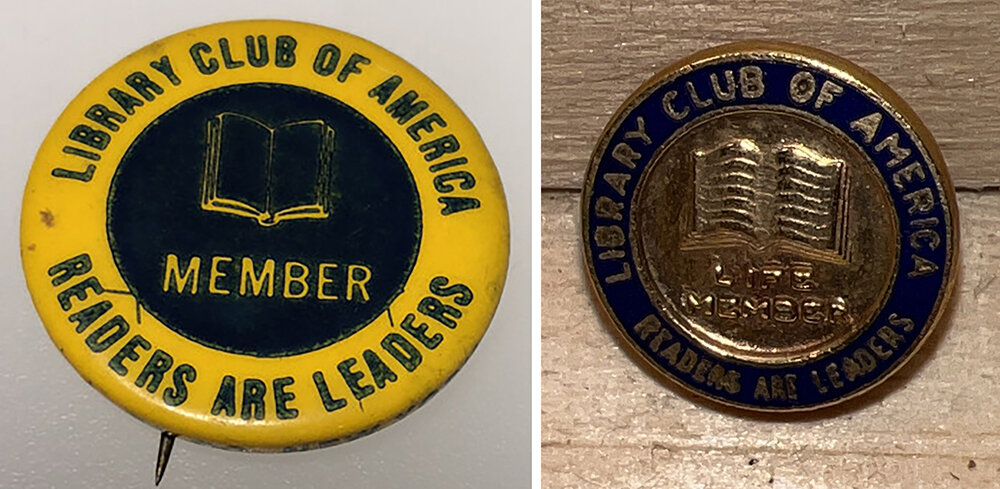
Each summer at the library, until sometime in middle school, children were encouraged to read by a simple competition designed by a book manufacturer. The creator of what was called the Library Club of America, which focused on kids exclusively, said, “You’ve got to get to the child. The thing to sell is the reading habit early.”
The competition was similar to scout merit badges. Students could earn a plastic button for reading four books, and for reading 10 books, they would be awarded a bronze-coated pin. These prizes were highly sought after, and the more you read, the more you received. I still wear mine when I attend library events.
An educational change that I believe does not bode well for future generations of readers is that more and more, middle school, high school and college classes aren’t requiring students to read complete books, instead opting for excerpts.
I’m not going to dwell on it too much, but frankly, the publishing industry hasn’t been able to come up with a string of blockbusters that pull long-term readers in lately. Where’s Harry Potter when you need him?
Some experts have pointed to reading as an elixir for mental health woes. Think about the times you’ve turned to fiction to get through a difficult time. Read more — and get your kids involved.