
From failing MSU project to ‘zero chance this will fail’ on ‘Shark Tank’
Tanvi Gadamsetti and Madhav Aggarwal said they failed their initial class project at Michigan State University as sophomores a few years ago.
“It was the lowest grade in the class,” Aggarwal told City Pulse.
In early March, they ended up in tears on national TV as they pitched their product, a new grippy material being proven as shoelaces, and made a $300,000 deal with two investors on Shark Tank.
It was good tears, they said, pure emotions from a pair of college students who were able to talk on national TV about their work, their BRCĒ company, MSU and about carrying forward the dreams of their parents.
“We will not fail,” Gadamsetti told the Shark Tank investors during the ABC-broadcast show, which aired last week.
And that’s exactly what one of the investors whispered to another, in a moment that sealed the deal.
Guest shark Fawn Weaver, CEO of Uncle Nearest Premium Whiskey, leaned over to Daniel Lubetzky, founder of KIND Snacks, and quietly said, “There’s zero chance this is gonna fail,” relying on her quick read of the students.
The two investors quickly jumped up to shake hands and seal the deal, for 20% of the company and right of first refusal on the pair’s next invention.
“I do not believe you all have fail in your bones,” Weaver told Gadamsetti and Aggarwal, “you don’t have quit anywhere in your bones so I’m here to roll with you.”
How it started
The engineering students met in college, the first drafts of BRCĒ were all for MSU courses and done in the college apartments at Shaw Hall.
“Starting up, we got a lot of support and we got a lot of absences because we now get to travel the world showcasing this,” Aggarwal said.
But this year is their senior year for both and it’s intense, they said.
The product came from experience.
Both had been athletes and had injured their ankles, disrupting their dreams, and figured materials science could help solve a major problem.
Their innovation was patented. Aggarwal said it was the fastest approved materials science patent in the country’s history.
In a phone interview the morning after their deal, the pair seamlessly described the technology.
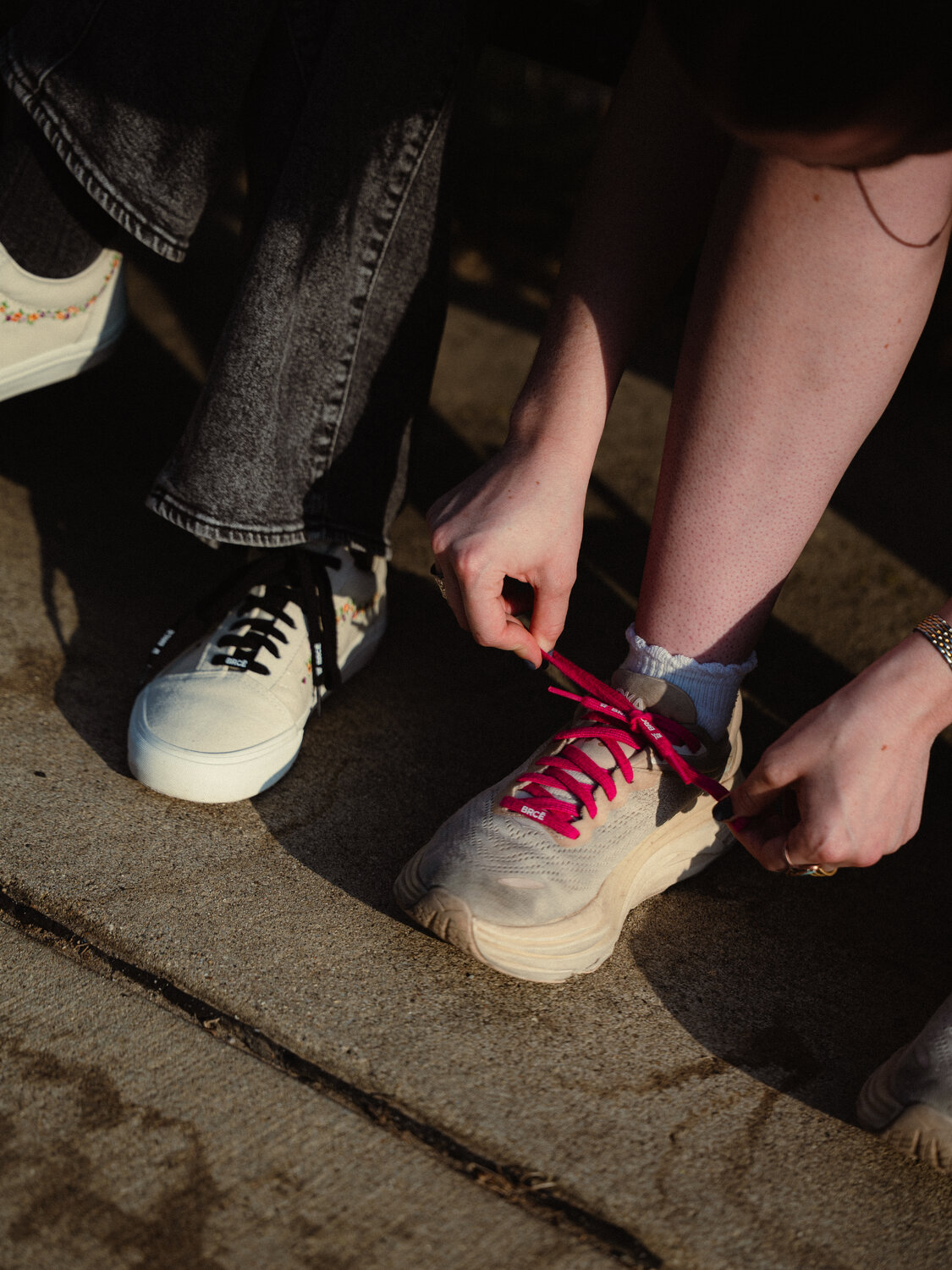
“If you look with a naked eye, it looks and feels exactly like a shoelace just like a regular textile,” Gadamsetti said.
“But under a microscope,” Aggarwal adds, “it looks like Velcro just way, way smaller. So what we’ve done here is use the the benefits and framework behind how velcro works and made it into nanotechnology so these loops and hooks are are fraction – 1% – of the size of hooks and loops so it works like Velcro but you can’t feel the difference in tying or using them in your daily life.”
The product is shoelaces, for now, and with the airing of the Shark Tank episode they also launched a kids shoelace line. Look for occupational partnerships next.
Untied or less-grippy shoes are one of the leading causes of ankle injuries, which is the most common injury in athletics and one of the most common occupational injuries, Aggarwal said.
It’s why they believe a better shoelace will help curb injuries and improve athletic performances, and that can translate to restaurants, construction sites and other occupations.
And a shoelace is something of a proving ground for their larger, grippy, technology.
Where it can go
Gadamsetti said they are pursuing a model similar to other advanced materials like Gore-Tex and Kevlar.
“Those are great materials, but so expensive to integrate into gear and limited in what they can be integrated into,” she said.
“We take regular everyday materials and weave and extrude them to deliver these benefits at a fraction of the cost,” Gadamsetti said.
She said there are a wide range of markets from athletics and outdoors to tactical and medical applications.
What it means to Gadamsetti and Aggarwal
Both of the MSU seniors are children of immigrants, they told the investors on Shark Tank.
Gadamsetti said BRCĒ is so important because it a way for her to provide for her family after her father’s death.
Aggarwal said his parents sold their house to fund a one-way ticket for him to come to Michigan State University, the first-ever flight for his family.
“I can’t fail,” he told the investors. “It’s not an option.”
The investors believed.
Lubetzky, the founder of KIND Snacks, praised their energy.
“You are the American dream,” he said. “So much heart and you’ve inspired the next generation who’s listening to you and is going to be in that place the next time around.”
Weaver, CEO of Uncle Nearest, could hardly wait.
“I believe you will figure it out, I do not believe you will fail so I have an offer,” she said.
Weaver and Lubetzky asked for 25% and quickly agreed to Gadamsetti and Aggarwal’s counteroffer of 20%, along with letting the investors get first crack at their next big idea.
In a phone call the day after the show aired, Gadamsetti and Aggarwal said much of the work was done in classes and through MSU with plenty of support to help to bring the idea into markets, through patents and onto a national platform.
The company has been supported by Lansing Economic Area Partnership (LEAP), the SmartZone, Burgess Institute for Entrepreneurship & Innovation at Michigan State University, MSU Research Foundation, Michigan Founders Fund, Small Business Development Center and others.
Gadamsetti said they were invited to pitch on Shark Tank this season.
“We didn’t know we could apply,” she said. “We were the only student team selected in the past three years, it was truly mind-blowing.”
To build this start-up from a college apartment, to get the fastest patent in materials science and to make it to national television while we’re still in college,” Aggarwal said, “we are very excited and very proud of ourselves.”
Gadamsetti said they like to end their pitches, as they did on Shark Tank, by saying, in unison: “Embrace the lace.”
Tanvi Gadamsetti and Madhav Aggarwal said they failed their initial class project at Michigan State University as sophomores a few years ago.
“It was the lowest grade in the class,” Aggarwal told City Pulse.
In early March, they ended up in tears on national TV as they pitched their product, a new grippy material being proven as shoelaces, and made a $300,000 deal with two investors on Shark Tank.
It was good tears, they said, pure emotions from a pair of college students who were able to talk on national TV about their work, their BRCĒ company, MSU and about carrying forward the dreams of their parents.
“We will not fail,” Gadamsetti told the Shark Tank investors during the ABC-broadcast show, which aired last week.
And that’s exactly what one of the investors whispered to another, in a moment that sealed the deal.
Guest shark Fawn Weaver, CEO of Uncle Nearest Premium Whiskey, leaned over to Daniel Lubetzky, founder of KIND Snacks, and quietly said, “There’s zero chance this is gonna fail,” relying on her quick read of the students.
The two investors quickly jumped up to shake hands and seal the deal, for 20% of the company and right of first refusal on the pair’s next invention.
“I do not believe you all have fail in your bones,” Weaver told Gadamsetti and Aggarwal, “you don’t have quit anywhere in your bones so I’m here to roll with you.”
How it started
The engineering students met in college, the first drafts of BRCĒ were all for MSU courses and done in the college apartments at Shaw Hall.
“Starting up, we got a lot of support and we got a lot of absences because we now get to travel the world showcasing this,” Aggarwal said.
But this year is their senior year for both and it’s intense, they said.
The product came from experience.
Both had been athletes and had injured their ankles, disrupting their dreams, and figured materials science could help solve a major problem.
Their innovation was patented. Aggarwal said it was the fastest approved materials science patent in the country’s history.
In a phone interview the morning after their deal, the pair seamlessly described the technology.
“If you look with a naked eye, it looks and feels exactly like a shoelace just like a regular textile,” Gadamsetti said.
“But under a microscope,” Aggarwal adds, “it looks like Velcro just way, way smaller. So what we’ve done here is use the the benefits and framework behind how velcro works and made it into nanotechnology so these loops and hooks are are fraction – 1% – of the size of hooks and loops so it works like Velcro but you can’t feel the difference in tying or using them in your daily life.”
The product is shoelaces, for now, and with the airing of the Shark Tank episode they also launched a kids shoelace line. Look for occupational partnerships next.
Untied or less-grippy shoes are one of the leading causes of ankle injuries, which is the most common injury in athletics and one of the most common occupational injuries, Aggarwal said.
It’s why they believe a better shoelace will help curb injuries and improve athletic performances, and that can translate to restaurants, construction sites and other occupations.
And a shoelace is something of a proving ground for their larger, grippy, technology.
Where it can go
Gadamsetti said they are pursuing a model similar to other advanced materials like Gore-Tex and Kevlar.
“Those are great materials, but so expensive to integrate into gear and limited in what they can be integrated into,” she said.
“We take regular everyday materials and weave and extrude them to deliver these benefits at a fraction of the cost,” Gadamsetti said.
She said there are a wide range of markets from athletics and outdoors to tactical and medical applications.
What it means to Gadamsetti and Aggarwal
Both of the MSU seniors are children of immigrants, they told the investors on Shark Tank.
Gadamsetti said BRCĒ is so important because it a way for her to provide for her family after her father’s death.
Aggarwal said his parents sold their house to fund a one-way ticket for him to come to Michigan State University, the first-ever flight for his family.
“I can’t fail,” he told the investors. “It’s not an option.”
The investors believed.
Lubetzky, the founder of KIND Snacks, praised their energy.
“You are the American dream,” he said. “So much heart and you’ve inspired the next generation who’s listening to you and is going to be in that place the next time around.”
Weaver, CEO of Uncle Nearest, could hardly wait.
“I believe you will figure it out, I do not believe you will fail so I have an offer,” she said.
Weaver and Lubetzky asked for 25% and quickly agreed to Gadamsetti and Aggarwal’s counteroffer of 20%, along with letting the investors get first crack at their next big idea.
In a phone call the day after the show aired, Gadamsetti and Aggarwal said much of the work was done in classes and through MSU with plenty of support to help to bring the idea into markets, through patents and onto a national platform.
The company has been supported by Lansing Economic Area Partnership (LEAP), the SmartZone, Burgess Institute for Entrepreneurship & Innovation at Michigan State University, MSU Research Foundation, Michigan Founders Fund, Small Business Development Center and others.
Gadamsetti said they were invited to pitch on Shark Tank this season.
“We didn’t know we could apply,” she said. “We were the only student team selected in the past three years, it was truly mind-blowing.”
To build this start-up from a college apartment, to get the fastest patent in materials science and to make it to national television while we’re still in college,” Aggarwal said, “we are very excited and very proud of ourselves.”
Gadamsetti said they like to end their pitches, as they did on Shark Tank, by saying, in unison: “Embrace the lace.”
Related Articles

Meet the local women leading Greater Lansing efforts to provide the ‘dignity of work’
No matter how successful Shara Trierweiler became in her years-long finance career, it never seemed to make being a mom to her two children, Philomena and Dominic, any easier. …
Rewind: News from the last 7 days
Rewind 6/3/26 The Michigan State Police have finished their investigation into the April 15 fatal police shooting of Isaiah Kirby by East Lansing officers.

Prayer Walk for Peace in Lansing brought faithful protesters to Capitol
Photo Gallery – Prayer Walk for Peace