Full circle
There’s a sweet moment in a jazz tune when the soloists have all had their say, the energy is reaching a peak, and the band roars back to reprise the “head.”
There’s no …
16th annual JAMM Tribute
Lois Mummaw and Gregg Hill
3:30 p.m. Sunday, Nov. 9
Friendship Baptist Church
2912 Pleasant Grove Road, Lansing
jazzjamm.org
Jazz patrons Gregg Hill and Lois Mummaw receive lifetime honors
There’s a sweet moment in a jazz tune when the soloists have all had their say, the energy is reaching a peak, and the band roars back to reprise the “head.”
There’s no shortcut to that moment. You have to put in the time.
The Jazz Alliance of Mid-Michigan is closing in on a full-circle moment years in the making on Sunday (Nov. 9), as jazz patrons Gregg Hill and Lois Mummaw are named its 2025 lifetime honorees.
Behind the scenes, Hill and Mummaw have provided key financial support for the East Lansing Summer Solstice Jazz Festival, Jazz Tuesdays at Moriarty’s Pub and many other events and venues. They also helped establish a scholarship fund that has helped more than 20 students launch musical careers.
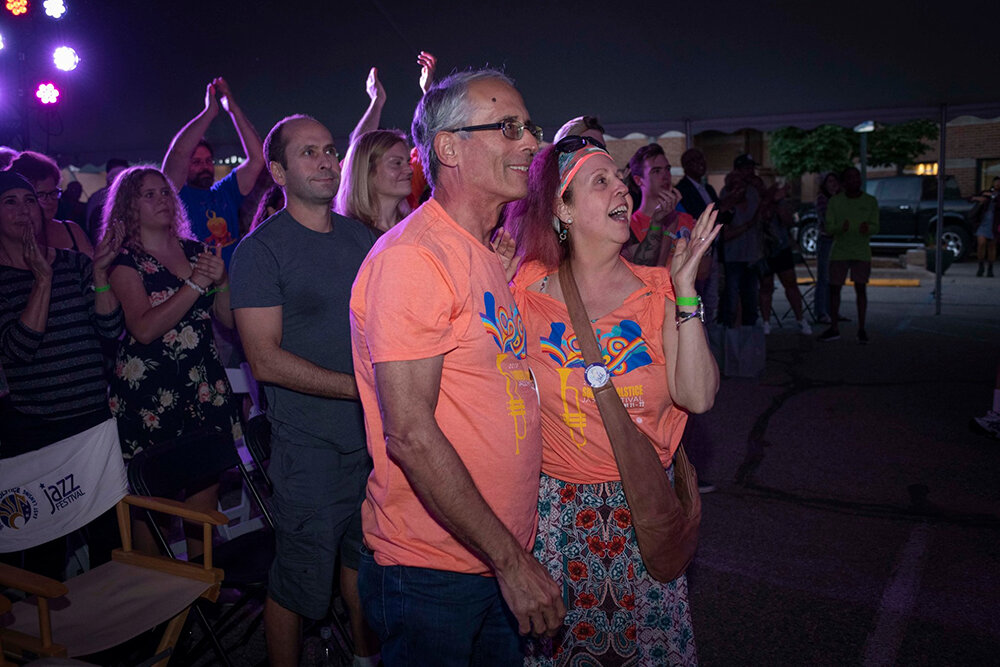
Not so behind the scenes, their obvious love for each other — and for the music — has made them a conspicuous and joyful presence at hundreds of events, where they can be seen dancing, grooving and living the jazz life.
Sunday’s event feels like a closing circle because JAMM itself, and the tradition of honoring an artist each year, was nurtured in their living room.
Nearly every JAMM lifetime honoree will perform, from Michigan State University Jazz Studies director and bassist Rodney Whitaker to veteran drummer Randy Gelispie and pianist Arlene McDaniel, along with a star-studded lineup that includes violinist Tia Imani Hanna, singer Twyla Birdsong and many more.
Drummer Jeff Shoup, impresario of Jazz Tuesdays, said Hill and Mummaw “have been a real positive force not only for jazz music, but live music in general.”
“They’re founding sponsors that have supported Jazz Tuesdays since Day One and were in attendance for nearly every show for the first several seasons,” Shoup said. “I never imagined this thing would last eleven years, and they are a primary driver in keeping it going.”
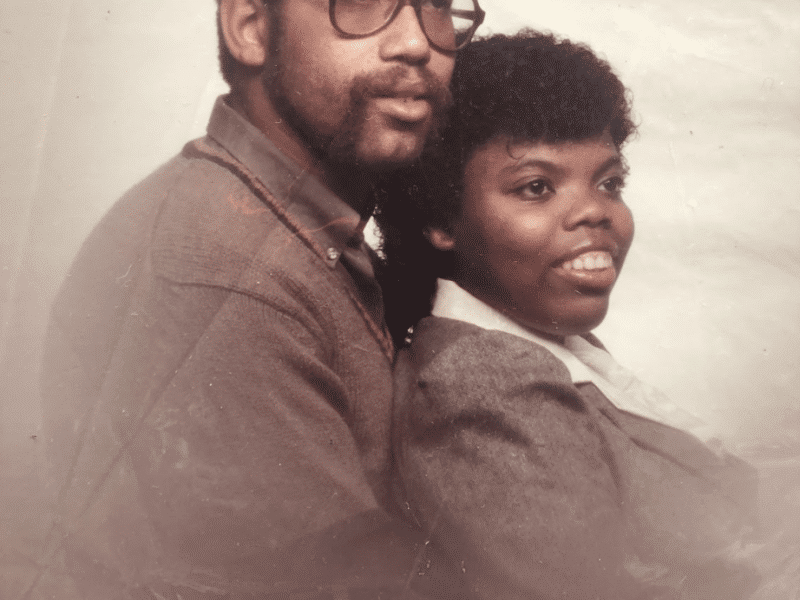
Hill and Mummaw led very different musical lives before they met at the 2006 Summer Solstice Jazz Festival.
“Gregg takes all the credit for turning me on to jazz, but it really didn’t take much because I’m a music lover to the bottom of my soul,” Mummaw said.
She grew up on Michigan’s west shore and went to Benton Harbor High School, the same school legendary jazz pianist Gene Harris attended a generation earlier.
(A generation earlier, Mummaw’s mother and Harris were reprimanded by their junior high school principal for dancing together.)
Dance was Mummaw’s thing back then, and it still is.
She reluctantly learned how to play the clarinet (“having to practice was painful”) but happily started taking lessons in baton twirling and ballet at age 3.
“My way to appreciate music has always been to move to it,” she said.
The comedian Sinbad (aka David Adkins) also went to Benton Harbor High. Mummaw recalls Adkins and his family coming over to her family’s house on Sundays after church, where Adkins senior was pastor.
“We’d barbecue, play badminton and dance to James Brown records on the lawn,” she said.
Mummaw’s maternal grandmother, also named Lois, was a jazz pianist.
“She played the Shadowlands Ballroom at 19,” Mummaw said. “Her nickname was ‘Speed’ because she played so fast.”
Hill wonders if his wife’s grandmother somehow planted the seeds for her late-in-life conversion to jazz, but Mummaw isn’t so sure.
“Music was music to me,” she said. “My parents weren’t jazz fans, but my mom had the radio on all the time.” She loved pop groups like Tommy James and the Shondells (from Niles, Michigan) and later picked up on ‘70s groups like Led Zeppelin and Black Sabbath.
“You can really dance to that stuff,” she said.
She moved to the Lansing area in 1988 after going through a difficult divorce from her first husband and worked multiple jobs as a single mom.
Free music festivals, including the Great Lakes Folk Festival, offered a welcome break.
“Outdoor music festivals are my favorite thing in the world,” she said. “I don’t care what kind of music. As long as I can dance, I’m good.”
Her first all-jazz festival was the 1988 Summer Solstice Jazz Festival. She went with her son, Ben, who was in the East Lansing High School Jazz Band.
The 2006 festival led to a fateful encounter. Hill watched Mummaw dance but didn’t talk to her, assuming she was married.
Fortunately, Mummaw and her son approached him after the set to thank him for being a festival sponsor. They swapped phone numbers and met again the next night, at The Green Door.
Mummaw was quickly sucked into Hill’s world, which is easily summed up in three words: jazz, jazz, jazz.
He grew up in Midland, the son of a big-band fanatic. His parents took him to see Dizzy Gillespie, Duke Ellington and many other greats in the 1950s. He got a set of bongos at 14 and soon plunged into the beatnik world, beret, poetry and all. He soaked up the jazz scenes in New York, California and Detroit as a truck driver for 25 years and moved to Lansing in 1970 with his first wife, Gail, who died in 2000.
He had little time for music in the 1980s, with work and family taking precedence, but all that jazz was percolating in his brain. His composing muse began to surface when he quit his trucking gig and took lessons with Arlene McDaniel.
By now, Hill’s book of tunes has grown to over 200. Many of them have been recorded on a growing stack of CDs by Rodney Whitaker, trombonist Michael Dease, guitarist Randy Napoleon and other top stars, gaining national attention and glowing reviews in the jazz press.
Pianist Ron Newman, a longtime staple of Lansing’s jazz scene, saw Hill soaking up the music at many gigs he played with his wife, singer Sunny Wilkinson.
“Apart from their financial support, Gregg and Lois are the ultimate lovers of jazz,” Newman said. “Once he started hanging with Lois, it was obvious she was also a keen listener. Musicians need listeners, and Gregg and Lois are the best.”
Hill’s lifelong love of jazz clearly rubbed off on Mummaw, but he also credits his wife for “loosening” him up, in more ways than one.
“I’m not a natural dancer,” he said. “She taught me how to actually dance.”
Mummaw felt that JAMM was dominated by jazz purists in its early years, with little regard for smooth jazz, fusion or other funk- and pop-leaning hybrid forms.
“Gregg couldn’t break free of that influence,” she said. “I’m responsible for him loosening up what he calls jazz.”
Mummaw stepped down as president of JAMM two years ago, but she hopes the organization will continue to open its tent wider.
“I’m hoping for JAMM to be more open to different styles of jazz, and to more younger people, and to just make it more joyful to be part of this jazz society,” she said.
JAMM gave the jazz community a timely boost in 2009, when the economy was in free fall, gigs were drying up and the MSU jazz studies program was still building its national reach and promotional muscle.
“The tradition of having a tribute is what we’re most proud of,” Mummaw said. “That and the scholarships for high school kids.”
More than 20 local students have received JAMM scholarships. Many of them, such as 2015 recipient and keyboard wizard Clif Metcalf (also performing at Sunday’s tribute), have gone on to launch successful musical careers.
Hill pushed the idea of a yearly tribute when pianist Sandy Izenson died in 2008. He hated the idea of Izenson “going into oblivion” without a word of recognition.
“I picked up the idea from New Orleans,” Hill said. “It doesn’t matter how obscure you are there, if you’re a DJ, what have you. If you contributed to the music scene, you’re celebrated. Show him some love.”
Mummaw said she has planned 14 of the 16 JAMM tributes, drawing upon years of organizing experience as a restaurant worker (and owner) and volunteer youth coordinator at University Lutheran Church.
The tributes have produced some emotional moments and exceptional music. Hill and Mummaw agreed that two tributes to singers named Betty — Betty Joplin in 2015 and Betty Baxter in 2016 — stood out.
“They’ve all been good, but those two were especially moving, seeing a community form around these two great singers,” Hill said.
“Every honoree has said they didn’t think it was going to be that big of a deal,” Mummaw said. “Afterwards, they say, ‘You usually don’t hear stuff like this until you’re dead, and then you don’t hear it because you’re dead.’”
She turned to her husband.
“You’d better bring a stack of hankies, because it’s going to get you bad.”