Iran doesn’t feel too far from Michigan
When the first bombs dropped on Iranian soil, information was limited and uncertain. The Iranian regime’s communication blackout inside the country made calls and messages difficult, as always.
…
Iranian and Iranian-American Michiganders share emotions about ongoing conflict
When the first bombs dropped on Iranian soil, information was limited and uncertain. The Iranian regime’s communication blackout inside the country made calls and messages difficult, as always.
Ali, a 27-year-old doctoral student at Michigan State University who asked that his full name not be used, said his mother, from her neighborhood in downtown Tehran, tried to let him know that she and the rest of the family were safe.
It wasn’t until hours later, after trying seven or eight times, that his mother eventually was able to call him.
“Didn’t you see the news?” his mother asked.
“Which one? A lot is going on,” Ali said.
“He is gone, he is dead,” his mother yelled, as she celebrated in the streets.
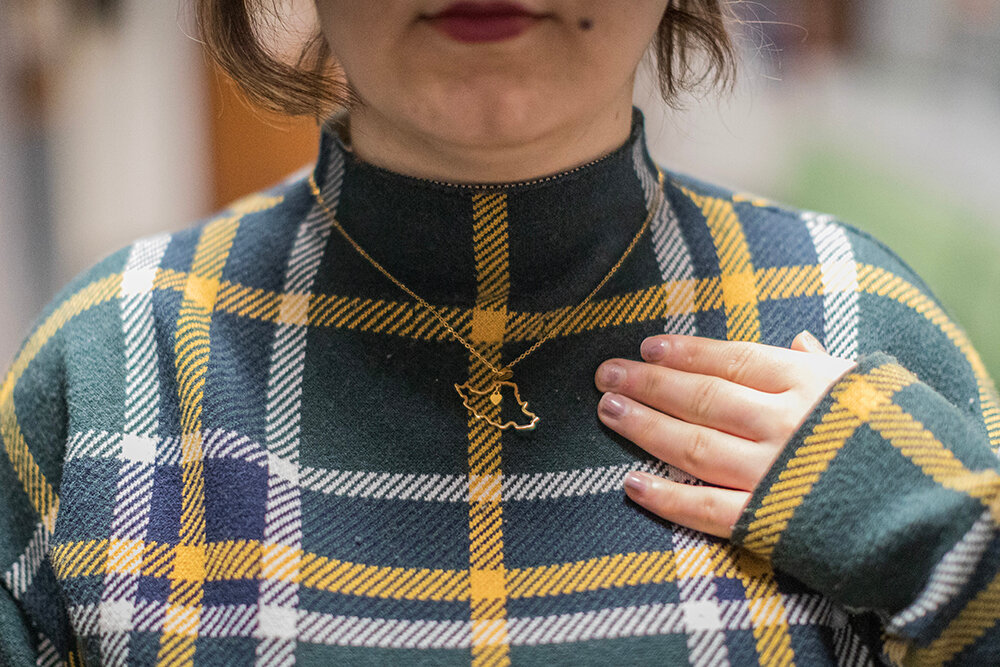
The death of 86-year-old Iranian Supreme Leader Ali Khamenei in the bombings — carried out jointly by the United States and Israel — was for Ali nothing but hopeful news. He and his friend Farzaneh Holasu, a 28-year-old MSU doctoral student, stayed glued to their phones in the early hours after the first bombs for as long as their eyes allowed, switching tabs and messaging to see if there was any new information about what many compatriots have called the liberation of Iran.
The news about the current intervention by the U.S and Israel and Khamenei’s death was relieving for Holasu and her family.
However, she said, it isn’t over, and what people want is regime change.
“It would be naive to say that Trump is the savior of the Iranian people,” Holasu said. “Of course, they (U.S. and Israel) have their own geopolitical interests, and this is a moment when those interests align with those of the Iranian people. Right now, we are on the same side, fighting the same enemy.”
Holasu’s mother called from Shahin Dezh city in northwest Iran, where Holasu was born and lived for about 20 years. She learned some bombs were dropped in the city, where a military facility is located, and that no civilians were injured.
“My mom just sent me a message saying, ‘We are so happy. I wish you were here. We are celebrating,’” Holasu said. “But then, after that, it was all cut.”
By Thursday evening (March 5), Israel had once again flexed its military muscle in the region. Hundreds of thousands are estimated to be displaced as attacks intensify in southern Lebanon and Shiite Muslim neighborhoods of the Lebanese capital, intensifying its attacks against the Iranian regime proxy, Hezbollah.
Inside the White House on Thursday, President Donald Trump was joined by international soccer superstar Lionel Messi and his Miami-based Inter Milan soccer team. Trump said Iranian military forces were being reduced from missiles and air power to communications and navy.
“What is left?” Trump said. “But they’re tough, and they want to fight, and they’re calling. They’re saying, ‘How do we make a deal?’ I said, ‘You’re a little bit late.’ And we want to fight now more than they do.”
The president said he is promising immunity to forces who desert the regime and “absolute death” for those who continue fighting.
“They’re only going to be killed,” Trump said. “And now is the time to stand up for the Iranian people and help take back your country.”
As the armed conflict enters its second week, the death toll has already surpassed 1,500. Among the dead are a reported 175 civilians killed at an elementary school in southern Iran. The New York Times has analyzed the bombing, and its reporting suggests it was likely carried out by the United States, though no one has claimed responsibility.
By Sunday (March 8), the U.S.-based Human Rights Activists News Agency reported that 1,215 civilians, 187 military forces and 317 unclassified people had died in Iran. The Lebanese Minister of Public Health, Rakan Nasreddine, said 394 people died in Lebanon. Eleven civilians died in Israel, according to Israeli authorities. Seven American soldiers and dozens more have died in a conflict that has engulfed eight other countries in the region.
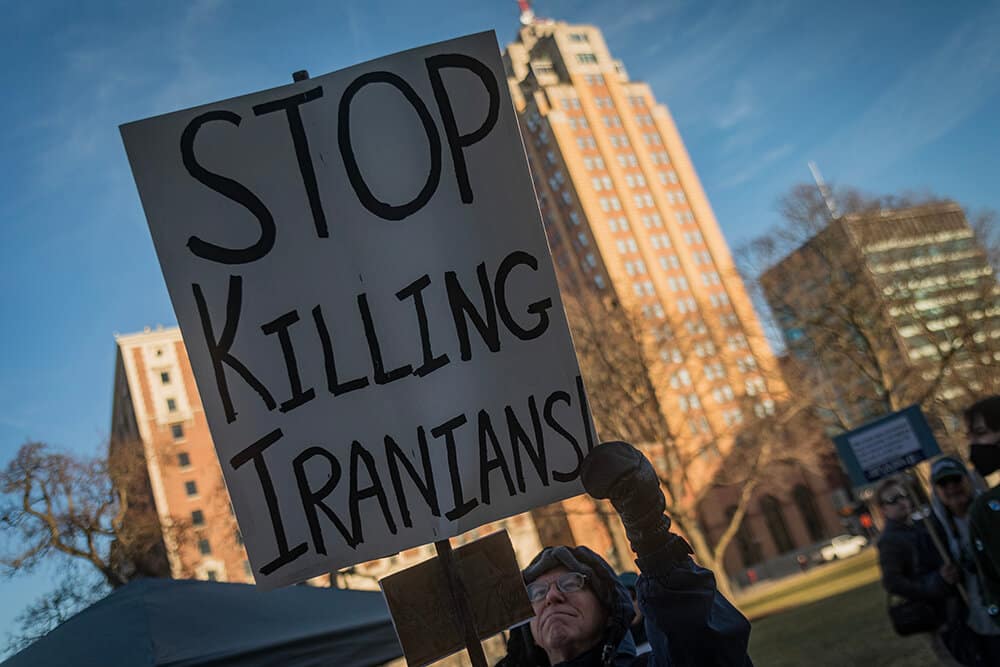
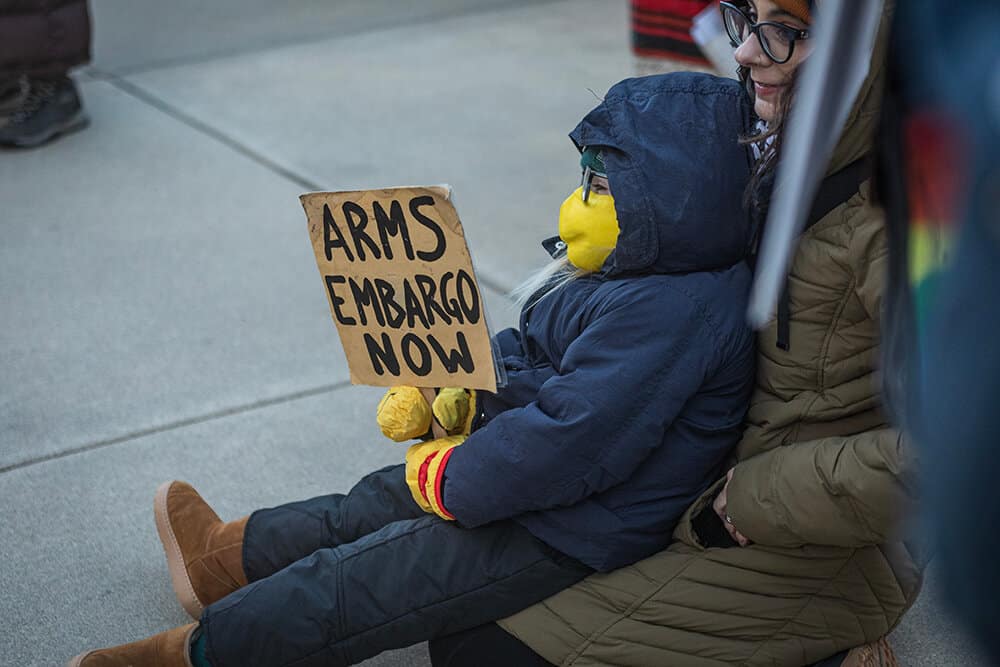
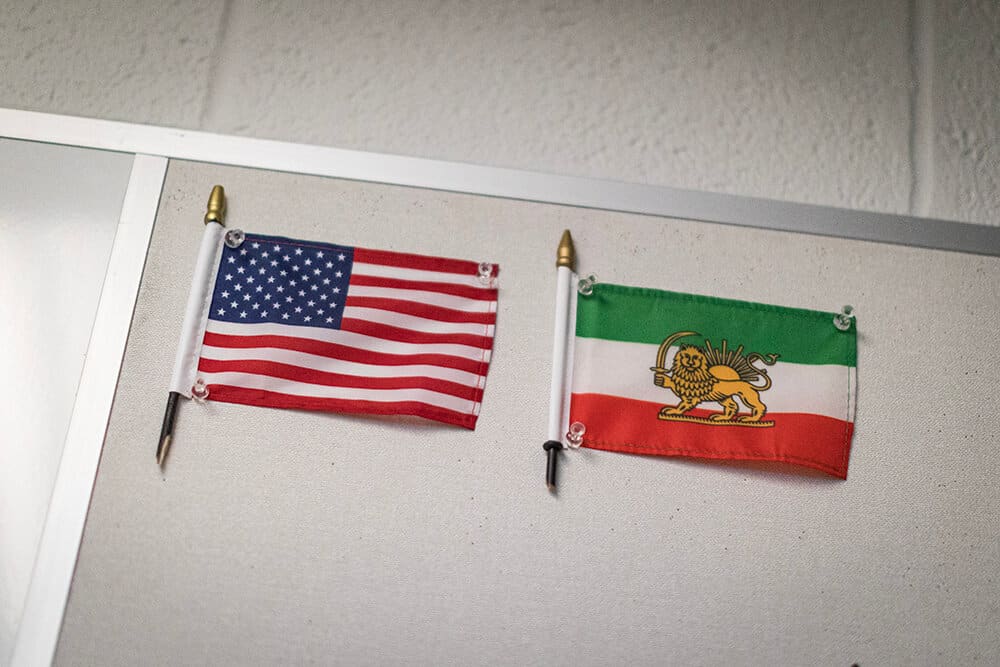
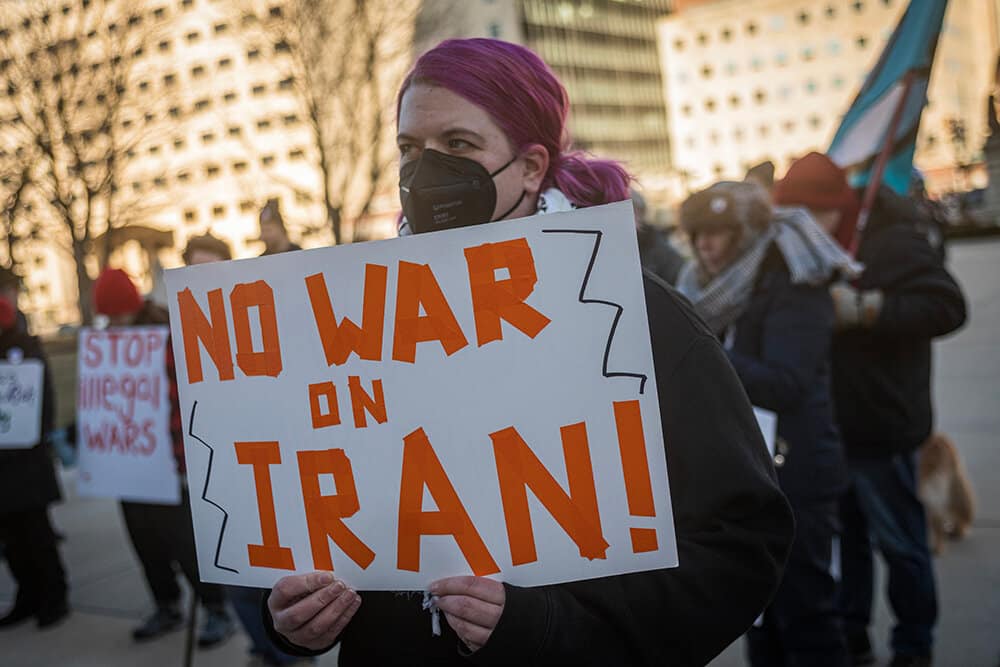
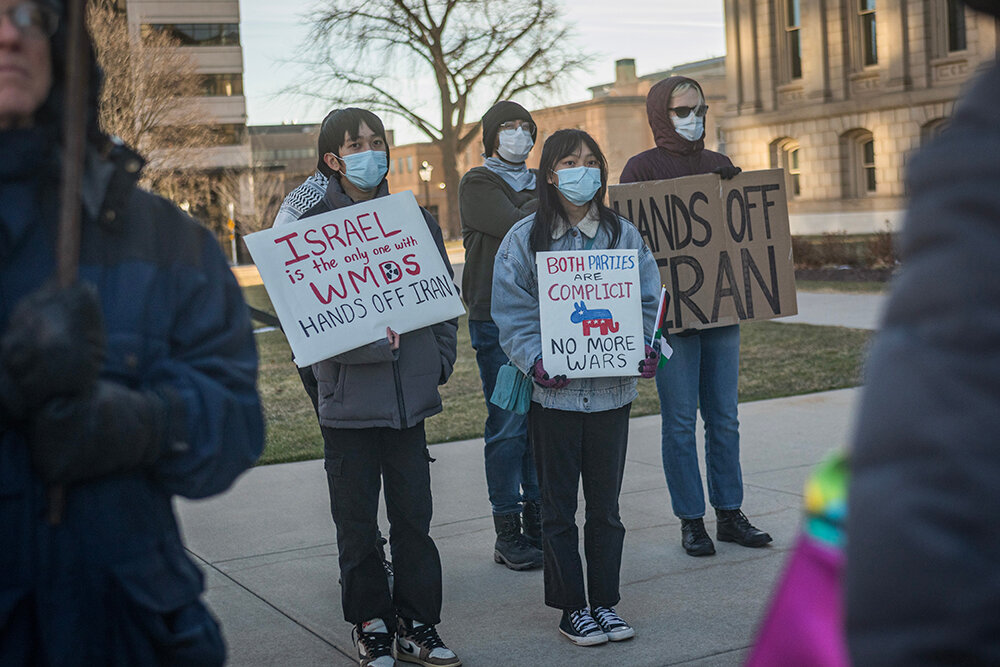
The Iranian flag — a Persian symbol before the 1979 Islamic Revolution depicting a lion holding a sword in front of a sun — was carried alongside Israeli and American flags in demonstrations in the days after the bombings in cities including Los Angeles, New York, Boston andDetroit. The demonstrations were in support of the conflict, as many members of the Iranian diaspora thanked Trump. At the same time, anti-war demonstrators also took to the streets in cities across the country, demanding American taxpayers stop spending money on foreign wars and cease funding Israel’s military interests.
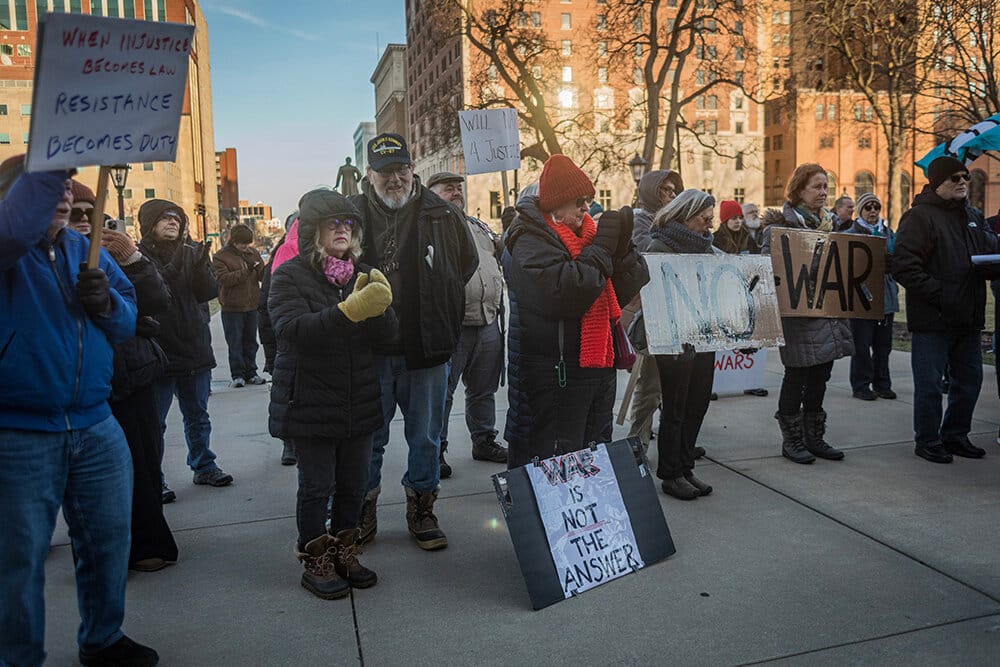
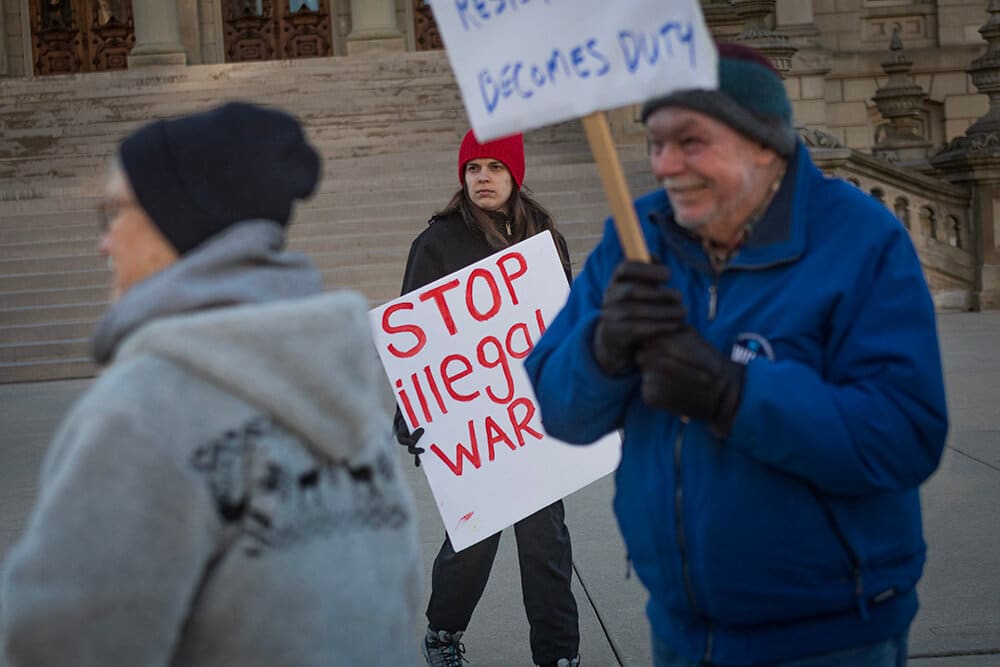
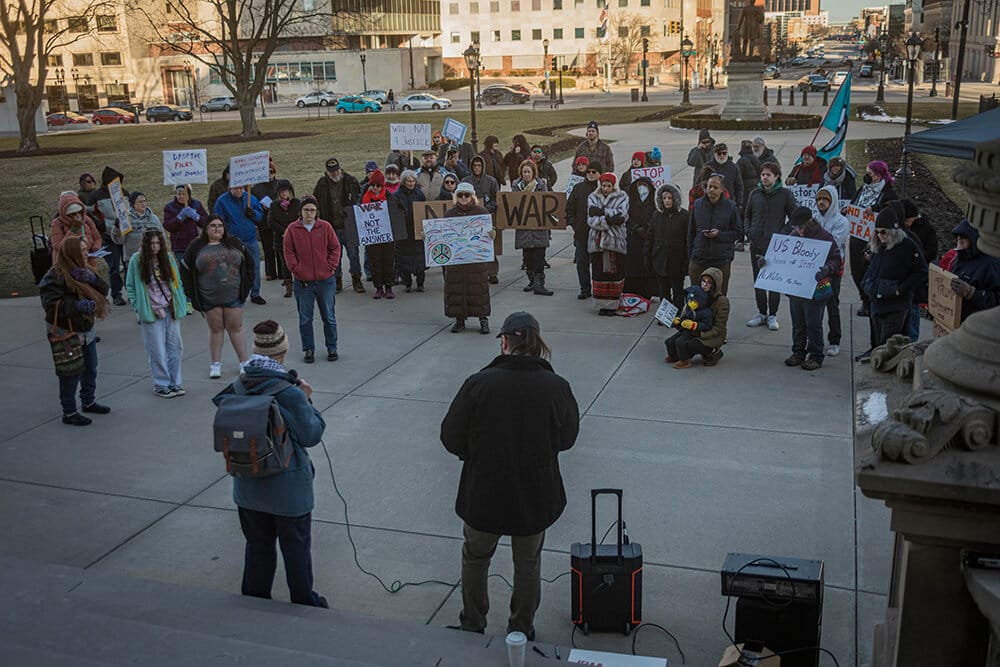
On March 2, around 100 people gathered outside the Michigan State Capitol for a rally called “No War with Iran.” Speakers and slogans condemned Trump’s “Operation Epic Fury.”
William Lawrence, a congressional candidate for the 7th District seat, criticized the actions.
“All this is just a waste of money, human life and human creativity that we’re pouring into a war that brings us absolutely nothing back here at home,” he said.
Standing in front of Lawrence, wearing a USS John F. Kennedy cap, an 81-year-old who gave his name as Heverly said he doesn’t believe the government about the current conflict.
“I just don’t believe it. Come on. War doesn’t do anybody any good. That’s a platitude,” said the veteran, who said he served on the USS John F. Kennedy aircraft carrier, deployed to the Mediterranean during the 1973 Yom Kippur War.
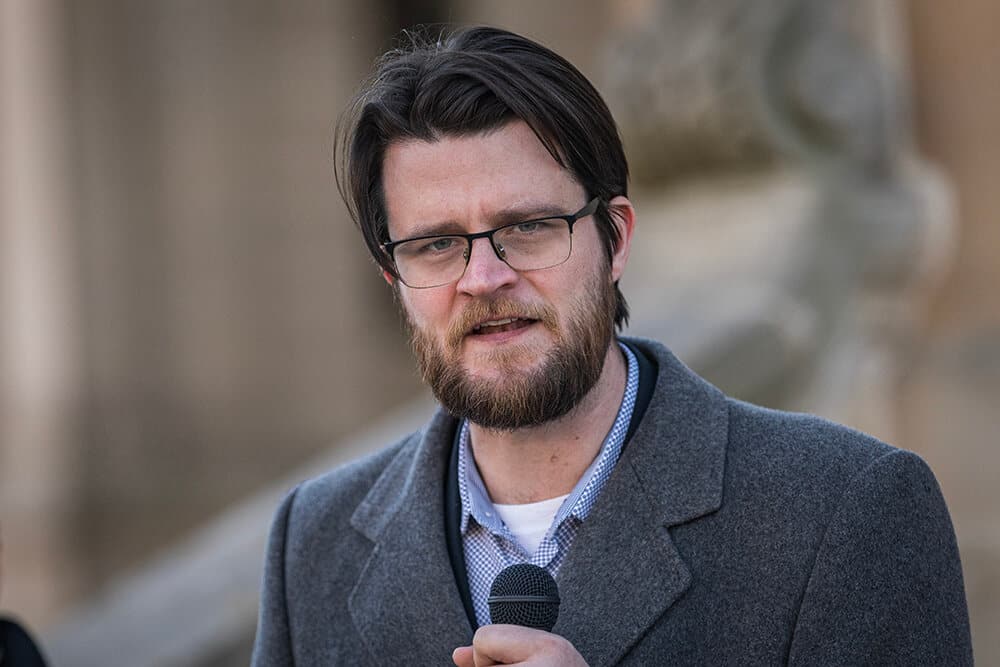
Mohsen Zayernouri, 43, a MSU associate professor who has not returned to Iran in almost 19 years, said the Khamenei regime poses a threat to the United States and its own people. He said he believes that now that its leader has been overthrown, the conflict might not last long. He said he is hopeful since Trump said that “help is on the way” and Trump also urged Iranians to continue the mass protests that shook the regime from within earlier this year.
These protests, which began over economic problems, have resulted in a sea of deaths, with estimates of between 3,000 and 25,000 people killed in massacres allegedly orchestrated by the regime and clashes, according to reports from the Islamic government and independent investigations.
“The people of Iran do not feel that this government belongs to them,” Zayernouri said. “They are aware that every election has been carefully manipulated and that none of their representatives are present. They have no voice. They have no freedom of speech. They have no freedom to choose their religion.
“This country does not cooperate with the rest of the world. This country is not serving its own people.”
A large majority of Iranians in the diaspora say the attacks have left them worried about family and friends back home.
A bittersweet sense of relief, perhaps.
“We are very cautiously happy about this news,” Zayernouri said. “Although these combat operations were supposed to be pinpointed, there have definitely been civilian casualties. So, we are really hoping and praying that Iranians remain safe.”
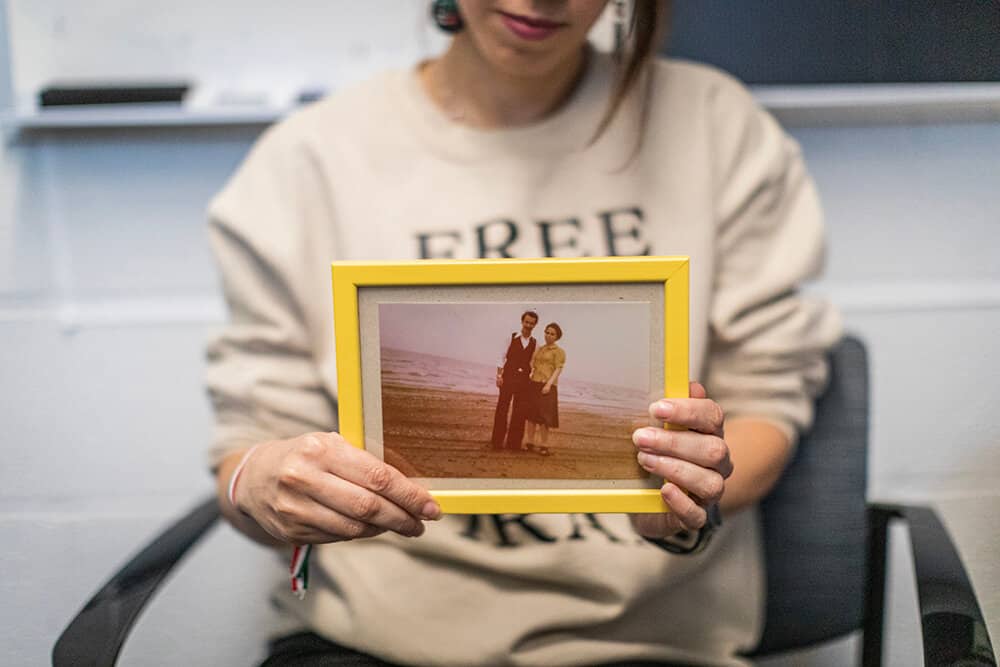
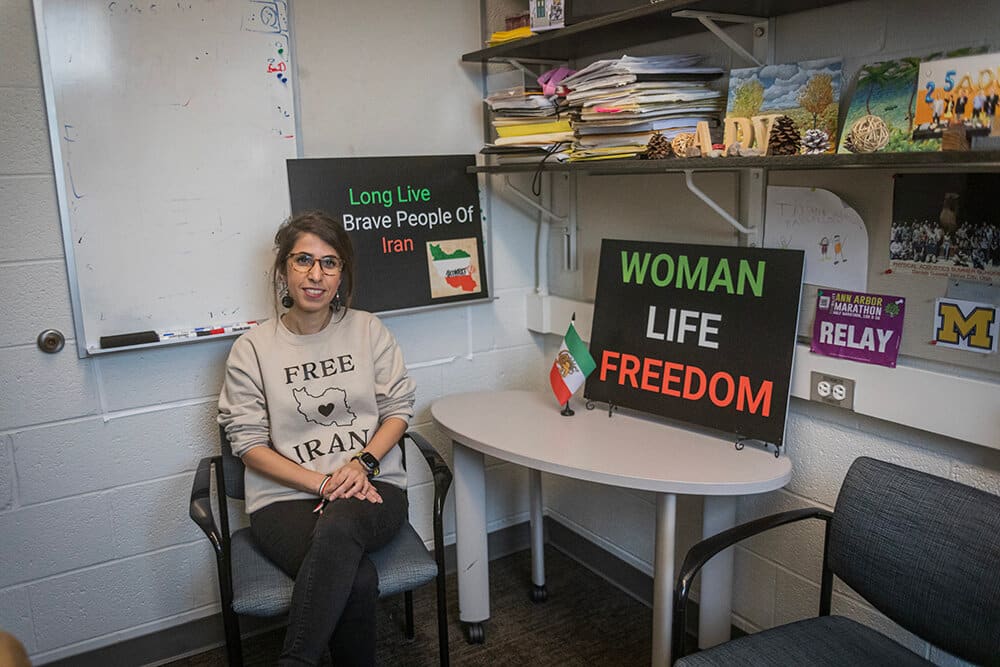
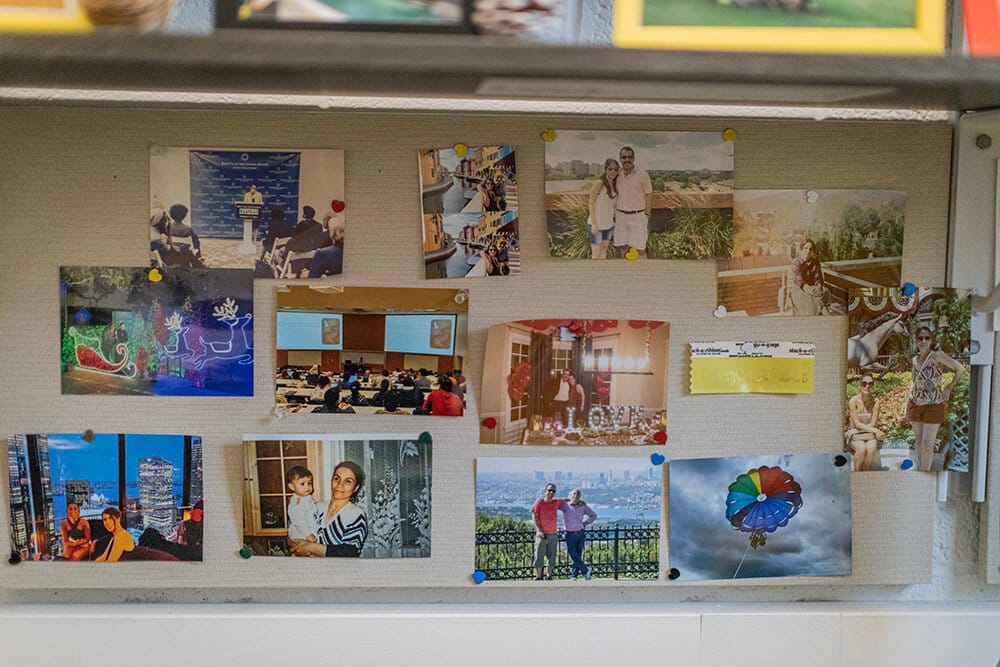
On the wall of a small office at the University of Michigan, faculty member Mitra Aliabouzar, 39, has hung up childhood photos with her family — the same photos she carried on with her on the plane when she left Iran 13 years ago. Originally from Tehran and a student activist, Aliabouzar was imprisoned three times by the regime for her activism in support of Iranian women’s rights. Aliabouzar hadn’t talked to her parents since the bombings began, but a neighbor told her they were safe and staying at their home in the capital.
“This time, the explosions are much louder than during the war last June,” Aliabouzar said. “And this time, it is definitely very different and more horrifying than last year. It’s not safe to move because the timing of the bombings is not very clear.”
She remained critical of Netanyahu and Trump’s intentions regarding her country; however, she added that the regime’s fall aligns with the demands of the majority of Iranians. A demand, she said, that had gone unheeded by several American presidents, who did not respond during numerous mass protests and mass deaths over decades.
Aliabouzar was critical and said she was disappointed by anti-war protesters who have taken to the streets.
“This regime has killed thousands of its own citizens. Were these ‘no to war’ crowds out there last month?” she said. “That’s a very simple question. I understand people’s instinct to oppose war — every sane person should be against it. What I don’t understand, and what is very hurtful and painful, is the inconsistency. Didn’t they pay attention, or were they completely deaf and blind during the massacres last month?”
The question of whether to return home is big in the Iranian diaspora. On Sunday (March 8), as Tehran awoke shrouded in thick black smoke following Israeli nighttime bombings of petrol depots, the still-dormant Islamic regime confirmed Mojtaba Khamenei, son of the deceased leader, as successor. In Delaware, a military plane landed before Trump’s eyes with the bodies of six soldiers killed in action, and Netanyahu again threatened the Lebanese government with “disastrous consequences” for the country if it does not disarm Hezbollah.
When Aliabouzar left Iran, she didn’t really think about returning while the regime remained in power. Now, she hopes to be able to return to her family.
“They let me leave without saying a proper goodbye to my mom, and that’s always in the back of my mind,” she said. “I never hugged her goodbye. I didn’t know if I would ever be able to go back. And now, for the first time in 13 years, I feel like this is the closest I’ve been.”