
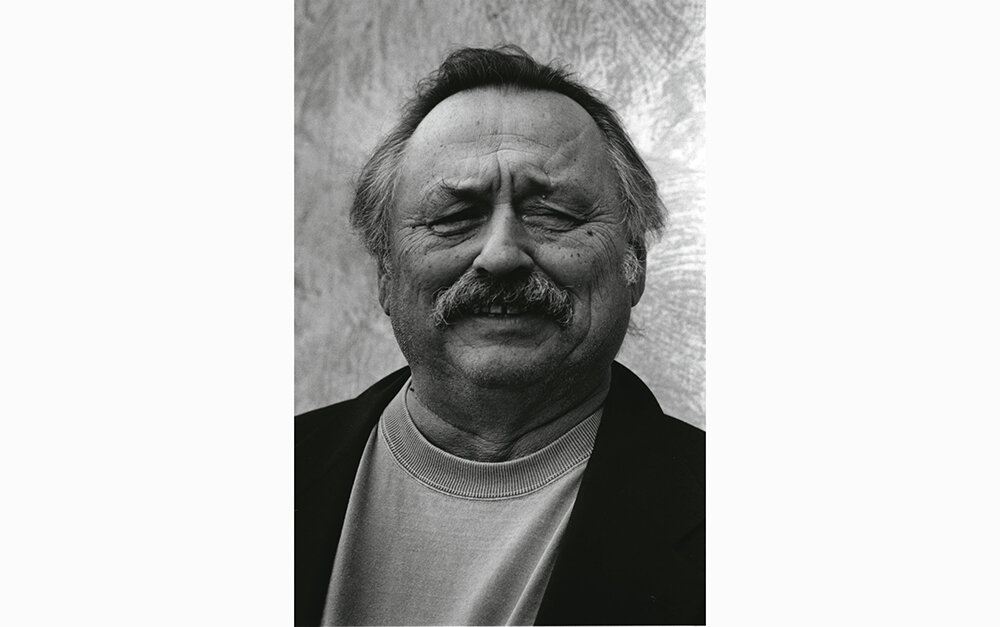
Jim Harrison in midlife: Fame becomes him
This is the second installment of a three-part story on Todd Goddard’s biography of Jim Harrison, leading up to Goddard’s appearance at 7 p.m. Nov. 13 at the Library of Michigan. The …
This is the second installment of a three-part story on Todd Goddard’s biography of Jim Harrison, leading up to Goddard’s appearance at 7 p.m. Nov. 13 at the Library of Michigan. The event is free, and books will be available for purchase. Goddard will be interviewed by Leslie McRoberts, head of Michigan State University’s Special Collections.
Todd Goddard’s comprehensive and revealing — very revealing — biography of the late Jim Harrison, one of the nation’s most famous contemporary writers, might be called “Devouring Time,” but parts are difficult to digest.
Readers learn about Harrison’s immense talents, fueled by a singular genius and a seemingly photographic memory of everything he put his hands on, but also about his excesses with food, sex and drugs, which almost led to his ruination.
Bob Dattila, who was a close friend and contemporary of Harrison at Michigan State University and later became his agent, is quoted in the book as saying Harrison was the most intelligent man he ever met.
A similar observation was made by former MSU President Lou Anna Simon, who, while waiting in the Wharton Center green room with Harrison, Richard Ford and Tom McGuane, said, “I’ve never been in a room with three men who are as smart as you are.”
Harrison’s life was one big juxtaposition. Goddard chronicles how Harrison’s growing fame in midlife often brought out the worst in him, along with the best. Harrison rubbed shoulders and shared drugs and deep conversations with the likes of Jack Nicholson, Marlon Brando, Edward Abbey, Richard Brautigan, Gary Snyder, Peter Matthiessen and Jessica Lange (with whom he had a documented affair), to name only a few.
Despite appearing rough and gruff, Goddard details numerous examples of Harrison’s generosity and kindness. One takeaway from Goddard’s book is that Harrison was as complex as his writing.
Goddard cites a 1980 letter from Harrison to fellow writer and close friend Tom McGuane in which he details his financial difficulties after blowing through a million dollars. He writes, “I’m absolutely broke with no prospects. Oh my god, how did it come to this — $500 meals and $200 whores.”
The highs and lows of Harrison’s writing career are laid out clearly in Goddard’s frank look at his life. Despite publishing books at a furious rate, such as “Farmer,” “Wolf,” “Warlock” and the novella “Legends of the Fall,” which cemented his fame, Harrison found himself writing for Hollywood dollars, chasing federal grants and borrowing $25,000 from Jack Nicholson.
From Goddard’s writing, we learn that Nicholson and Harrison became enamored with each other. The author provides numerous examples from Harrison’s archives of how, despite his shortcomings, he drew people in and made lasting friendships.
Goddard also details the unwavering friendship between Harrison and Dan Gerber, another MSU acquaintance. Gerber would “loan” Harrison money and pay for Harrison and his wife to accompany him and his spouse to Africa. Denizens of the ‘60s especially will enjoy the stories Goddard brings to light about the literary magazine Sumac, which Harrison and Gerber founded.
Goddard also covers the raucous times Harrison and the “sporting club” (Guy de la Valdene, Tom McGuane, Jimmy Buffett and others) would spend in Key West, fishing carousing and snorting.
The book paints a vivid picture of Harrison as a flawed family man who would be away from home for a month at a time. However, he would always return to his spouse, Linda, and his daughters.
The book also details how much Harrison relied on Joyce Bahle, whom he hired after his success with “Legends of the Fall” to manage his literary and personal affairs, which were in terrible disorder. For years, the IRS was hounding him for back taxes. Bahle helped keep him on the straight and narrow, or at least his definition of it.
We come to understand from the book that Bahle knew everything about Harrison’s professional and personal life, but as his aide de camp, she was the most discreet assistant ever. She controlled everything from who could talk with him (outside his circle of close friends) to his daily schedule, with some exceptions, like his cross-country drives.