
Lansing SNAP recipients prepare for impending freeze
For some people, a $216 loss one month means eating out less often. For Ariel “Kit” Cushman, who is currently transitioning out of homelessness, it’s a major setback.
…
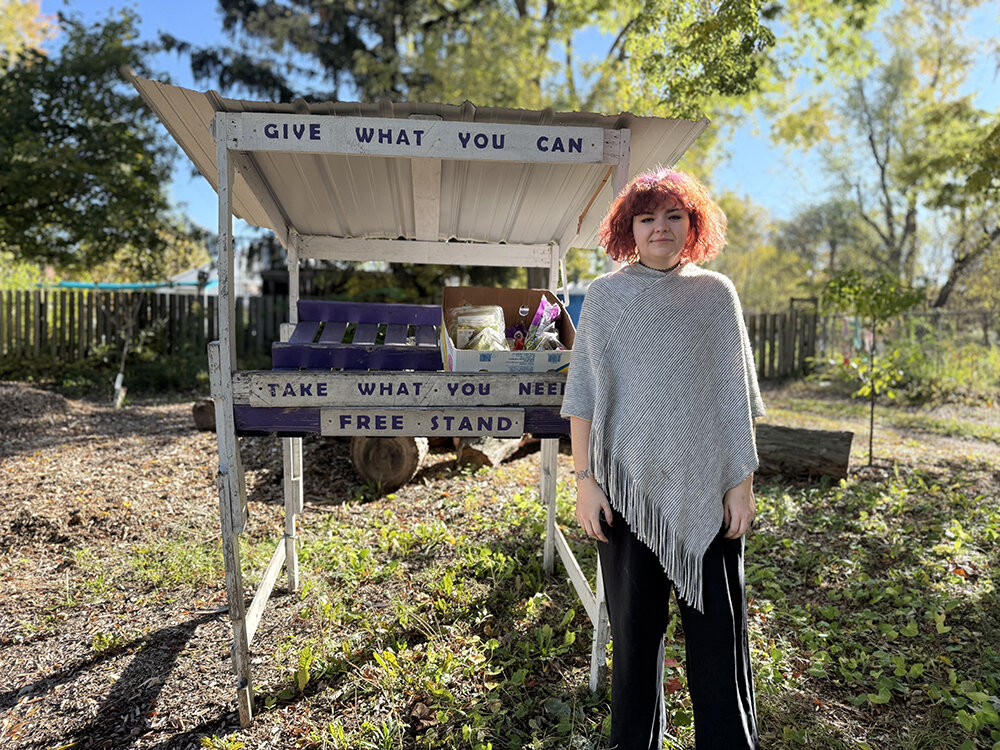
For some people, a $216 loss one month means eating out less often. For Ariel “Kit” Cushman, who is currently transitioning out of homelessness, it’s a major setback.
“Other than food pantries and community gardens that some of my friends work with, I don’t know how I’m going to feed myself,” they said.
In Ingham County, 47,773 people received Supplemental Nutrition Assistance Program benefits in 2022, according to the most recent Federal Reserve Economic Data report. But recipients of that food assistance program may not receive their benefits in November if the federal government shutdown continues — which seems likely.
The shutdown, which resulted from an impasse in the U.S. Senate over Affordable Care Act subsidies, shows no signs of ending. Democrats and Republicans blame each other.
But in a historic first, the U.S. Department of Agriculture has announced that “the well has run dry” for SNAP. Michigan Attorney General Dana Nessel joined a coalition of 22 Democratic attorneys general and three Democratic governors in suing the USDA and others for not using contingency funds to continue the program.
U.S. Rep. Tom Barrett, R-Charlotte, said in a statement that the cuts would affect “Many of Michigan’s most vulnerable families,” and blamed Democrats who “refuse to reopen the government” for the shutdown.
In the Lansing area, SNAP recipients are preparing for a rough ride. Cushman is particularly worried about homeless residents.
“I work directly with the unhoused community and a lot of addicts, and the only way they’re going to be able to take care of themselves is through the SNAP benefits,” they said. “There are going to be a lot of people on the streets that are really hungry.”
The resulting stress and malnutrition may also lead to mental health issues, Cushman said, which is a big factor behind homelessness already.
Vivienne Hazzard, assistant professor in the MSU Charles Stewart Mott Department of Public Health, said the public health consequences of the freeze could be far-reaching.
“The obvious answer is hunger,” she said, “and stress and children not performing well in school. But we also need to be prepared for the ripple effects that folks may not anticipate.
“Based on trends that we’ve seen toward the end of the SNAP benefit month under normal circumstances, I expect that we’ll see increases in crime and also emergency room use for conditions like hypoglycemia.”
She said hunger creates stress, which can impact household dynamics and lead to increased child maltreatment and domestic violence. And, people with diabetes and other medical conditions will be especially vulnerable and in need of emergency food systems, which she worries are not ready for the demand.
“They’re just not equipped to deal with this magnitude of need.”
Katyln Cardoso, senior marketing manager at the Greater Lansing Food Bank, said the freeze comes on top of already-increased demand. She said there had been a roughly 18% increase in demand in Sept. 2025 over Sept. 2024.
“There is something to be said for the immediacy of the current challenge we’re facing, but we also know that this is one challenge of many,” she said. “Whether or not anything is going on with SNAP right now, it is just harder for people to make ends meet.”
Donations have increased to keep up with the need, she said, though she declined to speculate on whether she expects that trend will continue. She stressed the food bank “will be here no matter what.”
Allee Redfern operates Your Mom, a Lansing-area mutual aid directory. She said the people she works with are scared.
“People don’t know what they’re going to do, especially if they don’t meet the qualifications to get a lot of funding or assistance that traditional nonprofits offer,” she said. She said she has seen particular anxiety among people who live above the poverty line but still can’t make ends meet. A temporary lapse in assistance could be enough to crumble that limited stability, she said.
Redfern has also seen an increase in support, though she said relying on community donations is not the same as the predictable infrastructure of major government programs.
“These aren’t big government companies with all this extra profit to do philanthropic endeavors, this is coming from people in our community,” she said. “I don’t think it’s realistic or sustainable for everyone to donate hundreds and hundreds of dollars for months at a time to food pantries.”
Even before the announcement, local homeless outreach organization Punks With Lunch Lansing was already dealing with “a crisis of demand,” executive director Kelsea Hector said. She expects it to get worse.
Hector said her family received SNAP benefits when she was a teenager. When those benefits disappear, she said, families have to choose which bills to get behind on in order to afford food.
“Maybe it’s only 200 bucks a month, but that 200 bucks a month has been allowing you to feed you and your kids,” she said. “Now, all of a sudden, it’s gone, so you’ve got to pull that from somewhere else. It’s the math of poverty.”
Hector said she and other local organizations received a surge in support, but that she expects demand to keep pace even if SNAP benefits return due to economic conditions.
Kari Aldrich, a South Side resident who receives SNAP benefits, said food banks can never be a true substitute for SNAP.
“My youngest was lactose sensitive, so I couldn’t just go to a food bank and get their shelf-stable milk,” she said. “Sometimes I would literally have to say to people, ‘Can you give me some money so I can go buy almond milk, so my kid can eat cereal for breakfast?’”
State benefits require regular recertifications and meetings with case workers, and Aldrich and Cushman both know what it’s like to be without benefits after losing theirs multiple times. Aldrich said she lost hers for multiple months earlier this year after recertification paperwork never got processed. She got back-pay after having her benefits reinstated, which she used to stockpile food that she plans to share with others in need during the funding freeze. She encouraged those who are struggling to tap into community networks.
Despite the challenges facing food banks, Cardoso, Hector and Redfern all encouraged struggling residents to use whatever help is available. The city of Lansing is working on a public list of resources, mayoral spokesperson Scott Bean said, and multiple departments are coordinating with each other and several outside agencies to address a growing need.
Hector said she’s ready for a massive surge in requests.
“We’re getting a lot more requests than last month, and we’re just gonna see that soar in November,” she said. “Because we know that when SNAP benefits go away, people just don’t eat. They starve.”
Related Articles

Meet the local women leading Greater Lansing efforts to provide the ‘dignity of work’
No matter how successful Shara Trierweiler became in her years-long finance career, it never seemed to make being a mom to her two children, Philomena and Dominic, any easier. …

Rewind: News from the last 7 days
Rewind 6/3/26 The Michigan State Police have finished their investigation into the April 15 fatal police shooting of Isaiah Kirby by East Lansing officers.

Prayer Walk for Peace in Lansing brought faithful protesters to Capitol
Photo Gallery – Prayer Walk for Peace