
LansingHenge is the twice-a-year photo op you see in all those fancy brochures. Here’s how to see Lansing in the best light.
In 2016 I was chasing every exciting shot I could. Traveling the country with a camera in hand. I had a list, and being a midwesterner, going to Chicago, during the Spring equinox was right at the …
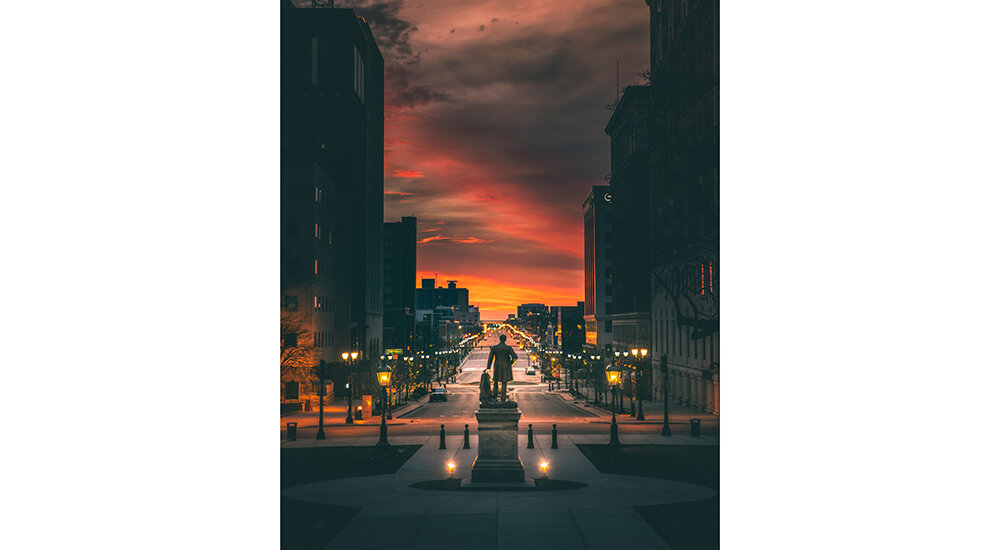
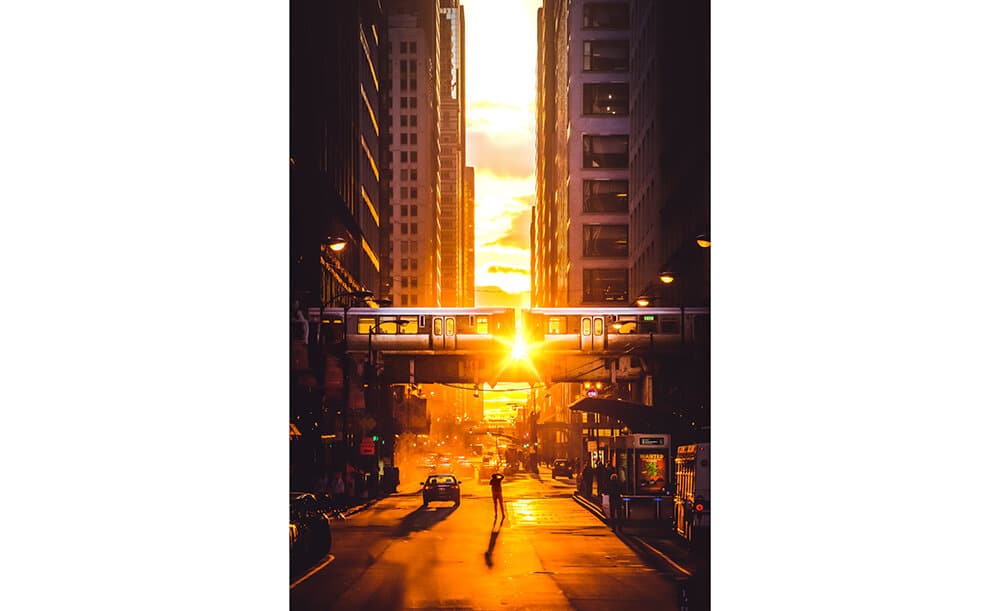
In 2016 I was chasing every exciting shot I could. Traveling the country with a camera in hand. I had a list, and being a midwesterner, going to Chicago, during the Spring equinox was right at the top. It’s when a global phenoma referred to as “ChiHenge” happens.
Photographers from all over the globe descend on the city to capture the moment the sun melts into the streets.
The light doesn’t just fall on the city. It enters it. It fills the streets, reflects off glass and steel, stretches shadows down asphalt like paint, and transforms a daily commute into something cinematic.
As a photographer, I didn’t just see a sunset.
I saw alignment.
Timing.
Possibility.
And I had one immediate thought:
Could Lansing do this too?
WHAT IS A HENGE ANYWAYS?
A “henge” happens when the sun aligns perfectly with the grid of a city’s streets during an equinox, the two days each year when day and night are nearly equal.
In cities built on a grid, this creates a brief window where: The sun rises or sets directly down the street.
Buildings frame the light The city becomes a corridor for the sky.
Chicago didn’t invent the sun alignment, but it gave it a name and a stage.
And after seeing it, I knew:
Lansing had the bones for something just as powerful.
BRINGING LANSINGHENGE
TO LIGHT
Lansing isn’t Chicago. It doesn’t need to be. What it does have is historic corridors, intentional street lines and a skyline that quietly frames the horizon. When the equinox approached, I began scouting, watching, measuring and waiting for the next equinox in the fall.
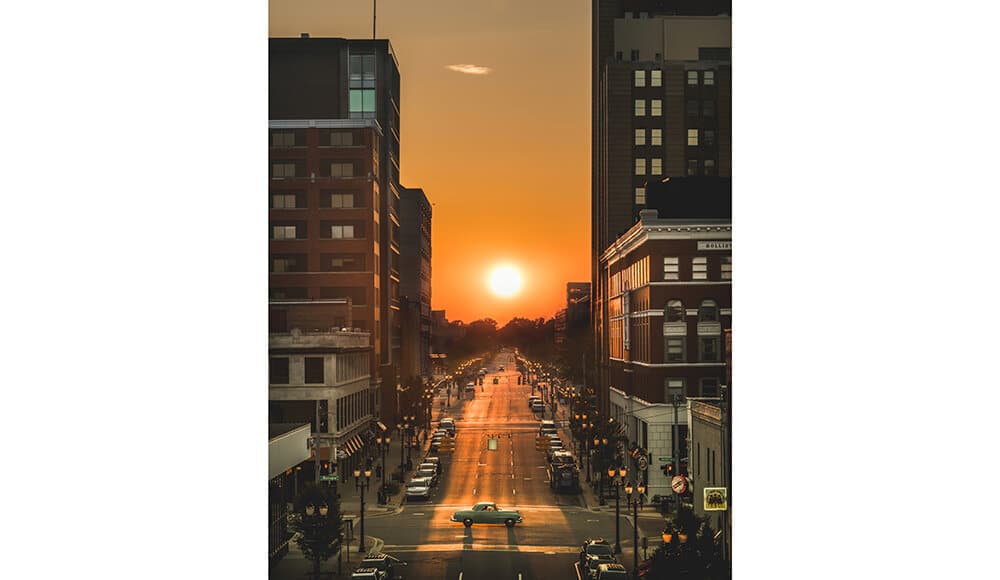
Then it happened on a special fall day. The sun dropped perfectly into alignment with Lansing’s streets, pouring light down the city like liquid gold. Cars paused, People stopped mid-step, cyclists became silhouettes, and shadows stretched for blocks. For a few fleeting minutes, Lansing transformed not into something else, but into something fully itself.
That was the birth of LansingHenge.
A CITY, REFRAMED
Photography has always been about revealing what’s already there.
LansingHenge didn’t add anything new to the city. It revealed something hidden in plain sight. Alignment, geometry and light.
For a brief window twice a year, Lansing becomes a stage where the sun performs, our streets guide it and our people become part of the composition. You don’t need to understand astronomy to feel it. You just need to stand in the street and watch.
MORE THAN A PHOTO…
A SHARED MOMENT
Since its introduction, LansingHenge has become something more than a photographer’s pursuit. It’s become a reason to gather and a reminder that beauty doesn’t belong only to the biggest cities. We can have it too.
Inspired by Chicago, yes. But unmistakably Lansing.
A moment where the sky meets the streets and the city pauses long enough to notice.
HOW TO EXPERIENCE LANSINGHENGE
It happens twice a year:
Spring equinox: the week of March 20 Fall equinox: the week of Sept. 22
Find an east-west street
Face the horizon
Be ready
Because when it happens — it doesn’t last long.
But you’ll remember it.
YOU WANT TO TAKE THE PHOTO?
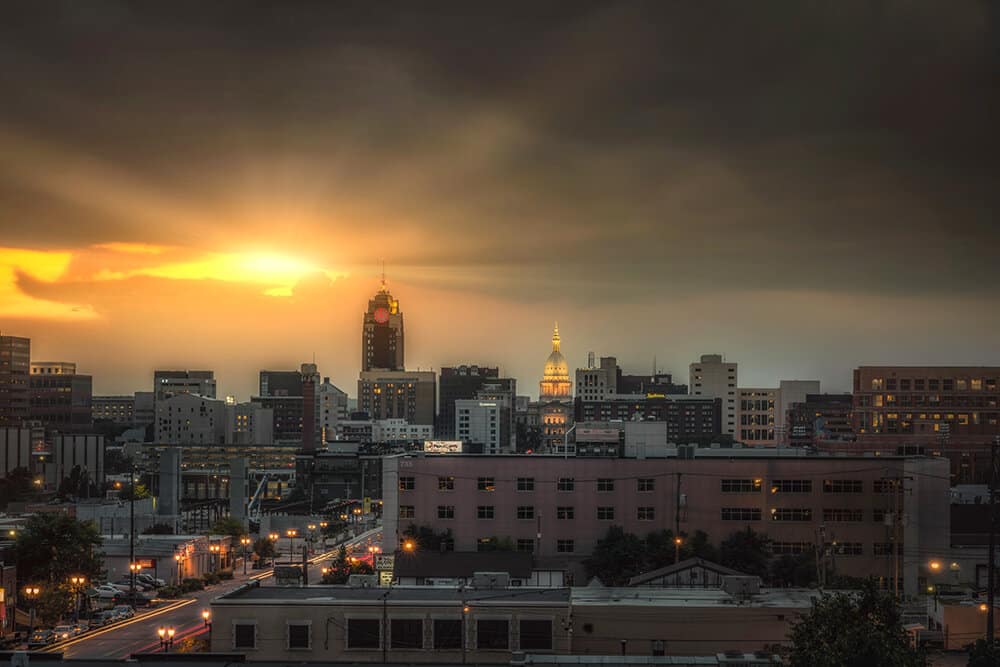
Capturing LansingHenge isn’t as simple as showing up and pointing a camera at the sun. In fact, photographing the sun is one of the most technically demanding things a photographer can do.
Extreme dynamic range (bright sun vs dark buildings)
Rapidly changing ligh
A narrow timing window — often just minutes
Expose for the street, and the sun becomes blown-out white circle. Expose for the sun, and the city falls into darkness. To make these images work requires technical skill, and practice … a lot of it.
Manual exposure control
Understanding of dynamic range
Bracketing or exposure blending
Knowing when to silhouette vs. when to recover detail
Intentional equipment
Telephoto compression lenses to enlarge the sun in frame
Tripods for stability at lower exposures
Lens hoods to control flare
Sometimes neutral density or graduated filters
And most importantly, timing and positioning
The alignment window is short.
Clouds matter. Atmospheric haze matters.
Even being a few feet off center can ruin the alignment.
LansingHenge is a reminder that photography isn’t just about seeing beauty but about knowing how to hold onto it before it disappears.
Related Articles

A roundup of recent Lansing-area music news
From Big Sur releases new album, Starfarm’s Whitney Who has a new group and Displaced Manor finds a new home

Ten touchstones in local LGBTQ+ history
In 1971, gay activists in East Lansing demanded protections in the city government’s hiring process from their City Council. They came, they fought, and they won: East Lansing’s early 1972 civil rights ordinance was the first of its kind in the country.