Money speaks loudest in Lansing primary election — with one *
What does a spot on the November ballot cost an at-large City Council candidate?
At least $14,000, based on this year’s campaign finance reports.
Money spoke loudest in last …

Mayoral hopeful makes the cut despite raising under $1,000
What does a spot on the November ballot cost an at-large City Council candidate?
At least $14,000, based on this year’s campaign finance reports.
Money spoke loudest in last week’s primary election, with the top four vote-getters also having the biggest campaign chests. Current 2nd Ward Councilmember Jeremy Garza pulled in over $48,000 and received 20% of the vote. Clara Martinez and Julie Vandenboom, who each received around 17.5%, secured over $21,000 and around $14,500 respectively. Aurelius Christian, with 9.7%, also raised $14,500. In the 4th Ward, Peter Spadafore pulled in 57% of the vote with $18,000 raised.
But that correlation was interestingly absent in the mayoral election: Incumbent Mayor Andy Schor raised nearly $100,000 in 2025 and earned 63.4% of the vote, but runner-up Kelsea Hector secured 15.9% with under $1,000 raised or spent. She didn’t even have to file a campaign finance report.
How did a grassroots candidate with under $1,000 get onto the November ballot while City Council candidates scrounged together tens of thousands just for the chance?
“We were really accessible, and we met people where they were at,” Hector said in an interview. “We went into neighborhoods, we had everyone invite their neighbors, and we sat on people’s porches and just had a few hours of conversation with people.”
She also said her work as a nonprofit consultant gave her visibility and name recognition in the community, especially among younger voters.
Ingham County Commissioner and political consultant Mark Grebner put it more bluntly: He thinks Hector pulled through because Schor’s victory in November is inevitable.
“A thing is either in play or it’s not,” he said. “If it’s in play, the Chamber of Commerce, the would-be activists and the people who think their decisions are important, they’d be saying, ‘I’m supporting Candidate B. I’m opposed to Candidate A. I’m going to stand up, and Candidate A may win, but by God, we’re going to make him work for it.’”
“But if Candidate A is going to win with 63% of the vote in a split field, who the hell cares who B is?”
Without the mayoral seat “in play,” Grebner said the real top-of-the-ticket race for donors was the at-large Council race. That makes sense in the context of 2021, where Schor’s eventual competitor, Kathie Dunbar, reported around $29,000 raised ahead of the primary — more than 10 times any of Schor’s competitors this year.
Another apparent determinant was an endorsement from the Lansing Regional Chamber-PAC, which endorsed Garza, Martinez and Christian in the at-large race and Spadafore in the 4th Ward.
But Matt Grossmann, a Michigan State University political scientist, said the Chamber would not support a candidate it did not already believe could win.
“If someone is donating to a candidate, it means they believe that candidate can win,” said Grossman, director of MSU’s Intitute for Public Policy and Social Research.
Steve Japinga, the Chamber’s senior vice president, echoed this.
“Our endorsement matters, but at the end of the day, the candidate has to put in the work,” he said. “We have pretty limited dollars, and we try to make sure that we’re doing it strategically.”
Grebner said the LRC-PAC also endorses candidates it knows will win to bolster its credibility.
“The Chamber has endorsed me,” he said, laughing. “Isn’t that weird? I’m never really in a contested race, and also, I don’t really need the money. But the Chamber, every now and then, thinks I should be on the list of people they endorse because they like to have a long list of winners.”
One unsuccessful at-large candidate in this election was Nick Pigeon, the Michigan Campaign Finance Network’s former executive director. His slogan was, “Money can’t buy leadership.” Finishing in eighth place with around $5,000 raised, he learned the hard way that isn’t always true.
Pigeon said in an interview that the role of money in this election was “pretty part and parcel.”
As for the Chamber’s role, Pigeon said it was common to see regional chambers hold sway in elections, but that Lansing’s is unique for being “the top power that people look towards.” He attributed that to the influence of “some pretty large developers who hold a lot of power and get a lot of nods from the City Council.”
Another factor that may have impacted this election is a notably high voter turnout. With 15,000 votes, it was the highest-turnout Lansing mayoral primary in the 21st century so far.
City Clerk Chris Swope attributed that turnout to Michigan’s new permanent mail-in ballot list, which allows voters to sign up once to receive an absentee ballot in every election, as opposed to repeating the process each time. He said many signed up for the list in the 2024 presidential election, leading to “nearly 23,000 people that got a ballot mailed to them” in this election.
Grossmann said it made sense to attribute the 16% increase in voter turnout over 2021 to this system, because “it’s easier to raise turnout from a low-turnout election.”
Even while money had a very high correlation with victory among Council candidates, it wasn’t everything. Julie Vandenboom, who didn’t seek the Chamber’s endorsement (nor receive it), secured second place over Clara Martinez by three votes despite raising around $7,000 less than Martinez. And in the 4th Ward, Peter Spadafore’s competitor will be Heath Lowry, an attorney who earned 26.5% of the vote with $5,000. But Lowry has been endorsed by Zacharie Spurlock, who earned 16.5% in finishing last in a three-candidate race. If everyone who voted for Spurlock votes for Lowry in November, Spadafore will have a tight race ahead despite his monetary advantage.
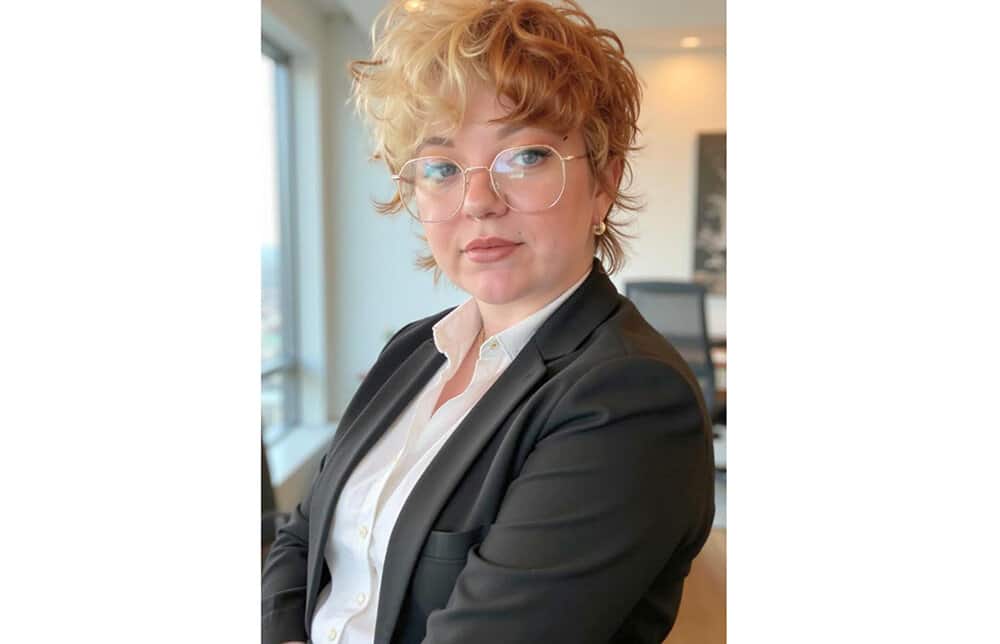
Hector said she will continue her current approach in her bid for the mayoral seat.
“This relationship-building model has been working for us, and we’ll continue to do it,” she said.
With a background in fund development, she said she was surprised to pull through. But she said increased awareness of campaign finance gave her hope that grassroots campaigns like hers might be gaining viability.
“The tide is changing,” she said.