MSU program to tell first-person stories of Vietnam War
Using the written word, combat veterans, authors and an anti-war activist will present a program Friday underlining how the Vietnam War permeated our nation’s culture and Michigan State …
Using the written word, combat veterans, authors and an anti-war activist will present a program Friday underlining how the Vietnam War permeated our nation’s culture and Michigan State University’s role in the world.
The program, hosted by MSU Libraries and the Historical Society of Greater Lansing, serves as the opening reception for the ongoing exhibit “A Campus and a War: Michigan State University and Vietnam,” curated by MSU Special Collections head Leslie McRoberts, librarian Garrett Sumner and archivist Jennie Rankin.
The event is free, and visitors are encouraged to arrive early to view the exhibit on MSU’s complex relationship to the Vietnam War, from its Cold War-era technical assistance programs to campus activism. Through archival materials and historic media, the exhibit traces how MSU’s global ambitions collided with a divisive conflict, leaving lasting marks on the university and the Lansing community, including refugees, service members and protesters.
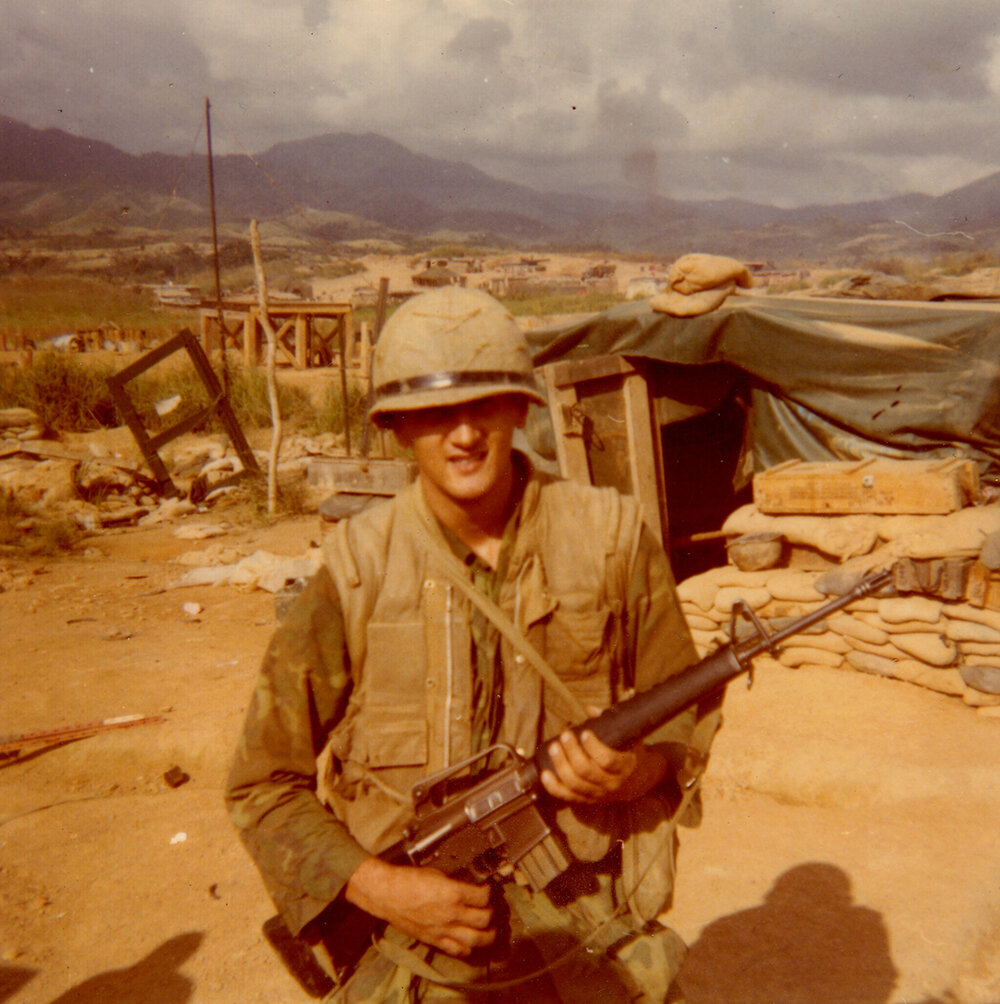
East Lansing author William Murphy, who has written two books on his combat experiences in Vietnam, “Not for God and Country” and “Souvenirs of War,” remembers waiting on the tarmac at the Marine Corps Air Station in El Toro, California, on Feb. 17, 1968, for his unit to ship off. President Lyndon B. Johnson had flown west to address the men. Following his short speech, Johnson began to shake hands with the Marines; Murphy remembers Johnson shaking his hand while looking directly into his eyes.
“Johnson had tears in his eyes,” Murphy said. “He was very troubled.”
Shortly after, Johnson announced he would not be running for reelection.
In addition to short passages from his books, Murphy will read a poem he recently wrote for the veterans’ magazine Dispatches, published by the Military Writers Society of America. The poem is a reflection on a brutal battle in which 80 of his fellow Marines were killed while protecting the Da Nang Air Base during the Tet Offensive in 1968.
“It was a very bad day,” he said.
Another area author, Nancy Vogl, will read a passage from her forthcoming children’s book on Jan Scruggs. In 1979, Scruggs was a 29-year-old Vietnam War veteran still carrying shrapnel around with him when he watched the war drama “The Deer Hunter” while drinking whiskey. The next morning, he told his wife he was going to build a national memorial that would list the names of all those killed in the war. By 1982, the first portion of the memorial had been erected.
The Vietnam memorial, like Arlington Cemetery, the Sept. 11 memorial, Gettysburg Battlefield and Omaha Beach, is one of the most hallowed places you can visit. It grabs you and doesn’t let you go. Instinctively, you find yourself looking for a person you knew and tracing their name with your finger.
The MSU program will also feature readings of poetry written by two veterans, one in the heat of battle and another 50 years later, and of seminal documents relating to the war, including a somber draft notice and a prison letter written by Saginaw native Alan Schultz, whom I met in 1966 at Abbot Hall. Then, he was a gung-ho Marine ROTC student. Four years later, he was on his way to a federal penitentiary in Milan, Michigan, for refusing induction.
Also to be read is a love letter from a combat zone; dispatches from Jim Sterba, a former State News writer who became a Vietnam War correspondent for The New York Times; and both formal documents and casual letters from then-MSU President John Hannah and professors revealing MSU’s ill-fated role in anti-communism dealings in Vietnam. Diane Harte, who served as a nurse in Vietnam, will tell of her experiences saving the lives of young soldiers, and a photographer will showcase five images that helped end the war. MSU graduate and Army combat veteran Ron Springer of East Lansing will close the program with a letter he received from his mother and an emotional poem written by another veteran.
The mostly straightforward, mundane letters, speeches and documents of the Vietnam War era take on a different light, often a darker one, 50 years after the war ended. From 1955 to 1975, the war permeated our lives and, unfortunately, still does in ways we are only beginning to understand, from the long-term effects of post-traumatic stress disorder to the legacy effects of chemical weapons. Music, literature and student activism were profoundly changed by the war, and the then-nascent mistrust of government continues to this day.