Phillip Bahar brings Chicago energy to Broad Art Museum
Phillip Bahar has one hell of a Rolodex — if people still use such things. (He calls it “a long list of digital contacts.”)
That’s not the only asset that led to …
Phillip Bahar has one hell of a Rolodex — if people still use such things. (He calls it “a long list of digital contacts.”)
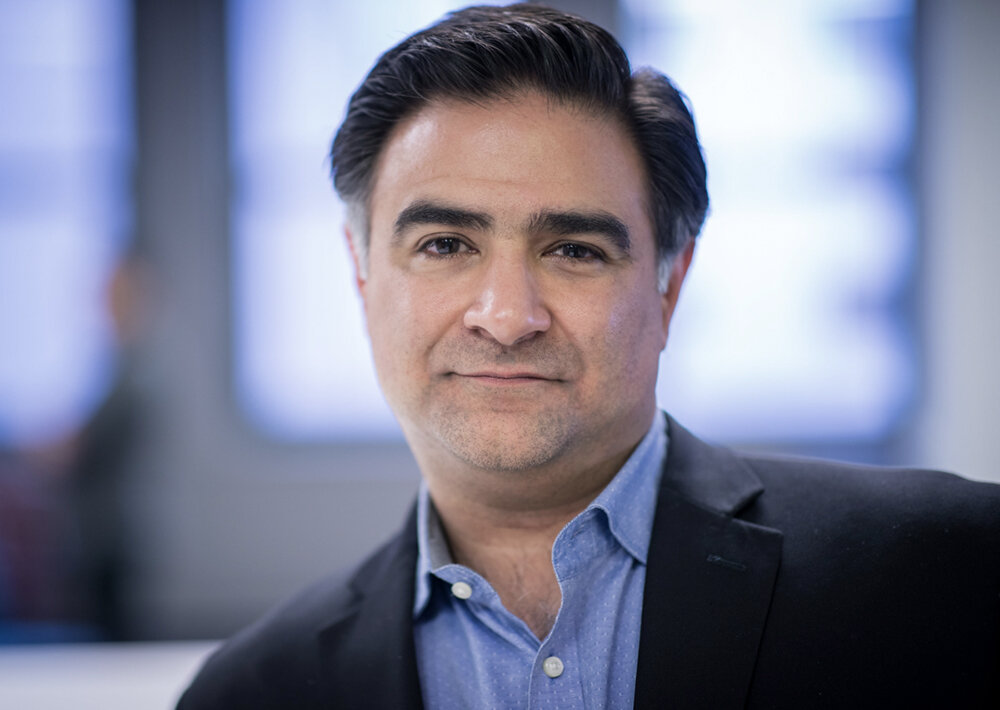
That’s not the only asset that led to Bahar’s appointment last week as the fourth director of the Michigan State University Broad Art Museum, but it didn’t hurt.
As president and director of the Chicago Humanities Festival for the past 13 years, Bahar brought more than a thousand artists, authors, thinkers and policymakers to thought-provoking events at venues large and small across the city, from Chinese contemporary artist Ai Weiwei and performance art icon Marina AbramoviÄ to politician and voting rights activist Stacey Abrams and punk-rock poet Patti Smith.
Bahar’s potential to activate the Broad with a panoply of special events, along with his skill at building partnerships with university and community groups, was among several attributes that gave him a clear edge in a search process that lasted nearly three years.
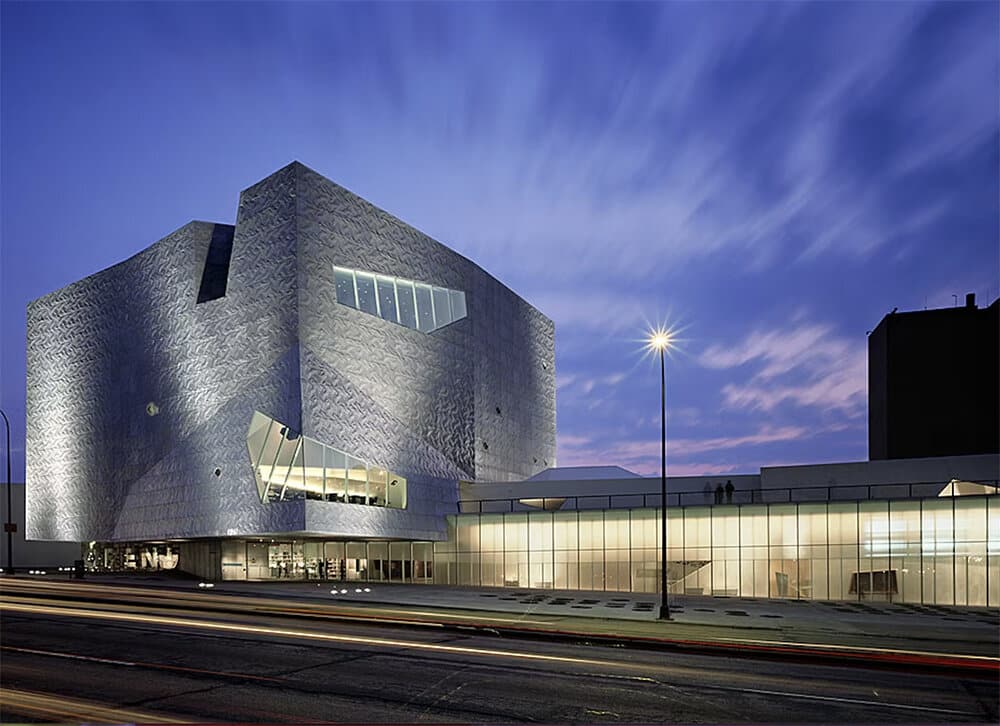
The Broad has burned through three directors in its 13 years, each of whom took a stab at making the museum the must-visit regional destination that its founder, the late Eli Broad, and star architect, the late Zaha Hadid, hoped it would be.
While the Broad is well established as a key academic and educational asset at MSU and a center of excellence in the realm of international art, it has yet to fulfill the grand vision expressed by architect Edwin Chan, a member of the jury that selected Hadid to design the museum, in 2007: “You’re going to need to build a bigger airport.”
Art collector Alan Ross, chairman of the Broad’s advisory board, a major donor to the museum and a member of the search committee that recommended Bahar, thinks the new director is the man to take the museum to the next level.
“We’ve finally located a leader we’ve been seeking for a long time, a leader who will bring together students, faculty and community,” Ross said.
Under Bahar, Chicago Humanities forged hundreds of partnerships with neighborhood organizations, reaching people who don’t often go to museums or downtown cultural events.
“He puts on a lot of different events, his organization is very successful and, most importantly, he reads and understands the community very well,” Ross said. “It’s going to be more than a museum for MSU. It’s going to be a destination for the community as a whole.”
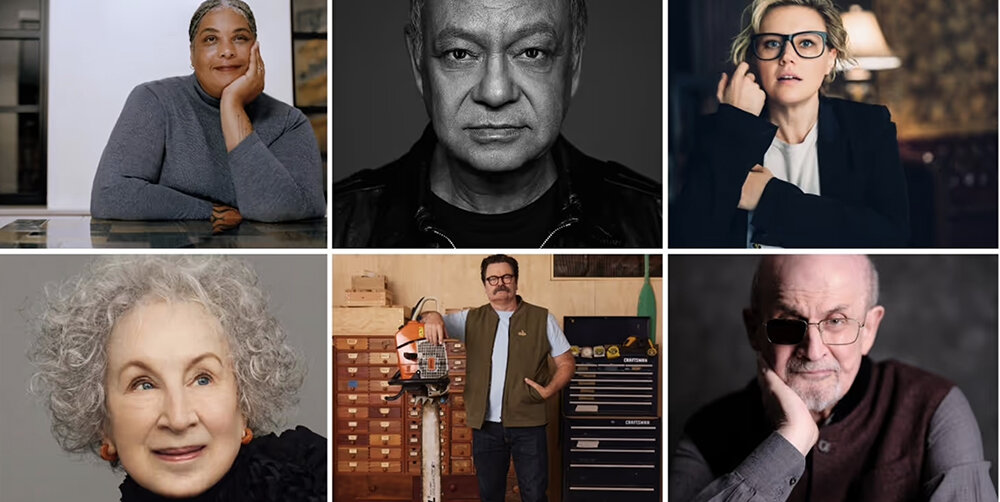
A glance at the autumn slate of events Bahar put together for Chicago Humanities shows a head-spinning variety, from novelists Salman Rushdie and Margaret Atwood to comedian Cheech Marin, singer-songwriter Kurt Vile and “Parks and Recreation” actor Nick Offerman.
Bahar doesn’t yet know how that Chicago energy will plug into mid-Michigan, but he envisions a similar caliber of events happening at the Broad.
“It’s too early to say who we’ll invite, but it’s important to focus on both local issues and artists as well as national and global voices,” Bahar said. “They go beautifully hand in hand. Some people we bring in, you might never have heard of.”
Before Bahar’s stint at Chicago Humanities, he was chief of operations and administration at the Walker Art Center in Minneapolis, a thriving hub for contemporary art that draws some 400,000 visitors a year.
Judith Stoddart, MSU’s vice provost for University Arts and Collections, credited Bahar with helping to “bring the museum into the city” and turning it into a “thriving public commons.”
Bahar said the Broad building will still be the “core” of activity, but he also plans to spin a web of “satellite experiences” that “bring the arts into the community.”
“MSU is a massive campus with a lot of people and a lot of acreage,” he said. “There are a lot of ways to connect with specific departments and find artists who are interested in working with non-traditional spaces, whether it’s an industrial site or a location downtown near the Capitol.”
Devon Akmon, director of the MSU Museum and chairman of the search committee, praised Bahar as “very approachable and unpretentious.”
“We feel we got a great mix out of Phillip,” Akmon said. “He’s a very dynamic and vibrant person. Look at the work he’s doing in Chicago. To pull off a festival of that scope, working with all kinds of community organizations in so many venues, it makes you think about how he might activate the building, the staff, all these groups the museum represents.”
It’s a big jump from the towers of Chicago to the cornfields of East Lansing, but after more than a decade of event-based programming, Bahar is ready to return to his first love: museums.
“It’s what I’ve wanted to do my entire career, to be right at the intersection of art, education, experimentation and civic engagement,” he said. “Museums are my heart — what I do for pleasure, what I do for education, what I do when I’m trying to figure out something in my mind.”
Growing up in Omaha, Nebraska, Bahar wasn’t exposed to many cultural events, but he gravitated to local galleries and museums and “went down a rabbit hole” when he discovered the surreal work of Salvador Dalí.
Although he isn’t an artist himself, Bahar resolved to “be engaged somehow in the arts” in middle school.
“On a personal level, artists have changed who I am as a human being,” he said. “They’ve allowed me to understand myself differently, to engage with the community differently, to have different perspectives on the broader world. Those are the kinds of experiences I hope we can create for our visitors.”
Bahar earned bachelor’s degrees in art and psychology and worked at art galleries in Seattle while studying arts management. He now teaches museum studies as an adjunct professor at Johns Hopkins University.
Bahar’s experience at the Walker showed him that a contemporary art museum can hit that sweet spot more squarely than a venerable, established museum with a broad collection.
“Contemporary artists are inspired by the world we’re living in today,” he said. “By nature, whether it’s visible on the surface or hidden below the paint or the sculpture, our civil society and social society are baked into the arts. That’s what’s special about the Broad: elevating art and education in a way that lets people see the world in a new way.”
Two weeks ago, Bahar visited the Broad on a game day and was pleased by the diversity of visitors.
“In the space of an hour, there was a group of older ladies, a lot of students and people in their running clothes — and I assure you, they had just been running,” he said.
The sweaty runners gave him extra delight.
“Being able to feel that welcome, that anybody across generations feels comfortable coming in, is a strong sign of the power of an institution,” he said.
Each of the Broad’s three previous directors has faced distinct challenges. Founding director Michael Rush gave the institution a vigorous start, but he fell ill and died in 2015 after three years at the helm. His successor, Marc-Olivier Wahler, left the Broad in January 2019 to be in Paris with his wife, who was seriously ill. Mónica Ramírez-Montagut had the unlucky fortune of being named director in July 2020, at the height of the pandemic shutdowns, and stayed for only two years. (Steven Bridges, a 10-year veteran of the Broad and curator of several key exhibits, took over as interim director in 2022 and is now the museum’s senior curator.)
Bahar takes charge in a political and cultural climate that none of his predecessors faced.
“Nationally, it’s a fraught moment, politically and socially,” he said. “Our social norms are shifting. Artists are in the middle of that, and they’re going to express themselves in that environment.”
Anyone who assumes from Bahar’s Midwestern pedigree that he will plow under the conflicts and pressures facing museums, universities and the communities they serve in the revisionist Trump era is likely to be disappointed.
“When artists express themselves in meaningful ways, that might make some of us uncomfortable sometimes, and that’s an OK thing,” he said. “If you’re comfortable all the time, you’re not actually thinking. As long as you’re true to the mission, true to the spirit of the artist, and you’re not actively trying to create conflict, I’m not overly concerned.”