Prune plum torte report
If you pull up the search engine of your choice and type “Marian B,” the autofill will complete your query: “Marian Burros plum torte.” Suffice it to say, I am not the first …
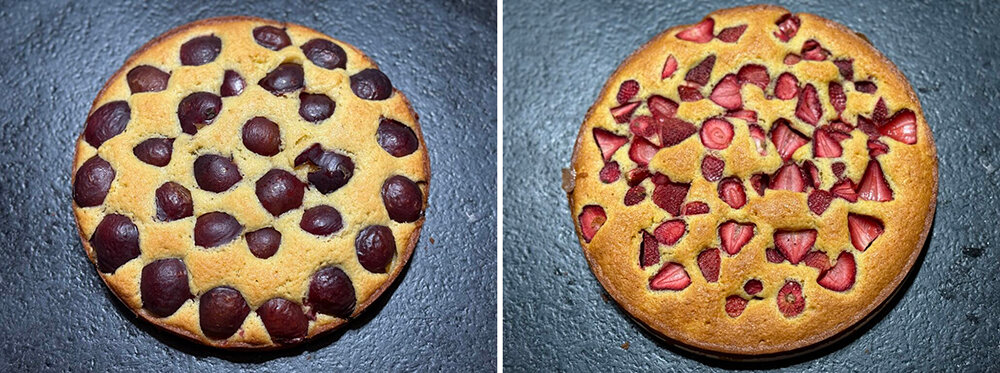
If you pull up the search engine of your choice and type “Marian B,” the autofill will complete your query: “Marian Burros plum torte.” Suffice it to say, I am not the first person to write about this spellbinding dessert, which seems to have more fans than the Boston Red Sox. The recipe was first published by The New York Times in 1983 and republished by the paper every fall for the next dozen years.
The recipe calls for Italian prune plums. Also known as purple plums, these small, tart fruits don’t often make it to supermarket shelves. It has always been a mystery to me why the torte is so popular when its key ingredient is so niche and hard to find for most people.
I once attempted to make the torte with the incorrect type of plum, thinking I could somehow defy a physical law of the universe that dictates otherwise. Instead of purple Italian plums, which have firmer flesh and a lower moisture content, I used the kind of big, sweet, round plums that one typically finds at the grocery store. My wrong-plum experiment was a failure. It was decidedly inferior to a correctly made torte that had been frozen for a year, which says as much about the torte’s storability as its dependence on only this type of plum.
But in a major shake-up of the Marian B plum torte universe, I have recently discovered that it can also be made with strawberries. This makes it
accessible to the masses, rather than the few of us lucky enough to live in some charming small town with an abundance of backyard plums.
This revelation happened at a food festival in Whitefish, Montana, where one stand was serving elk sausage pizza. There was a strawberry torte in the pastry case, and I ordered a slice. At this point, I was unsuspecting. However, when I bit in, I immediately recognized it as the one true torte, only made with strawberries rather than purple plums. This rendition was absolutely amazing, every bit as impressive and perfect as the original. In fact, my kids even prefer the strawberries.
Given how popular this recipe became, even when it required an ingredient that most Americans could never find, the news that it can be made with strawberries is a game changer. Nobody has any excuses. Everyone should make lots of tortes.
Marian Burros’ original plum torte
This recipe must be made with either Italian prune plums or strawberries. These are the only known fruits with the correct balance of sweetness, tartness and moisture content.
Being a torte, there is no crust to worry about. The batter has enough butter that it wouldn’t dream of sticking to the pan, and when sliced, it holds together just fine.
The quantities listed are for one 9-inch torte. You will need a 9-inch springform pan to make it.
- 1 cup all-purpose flour, sifted
- 1 teaspoon baking powder
- Pinch of salt
- One stick butter, room temperature
- 3/4 cup sugar
- Two eggs
- 12 Italian prune plums, pitted or split in half; or 2 pints strawberries, sliced in half
- 2 teaspoons sugar + 1 teaspoon
- cinnamon (to sprinkle on top)
Preheat the oven to 350 degrees.
Combine the flour, baking soda and salt in a medium-sized bowl.
Cream the sugar and butter in a cake mixer. Add the eggs, followed by the dry ingredients. Mix until fully combined.
Spread the batter into a 9-inch springform pan. Arrange the plums atop the batter in concentric circles, skin side up. Or, if using strawberries, place them cut side down.
Sprinkle the top of the torte with the extra sugar and the cinnamon.
Bake the torte for 40 minutes. If it starts to brown before that time has passed, test the batter with a toothpick. If it comes out clean, the torte is done.
Allow it to cool for 20 minutes and enjoy. If you wish to freeze it, let it cool overnight, wrap it in foil and seal it in a plastic bag.