‘Rollercoaster of emotion’ as Scott Seaton rolls out the Romantics in LSO opener
In a delightful 30-second YouTube clip called “The Scream,” conductor Scott Seaton and California’s North State Symphony pour all their might into the sudden spank that launches the finale of Igor Stravinsky’s “The Firebird,” causing a lady in the audience to emit a gurgling scream.
Seaton is the first of five guest conductors to appear with the Lansing Symphony this season to determine who will fill the shoes of retired maestro Timothy Muffitt.
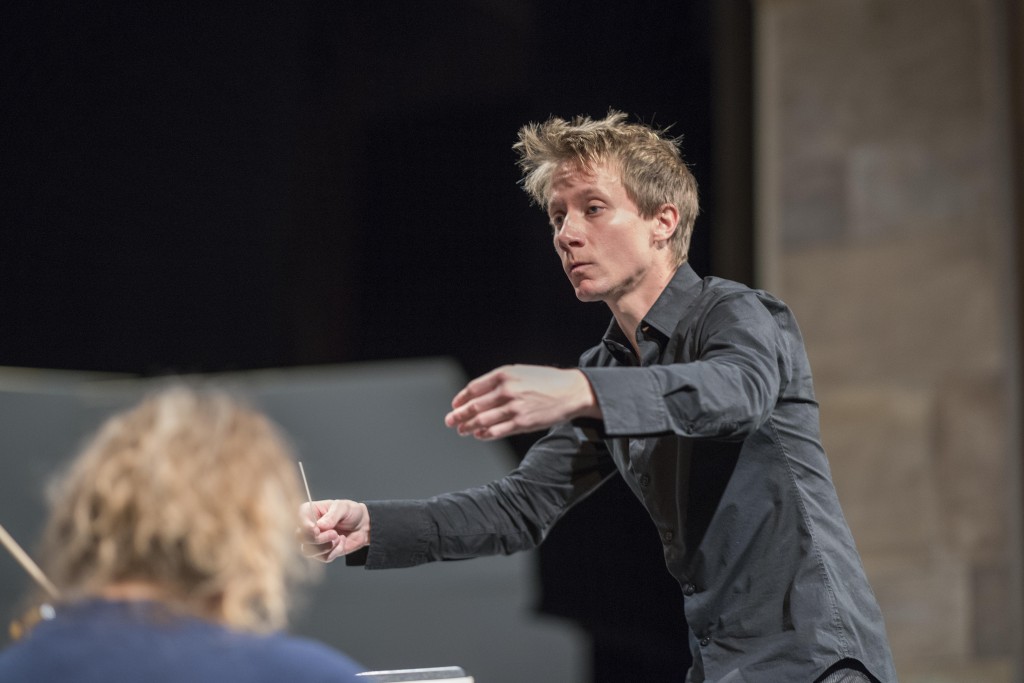
Seaton puts a lot of time, energy and thought into looking for ways to break down traditional barriers and connect directly with audiences, but that scream was a gift from the blue.
Laughter spread from the audience to the musicians as they struggled to keep up with Stravinsky’s blistering, complex music. Without missing a beat, Seaton smiled, glanced over his shoulder and gave the audience a wink.
“It was this moment of connection, and it was incredibly important,” he recalled. “I wanted to let them know it was fine. Someone had a natural reaction.”
Lansing Symphony Orchestra
Scott Seaton, guest conductor
Keila Wakao, violin
7:30 p.m. Friday, Oct. 2
Wharton Center Cobb Great Hall
750 E. Shaw Lane, East Lansing
Seaton is in his 11th season as music director of the North State Symphony. He is also in his fourth season as artistic director of the Signature Symphony in Tulsa, Oklahoma.
On the podium, he combines marathon-runner energy (he really is one) with the multi-level manipulations of a chess player (he’s that, too).
“Of course, you have to do a million things at once and think way ahead, but you also have to be ready for anything,” he said.
Taking a cue from one of his idols, longtime Boston Symphony maestro Seiji Ozawa, Seaton compared conducting to riding a horse.
“As a rider of that horse, you have almost zero power to do that jump, but it’s more about realizing you are sitting back and trusting that everything that is supposed to happen will happen,” he said. “That’s when that energy comes to life and everything happens the way it’s supposed to.”
Besides turning himself inside out to put the music across, he has introduced theatrical elements, including actors in the audience and on stage, fusions of electronic and orchestral music and new works by composers with diverse audience appeal.
“The more you can break down the barriers and make it an immersive experience — concerts like that are extraordinarily fun to do,” he said. “I’d like to see how far we could go, especially in a place like Lansing, where you can be more creative.”
For an initiative called “Just Ask,” audience members submit questions during intermission via social media. Seaton and the evening’s guest artist sit on the edge of the stage and answer them at the beginning of the second half.
“In 15 years, that’s one of the most fun things I’ve implemented in the concert hall,” he said. “It’s not a pre-concert talk or anything like that. It’s just, ‘This is me, the human side of us.’ I could definitely see something like that being fun to do in a place like Lansing.”
From shortly after birth to first grade, Seaton lived in various towns in Michigan, including Lake Orion and Lapeer.
“I remember shoveling snow in shorts and a T-shirt,” he said. “I was one of those crazy kids. I have a lot of family in Michigan, and they’ll be coming to the concert.”
Like most kids, Seaton watched cartoons growing up, but he zeroed in on the music more than the on-screen mayhem. Henry Mancini’s slinky “Pink Panther Theme” seduced him into picking up a saxophone.
His mother, Becky Carder, and his stepfather, Steve Collom, pushed him to study more seriously. Collom was a singer-songwriter who played with Dolly Parton and wrote music for Jerry Lee Lewis.
“He heard me practicing in the basement, and it was going badly,” Seaton said. “He took the music off the stand and said, ‘Go put on a recording, figure out what you hear and play it on the saxophone.’ That’s really what started me developing my ear.”
After moving to the rural outskirts of Nashville, Tennessee, where his stepdad was plugged into the musical scene, Seaton tried out for band in seventh grade and was unexpectedly thrust into a leadership role.
“Because I already had a year of saxophone under my belt from the Michigan public school system, I was often called upon to be the example,” he said. “That’s where the early conducting seeds were planted.”
Incredibly, when Seaton was in ninth grade, the high school band director entrusted the ensemble not only with Aaron Copland’s “Billy the Kid,” but also with Stravinsky’s savage musical orgy “The Rite of Spring.” There was no bassoon player, so Seaton played the famous opening solo on saxophone.
“I was the only one on the field, squawking out this ‘ooo-wa-de-oh-de-waaa,’” he said. “You can imagine how unpopular that was at football games. But just being exposed to this core classical repertoire — I don’t know when that would have happened to me otherwise.”
“The Rite of Spring” became his favorite piece. (Note: The LSO hasn’t played the ferocious work since 1996. Just saying.)
At Vanderbilt University, Seaton got a plum appointment as one of the assistant conductors for the superb Nashville Youth Symphony.
“Every week I was in college, I was privileged to conduct one of the best youth orchestras,” he said. “I guess the rest is history.”
He has conducted orchestras around the world, but he’s spent a lot of time in the American Midwest, appearing with the Cincinnati, Milwaukee and Detroit symphony orchestras.
He described Friday’s program at the Wharton Center as a “rollercoaster of emotion.”
The concert pairs major works by Felix Mendelssohn and Hector Berlioz, two “Romantic pioneers trying to figure out which direction to go,” Seaton said.
Mendelssohn’s violin concerto takes the dewy, innocent path, with “extraordinary sincerity and a direct line to the heart,” in Seaton’s words. Boston-born Japanese-American violinist Keila Wakao will serve as soloist.
Berlioz’s “Symphonie Fantastique,” by contrast, heads into satanic, opium-overdose territory.
“He shows us this classical restraint at first but then pushes it way beyond the envelope, not just to the point of obsession, but into fantasy and even nightmare,” Seaton said.
It so happens that the five-minute rouser that opens the concert, Anna Clyne’s “Masquerade,” also begins with a brisk, sudden spank, but no screams are anticipated. Lansing is a sophisticated town, after all.