Same latitude, same attitude
Erena Terakubo knew about Michigan State University before she knew about Michigan State University.
Born and raised in Sapporo, Japan, the latest addition to the MSU jazz studies faculty moved …
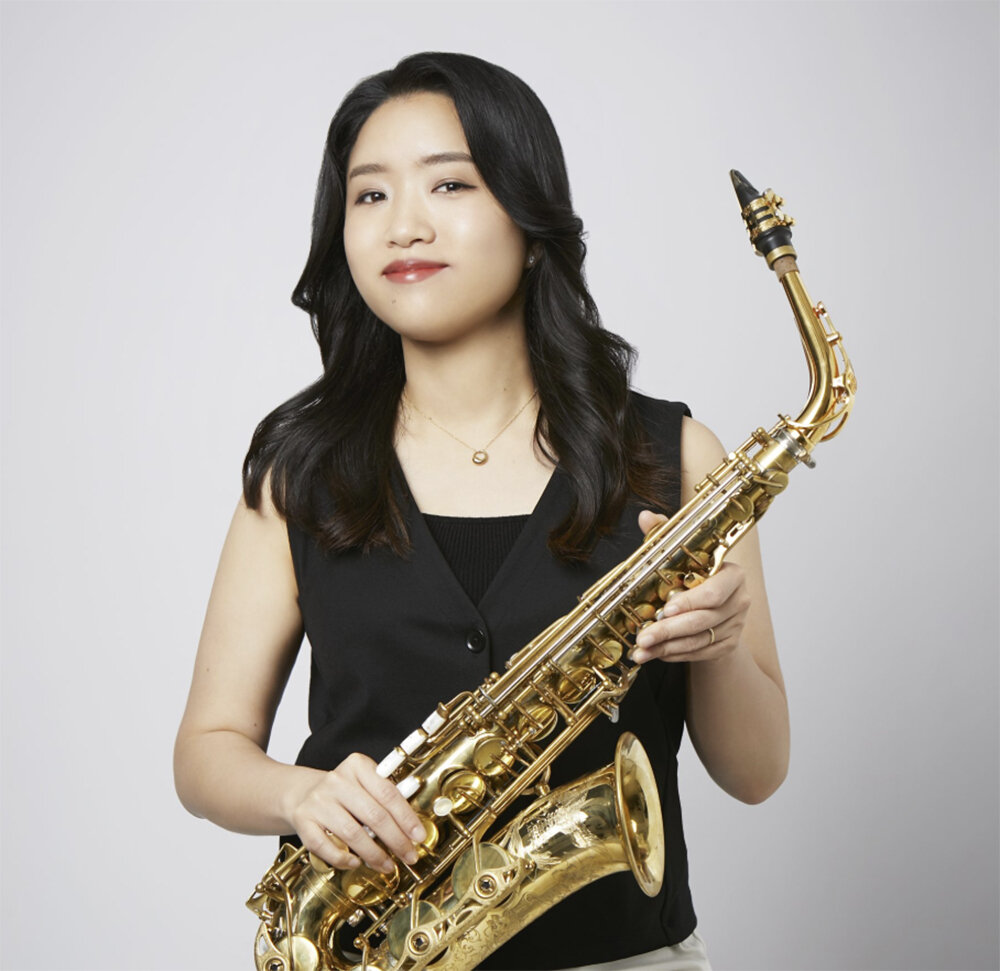
‘North Bird’ saxophonist Erena Terakubo joins MSU jazz studies
Erena Terakubo knew about Michigan State University before she knew about Michigan State University.
Born and raised in Sapporo, Japan, the latest addition to the MSU jazz studies faculty moved to New York in 2015 — a bold move for a young musician from way out of town. She had a bone-deep passion for jazz and blazing alto saxophone chops but no friends and few contacts.
“I was shy, so I didn’t go out and talk to people,” she said. “It took time for me.”
As she struggled to make her mark in the Big Apple, she kept running into successful graduates of a school she had never heard of in the heart of Michigan.
“Before I knew anything about MSU, I was like, ‘What’s going on with this school?’” Terakubo said. “Not only can everyone play, but they’re all so nice. That’s what’s outstanding about this program. I can tell someone went to MSU because they value community, they’re always helping.”
When MSU trombone Professor Michael Dease told her there would be a vacancy created by the departure this year of saxophonist Walter Blanding, Terakubo, 33, went for it right away.
Sapporo and East Lansing also happen to sit at about the same latitude, so she’s already equipped for fall with a down jacket. Her next move is to buy an e-bike and hit the local trail system.
“This is a dream come true for me,” she said.
Like many kids in Japan, Terakubo started playing piano at a very young age, but her local elementary school offered more than Bach and Mozart.
Her homeroom teacher, Mr. Takeda, was a jazz fan. He didn’t blink at pushing his band of 8-year-old kids from Thomas the Tank Engine and “Sesame Street” to hard bop trumpeter Lee Morgan’s saucy 1964 hit, “The Sidewinder.”
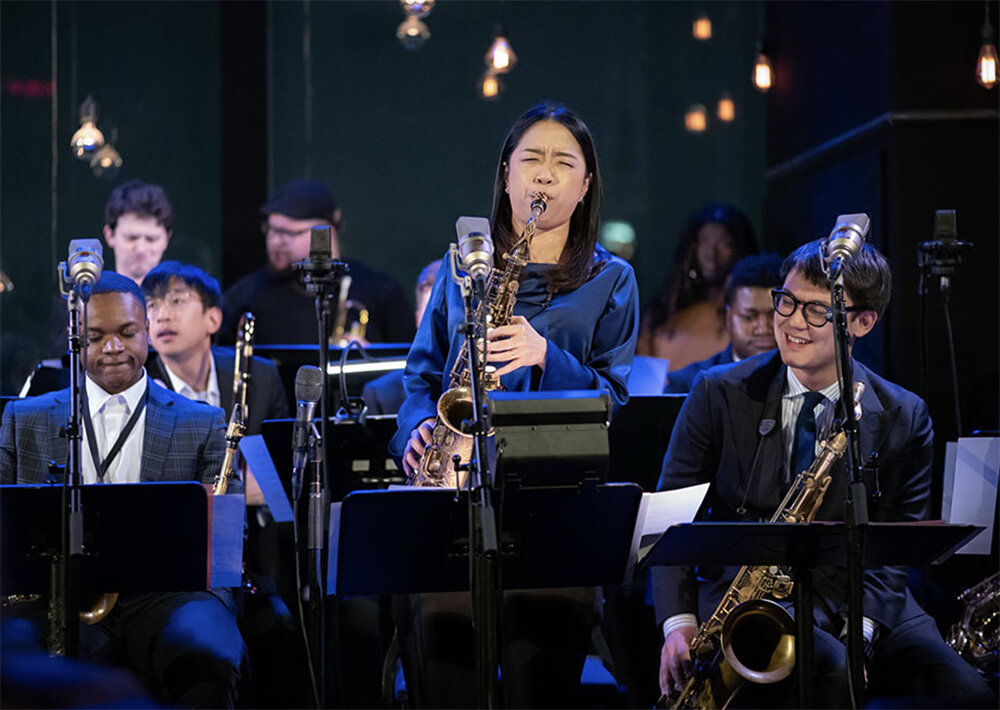
When Terakubo was little, she fixated on a toy her dad brought home, a candy jar shaped like an M&M playing a saxophone. When her parents took her to a local jazz concert, she was even more fascinated by the actual instrument. She borrowed her older cousin’s saxophone and started woodshedding.
She earned a spot in the Sapporo Junior Jazz Orchestra, a popular ensemble that drew from schools around the city and performed at many venues and festivals in the region.
“These were 8- and 9-year-old kids,” she said. “We had no idea how to improvise, but we did it anyway. Our approach was, ‘Jazz is expression.’ I really got into it.”
Audiences loved the ensemble’s energy and appreciated the members’ talent.
“I would hit a high note, and the audience would go crazy,” Terakubo said. “I really loved that interaction with the audience.”
Word of the group’s acumen spread, and soon the kids were getting in-person lessons from giants like saxophonist Sadao Watanabe (still swinging at age 92), arguably the most famous Japanese jazz musician. Herbie Hancock, a pioneer of electrified jazz, sat at the keyboards one weekend.
“Back then, I was into jazz fusion, and my idols were playing right in front of me,” Terakubo recalled. “I was very inspired.”
By the time she got to high school, she had thousands of hours of practice and performance under her belt.
“I really had chops,” she said. “I was able to play fast and hit high notes, and I got many opportunities to play.”
Word of Terakubo’s talent quickly reached record producer Yasohachi Itoh, known as “Mr. 88.” Another high-level supporter, adventurous jazz pianist Yōsuke Yamashita, asked Terakubo whom she’d want to play with on her first album. (Yamashita famously played a burning piano for a film of the same name in 1973. He recreated the event in 2008, and the short film on Vimeo is a shocker.)
For her first album, “North Bird,” Terakubo asked for the moon and got it. In 2010, while still in high school, she found herself on a plane to New York to record with veteran pianist Kenny Barron, bassist Christian McBride, guitarist Peter Bernstein and drummer Lee Pearson.
To her surprise, Barron, the elder statesman and most distinguished of the group, was the only one who asked for a chart.
“He wanted to practice before the session,” she recalled with amazement. “I was only 17. My chart looked like an elementary school student wrote it, but I gave it to Kenny. He rewrote it himself and brought it to the recording.”
“North Bird” reached No. 1 on the Japanese jazz charts and earned jazz magazine Swing Journal’s Gold Disc Award.
The “North Bird” recording session — and the prospect of a tour with Barron — shifted Terakubo’s center of gravity to the busiest jazz hub on Earth, New York.
“I had always wanted to go to America, but New York was beyond my imagination,” she said. “It kind of naturally happened, but I never thought I could make a living in New York back then.”
Besides keeping up her own performing schedule, she toured with Barron’s quartet, playing Blue Note Tokyo, the Kennedy Center, the Hollywood Bowl and even the United Nations.
For Terakubo, joining a jazz studies faculty doesn’t mean settling in and getting comfortable. With her career still in the ascendant, she plans to continue performing and touring while anchoring her musical life at MSU.
“I’ve wanted to teach for a long time because so many mentors and teachers helped me,” she said. “But it’s inclusive. I can do both, and both things help each other.”
She’ll ground her students in the traditions of alto greats like Charlie Parker and Sonny Stitt, but they will be free to take the music wherever they want. Terakubo herself is still evolving as an artist, as her precocious beginnings give way to a new phase of maturity.
“I try not to show off because I did that so much when I was a kid,” she said. She hears the excess in some of her old recordings. “After about five seconds, I think, ‘That’s too much.’ Music should be creative, and it should make people happy. But if you scream and make a lot of noise, sometimes it gets to people, but not all the time.”