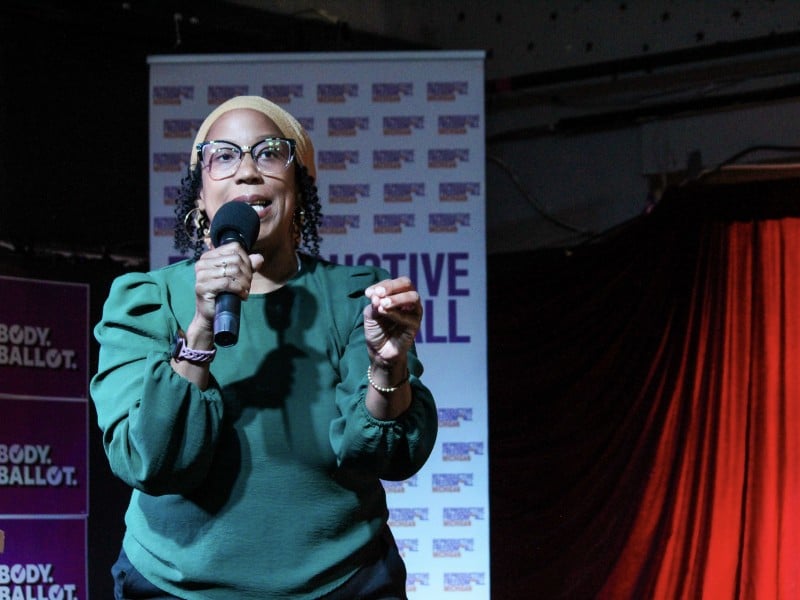
South side redevelopment is a Lansing success story
When large-scale developments are announced in Lansing, it’s common to see a laundry list of development tools used to get the projects off the ground. Grants, tax abatements and other …
When large-scale developments are announced in Lansing, it’s common to see a laundry list of development tools used to get the projects off the ground. Grants, tax abatements and other incentives for revitalization projects, like brownfield redevelopment plans, are familiar tools in the hands of larger developers.
But emerging developers often lack the experience to know how to apply for such programs, if they even know about them.
That’s what made last week’s announcement by residents Melissa White and James Denning so impressive: They have received more than $1.3 million in financial assistance to redevelop a blighted South Lansing strip mall. The project includes a $1 million award from the Michigan Economic Development Corporation’s Revitalization and Placemaking 2.0 program, Brownfield tax increment financing totaling over $380,000, and $30,000 from the city of Lansing’s facade improvement program.
Their development could show off the city’s efforts to support emerging developers. The tools White and Denning used have technically been available to small developers since their inception, Mayor Andy Schor said, but haven’t always been accessible to people.
“The tools are out there for everyone, but not everybody understands them,” he said. “Not everybody can hire a consultant and pay a lot of money for someone to figure out how to utilize the tools best.”
He said supporting emerging developers was a common thread when the city held public meetings to decide where to direct COVID relief funds.
“One of the things we heard was, ‘Let’s teach emerging developers how to utilize the tools in the toolbox in order to get the work done,’” he said. “‘Let’s teach them what a capital stack is and how to do a brownfield, let’s teach them all the different terms and how to get financing’ So, that’s what we’ve been doing.
The Lansing Economic Development Corporation has been instrumental in that process, said Schor, White and 3rd Ward Councilmember Adam Hussain.
White and Denning were inaugural graduates from the LEDC’s Supporting Empowered Emerging Developers (SEED) Academy, a free class on real estate development. They were connected by Brian McGrain, then the city’s planning and economic development director, to the LEDC, where they learned the property would likely be eligible for the brownfield or Obsolete Property Rehabilitation Act programs. Karl Dorshimer, then the LEDC’s director, educated them on the differences and even stood up for them when the funding was in danger, White said.
“Karl did a lot of advocating for us,” she said.
That assistance will help transform 820 W. Miller, formerly a City Pulse eyesore of the week, into a functional strip mall with an improved facade, space for multiple local businesses and an event space.
White said she couldn’t have done it without the help.
“We were not aware of any of the programs at all when we purchased the building,” she said. “I don’t think we would have been able to get where we are currently.”
Hussain, whose ward includes the development, said it was exciting to see brownfield, OPRA and other tax incentives being used to attract new investment in historic urban cores where pre-existing properties were blighted, which he said was their original purpose.
“What we’ve seen is the kind of savvy, well-established developers who tend to invest in downtown or historic core areas, that know how to leverage these tools, typically approaching local EDCs,” he said.
“What we haven’t done as good of a job at is working to support some of our emerging developers, small business owners and smaller entrepreneurs that are more likely to invest in those corridors and districts outside of downtown. I don’t think we’ve done a good job at engaging them, and frankly a lot of them just don’t know these things exist.”
White said she had been skeptical of the city and of Schor after seeing major developments downtown without investment in other areas, but isn’t anymore.
“I always wondered, ‘Why is everything going downtown? Why is everything being taken from the south side?’” she said. “‘Why are we not pouring money into the hood, into these underserved communities that could thrive?”
But when he found out, he didn’t shut the door on me at all.”
White and Denning expect the property to be online in early 2027.
— LEO V. KAPLAN