‘Thank You for Being a Friend’
USA Today best-selling author Wade Rouse’s latest novel, “That’s What Friends Are For” (MIRA, $28.99), is the first he’s published under his own name instead of his pseudonym, Viola …
Saugatuck author’s new novel is a love letter to a beloved 1980s sitcom
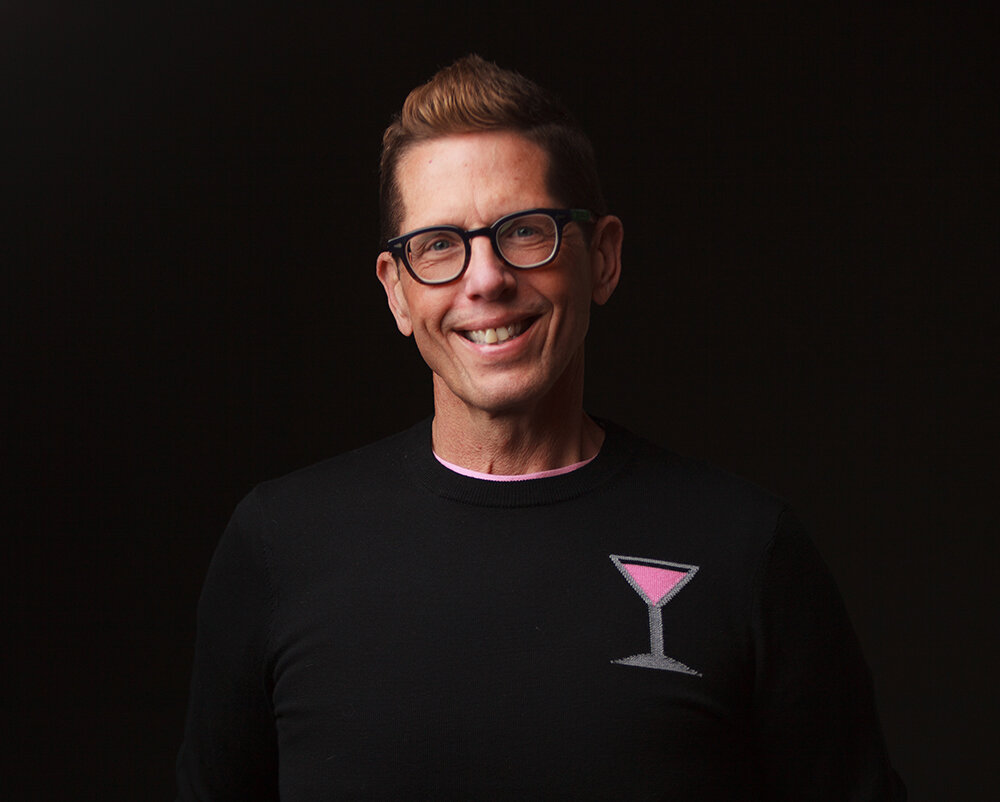
USA Today best-selling author Wade Rouse’s latest novel, “That’s What Friends Are For” (MIRA, $28.99), is the first he’s published under his own name instead of his pseudonym, Viola Shipman.
“After 20 books — including five memoirs under my own name and 15 novels as Viola Shipman, the pen name I use to honor my working-poor Ozarks grandmother whose sacrifices changed my life and inspire my fiction — this is the first novel under my own name, and the wait was worth it. I’ve never been prouder of a book in my life!” said Rouse, 61, who lives in Saugatuck with his husband, Gary.
“Friends” is a story Rouse has been wanting to write for years. He pitched the idea about two years ago, after signing a contract with his publisher for three new Viola Shipman novels.
“When I sent proposals to my editor and agent, I ended up tacking the proposal for ‘Friends’ onto the end. The timing just seemed right, in the country and in my soul, to write it,” he explained. “I was nervous. My editor got back to me immediately and said, ‘You’ve written so many beautiful stories that honor your grandmother and family; this is a story that honors yourself and your history. You have to write this book!’ And we decided it should be published under my own name to really crystallize the importance.”
“Friends” follows Teddy Copeland, who shares a home in Palm Springs, California, with three friends: Barry, a former actor still clinging to his youth; Ron, an uprooted Christian from the Midwest; and Sid, who, after coming out late in life, has never found love. Teddy is the caustic, de facto leader of “The Golden Gays,” the foursome’s monthly drag tribute to the TV show “The Golden Girls.” Despite their foibles and bickering, they’ve turned their golden years into a golden era.
But their happiness becomes a carousel of emotional baggage when Teddy’s estranged sister, Trudy, shows up with her teenage granddaughter. While Teddy tries to keep Trudy at arm’s length, she manages to wheedle her way into the lives of the four men, until the real reason behind her visit is revealed and the secrets they’ve all been keeping from each other begin to unravel.
Rouse said “Friends” is a love letter to friendship, “The Golden Girls” and Palm Springs, where he and Gary spend winters.
“I set the novel there because I wanted to celebrate Palm Springs and its history, diversity and beauty,” Rouse said. “For those who don’t know, Palm Springs is in the desert amid the majestic San Jacinto Mountains and is renowned for its mid-century architecture, palm trees, warm weather and Rat Pack vibe. It’s where Frank Sinatra and all the Hollywood stars of yore used to live and vacation, and gays have flocked there for decades. It’s hip, cool, gorgeous and filled with people who have endured hate and rejection across the United States and have relocated there to find a community and their people.”
He continued, “Palm Springs is sunny 360 days a year, and I love the juxtaposition of that relentless sunshine and optimism against the dark secrets these men are hiding from one another. So many people are drawn to Palm Springs for a reason — not just the sunshine or the mountains, but the ability to be their authentic selves and to find a family of friends, which is what the novel is all about.”
When “The Golden Girls” debuted in 1985, Rouse bonded with his mother and grandmother by watching the show long-distance. At the time, he was attending Drury University in Springfield, Missouri.
“That show was not meant for a 19-year-old frat boy,” he said. “I mean, four old women living together in a pink house in Florida? C’mon!”
However, though he lived the stereotypical ‘80s frat boy lifestyle, Rouse was harboring a big secret about his sexuality.
“And I hated myself for that,” he said. “So much so that I adopted a new persona in college that made me the life of the party. I buried my secret, much like I had buried my older brother, Todd, who had died a few years earlier in a tragic accident.
“I believed God had made a mistake and should have taken my life,” he continued. “I believed my brother, a true country boy, would have given my parents what I believed they wanted: A family, a daughter-in-law, grandchildren. I believed the rest of my life should be dedicated to not creating another moment of pain for my parents. So, I lived a lie to make others happy. And I died a little every single day until I nearly ended my life.”
On Sundays, Rouse would speak to his mother and grandmother via the payphone at the end of the hallway in his fraternity house. He learned they were watching “The Golden Girls.”
“So, on Saturday evenings before the fraternity parties started, I’d stretch that cord of the rotary phone until it snaked into my room and watch the show with the two women I loved most in the world, our laughter crossing the miles. That show also, I didn’t realize at the time, bridged a cavernous divide between generations,” he said. It allowed him to see his mother and grandmother in a new light. And it eventually allowed them to understand and accept him because it tackled topics, like coming out, that were rarely broached on network TV.
“What could four old women say that would resonate with a 19-year-old boy struggling to find his place in the world? Plenty, it turns out. Because we were the same in so many ways. Ostracized and overlooked. Diminished by society. Our voices and worth dismissed. Unlovable due to age, shame, sexuality,” he said. “And yet, somehow, we found our friends and community, we bonded together, and our individual strengths made each other stronger. Old women and the gay community, it turned out, were exactly the same.”
He noted that “The Golden Girls” addressed many major issues during its seven-year run — aging, family dynamics, friendships, LGBTQ+ issues, coming out, women over 60 having sex, the search for meaning after marriage and children, mortality, fidelity, racism, depression, the HIV/AIDS crisis — and it did it all with humor.
“It’s what I’ve done my entire existence in life and writing: lessen the pain with laughter. Break down walls with humor,” Rouse said. “‘The Golden Girls’ is still considered one of the most progressive shows ever to air on television, even some 40 years later, and it enjoyed an epic rebound during COVID, when so many younger people discovered the show as a way to understand what their isolated elders were going through. They watched it together, as I did some 40 years earlier with my mom and grandma.”
Of the characters in “Friends,” Rouse is most like Teddy, who, in turn, is like “Golden Girl” Dorothy. Like Dorothy and Teddy, Rouse has used humor both to make friends and to keep people at a safe distance.
“I can give someone a wicked side eye,” Rouse said. “Humor can unite, and yet it can also protect you from getting hurt, which it did for me growing up gay in the Missouri Ozarks. Dorothy, Teddy and I have that in common, and yet our wit, sarcasm, and good-natured needling are also our deeply personal ways to show love.”
“The Today Show” recently named “Friends” to its must-read list, which gobsmacked Rouse.
“To see it featured on ‘Today’ felt incredible, not only because they called it ‘laugh-out-loud hilarious,’ but also because they said, ‘This book made me call all of my best friends and tell them I loved them!’ I feel this book is special and deserves a wide audience, especially at this moment in our history,” he said.
For Rouse, “Friends” is a deeply personal story, filled with the beauty and struggles of his own life, his friends and the gay community. He felt a great sense of responsibility in writing these men’s stories.
“It’s the perfect balance of the laugh-out-loud humor of my memoirs and the heart-wrenching poignancy of my fiction. ‘Friends’ is about four gay men over 60. It’s ferocious and funny, hopeful and heart-wrenching, a story about what so many of us have endured in this life to find friendship, love and respect. I feel as if this is not only the book I was meant to write but also the right moment for this story of friendship, family, faith, aging and acceptance.
“This novel is a huge departure for me in my career, and I wrote this story because it called to my soul, and I knew that I needed to follow my heart,” he continued. “I’ve learned that sometimes the greatest moments in our lives happen when we are most terrified, and that if we can just corral that fear and walk through the fire to emerge on the other side — heart racing, a bit scorched — what we dreamed of and fought so hard to achieve has the chance to change the world. I believe this novel does.”