The broth of summer
Naengmyeon translates to “cold noodles” in Korean. This simple name renders incomplete justice to this kaleidoscopic dish. The noodles are indeed cold, thanks to pieces of ice floating among them in the pre-chilled daikon radish broth. Atop the noodles is a colorful combination of proteins and plant parts, including meat, egg, blanched vegetables, pickled radish, hot peppers and cucumbers, renowned for their coolness. Who knows what else is in that bowl? There’s only one way to find out: dig and slurp your way to the bottom of this treasure hunt of a meal.
I first enjoyed naengmyeon on an August afternoon at a restaurant in Vancouver, British Columbia, after being lured inside by a sign advertising a summer menu. I was expecting seasonal vegetables. What I got was a spicy and sour juggernaut that stopped my sweat in its tracks.
Back in 15th-century North Korea, where naengmyeon came to be, the ice came from the mountains. While cold is practically the definition of refreshment, most refreshing foods are sweet. But in this case, aside from the occasional slice of Asian pear, the meal is decidedly savory.
There’s no limit to the number of variations this dish can accommodate, but the radish broth itself remains the soul of naengmyeon. As soon as the daikon, ginger and onion begin simmering, an intoxicating fragrance fills the room. This mysterious smell is enticing.
In addition to the broth, there are several more steps to preparing naengmyeon, and each is basically its own recipe. We must make the daikon pickles, blanch the proteins, cook the meat and make perfect hard-boiled eggs. When these have all been prepared, we can finally assemble the finished dish.
One extremely useful piece of equipment for this dish, and many others, is a pot with a pasta boiler insert that you can remove. With so many ingredients being pre-cooked in boiling stock, the pasta basket allows us to remove things from the kettle without the hassle and potential danger of pouring hot liquid through a strainer.
When everything is prepared and assembled, dive into this glorious bowl of diverse textures and flavors. Eat strategically. If you get too much heat from a sliced jalapeno, head to the Asian pear for refuge. It all adds up to a savory and sour soup that’s as refreshing as iced tea but even more nutritious and exhilarating, as the chilled ingredients carry the cold deep inside of you, where you need it the most.
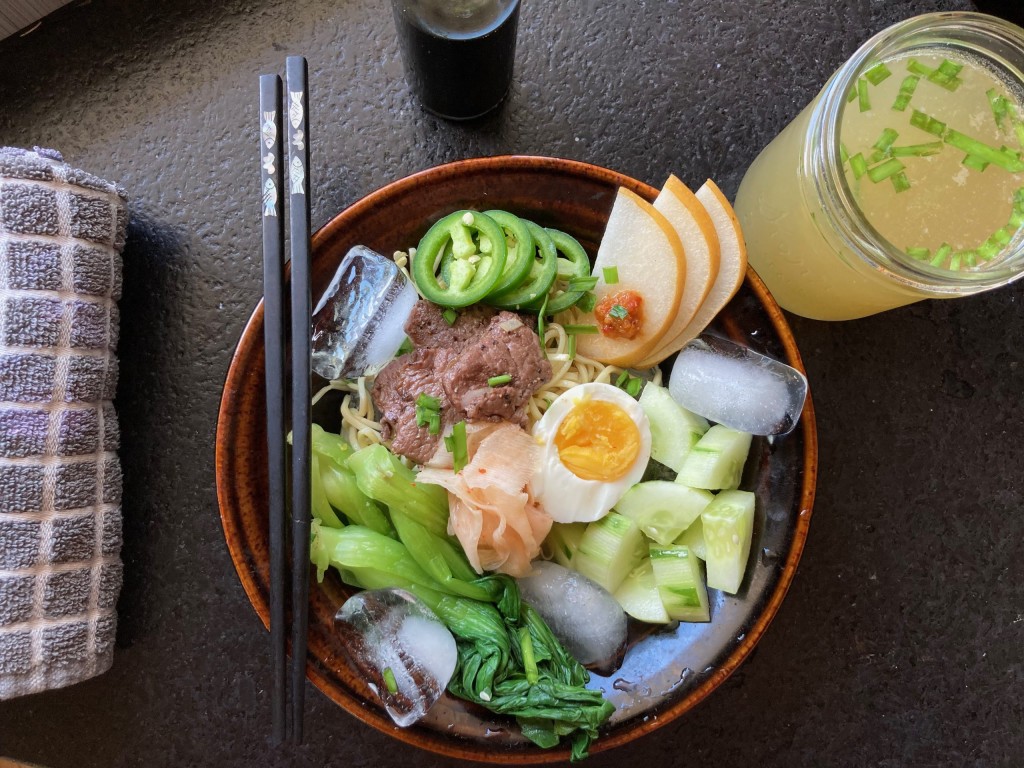
Photo by Ari LeVaux
Daikon broth
There’s a lot you can do with this daikon broth in addition to making naengmyeon. Last night, I used it to make a pot of rice, and that captivating flavor impregnated every grain.
1 pound daikon radish, peeled and sliced into half-inch rounds
4 ounces peeled ginger, sliced to about a quarter-inch thick
One large onion, cut into quarters
1 pound beef brisket or similarly lean, tough red meat (optional)
If you skip the brisket, replace a quart of the water with beef (or vegetable) stock or use bouillon cubes
Add the ingredients to a pasta basket and set it in a pot with 5 quarts of water. Bring the pot to a boil, then turn it down to a simmer and cook for two hours. Remove the pasta basket and let the broth cool to room temperature, then chill it in the fridge. Allow the brisket to cool, then slice it thinly. Toss the slices with salt and refrigerate them until it’s time to assemble the dish.
While the broth simmers, make the daikon pickles, boil the eggs and prepare the noodles and vegetables as follows.
Pickled daikon
8 ounces daikon radish, peeled
½ teaspoon salt
6 tablespoons cider vinegar
2 teaspoons sugar
1 teaspoon crushed red pepper
Use a peeler to cut the radish lengthwise into ribbons. Place the daikon ribbons in a bowl and toss with the salt. Add the remaining ingredients. Toss again and refrigerate until it’s time to assemble the bowl.
Hard-boiled egg
Four eggs
Bring a quart of water to a boil. Gently lower the eggs into the water and cook for a minute at full boil. Lower the heat to a simmer and cook for another 12 minutes. Remove the eggs, transfer them to a bowl with two quarts of cold water and let them cool for 15 minutes. Peel under running water.
Noodles and veggies
½ pound soba noodles
Baby bok choy, spinach or other greens
Boil 4 quarts of water in a pot with the pasta basket insert. You can also cook the noodles and vegetables in the radish stock.
Cook the noodles per the instructions on the package. Then remove the insert and plunge the noodles into cold water. Drain and set aside.
Briefly blanch the vegetables you intend to use according to how much time they need. For bok choy and spinach, a minute in the boiling water is all you need.
Naengmyeon
Here we assemble all the previously prepared ingredients into bowls.
Makes four servings
Two trays of ice cubes or similar amount of crushed ice
1 pound cooked soba noodles
1 pound sliced cooked brisket
Four hard-boiled eggs, sliced in half lengthwise
1 pound cooked bok choy, spinach or other green vegetables
1 pound pickled daikon radish
One large cucumber, peeled and sliced
Sliced jalapeno, if you like some heat
Soy sauce
Rice vinegar
Chili paste
Divide the ice among the bowls. Add the noodles and give them a twist with your fingers or a fork so they make a bit of a spiral pattern.
Artfully place the proteins, fruits and vegetables in little piles atop the noodles and ice. Place these bowls on the table and ladle in the broth. Season with a splash of soy sauce, leaving the bottle on the table, along with cider vinegar and pepper paste, so the diners can personalize their salt and acidity levels.
If you’re extra thirsty, consider slurping the broth out of the bowl straight away, without chewing anything. Then refill the bowl, adjust the salt and acidity, and begin eating in earnest.