The flavor of fire
In the rain-washed air above Montana’s Red Eagle Campground, vibrations of rock ‘n’ roll power chords mingled with the fragrant smoke of a buffalo feast. On the ground, a mix of …
In the rain-washed air above Montana’s Red Eagle Campground, vibrations of rock ‘n’ roll power chords mingled with the fragrant smoke of a buffalo feast. On the ground, a mix of local Blackfeet tribal members and headbangers from around the world whet their appetites with heavy-metal calisthenics at the three-day Fire in the Mountains festival.
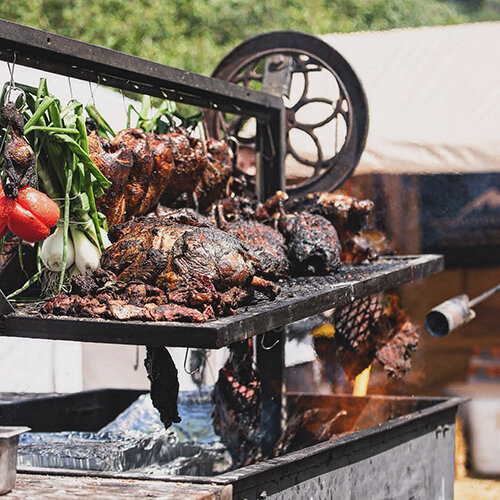
A well-appointed outdoor kitchen featured some heavy metal of a different sort. Several fire-breathing grilling apparatuses imported from Argentina, where they know a thing or two about cooking large animals, were laden with heavy roasts of bison. The hunks of meat contorted in the rising smoke of cherrywood briquettes, sputtering occasional geysers of sizzling juice at the hot framework. Bunches of onions hung in the smoke, while peppers, corn, beans, asparagus, potatoes, beets, turnips and other root crops, everything locally grown, browned closer to the coals.
“It was very welcoming and peaceful, and the no-alcohol policy amplified this,” Drew Iaderosa, an occupational therapist from Missoula, said. “It was the kind of festival that could turn a metal skeptic into a believer of the genre.”
Iaderosa described his favorite meal, a Philly-style buffalo cheesesteak sandwich, in a manner that cannot be printed.
The feast was structured like an asado, explained Tom Fitzgerald, owner and executive chef of the Whitefish, Montana, catering company Region Sauvage, which fed the festival’s 1,200 guests. The word “asado” refers not only to the type of grill but also to the style of whole-animal cookery where different cuts are served at different times throughout the feast, based on when they reach perfection.
Fitzgerald grew up in the remote North Fork Valley of the nearby Flathead River and has traveled to similar temperate regions in other countries to better understand the culinary possibilities of home. While sourcing his grill game from down south, he’s looking to Norway and Japan for inspiration on fermentation. These techniques are useful for preserving foods without modern sterilization techniques and are especially important in safely storing wild meats.
“If I had a grizzly bear, I would ferment it before eating it,” he said.
It’s fitting that Fire in the Mountains happened 30 miles from Camp Disappointment, the northernmost campsite of the Lewis and Clark expedition. It so happens that Fitzgerald is prone to speculate as to what would have happened had France held onto Louisiana and had French fur traders explored the Northwest. Montana’s food scene would be different than it is today, he contends, “Because those guys could cook.”
Instead, Montana’s regional food scene was stunted, with its most significant culinary innovation being a fried pork chop sandwich. Fitzgerald wants to bring Montana’s food culture back to what it could have been had different cooks been in charge.
“Our rivers are full of crawfish, our hills are flush with wild mushrooms, the plains are thick with buffalo and elk, the lakes have whitefish and trout. Just imagine what they could have done,” he said.
Montana state law allows the serving of wild game to the public if there is educational value, and many Region Sauvage events qualify.
“My vision is to help foster a strong local food network where Montana’s producers, ranchers, farmers and foragers work hand-in-hand with chefs,” Fitzgerald said. “It’s about building a community table — connecting the people who raise the food with the people who prepare it and making sure the value of that work stays here. If we can build that system, we not only nourish our guests, but we strengthen our communities.”
To that end, Fitzgerald once served pemmican — a mixture of dried bison, berries and fat — to a group of high-end clients. They regarded it skeptically at first, until he explained that this was the original Clif Bar, a preserved food that fueled hunters and sustained families through winters. That got their attention.
“Suddenly, they weren’t just eating; they were connecting with the ingenuity of the people who thrived on this landscape,” he said. “That’s authenticity to me — not reinvention but carrying forward what was already perfected.”
Dandelion-leaf miso with koji rice
Fitzgerald was kind enough to provide this recipe, which employs one of the most prolific ingredients on the planet, available wherever grass is grown. He gave me a sample, and it’s exquisite. I’ve used it in my miso salmon recipe and marinated tough stew meat in it for five days, at which point the meat was like butter.
Ingredients
- 1 pound young dandelion leaves, thoroughly rinsed, tough stems removed
- 1 pound koji rice (steamed rice inoculated with Aspergillus oryzae)
- 1 cup fine sea salt (non-iodized)
- 1/2–1 cup filtered water, as needed
Bring a large pot of salted water to a boil. Blanch the dandelion leaves for 60 to 90 seconds, then plunge them into ice water. Drain well and squeeze dry. Chop finely.
In a large mixing bowl, combine the chopped dandelion leaves with the koji rice. Use clean hands to break apart any clumps of koji, working it evenly through the greens.
Sprinkle in the salt and massage it into the mixture. Add just enough filtered water to create a paste that clumps when pressed but is not watery.
Transfer the mixture to a fermentation crock or a large, sterilized jar. Press down firmly to remove air pockets. Cover the surface with parchment or a cheesecloth, then weigh it down with a fermentation weight or a clean plate. Seal the vessel with a lid that allows gas to escape.
Store in a cool, dark place (ideally 60 to 70 degrees) for at least six months, preferably up to a year. Check periodically for surface mold and remove it gently if it appears. The miso will darken, and its aroma will deepen over time.
When the flavor has mellowed to your liking, transfer the miso to smaller jars, seal, and refrigerate. They will keep for a year or more.
Serving suggestions
Whisk a spoonful into hot broth with scallions and tofu for a wild miso soup.
Spread on grilled sourdough with fresh ricotta and cracked pepper.
Stir into warm butter and toss with roasted root vegetables.