
The infinite pickle glitch
I asked my house sitter for a shopping list so I could leave her a properly stocked pantry. On the list was a “big jar of pickles.” I lamented not having better pickles to offer her than …
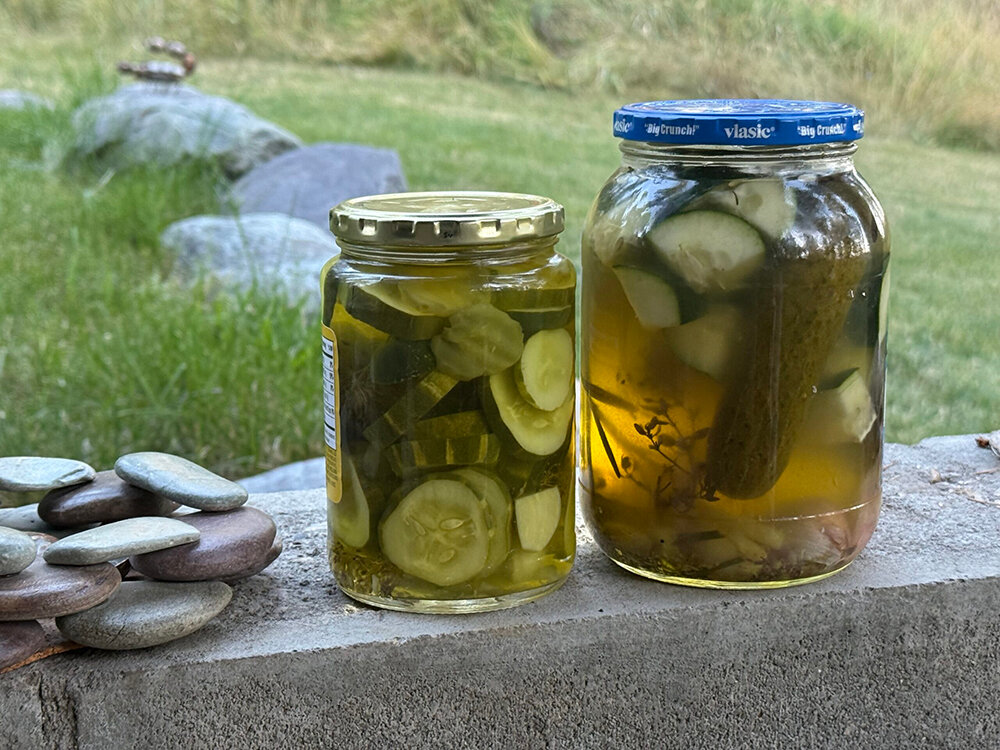
I asked my house sitter for a shopping list so I could leave her a properly stocked pantry. On the list was a “big jar of pickles.” I lamented not having better pickles to offer her than a jar of soggy and leathery cucumber prunes, but when I returned home from my trip, it all made sense.
She’d tossed the pickles themselves and replaced them with the contents of a $5 bag of pickling cucumbers from the vendor at the farmers market who gives you free sprigs of dill with all your cucumber purchases. She’d stuck one of those fresh seedbeds in the pickle jar as well, along with a clove of garlic from the garden.
These new pickles in old brine were bright green and as crispy as freshly opened potato chips. In the juicy crunch of each bite, you could still taste raw cucumber, along with the herbal, salty, vinegary pickle brine. That was weeks ago, and that jar is still going, like an infinite pickle glitch.
This is an example of a cooking technique called fridge pickling. Normally, pickling is used as a storage technique, a way of capturing the abundance of harvest and squirreling it away for future use. But fridge pickles are designed for short-term consumption. You can skip sterilizing the jars and cooking the cucumbers, which are necessary for safety reasons with storage pickles. Thus, fridge pickles are insanely easy to make, and they’re of the highest quality.
Fresh fridge pickles are a more fluid situation than storage pickles. When the brine level gets too low, I add white vinegar, water, sugar and salt. I use cucumbers of any kind — big or small, slicers or picklers. I replace the cloves of garlic I eat and apply dill seed heads to maintain that dense, herbal pungency. With each bite of pickle, I’m subconsciously monitoring the levels of saltiness and sweetness,prepared to take action when they drop too low.
This fall, when it’s time to make storage pickles, I know exactly the recipe I’ll use based on the flavor I want. With my pickled beets, however, I’m not so sure. So, I’ve been using the summer to experiment with fridge-pickled beets and optimize my recipe for my winter stash. I’m doing so because I’ve lived the alternative, and don’t want to go through that again.
You wake up one Saturday morning and decide, “Today is the day!” You hit the farmers market in the cool of the early morning, when it’s just you and the white-haired diehards. You bring home mountains of cucumbers, peppers, carrots, beets and whatever other worthy materials you can find and surf over to some blog to figure out how to flavor them. Twenty quarts of pumpkin-spice bread-and-butter pickles later, you begin to wonder, “What if this recipe sucks?” Three weeks later, you crack a jar, only to confirm that you just wasted time, money and produce on something nobody will eat.
The thing is, some of you are probably reading this and thinking, “Hell yeah, pumpkin-spice pickled beets!” It just goes to show how personal pickles are.
So, as we savor the tail of summer, let’s use these long days to make some plans for those cold, endless nights. Do some refrigerated research on the impacts of salty-sweet vinegar on fresh produce while you scratch that pickle itch with some infinite pickle glitch.
Pickled red beets with allspice, cloves and red onions
To be a serious pickler, you need to have all of the brine ingredients on hand, preferably in bulk. You can save a lot by buying vinegar in plastic gallon jugs. I don’t like listing quantities because they depend on how much raw material you have and how tightly you pack your jars. But a good rule of thumb is about 2 cups of vinegar, a teaspoon of salt and a half cup of sugar per pound of raw beets, plus spices, which, like sugar, are ultimately up to taste and not necessary for safety.
- Red beets
- Red onions
- Whole allspice
- Whole cloves
- Apple cider vinegar
- White vinegar
- Salt
- Sugar
Slice the beets into quarters and steam them until soft, about 30 minutes. Let them cool, then slip off the peels with your fingers. Slice each piece into 1/2-inch-thick quarter rounds.
Wash and sterilize your canning jars and lids. Add a teaspoon each of cloves, allspice and salt to each quart, or halve that for pint jars. Then pack in the beets as tightly as possible without crushing them.
Depending on how well packed your jars are, you will need 2 to 3 cups of brine per quart. For 12 cups of brine, which will pickle 5 to 6 quarts, use 6 cups of water and 3 cups each of white and cider vinegars, plus 2 cups of white sugar. Bring the brine to a boil and pour it into the jars, leaving half an inch of headspace at the top of each jar. Secure the lids and rings and process in a water bath for 20 minutes. Remove the jars and allow them to cool and seal.
Related Articles

Babe’s Corner reels in shrimp and lobster rolls
It’s hard to find a good lobster roll in the area. The few restaurants that serve them only do so for a limited time. One of these places is Babe’s Corner, which recently moved into the downtown …

Sunrise Chinese Food & Sushi replaces Apple Jade in Frandor
Before opening Sunrise Chinese Food & Sushi in Frandor, Feng Yang operated a similar restaurant in New Jersey.
Arana Yang, translating for Feng, said he was interested in bringing his …