This is what union busting looks like up close
A few weeks ago, I wrote about how Michigan’s cannabis industry has developed a disturbing pattern of crushing union drives.
I heard from a lot of people after that piece but what stuck with …
A few weeks ago, I wrote about how Michigan’s cannabis industry has developed a disturbing pattern of crushing union drives.
I heard from a lot of people after that piece but what stuck with me most was Emily Hull’s story.
The 26-year-old moved to Michigan from Colorado in 2022, got into cannabis almost immediately and found a genuine passion for helping people.
She came from cosmetology school. “The thing I translate from skin and nails is just helping people and making them feel good,” she said. “That’s what I love about the cannabis industry.”
She spent months on a picket line outside an Exclusive Brands dispensary in Ann Arbor in what became the longest strike in Michigan cannabis history. She lost her job over it. So did three of her coworkers.
How it started
It started with a slow day and a broken drawer.
“We were just shooting the shit on a slow day, just cleaning or whatever,” Hull said. “He was talking about how it was when we first started working there versus how it is now.”
The list of grievances was mundane at first — the kind of stuff that piles up at any job. But at Exclusive, broken drawers were landing on people’s feet, hurting them. Workers who raised the issue had their hours cut.
Then Hull broke her ankle.
“I was willing to work,” she said. “But they were scheduling 12-hour shifts and I’m like, I can’t work 12-hour shifts on a broken ankle. So they just cut me off the schedule entirely for like a month.”
“We decided, hey, let’s go to a union. This is basically our only option right now.”
How it works — and how Exclusive tried to stop it
To organize, workers will typically reach out to a union, sign authorization cards, and if enough workers sign, they can petition for an election. If the majority votes yes, the employer is legally required to bargain a contract with the union.
Hull and her coworkers reached out to UFCW Local 876.
She still has the piece of paper from their first meeting, a handwritten list of steps: march on the boss, gather union cards, build the committee.
And then an Exclusive manager called Hull to talk her out of it.
“He was just trying to convince me we don’t need a third party, blah blah blah,” she said.
Then a worker in the processing facility started talking to coworkers about organizing.
He was fired, “as soon as he started talking about it,” Hull said. “So we filed an unfair labor practice charge.”
That firing was one of the central charges in the UFCW’s complaint to the NLRB.
The strike — and the bunny suit
The workers went on strike in late August 2025. Four of them held the line. By any measure, they held it longer than anyone expected.
Exclusive brought in replacement workers, including family members of management as replacement workers.
“Not only did they hire scabs, but they hired their own family,” Hull said. These were not workers with any stake in the outcome. They were there to vote no, and once they did, most of them were gone. “As far as I know from some of the people I still talk to in there, they don’t work there anymore. As soon as they voted no and got their way, they were like, I don’t have to work here anymore.”
And then there was the bunny suit.
“They had somebody dress up in a bunny suit with a megaphone and go out one of the doors, yelling inappropriate things about the girls and their bodies,” Hull said. “Telling everyone that they were fat and old and ugly. Literally the most high school type of taunting that I’ve ever seen.”
The legal trap
Exclusive’s core legal argument wasn’t just that the union was wrong. It was that the NLRB had no jurisdiction over a cannabis business at all because cannabis is still a federally illegal Schedule I substance. Federal labor law, they argued, doesn’t apply to them.
Hull understood immediately what that meant in practice. “If we get hurt on the job, just because you’re in cannabis, you can’t get help or do anything?”
Follow it to its logical conclusion, as I pointed out to her, and you get to a place where an employer could theoretically refuse to pay workers and hide behind federal illegality as a defense. It’s an absurd argument.
But there’s another layer to this that most people don’t know. On the cultivation and processing side of cannabis — think growers, trimmers and extractors — federal lobbyists for some of the largest cannabis companies in the country have successfully pushed to have workers classified under the same labor category as migrant agricultural workers. And here’s why that matters: migrant farmworkers are one of the only groups of workers in the United States explicitly exempted from the protections of the National Labor Relations Act.
It’s why UFCW and the Teamsters have focused their cannabis organizing almost entirely on retail — because those are the only workers whose union contracts are guaranteed to hold up.
Where they are now
Of the four workers who stood on the line, Hull and one other are still in cannabis.
“I totally get if they kind of got burnt out from that.”
Hull still volunteers with the union when she can, handing out leaflets and showing up when she’s needed. She’s not officially on staff anywhere, but she hasn’t walked away. “I just have a personal passion for those kinds of things.”
She said something near the end of our conversation that I can’t shake.
“This is not exclusive to just Exclusive, you know. This is a cannabis industry problem. Exclusive just happened to put out that stupidly clever argument out there and gain attention.”
The argument Exclusive made — that cannabis workers don’t deserve the same rights as every other worker in America — didn’t die with their case. It’s waiting to be used again by the next company that decides a union is more expensive than the legal fight to avoid one.
Hull stood on a picket line in Ann Arbor for months. She got harassed by a guy in a bunny suit. She watched her coworkers lose their jobs. She watched family members of management cast the votes that ended it.
And she’s still in this industry, still showing up, still giving a damn.
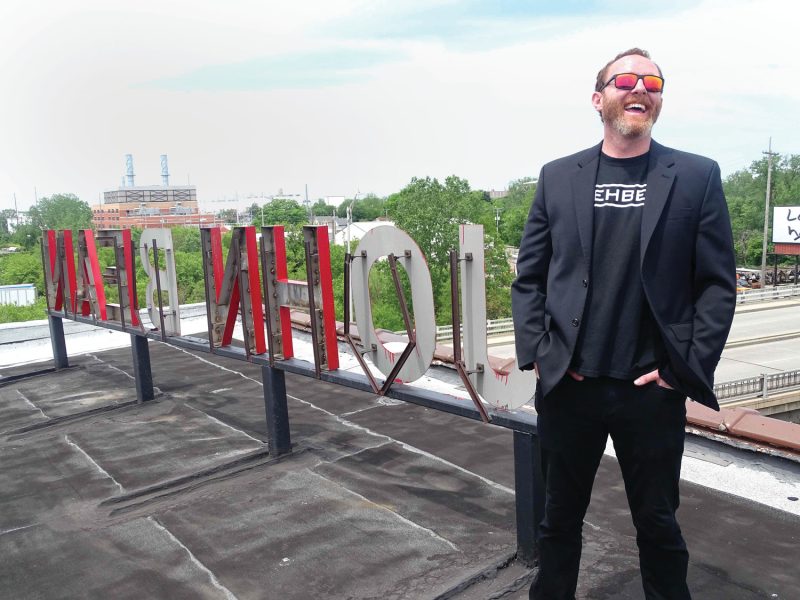
Chris Silva writes the Lansterdam column for City Pulse. Tips? Reach him at silvachr@gmail.com.*