UM-Sparrow asks Council not to study making old Eastern a historic district
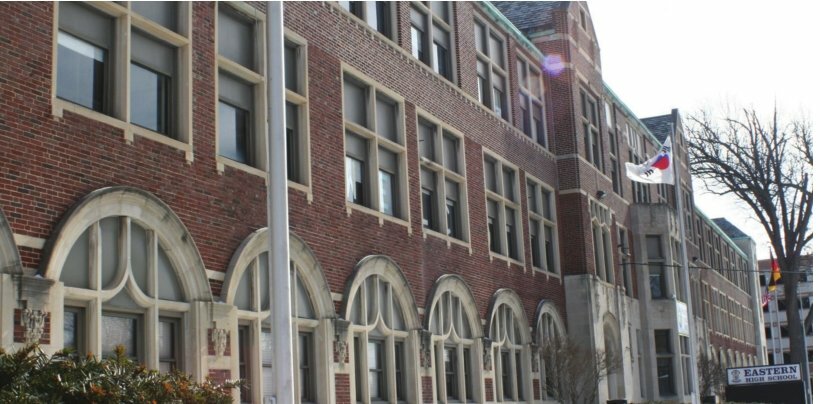
THURSDAY, Aug. 22 — University of Michigan Health-Sparrow is fighting back against a proposal to the Lansing City Council for a study committee to determine if old Eastern High School should be …
UM-Sparrow’s letter to the Lansing City Council
Margaret Dimond, regional president of University of Michigan Health, sent the following message by email today to the Lansing City Council:
“We understand the Lansing Historic Preservation Society plans to submit a resolution to the Council seeking authorization of a study with the intent to declare the old Eastern High School building a historic district—and ultimately, obstruct the University of Michigan Health-Sparrow’s plans to address Lansing’s health care access crisis through our extended campus.
“I implore you to vote against a study, a moratorium or any other action that will delay or prevent the people of Lansing from receiving lifesaving care.
“As you know, we at Sparrow have applied for a Certificate of Need to address a behavioral health care crisis that impacts nearly every family in some way. Though planning is still in its early stages and subject to approval by the state and the University of Michigan Board of Regents, we have proposed to build a new, 120-bed behavioral health facility on our extended campus, which includes the former Eastern High School (EHS). This expanded access to behavioral health care will truly save lives and will allow people waiting for this care—our friends, family members and children—to get the help they need.
“Sparrow purchased the old school site in 2016 with the goal of using the property to improve and protect the health of our community. However, the current building has significant safety and quality issues that preclude us from using it as a health care facility. It is simply not possible to use the building to deliver health care, and as a non-profit health care organization we have a responsibility to focus our resources on our mission to improve community health, not complex historic renovations.
“While the behavioral health hospital is the first project Sparrow has proposed for the property given the surging, emergent need for these services, it is not our only consideration for the site. We are also exploring opportunities to address other urgent needs through our extended campus, including better access to cancer care, enhancements in our birth center and NICU facilities, and more convenient surgical care. We also see an opportunity to utilize this property to solve pressing challenges and overcrowding in our emergency department, which is designed to see 75 patients per day and is currently seeing as many as 200 patients per day.
“While these additional opportunities to address all these health needs are not final and still being explored, they are an important consideration as the Council considers the future of this property.
“When Sparrow affiliated with U-M Health, U-M Health committed to investing 0 million toward improving access to world-class health care in our community. The future of the former Eastern campus is the linchpin of our vision for a healthier future for Lansing area, and a vote to consider a historic district designation puts at risk not only the proposed behavioral health facility, but all future efforts designed to serve the people of Lansing.
“Lansing’s Historic Districts ordinance allows the City Council to declare an emergency moratorium on the proposed district if it finds that “pending work will cause irreparable harm to one or more resources within an established historic district.” It is clear that if the City Council votes to support a study and an emergency moratorium, real irreparable harm will be caused to the people of Lansing: the people of Lansing who have to drive miles away for mental health resources, who are stuck waiting in an overburdened ER, and who are unable to get access to the care they need.
“We understand that many feel a connection to EHS, and we will continue to work with the community to honor its legacy as we evolve the UM Health-Sparrow campus to offer these and other lifesaving services long into the future. Already, we have heard meaningful ideas from dozens of community members that will allow us to honor the school’s legacy and invest in the health care needs of the people of Lansing – from a memorial garden to a remembrance wall.
“Once again, I implore you to vote against a study, a moratorium or any other action that will delay or prevent the people of Lansing from receiving lifesaving care.”
Council member Ryan Kost’s repsonse
“I concur with Ms. Dimond’s assessment that we require additional mental healthcare beds. However, it is disingenuous at best to claim that they are collaborating with the community when they have not responded to me in weeks and have severed all communication with community organizations. We remain committed to assisting in the completion of their project and repurposing Eastern for other essential purposes, such as much-needed housing for the elderly or disabled who struggle to find suitable accommodations. This is not a personal matter, and I take nothing personally. Our goal is to achieve a mutually beneficial outcome, and I believe we all agree on the necessity of mental healthcare and housing, recognizing that housing insecurity directly impacts our mental well-being. It is time to take a holistic approach, considering the bigger picture and the entire situation rather than focusing on isolated aspects. We deserve the best and must address issues comprehensively rather than one at a time. This is an opportunity to do so. The only obstacle impeding the University of Michigan’s progress is its unwillingness to consider the 26 acres of surface lots, which were actually designated as the intended location in 2022, according to site plans submitted to the city prior to the university’s takeover.”
Says it would ‘obstruct plans to address Lansing’s health care crisis’
THURSDAY, Aug. 22 — University of Michigan Health-Sparrow is fighting back against a proposal to the Lansing City Council for a study committee to determine if old Eastern High School should be declared a historic district.
Such a study would “ultimately obstruct the University of Michigan Health-Sparrow’s plans to address Lansing’s health care access crisis,” Margaret Dimond, regional president of UM-Health, emailed the Council today.
Dimond said old Eastern’s location was the “linchpin” to the $800 million commitment toward improving access to world-class health care in our community” when it acquired Sparrow in 2022.
“A vote to consider a historic district designation puts at risk not only the proposed behavioral health facility, but all future efforts designed to serve the people of Lansing,” she wrote.
The city’s Historic District Commission voted unanimously last week to seek the study. It has scheduled a special meeting at 5:30 p.m. tomorrow at the Neighborhood Empowerment Center, 600 W. Maple St., to decide on the language of a proposed resolution to submit to the Council.
In her email, Dimond erroneously referred to the commission, whose members are appointed by the mayor and the Council, as the “Lansing Historic Preservation Society.”
If the Council approves the resolution, the mayor and the Council would appoint the study committee, which can take up to a year to complete a study on whether the eastside landmark qualifies to be declared a historic district and report to the Council, which would have final say.
During that process, city officials have said, the University of Michigan could not tear down old Eastern to replace it with a $97.2 million, 120-bed psychiatric hospital, which UM-Sparrow has proposed. However, besides establishing the study committee, the Council may also need to approve a moratorium to keep U of M from proceeding.
The U of M Board of Regents and the state must sign off on the plan.
“I implore you to vote against a study, a moratorium or any other action that will delay or prevent the people of Lansing from receiving lifesaving care,” Dimond said.
Dimond’s letter indicated that UM-Sparrow has other long-term plans for its eastside campus that the fate of old Eastern may affect.
“We are also exploring opportunities to address other urgent needs through our extended campus, including better access to cancer care, enhancements in our birth center and NICU facilities, and more convenient surgical care,” she wrote, using the neonatal intensive care unit acronym. “We also see an opportunity to utilize this property to solve pressing challenges and overcrowding in our emergency department, which is designed to see 75 patients per day and is currently seeing as many as 200 patients per day.”
She said old Eastern, which has been closed for five years, “has significant safety and quality issues that preclude us from using it as a health care facility.”
She also addressed UM-Sparrow’s opposition to restoring the building through preservation. “As a non-profit health care organization we have a responsibility to focus our resources on our mission to improve community health, not complex historic renovations.”
Efforts were not immediately successful to reach John Foren, UM-Sparrow’s spokesperson, for comment on how UM-Sparrow determined the level of complexity of such renovations.
Dimond promised UM-Sparrow will “continue to work with the community to honor its legacy,” referring to old Eastern, “from a memorial garden to a remembrance wall.”
City Council member Ryan Kost, a leader of an effort to preserve old Eastern, called Dimond’s message “disingenuous at best.”
“I concur with Ms. Dimond’s assessment that we require additional mental healthcare beds,” he said today.
“However, it is disingenuous at best to claim that they are collaborating with the community when they have not responded to me in weeks and have severed all communication with community organizations.”
Kost co-chairs the Committee to Preserve Historic Eastern and Promote Mental Health, comprising alumni, eastsiders and preservationists. He represents the 1st Ward, where UM-Sparrow Hospital’s campus is located.
Dimond and other UM-Sparrow executives met last month with committee members. Dimond scheduled a tour for committee members but rejected its request to include a photographer and a preservation architect. Kost said the committee was disappointed but did not argue.
After Kost posted on Facebook that the committee’s two requests were turned down, Dimond canceled the tour.
Meanwhile, UM-Sparrow granted a tour to the Lansing State Journal, albeit with a no-photography condition.
The story reported Foren as saying, incorrectly, that plans for the tour had “stalled” because the citizens’ committee was not living up to its agreement to limit its participation in the tour to the same committee members who had met with UM-Sparrow.
City Pulse then published a portion of the meeting transcript that documented that no such agreement existed and that the committee had requested preservationists to tour the building with UM-Sparrow officials, not committee members.
Reacting to the story, UM-Sparrow ended discussions, saying that committee members were being adversarial and not acting in “good faith.”