‘We have to speak up’
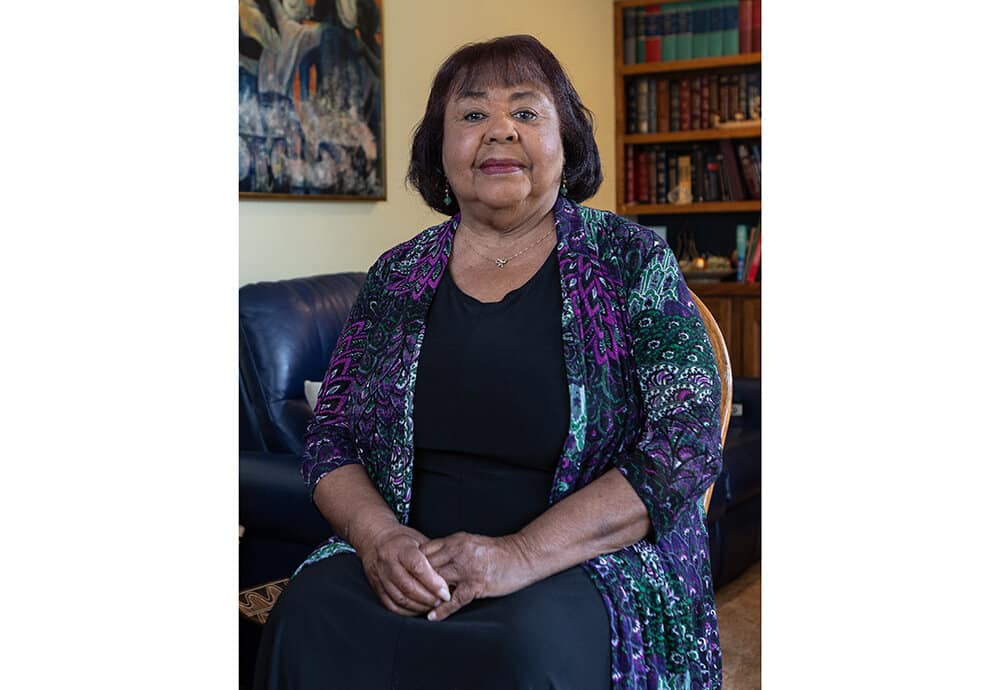
The last thing Barbara Roberts Mason wants is for people to make a fuss over her. All her life, she has focused on making life better for others, especially kids.
Well, she’s got a …
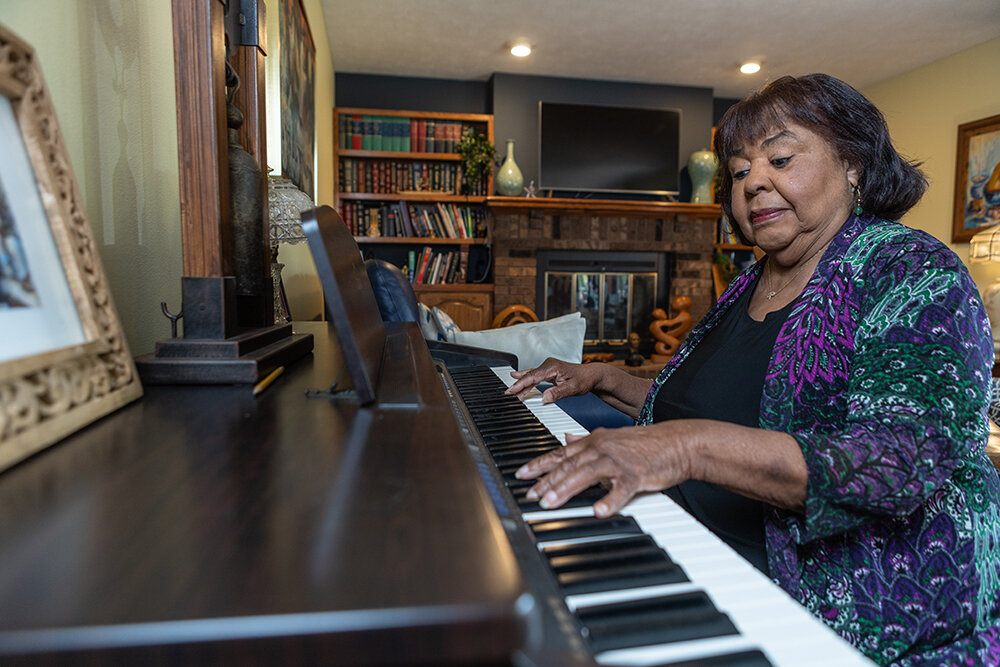
The life and legacy of Barbara Roberts Mason
The last thing Barbara Roberts Mason wants is for people to make a fuss over her. All her life, she has focused on making life better for others, especially kids.
Well, she’s got a problem. A gala-style 85th birthday celebration planned for her Sunday (Aug. 31) at the University Club definitely qualifies as a fuss.
Basking in the limelight is not her thing, but she’s going along with it — not out of politeness, but for her own reasons.
Mason has squeezed real progress from the sausage factory of politics more times than she can count.
She served for 24 years on the Michigan Board of Education — the first Black woman to be elected to statewide office, according to the Michigan Women’s Hall of Fame.
As a teacher and speech therapist in over 30 Lansing schools, she worked tirelessly to improve conditions for students, teachers and teachers’ aides.
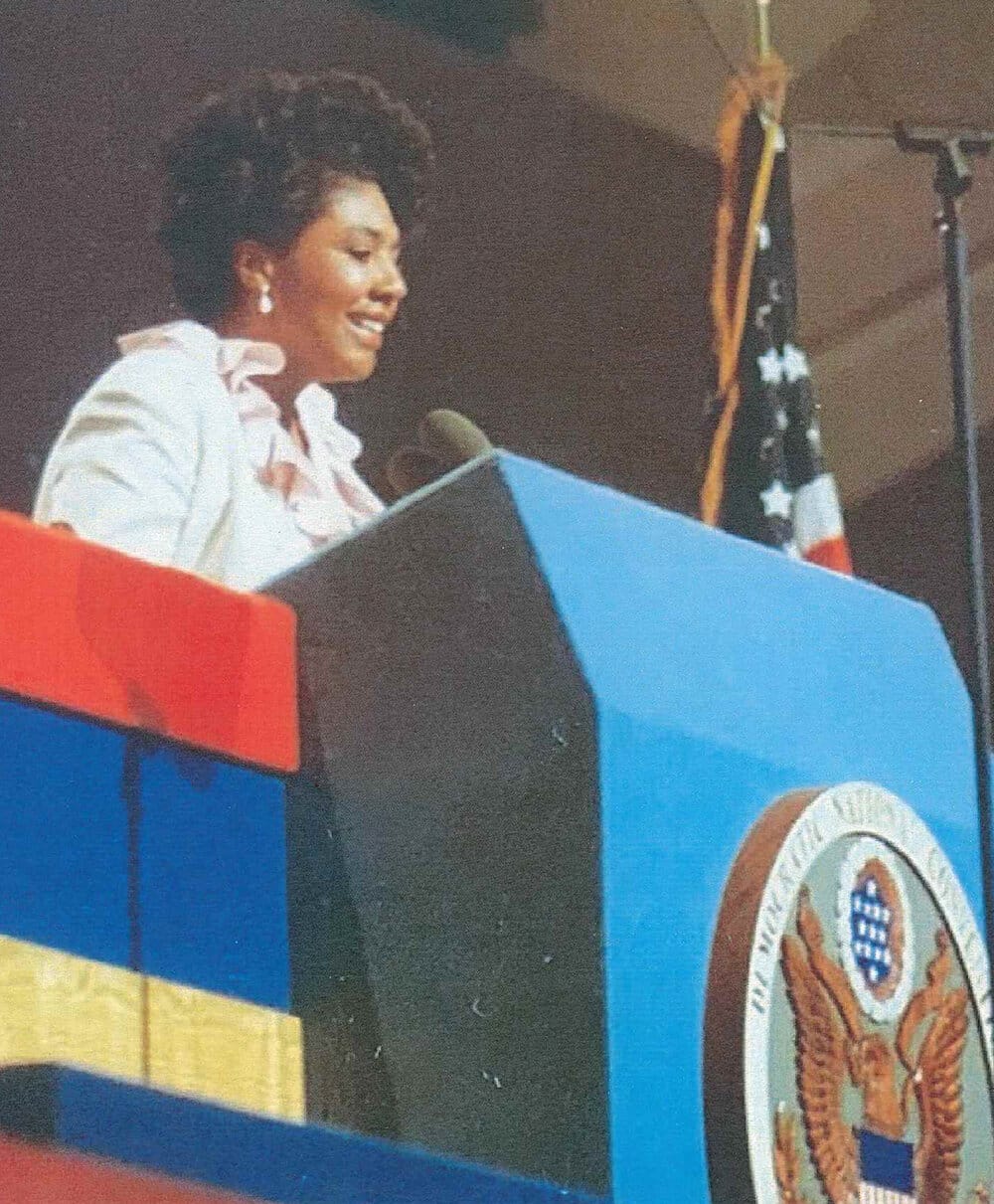
On the national stage, she advised presidents and negotiated with senators, governors and corporate heads, usually as the only woman in the room. At the 1984 Democratic National Convention, she helped make history when she seconded the vice-presidential nomination of Geraldine Ferraro, the first woman on a major-party ticket.
She dug latrines and built health clinics in Ghana. She took poor Lansing kids to Japan to study the language and culture.
There’s much more to Mason’s life story, and that is why we are gathered here today.
As a lifelong educator, she knows a teachable moment when she sees one.
All this fuss goes against her grain, but it also gives her another opportunity to spread the values she holds most dear: quality education for all kids; equity in health, schools and job opportunities; and the power of combining a global perspective with local action.
Counting the cars
Sleeping was never Barbara Roberts Mason’s strong suit.
As a kid, she often sat up at night and watched a cavalcade of tail-finned Cadillacs slip quietly down Scotten Street on the west side of Detroit, on their way to local dealerships from the nearby Clark Street factory.
“I would look out the window and count them — ‘Three yellow, four red,’” she said. “I tried to wake up my sister to watch, but she didn’t wake up.”
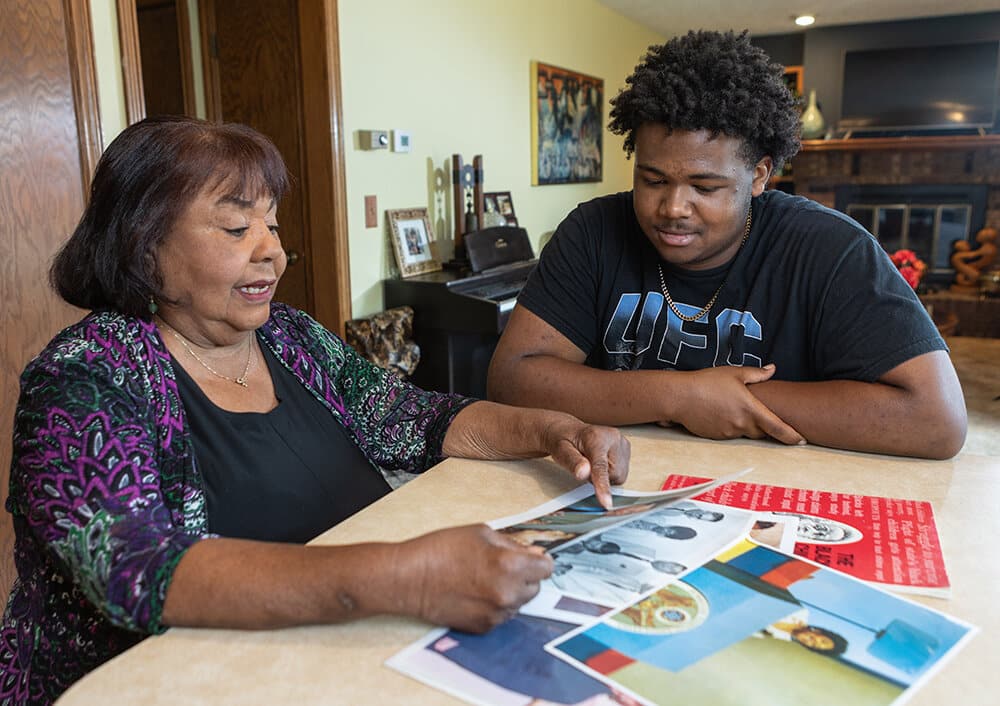
As we talked in the living room of Mason’s home in Dimondale, a French horn fanfare sounded repeatedly from her phone. That same sister, Gloria Sailsbury, who lives across the street, was going through a box of old photos and was excitedly sending forgotten gems to her sister, priming the memory pump.
There were too many stories to tell. Mason picked one, almost at random, to express her amazement at her life’s path.
In the 1980s, Lotte Confectionery, a South Korean candy conglomerate, threatened to take a large manufacturing plant out of Battle Creek if the state didn’t set up a “Saturday school” to prepare workers’ kids for the crucial exams they would later be required to take in Korea.
Mason led the negotiations.
“I thought, here’s this little Black girl from Detroit, whose father wore holes in his shoes as a letter carrier in order to buy me some nice shoes,” she recalled. “Now I’m sitting across this big table with the president of Lotte on the other side.”
The talks were successful and the company stayed in Battle Creek, but that isn’t why she brought up the story.
“As a Black female, I’ve led many delegations, and many times I’ve been the only Black female in the room,” she said. “It was, to me, a marvel that this could have happened in my life, or anyone’s life.”
Growing up in Detroit, she loved to sing with her family, at home and in the church, and sang in the church choir at St. Stephen AME. At church parties, they went on urban hay rides, with shredded newspaper in lieu of hay.
Mason danced and sang Irving Berlin’s “Steppin’ Out with My Baby” in a high school theatrical production. Audiences liked her, and she returned the feeling.
She had a lisp, but a speech therapist helped her, changing her life in the bargain.
“I loved my speech therapist, probably because we had lots of games and prizes,” Mason said. “There were Hershey bars, Almond Joys and Baby Ruths.”
When Mason was 12, an uncle who was active in the church asked her to recite the welcome at a statewide church conference at St. Stephen.
“That’s how I learned subjunctive mood,” she said. (That’s the one that expresses a hypothetical situation.)
Three quarters of a century later, the text is burned into her brain: “Were I to invite you to my home, I would ASCERTAIN…”
She interrupted herself. “I remember thinking, ‘What is ascertain?’”
She went on.
“’I would ASCERTAIN the kind of food and drink you would enjoy,’” she intoned graciously.
“I thought, ‘Wow, this is fun, all these people looking at me.’ It was kind of scary, too.”
She won a lot of oratory contests, but it wasn’t all fun. In one contest, an instructor told her to recite a speech from “Gone with the Wind.”
“I didn’t want to do that,” she said.
It wasn’t just because of the film’s crude stereotypes and sickly sweet nostalgia for antebellum slavery. She had seen the movie in Charleston, South Carolina, with her family and never forgot the experience.
“We had to go up the back stairway and sit in the balcony,” she recalled. “It was dirty up there.”
She tried to refuse to do the recital, but the instructor insisted.
“She had no idea of the impact doing that would have on me,” Mason said.
In protest, Mason deliberately threw the contest to another participant. Her uncle was disappointed, but with time, he came to understand her reasons.
‘It wasn’t fine’
Mason quickly found out that oratorical skills, however useful, couldn’t compensate for a weak education.
“Other than being accepted socially and having fun, I didn’t have a very good high school experience,” she said.
As a member of the Detroit High School Student Council, she saw what was going on in other schools.
“That’s when I found out that Northwestern was among the worst of the high schools in terms of what it had to offer,” she said. “I would go to Mumford, Cooley, Central or Cass and say, ‘Wow, is this what a chemistry class looks like?’ I’d go into the library and see wonderful, wonderful books. The disparities were really great. When I got to Lansing, I never forgot that experience.”
(Northwestern has since become a college prep academy.)
Although Mason is content with her career choice as an educator and speech therapist, she sometimes thinks of the opportunities she missed because of her substandard high school education.
“My son is a physicist because of math,” Mason said. Roger Jr., works at Los Alamos as a nuclear physicist.
“He does things he can’t tell me about, and the things he does tell me about are so interesting. I’ve always thought that if I had the kind of education he had right here in Lansing, I’d have been able to do what he does.”
As a junior at Michigan State University, majoring in speech therapy, Mason married Roger Roberts, a microbiology major. They settled in Lansing, Roberts’ home town.
A solid Army background made Roberts an ideal candidate for recruitment by the NAACP to become Lansing’s first Black firefighter.
“He was born in Lansing, had good grades at MSU, worked part time for the state and was a veteran, a paratrooper,” Mason said. “How could you turn him down?”
But the city did turn him down.
“The department was not hiring African Americans at that time,” Mason said dryly.
Seven months pregnant, Mason led picketers at City Hall to get Roger into the Fire Department.
“It took a while, but the NAACP pushed hard, and they hired him,” she said.
When the new family looked for a home, they were ensnared in a web of redlining. Mason still has a printed advertisement from a subdivision in Lansing’s Churchill Downs neighborhood that reads, “Everybody Welcome.”
But Mason and her husband couldn’t get approved for a mortgage for a $10,500 house in Churchill Downs. They were, however, approved for a $13,000 house on Pine Street, in a mostly Black neighborhood.
She wanted to fight back, but the fire chief told her that if they did, the department would fire her husband.
They ended up living in a house on Michigan Avenue.
“Which was fine — but it wasn’t fine,” she said. “It was segregation.”
‘Welcoming and shock’
Mason joined Lansing schools as a speech therapist, with a focus on mentally impaired students who were not getting the support they needed.
“At the time I came, there was no good program for special education students in speech therapy,” she said.
She teamed up with special education director Marvin Beekman to advocate for mainstreaming special ed students. Later, when Beekman became the state’s special ed director, they successfully pushed for a law mandating special education for kids with disabilities.
A fresh battle came her way when her kids began classes at the substandard Michigan Avenue School, on Michigan Avenue and Logan Street (now Martin Luther King Jr. Boulevard).
Mason and another teacher, Gwen Macintosh, walked the neighborhood with a petition to fix the school or close it and build a new school. A throng of kids (“every child in the school,” Mason said) went to a school board meeting to back up the petition.
“They ended up fixing up the school,” she said. “They let me pick the color to paint the walls. I picked yellow.”
In 1976, the district built a new school, Riddle Elementary, on Huron Street, to serve the students who formerly went to Michigan Avenue School.
In 1971, Mason became director of the Lansing Schools Education Association, the Lansing affiliate of the Michigan Education Association, at a fraught period in the system’s history.
“Lansing was embroiled in desegregation,” Mason said. “One of the reasons was schools like Michigan Avenue, schools in lower income areas that were not up to par.”
Mason helped write the district’s staff desegregation plan. Eva L. Evans, a national leader in civil rights and education from Lansing, wrote the basic plan for students.
It was a thorny and difficult process.
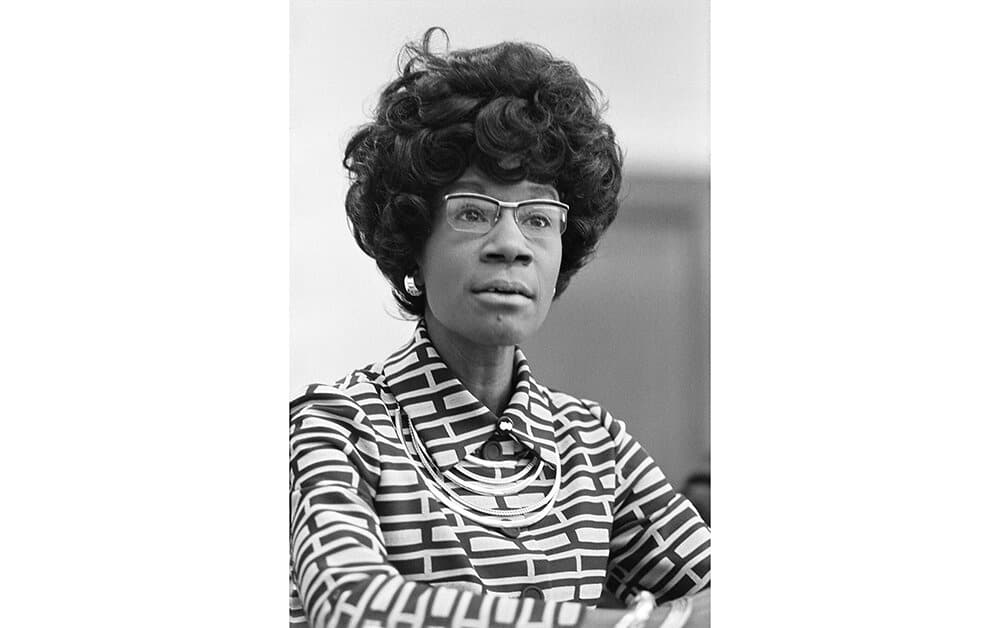
Mason brought some heavy-hitting speakers, including civil rights icon and U.S. Rep. Shirley Chisholm and “Roots” author Alex Haley, to the discussion of desegregation in Lansing, at forums she organized with the LSEA.
“Here was a Black woman who was really active, running for president,” Mason said. “She told me a lot about what she was doing in New York. She was strong — ‘unbossed and unbought,’ as her book says. I thought, ‘Well, she can run, and I can run for something, too.’”
Mason was frustrated in her efforts to improve the second-tier status of paraprofessionals, or teacher aides. She was also looking for more ways to help special education students. Talking with Chisholm inspired her to reach for a seat at the statewide decision-making table.
That decision would mark a historic first in Michigan, although Mason didn’t realize it at the time.
“I found out that all the rules for education come through the state board,” she said. Becoming the first Black woman on the board, and the first to be elected to statewide office, was not even in the back of her mind.
“I wanted to be on the board because I wanted to help get the paraprofessionals better pay, better quality, better standards for their work,” she said.
Joe Finkbeiner, a union local president, threw a fundraiser, with Chisholm as guest speaker.
Mason started wearing out shoe leather.
“Suddenly, you realize you’ve got a big state,” Mason said. “You really have to campaign. That’s when I learned what politics was about.”
Visiting remote towns and hamlets, Mason recalled being received with “welcoming and shock.”
“In little places like Tawas City, people supported me because I showed up, unlike some of the other candidates,” she said. “I had a message — that all children should learn, we should have high standards and quality classes in Michigan, no matter who you are and where you’re from.” She was first elected in 1974 and sat on the board for 24 years, twice serving as president.
National stage
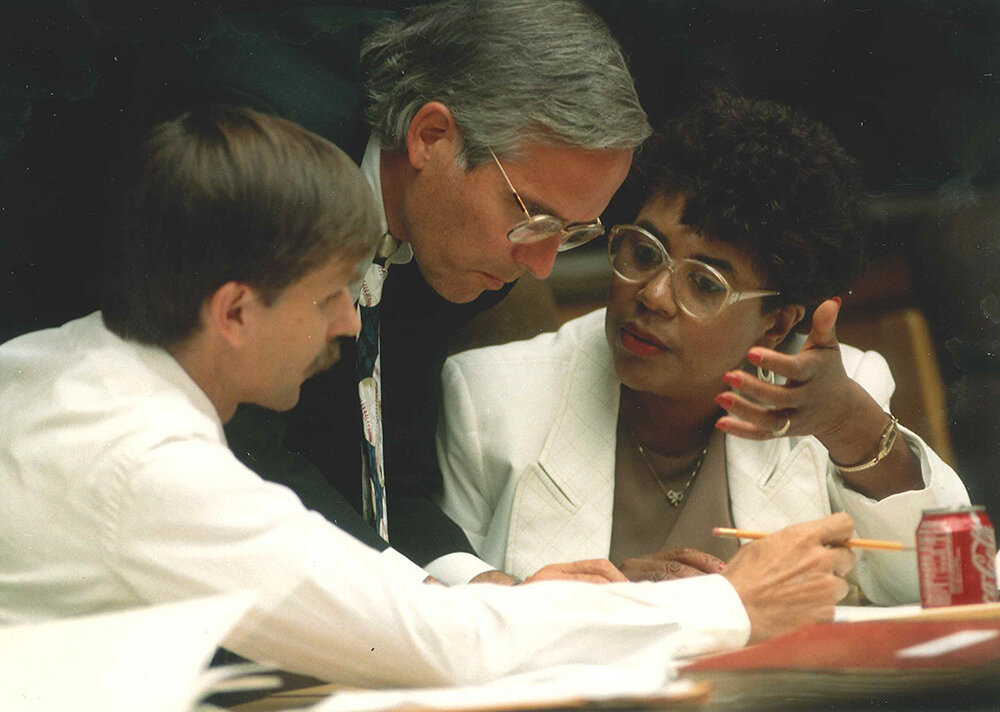
In the 1980s, Mason moved into national politics, inspired largely by her conversations with Chisholm. She served on the platform committee at four Democratic national conventions, helping to draft the language.
“That was really important to me, because you get a chance to put your own thoughts into it and find out who you really are,” she said.
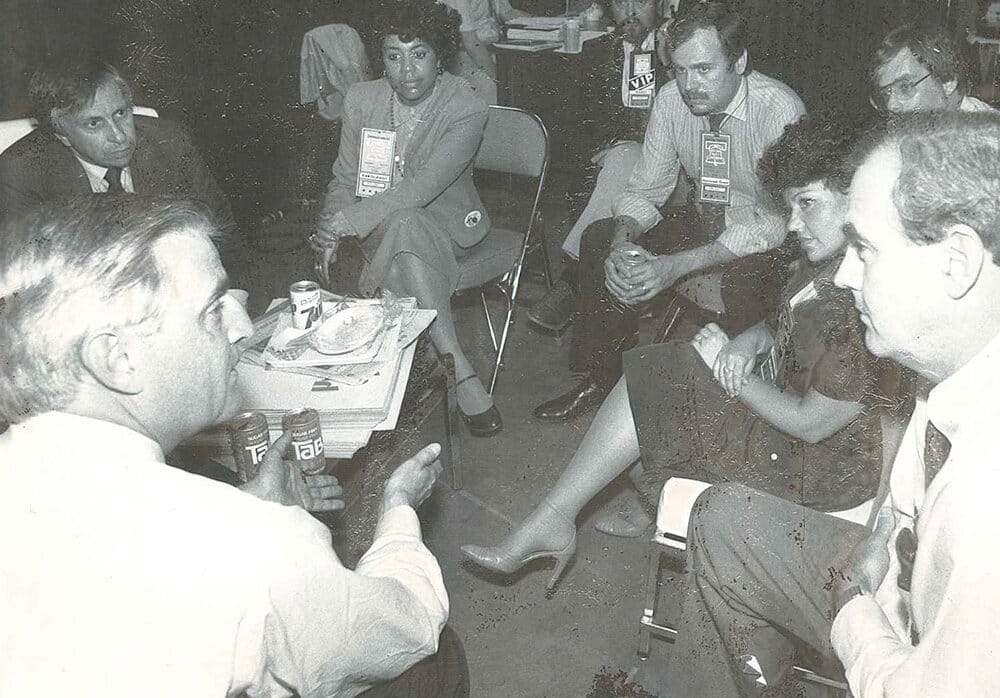
At the 1980 convention, while representing President Carter on the drafting committee, she sat at the table with some high-level colleagues, including flamboyant New York Sen. Patrick Moynihan, the Rev. Jesse Jackson and future New York Gov. Mario Cuomo.
As they hammered out the platform, the verbal sparring was intense.
“Moynihan and I disagreed over one word,” she said. “I don’t even remember what the word was, but he wanted it out, and I wanted it in. I was so thrilled when I won the argument and the word went in.”
The next day, she looked at the final draft and found that the word was back out. Moynihan was only being gallant — or artful.
“He let me win,” she said. “I don’t hold it against him.”
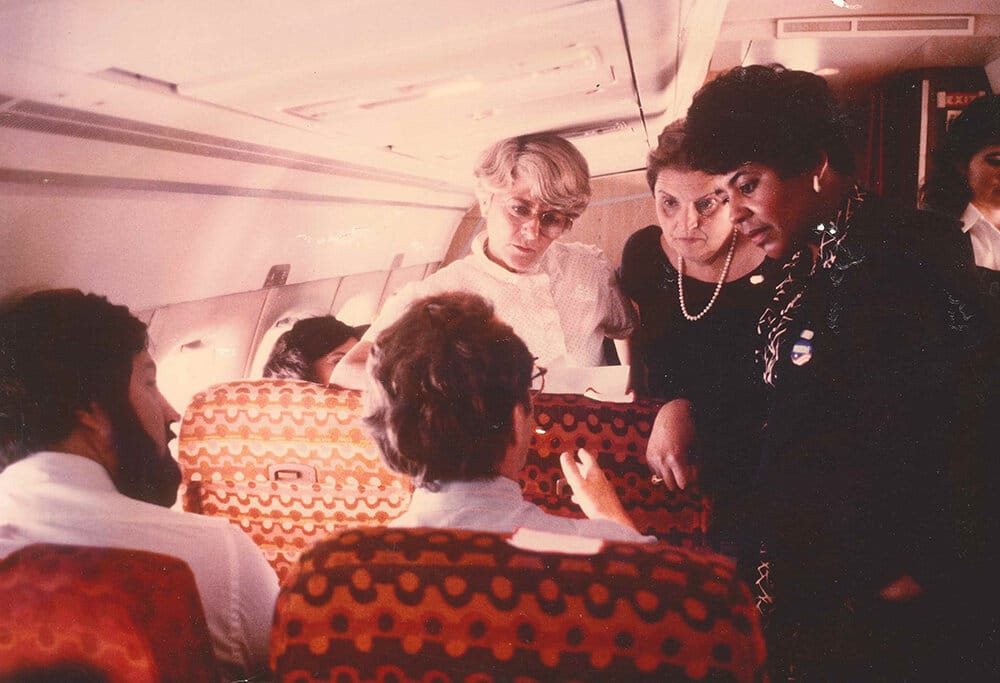
Prior to the 1984 Democratic convention, Mason toured the nation with Geraldine Ferraro to get public input on what should be in the platform. Ferraro chaired the platform committee that year.
“We went to farms, and that’s when I realized family farms were dying,” Mason said. “Part of our platform was to help them hang on.”
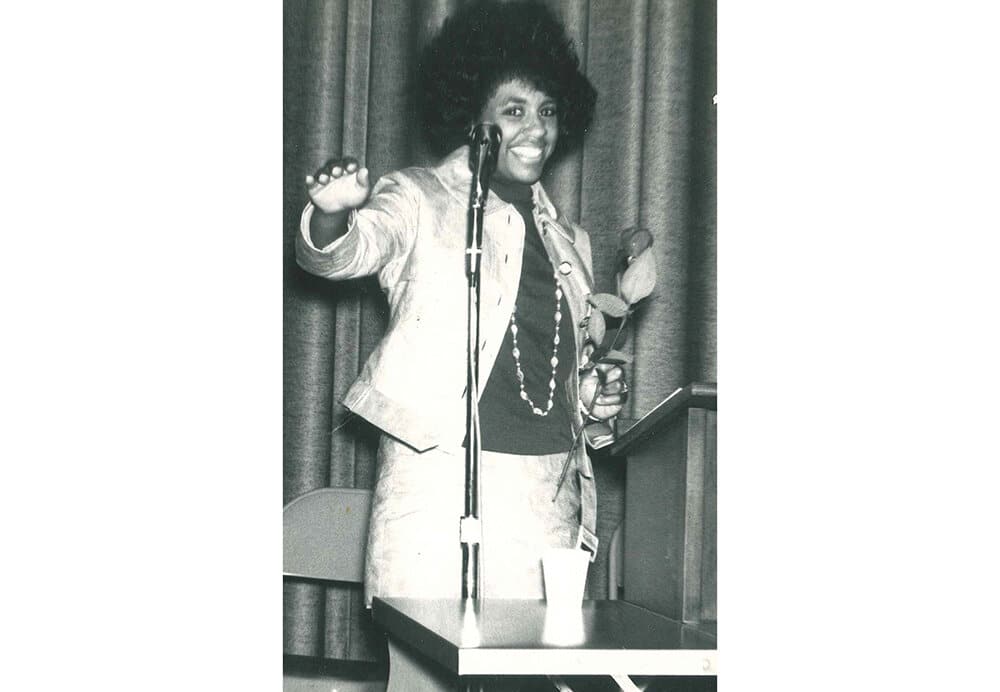
Mason got to know and respect Ferraro on the tours. When Ferraro was chosen by the Democratic presidential candidate, Walter Mondale, as the first female vice-presidential nominee from a major party, she called Mason and asked her to give a nominating speech.
“I thought, ‘Oh my God, what do I say?’” Mason recalled.
The speech was a rouser. Ferraro asked Mason to be her senior adviser for domestic policy.
It was her first national campaign.
“I found out they’re very different,” she said. “It was a great experience, but it wasn’t easy. I’m an evening person. You wake up early in the morning, start in the East, end up in California, and it’s still daylight. It’s exhausting.”
Mason’s turn on the national stage led her to some surprising places.
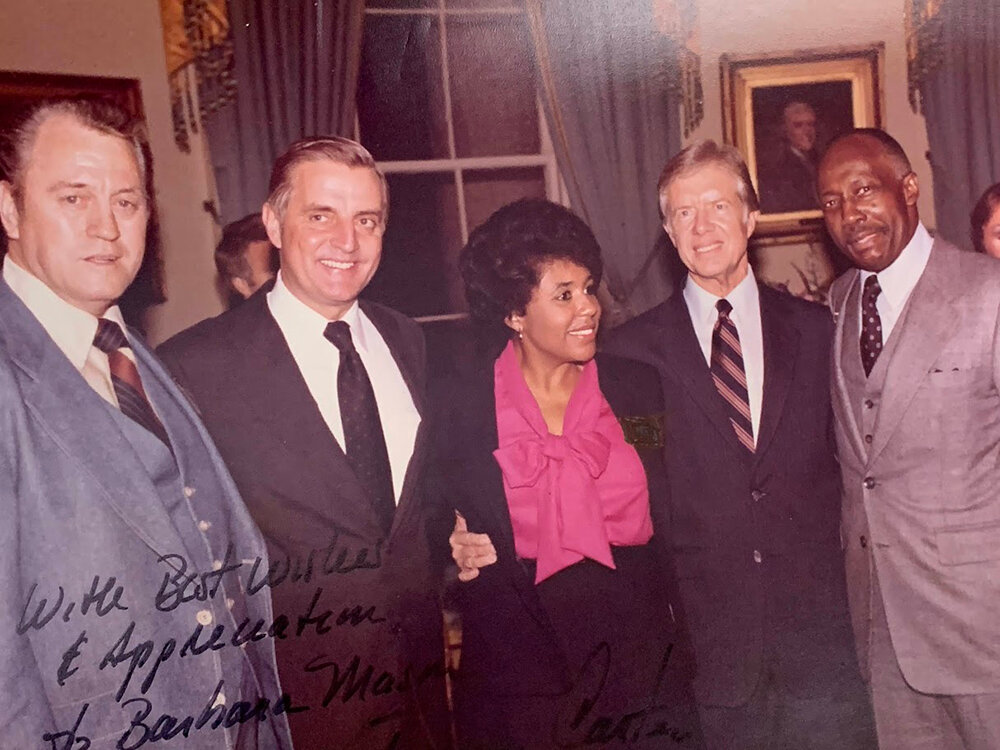
President Carter’s team invited her to the White House to join discussions on whether to adopt the Strategic Arms Limitation Talks, or SALT II, agreement.
“I was surprised,” Mason admitted. “It was something my son would know more about than I did.”
She surmised that her service on a federal Impact Aid grant commission, with the rank of second lieutenant, had attracted the attention of the administration. The commission traveled around the world, visiting military bases in Germany and other nations, to evaluate federally funded schools.
“They wanted diversity of backgrounds in these discussions,” she said. “I’m not sure how much benefit I was to them, but it was beneficial to me. I learned a lot.”
The day Mason was summoned to the White House, she was trapped in a conference with U.S. Rep. William Ford, a loquacious Michigan congressman, in his office.
She kept glancing at her watch as Ford held forth.
“I was running late for the White House, and he could talk even more than I can,” she said.
At the last minute, the driver raced Mason to the White House, where they talked down a pair of guards with raised rifles and got into the meeting on time.
Mason got to know Carter and his wife, Rosalynn.
“I really liked Carter,” she said. “He was gentle, kind and very nice, probably too nice to be in the position he was in.”
The night before the 1980 election, when Carter was decisively defeated by Ronald Reagan, Rosalynn was campaigning in Lansing.
That evening, Mason picked up Mrs. Carter after a campaign speech at the UAW 652 local and drove her to the Capital City Airport.
“We all knew he was going to lose, with the polls and everything,” Mason said. “She told me, ‘Barbara, they just don’t know Jimmy. He’s such a good man, but he’s going to lose tomorrow.’”
Crisis and response
While serving on the state Board of Education, Mason was alarmed by the data that reached her desk.
“Black children are dying, and Black mothers are dying because of issues in childbirth,” she said. “Even data when it comes to mental health — our kids are having serious problems. Not just our kids, but even our grandmothers. It’s intergenerational.”
She approached Phil Runkel, the firebrand state school superintendent who braved vicious anti-tax headwinds in the 1980s to increase funding for the state’s schools.
Mason told Runkel that the schools faced a far worse situation than a financial shortfall. A knot of interlinked issues had to be addressed.
“If you don’t have good health, if your mother died in childbirth, if your grandmother doesn’t have a job, if your father’s on drugs, you’re not going to do well in school,” she said.
They brought a proposal for statewide action to Gov. James Blanchard. Lt. Gov. Martha Griffiths co-chaired the Black Child in Crisis team and ordered department directors in six cities, including Benton Harbor, Flint, Detroit and Lansing, to come up with a plan.
The Black Child and Family Institute, with Mason as director, was the fruit of that initiative in Lansing.
Mason approached David Hollister, then a state representative, to lobby for funds from the state’s social services budget.
They asked for $500,000 and got $100,000. To house the project, she went to Lansing school Superintendent Richard Halik.
He asked her what room she wanted.
“The Genessee Street School,” she replied.
“You want the whole building?”
She got a sweetheart lease deal from the Lansing School District for $1 a year.
The Black Child and Family Institute, now called Building Child and Family Initiatives, immediately began to punch above its weight, offering a wide range of community and educational programs. It moved out of the Genessee Street School in 2012 but still offers classes, tutorials and summer camps in science, math and other areas.
Linoleum dreams
As a young girl, Mason was fascinated by the blue and white sailboat pattern of the linoleum floor in her bedroom.
“I used to dream of getting on those boats and sailing around the world to all of these places,” she said. “I should write a book on linoleum.”
She got her wish, traveling to Germany and other U.S. military bases on the Impact Aid commission. She has also led delegations to France, Korea, Cameroon, China, Benin, Nigeria and South Africa to study their education systems or offer humanitarian aid.
A new door to the world opened when Mason became director of Lansing’s Sister Cities Commission, a post in which she served for 23 years.
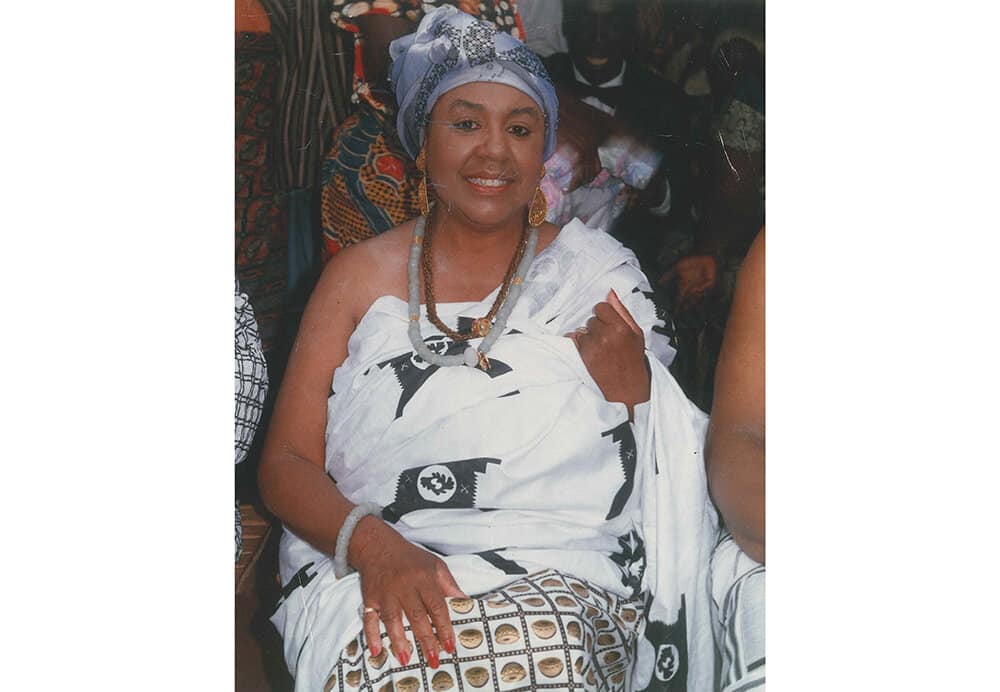
She traveled frequently to Ghana, where Akuapim South District is one of Lansing’s sister cities.
There, they built a clinic from scratch, fabricating new and more efficient molds to stamp the bricks (“or else it would have taken seven years”). She headed another delegation to Ghana in 2019 to renovate two more clinics.
Mason is especially proud of the BCFI’s ambitious Japanese language program. In 1988, she signed an agreement with Blanchard to open the Japan Center for Michigan Universities in Hikone, Japan.
She dreamed of taking the BCFI children to Japan for the opening of the center.
A community fundraiser wasn’t going to work. Few of the students’ parents and their friends could afford the $25 to $50 admission charge needed to raise the money.
Mason cranked up her fax machine and compiled a list of U.S.-based Japanese companies, all without the aid of the internet. She faxed them all, asking for money to send the kids to Japan. Only one company responded — Tokico America, an auto parts manufacturer.
If Mason let the company president have his picture taken with the children, they’d donate the $2,500 needed.
“We said, ‘Come on down!’” Mason said. “The moral is, you don’t give up. You just keep going.”
Staying awake
Just a few weeks ago, Mason’s daughter, Laurin’, had to sit down with her at her laptop and show her that she was the first African American woman in Michigan to be elected to statewide office.
As her 85th birthday approaches, it’s one of the first things to be pointed out in most capsule bios and news stories about her, but she professed to having no idea.
“Looking back, I’ve been the first of a whole lot of things,” she said. “I never think about being the first of anything. I think about, ‘What can I do?’”
Only last month, she gave a contribution to her local church, Trinity AME in Lasing, to launch a global initiative program.
“We don’t know what the world’s going to be like in 20 years,” she said. “I won’t be here, but we have to prepare our kids to be able to think globally.”
She still has insomnia but doesn’t stay awake to count Cadillacs, as she did many years ago. Mostly, she keeps up with the news and thinks about the future.
“With the current president we have, you can see that things are going backward,” she said. “We can’t let our democracy go by the wayside. We’ve got to be alert. We’ve got to speak up.”
Whie serving on the state Board of Education, Mason visited migrant camps and became a passionate advocate for migrant children as a member of the Interstate Migrant Education Council.
She lobbied the state Legislature for privies to be distributed to farms with migrant camps.
“One of my board members said, ‘Why do you need that? Cows do it in the fields.’ That’s the mindset we have. I think about Trump and what he’s doing to send people out of the country, separating families.”
In January 2023, Mason received the Dr. Martin Luther King Jr. Legacy Award at Lansing’s annual MLK Commission luncheon. She invoked King’s March 1968 speech at the National Cathedral in Washington, D.C., in which he warned of the dangers of “sleeping through a revolution.”
“I’m very happy to be 85,” Mason said. “People talk about aches and pains. At least you feel them. It means you’re on the other side of the ground. But my grandchildren are 20, 16 and 23. If I sleep through the revolution, if I don’t fight for what I believe is good for them, what will their lives be like?”