
2025 strained many nonprofits but also led to more donations
It’s hard to peg down any one thing about non-profits: There are about 42,000 of them of all sizes in Michigan, covering everything from health care, homelessness and housing to arts and animals.
…
It’s hard to peg down any one thing about non-profits: There are about 42,000 of them of all sizes in Michigan, covering everything from health care, homelessness and housing to arts and animals.
But if there’s one thing in common, it’s that 2025 was a lot to deal with.
There were federal funding scares and realities, alongside increased demand for what most nonprofits do, which only accelerates the growing strain on every nonprofit’s volunteers and staff, said Kelley Kuhn, president & CEO of the Michigan Nonprofit Association.
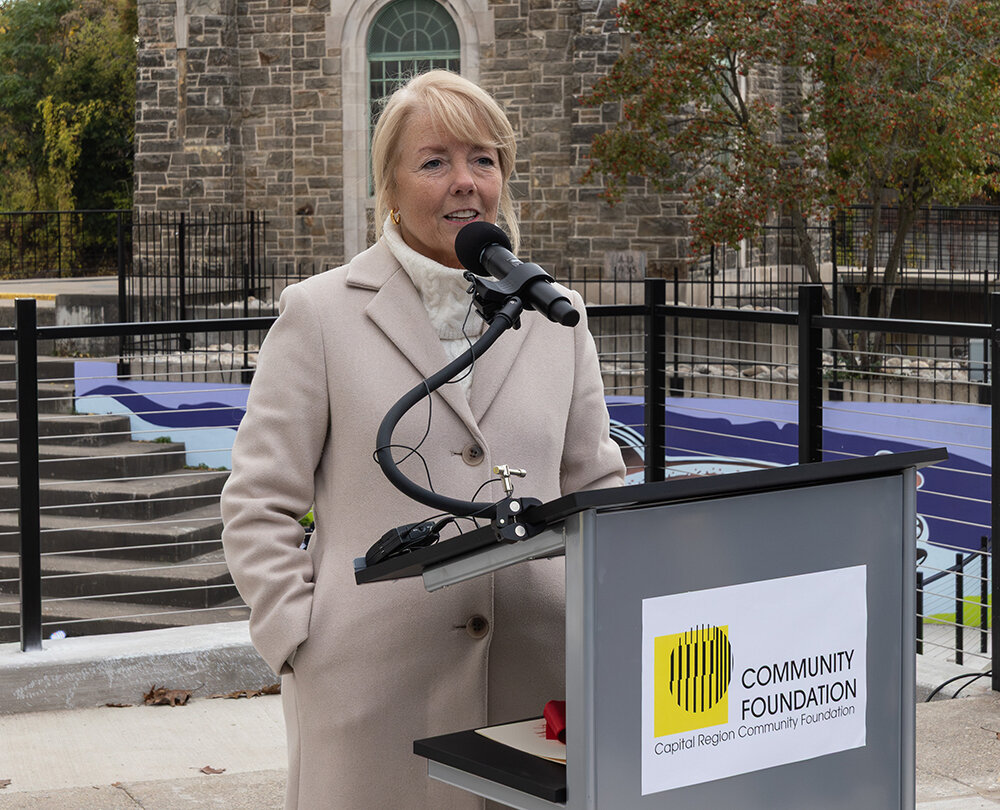
It’s been a challenging fundraising year for most nonprofits, said Laurie Strauss Baumer, president and CEO of the Capital Region Community Foundation.
“Nonprofits in general have suffered throughout the year,” she said. “We’re hoping and praying that this is a strong giving season.”
She said her foundation’s recommendations for giving are focused more on issues like homelessness, housing, healthcare, and children, and less on areas like the arts and animals this year, because “conditions are so dire for individuals and families.”
Kirk Taskila, senior case manager at Lansing Area AIDS Network, has been with the nonprofit for about 18 years and said 2025 was the most uncertain year so far. Feared cuts have not happened yet, Taskila said, but even staying flat was effectively like getting a budget cut in 2025.
“There have been no increases (in government funding) despite the increased cost of housing, electricity, and other increases that are continuing across the board for all budgets,” Taskila said.

Most of Taskila’s clients are at or below the poverty line.
“And when people are trying to live on $900 a month through Social Security, it makes it really difficult to maintain housing and provide for food and your basic necessities,” Taskila said.
Economic conditions often hit nonprofits more than once: The services they offer are more needed than ever, individual donors may be tightening their own belts while big-dollar federal grants shrink and the volunteers and staff at the nonprofits get stretched even further than before.
“People are feeling insecure and worried about the conditions and when they feel insecure and afraid, they might hold tighter to their cash and that has a trickle-down effect to nonprofits,” Strauss Baumer said.
How nonprofits fared in 2025
Some Head Start programs had to temporarily close early in 2025 after federal freezes, Kuhn said.
“Initially, we saw a response from philanthropy,” she said, “working with grantees until those dollars came back or to help where there were delays in reimbursements.”

The John D. and Catherine T. MacArthur Foundation helped to set an early tone of giving by upping their giving from 5% of their holdings to 6%, an estimated $150 million more over two years. Kuhn said that set the tone for other foundations to give more and signaled that the need, even early in 2025, was greater than ever before.
Another round of major giving happened in the fall when SNAP funding was both cut and delayed.
Those well-publicized and significant cuts and delays inspired rounds and rounds of donations to the Greater Lansing Food Bank, which supports smaller pantries and soup kitchens throughout seven counties in addition to its own efforts.
The GLFD saw a dramatic increase in donations to match the federal cuts and worries of even deeper cuts.
“We definitely have seen higher amounts of giving, both from individuals and in food being brought in,” said Katlyn Cardoso, senior manager of marketing and communications for the food bank.

That’s coming alongside higher demand and higher food prices, although the food bank is not in danger of running out of food, she said.
“It’s important to sustain this momentum and this support work we do for the community, because the more resources we have, the more we’re able to anticipate and react to what happens next,” Cardoso said.
Silver linings in a tough year for nonprofits
Overall, there is some good news for nonprofits: No, their big federal dollars aren’t being restored. And no, the problems they want to solve may not be getting solved at scale.
But there are more donations, at least as measured at a high level.
During the critical December giving season, many nonprofits are cautiously optimistic, Kuhn said.
Giving Tuesday, on Dec. 2 this year, brought about $4 billion in donations to various nonprofits worldwide, according to estimates from the official GivingTuesday.com platform. Giving Tuesday began in 2012 as a hashtag and a nonprofit fundraising campaign by the 92nd Street Y in New York; it has ballooned into one of the most important donation days in the nonprofit world and Giving Tuesday became a standalone group in 2020.

The organization said Giving Tuesday 2025 showed increases in almost every area from 2024: 13% more money, 3% more people giving, 20% more people volunteering and 26% more people speaking out about their causes.
Kuhn said she is seeing more individuals giving as well as organizations and communities stepping up for food insecurity issues, among others.
Tax changes
Some of that estimated $4 billion from Giving Tuesday will have been donated to Michigan and local nonprofits but even outside of Giving Tuesday donations and estimates, December has proven to be a critical month for nonprofits, Kuhn said.
There’s a bit of holiday spirit as well as tax reasons for seeing a spike in donations in December.

A new federal law – the Big Beautiful Bill – allows non-itemizing individuals to deduct up to $1,000 in charitable donations or $2,000 for a family, which could encourage lower- to middle-income people donate more this year, according to the Journal of Accountancy.
The same report found that the bill could also significantly reduce high-end giving, in some cases making the same exact donations mean less for the donor’s taxes, and the changes could also mean long-term donation plans get accelerated into late 2025 to stay ahead of future changes.
The National Council of Nonprofits opposed many of the tax changes, including the high-end changes, but it supported the individual deductions.
“This provision further incentivizes charitable giving among the 90% of taxpayers who do not itemize their tax deductions, bolstering the work done in communities by charitable nonprofits,” the council said, in a summer analysis of the bill’s implications for nonprofits.
What’s 2026 looking like?
Going into the new year, there is a lot of headwind, but there has been a lot of hope too, said Bob O’Hara, director of development for the Michigan Coalition Against Homelessness.
He said fundraising at his organization has been strong following cuts to federal programs earlier this year, in part because the crisis has inspired more people to donate and volunteer, people who may have previously believed that “somebody else is taking care of it.”

More people helping means his coalition can do more training and support for the local organizations that work to combat homelessness on the ground.
O’Hara said his organization doesn’t do the on-the-ground work that dozens of homelessness organizations do in places like Lansing.
Instead, his organization works to give those local groups more support and training and to advocate for state changes that would create less work for the local groups by building more houses
“You can’t solve homelessness without more houses,” O’Hara said.
Holy Cross closing, The Nest opening
There’s a lot of work to be done to solve homelessness in Lansing and one of the city’s biggest shelters is announcing that it will be closing soon.
Holy Cross, one of Lansing’s largest homeless shelters, is closing its doors at the end of March.

Holy Cross Shelters is wrapping up operations after the first quarter, with some of its services being picked up by a new nonprofit: The Nest.
“New Hope will close at the end of March,” said Shelbi Frayer, the interim director of Holy Cross and founder of The Nest.
Holy Cross will continue to provide shelter through the winter, which was important, Frayer said.
The Nest is currently raising money and is working with City Rescue Mission, one of Lansing’s other major shelters, which is expanding capacity.
The Nest will run a separate shelter system for about 26 veterans and 12 to 15 families, who have fathers or boys over 13. Most local shelters do not accept grown men with children and there is a gap for veterans as well, Frayer said.
The Nest will also serve as a day center for people who shelter overnight at City Rescue Mission, where they typically don’t spend the day.
The recent cold weather has escalated the problems for those living outside and the city of Lansing has had a Code Blue designation since before Thanksgiving.
“That pushes our staff, it means more overtime and more staff and volunteers needed,” Frayer said.
Shelters, she said, generally will keep some people out for past bad behavior.
“There are lists of folks who not allowed back – maybe they assaulted staff or did something inappropriate – but during a Code Blue, everyone is welcomed in because it’s a life and safety issue. That usually requires a new level of security in the building to keep everyone safe and protected.”

If the entire winter remains at a Code Blue, which Frayer said seems possible if the city uses a reasonable metric of temperature falling below 25 degrees for more than two hours, that will mean extra pressure on shelters across the city and would also mean more access to warming centers for those in need.
The Nest is one of a large number of nonprofits in and around Lansing that are doing great, and sorely needed, work right now, said Strauss Baumer, of the Capital Region Community Foundation.
Frayer said the most effective way to give, whether that’s to help the homeless population in Lansing or any other cause, is to support different groups and go straight to the group and ask what they need.
“One of the best ways is to donate directly to shelters,” Frayer said. “Everybody has a QR code and they have lots of ways to donate.”
How to give
Direct donations may be the best gift any nonprofit could get, said Kuhn, and giving directly to a nonprofit is a great way to tailor effective giving.
Unrestricted donations – money given with no conditions or requests – can allow an organization do all kinds of stuff from routine maintenance and paying staff to launching new programs.
For the Food Bank, $1 in donations can provide three meals because the organization can use nonprofit discounts, bulk purchases, friendly agreements, and other tricks to make that $1 in cash buy more food than anyone else could with $1.
But direct cash donations are not the only way to give.
Almost any nonprofit would be happy with little effort and just a few bucks tossed toward something on their Amazon wish list.
Donating directly to wish lists is an effective way to give, Kuhn said. It’s one of the best ways to give something that will get used, often immediately.

There’s going to be both normal and offbeat things on those Amazon lists, which sometimes tell you a lot about the people helped by the nonprofit.
Consider donating travel-size shampoo bottles for homeless shelters, for example, instead of large bottles, because they’re easier to carry.
Ele’s Place offers help to grieving children, teens, young adults and families.

Their Amazon wish list has stickers, hair ties, games, snacks and more.
The Ronald McDonald House Charities of Mid-Michigan needs fidget toys, laundry supplies, clock radios, shower caps and condiment packets, said Amy Stanton, development director.
Their Amazon wish lists help to cover not only stays at the Ronald McDonald House, aimed at avoiding long commutes to hospitals, but also to stock hospitality carts that roam the NICU spaces at UM Health-Sparrow Hospital.
People come in sometimes with nothing but what they had on them when a medical emergency strikes,
“Whether it’s supplying necessities like snacks and personal care items on our hospitality carts and in transfer bags, a room or hot meal at Ronald McDonald House Mid-Michigan, or fuel and meal gift cards to families transferring hospitals,” Stanton said, “we strive to keep each family together, providing them with a warm and caring environment where they can focus on the health of their child.”


By Mike Ellis