City Council rejects housing incentive that would have dropped council hearings
Lansing City Council members rejected on Monday a proposal that would have encouraged housing investment in exchange for bypassing the City Council hearings.
The council split 4-4 on the proposal, defeating it in a contentious meeting.
The proposal would have added an automatic, or by-right, approval for housing projects that included affordable housing and meet normal city, state and federal housing regulations.
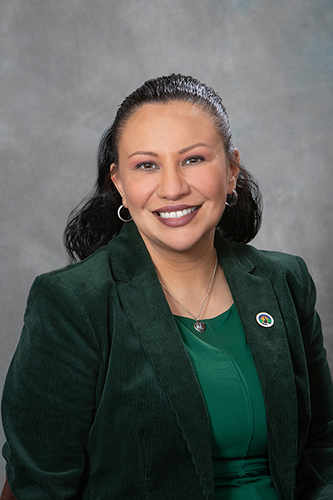
It was, according to council member Deyanira Nevarez Martinez, one of the best ways to encourage housing investment in a city that sorely needs more housing because of a gap of several thousand units.
Nevarez Martinez is a housing professor at Michigan State University and a nationally recognized expert, and when she was elected last year, other council members said they would turn to her expertise to help solve Lansing’s housing crisis.
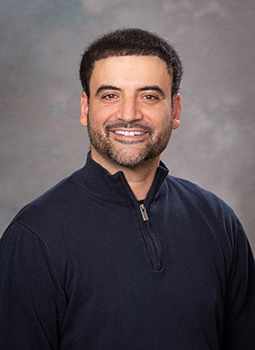
But throwing the doors open to encourage development at the cost of City Council oversight was too much to ask of Lansing’s residents, said council member Adam Hussain, who opposed the plan.
He said the city did not need to give up its leverage over developers and pointed to recent projects in which city council members had exacted higher tax payments, shorter terms or outright rejected bad deals through public hearings.
“Our work over the last five years,” he said,” has saved millions for the city over the duration of the PILOTs.”
Nevarez Martinez’s proposal aimed to give a by-right approval for housing proposals that set aside at least 30% of their units for affordable housing in exchange for a 4% payment-in-lieu-of-taxes deal, or PILOT.
Most developments in Lansing either go all affordable or none – because if a developer only sets aside 30% of the units as affordable, this incentive and others would only apply to 30% of the project – so it is likely that most of the proposals will be far above the minimums, said Rawley Van Fossen, the city’s director of Economic Development and Planning.
“We’re trying to address a billion- or trillion-dollar problem that is affordable housing with nickels and dimes,” he said, during a community meeting last week. “This can speed up the process and make Lansing more competitive.”
Developers would agree to pay a set amount, far less than the normal tax rate, in exchange for building affordable housing rather than market rate housing and they would, in exchange, get to bypass the city council hearings where the public could weigh in or build pressure on council to reject the project.
Nevarez Martinez said there would still be maintenance and safety and construction regulations that developers would have to follow but those would be objective criteria that developers and banks can plan on ahead of time and avoid worries about public pressure or “politicization,” as Nevarez Martinez calls it.
Her proposal called for 18 year terms. The city has an existing 10% PILOT program and many of the current three dozen PILOTS have rates below 10% and for terms longer than 18 years. These deals can be extended after they expire.
For Walter French, one of the area’s most touted affordable housing projects, the funding included 17 sources, including a PILOT, but that project was more complicated than most and mixed both affordable and market-rate housing as well as a child care center.
The tax difference between a normal tax-paying property and a PILOT is wildly different for each project but at a presentation at the former REO School, an official for the Capital Area Housing Partnership said the difference of getting the PILOT for Walter French amounted to a city subsidy of about $500,000 over the course of the deal, more than 15 years.
Hussain said the city had not calculated any projection of what the proposal would cost the city, nor did the city prepare a report on the gap between the current PILOT proposals and the full amount the city could theoretically have made.
Nevarez Martinez said it is a mistake to see the difference between the city’s full tax expectations and the discount of a PILOT because in almost every case, the difference is between a project that doesn’t happen and one that does. She said most of the projects that get initial city PILOT approvals across the state get rejected by the state and don’t get built.
Council member Ryan Kost said during Monday’s meeting that he has been through some of the buildings the city has given PILOTS to, “including one of our newest PILOTs,” where conditions have quickly deteriorated, and residents are living in deplorable conditions.

He said it is not just old buildings, but new buildings the city has recently helped to fund that are falling apart and that without city council oversight, future developments could be worse.
“We need to name this; it is not making affordable housing, it’s corporate welfare,” Kost said. “If we do 4% byright, people can’t voice support or not support and they won’t have a chance to voice their opinion.”
Kost said developers are bluffing when they say affordable housing is only possible with a 4% PILOT agreement. He pointed to Simtob Management as an example of quality affordable housing being possible without city subsidies like PILOTS.
“They fund low-income housing without PILOTS,” Kost said.
Simtob settled a lawsuit with the city in 2023 over the condition of dozens of their homes.
Nevarez Martinez said Kost was not being factual and that Simtob does workforce housing, which is not the same as affordable housing and their buildings would not qualify for PILOT funding because they do not attempt to meet the federal standards.
Affordable housing is defined as a percentage of the average income of an area.
In Lansing, about 62% of people qualify for affordable housing, Nevarez Martinez said.
Nevarez Martinez also said the building Kost was referring to was not part of the city’s PILOT program and both the current and her proposed PILOT programs require tax benefits to be removed if conditions violate federal rules.
“If you can give me the address of anything that’s an active PILOT,” Nevarez Martinez said, “that’s a violation of the federal program. Come tell me and I personally commit to starting an investigation.”