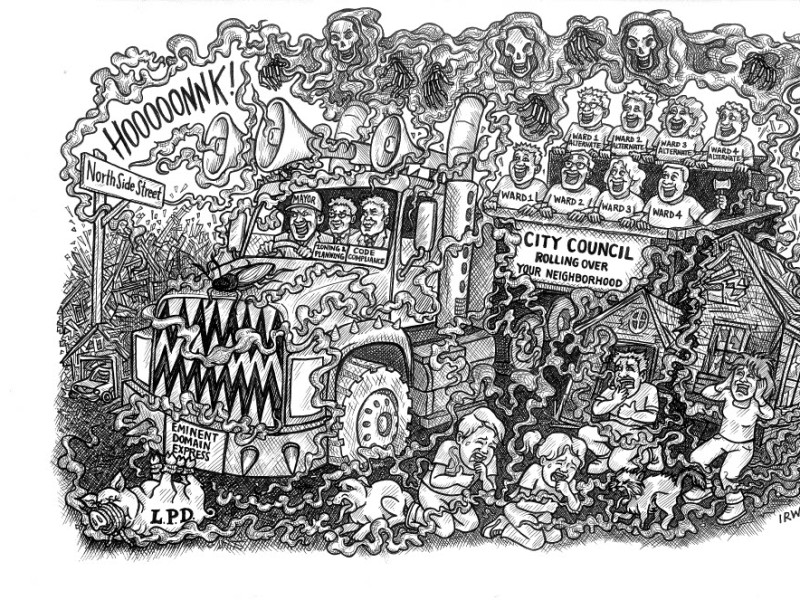
This is what passes for democracy in state government these days
At the moment, I’m sitting in a nearly empty state House committee room.
The subcommittee charged with overseeing hundreds of millions of dollars of pork barrel spending was …
At the moment, I’m sitting in a nearly empty state House committee room.
The subcommittee charged with overseeing hundreds of millions of dollars of pork barrel spending was supposed to meet at 1 p.m. It’s now 1:37 p.m. Tuesday, Sept. 30, budget shutdown day.
Without a passed budget by 11:59 p.m., the law prohibits the state government from spending any money. The state government theoretically shuts down.
This committee is supposed to supply pieces to the final budget puzzle.
Whatever they wanted to do wasn’t ready. So, Chair Nancy Jenkins-Arno went at ease. The members filed out. The word is “it’s going to be a while.”
Hurry up and wait.
The clerk stares at a computer screen. A couple of staffers chat about the Tigers. At 1 p.m., around a dozen people were in the audience chairs. All but one are gone.
Maybe they’ll come back. Maybe “a while” means 5 p.m. Could be 8 p.m. Could be never.
Welcome to budget season at the state Capitol in 2025.
What’s in? What’s out? Only a limited number of legislators and staff know for sure. Most legislators, media, lobbyists and the like feed on scraps of rumor and gossip as they stand around. Waiting. Waiting. Waiting.
When is dinner being served? Will they go all night? No shortage of theories. Everyone shares them to pass the time.
Not knowing what’s going on is maddening. Every year, it gets a little worse.
Partisanship digs a little deeper. Democrats and Republicans talk less. More power creeps into the leaders’ offices. The leaders pressure rank-and-file lawmakers to fall in line.
One day this summer, Rep. Pauline Wendzel didn’t like the bills scheduled for a floor vote. Then she didn’t show up to a House session. The bills failed by a few votes. The next day, all of the bills in the committee she chairs wound up somewhere else.
The speaker says no Republican lawmaker is leaving town during budget-making season. Rep. Jaime Greene went on a mission trip to Israel anyway. She met Netanyahu. She planted a tree. She returned to America. All of the bills in the committee she chairs are gone.
Party discipline or bust.
What passes for public policy these days is a final document dropped on everyone’s lap after normal people go to bed.
Groggy, sleep-deprived lawmakers vote for whatever they’re supposed to vote for. Whatever it takes to end it.
The media gets a rough idea of what’s in the final document. Talking points heavily saturate the information available.
We can read the bill, of course. But at 3 a.m., who wants to do that? Really?
By the time everyone has their wits about them, the document in question is long gone. Lawmakers have signed it into law. Everyone is glad it’s over. Everyone has their own special gripes about what happened.
Yes, the process is broken. Yes, something should be done about it.
Yet, it’s rinse and repeat when the next crisis pops up.
“Did the budget process always used to be like this?” a lawmaker asked me yesterday. “Where we’re given hundreds of pages of documents in the middle of the night and expected to vote on it an hour later?”
The answer is no.
Twenty years ago, passing a state budget took weeks. Lawmakers broke the budget up into many pieces and passed sections at different times. Interest groups and the media had plenty of time to review everything. Votes on amendments to budget bills took place on the House floor. Debate on the House floor lasted all day.
It was long. Tedious. Messy. Democracy.
Over time, crafting a budget became a secretive, insular affair, seemingly with the philosophy that the fewer people who know what’s going on, the better.
They can’t have an interest group (or, God forbid, the media) catch wind of what’s going on. They’ll cause a panic and mess everything up. These deals are fragile, after all.
So, the leaders in charge stay behind closed doors. The rest of us wait in our offices, the Capitol or committee rooms. My committee room is now completely empty except for me. It’s 3:18 p.m.
We’re all waiting for the white smoke. Then we can play our roles.
(Kyle Melinn is the editor of the Capitol news service MIRS. You can email him at melinnky@gmail.com.)